California will face a lower budget shortfall than in previous year in 2026 as the state is set to cut back undocumented immigrants’ access to health care amid dwindling fiscal support from the federal government.
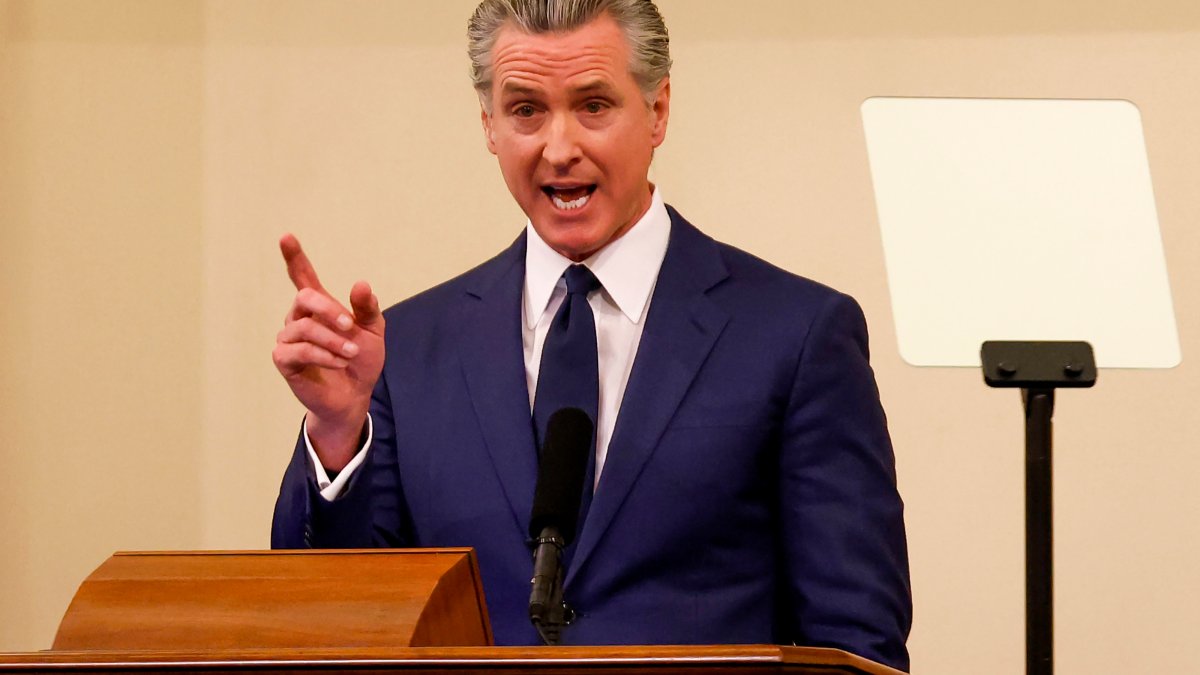
Governor Gavin Newsom’s office outlined the $349 billion budget proposal Friday as it tried to make some investments despite financial challenges.
Among $349 billion, $248 billion will be used as general fund while $23 billion will go toward total reserves.
The bad news is that the state will face a $2.9 billion budget shortfall. But the good news is that while California is facing a deficit for the fourth straight year, it’s far less than 2025’s $12 billion shortfall and 2024’s $38 billion. Also, the state’s revenues have grown, thanks to positive returns on stock market investments, according to the governor’s office.
See where the state’s money is going in 2026.
Rainy day funds
As required by Prop 2, which was approved by voters in 2014, California is required to pay down debts and set aside money in savings.
Among $23 billion that’s going toward the state’s total reserves, $14.4 billion will be deposited into California’s rainy day fund.
The state government will also put $4.5 billion toward a special fund for economic uncertainties, and $4.1 billion in the public school rainy day fund.
California will also spend $11.8 billion over the next four years to pay down long-term debt.
Investment in education
As Newsom hinted Thursday that the state will make “the most significant investments” in public education during his last State of the State speech, the state will fully fund universal access to transitional kindergarten, the governor’s office said..
As operational costs have gone up for schools, the state wants to provide $2.8 billion to school districts.
The University of California and the California State University system will have $716.3 million in resources.
Over $688 million will go toward financial aid for students, with the majority of it going toward Cal Grants ($552 million).
Environment
Wildlife and landscape resilience projects will see $314 million investments from the state.
EV rebate
Gov. Newsom wants to create a $200 million rebate program to make electric cars more affordable for Californians, the governor’s office said.
This comes as the Trump administration eliminated the federal EV rebate program which had been established during the Biden administration.
The $200 million comes from revenues generated by the state’s cap-and-trade program and an air pollution regulation fund.
Lawsuits against Trump administration
The budget proposal includes more funding for the California Department of Justice as it continues to fight dozens of agenda by the Trump administrations.
The state has sued the federal government more than 50 times last year.
Less money from federal government
California will lose about $1.4 billion that it would have received from the federal government.
Under the One Big Beautiful Bill Act, Medi-Cal will lose most of the funding as a federal match for limited scope services, such as emergency treatments and pregnancy-related care, will be reduced.
The state will also lose $300 million that would have gone toward CalFresh or the Supplemental Nutrition Assistance Program (SNAP).