
A sickly-looking coyote has been spotted roaming around some areas of South Portland in recent weeks.Some home security cameras have captured the coyote’s movements. South Portland Animal Control Officer Maggie Maxwell said the coyote appears to have a contagious skin disease.”He’s suffering from mange, which is a topical parasite that eventually can work its way into the body and start shutting down organs,” Maxwell said.Maxwell said the coyote has been spotted in several neighborhoods, including Ferry Village and Meeting House Hill.The most recent sighting was on Fessenden Avenue. Trout Brook runs behind some houses in that area, where officials said wildlife is often seen.”It’s pretty mangy. It doesn’t look healthy at all, no,” said Rob Tracy, who lives on Fessenden Avenue. “He’s a pretty smart guy, though. He can’t get caught.”The South Portland Police Department said efforts have been made to catch the coyote, but it is healthy enough at this time to evade capture.Tracy said his dog, Dolly, had a run-in with the coyote Thursday afternoon in their backyard.”The coyote popped his head through the fence and Dolly ripped after it, and the coyote split,” he said. “I was lucky enough to call Dolly off, so very happy about that.” Police said the coyote in question is not exhibiting aggressive behavior and continues to flee when approached. Residents are concerned about their pets’ safety given that mange is a highly contagious skin disease. Mange is typically found in mammals, both wild and domesticated, but can also cause infections in humans. Mange is ever-present in the environment and Maxwell reminded residents to keep their pets up to date on monthly preventative medications, which usually protect against parasitic mange.The coyote was also spotted in the Dyke Farm Road area. Resident Sterling Davis has a dog to protect his chickens, which could be easy prey for the coyote.”Just throw it a bone and let it go,” Davis said.A Maine Warden Service wildlife biologist said people, however, should not feed any wild animal. Police said that unless circumstances change, the best thing to do is leave the coyote alone.”They sometimes can stalk, which is following you. They are interested in what’s going on, but they shouldn’t attack,” Maxwell said. “If you are concerned for your well-being, turn around, make yourself big, yell at it and, for the most part, it should go away.”Police said Maxwell and the Maine Department of Inland Fisheries and Wildlife are aware of an increase in mange in the greater Ferry Village area, most recently observed in the coyote. Mange in humans causes itchy skin, bumps and blisters. Infections typically last between 10 to 14 days.Maxwell encouraged anyone who spots the coyote to call her office at 207-799-5511, extension 7253. Residents who have concerns or questions can also email Maxwell at mmaxwell@southportland.gov.
SOUTH PORTLAND, Maine —
A sickly-looking coyote has been spotted roaming around some areas of South Portland in recent weeks.
Some home security cameras have captured the coyote’s movements. South Portland Animal Control Officer Maggie Maxwell said the coyote appears to have a contagious skin disease.
“He’s suffering from mange, which is a topical parasite that eventually can work its way into the body and start shutting down organs,” Maxwell said.
Maxwell said the coyote has been spotted in several neighborhoods, including Ferry Village and Meeting House Hill.
The most recent sighting was on Fessenden Avenue. Trout Brook runs behind some houses in that area, where officials said wildlife is often seen.
“It’s pretty mangy. It doesn’t look healthy at all, no,” said Rob Tracy, who lives on Fessenden Avenue. “He’s a pretty smart guy, though. He can’t get caught.”
The South Portland Police Department said efforts have been made to catch the coyote, but it is healthy enough at this time to evade capture.
Tracy said his dog, Dolly, had a run-in with the coyote Thursday afternoon in their backyard.
“The coyote popped his head through the fence and Dolly ripped after it, and the coyote split,” he said. “I was lucky enough to call Dolly off, so very happy about that.”
Police said the coyote in question is not exhibiting aggressive behavior and continues to flee when approached. Residents are concerned about their pets’ safety given that mange is a highly contagious skin disease. Mange is typically found in mammals, both wild and domesticated, but can also cause infections in humans.
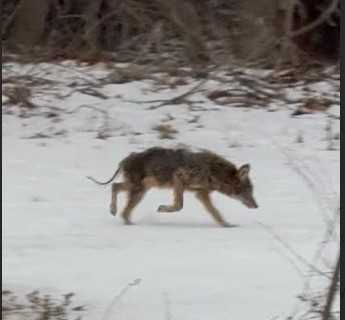
South Portland Police Department
Mange is ever-present in the environment and Maxwell reminded residents to keep their pets up to date on monthly preventative medications, which usually protect against parasitic mange.
The coyote was also spotted in the Dyke Farm Road area. Resident Sterling Davis has a dog to protect his chickens, which could be easy prey for the coyote.
“Just throw it a bone and let it go,” Davis said.
A Maine Warden Service wildlife biologist said people, however, should not feed any wild animal. Police said that unless circumstances change, the best thing to do is leave the coyote alone.
“They sometimes can stalk, which is following you. They are interested in what’s going on, but they shouldn’t attack,” Maxwell said. “If you are concerned for your well-being, turn around, make yourself big, yell at it and, for the most part, it should go away.”
Police said Maxwell and the Maine Department of Inland Fisheries and Wildlife are aware of an increase in mange in the greater Ferry Village area, most recently observed in the coyote. Mange in humans causes itchy skin, bumps and blisters. Infections typically last between 10 to 14 days.
Maxwell encouraged anyone who spots the coyote to call her office at 207-799-5511, extension 7253. Residents who have concerns or questions can also email Maxwell at mmaxwell@southportland.gov.