
Listen to this article
Estimated 5 minutes
The audio version of this article is generated by AI-based technology. Mispronunciations can occur. We are working with our partners to continually review and improve the results.
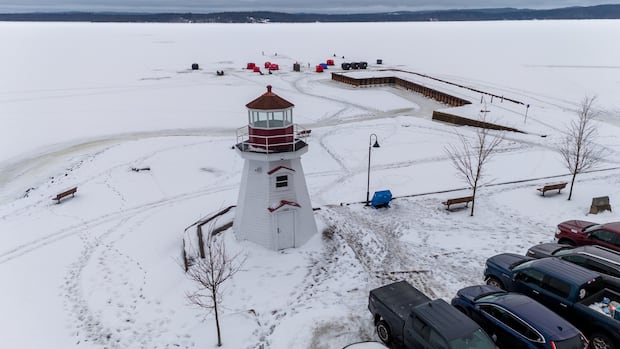
Mike Donovan doesn’t have a traditional ice-fishing shack in the makeshift village on the Kennebasis River in Rothesay.
He prefers to fish from his lawn chair or in a small pop-up tent when it’s windy. It’s a more social experience, he said, if he’s not in an enclosed structure.
“I did have a shack for a couple years, but I just can’t socialize so I don’t like that,” said Donovan, who has been fishing there for more than 40 years.
“I usually sit on the lawn chair and … people come up and talk. You meet so many people from all over. It’s amazing.”
Still, he’s disappointed the Town of Rothesay has installed a gate to prevent people from taking their trucks and cars onto the river and setting up shacks that have been a fixture in the Renforth Wharf area for decades.
WATCH | Longtime ice-fishing enthusiast says garbage problem has been getting worse: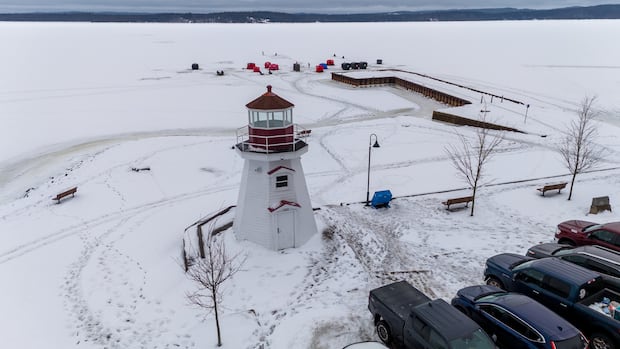
No more ice fishing shacks? Sick of abandoned debris, N.B. town says pop-up tents only
Years of abandoned shacks and garbage at the Renforth Wharf in Rothesay have led the town to ban anglers from bringing large structures onto the ice.
For years now, the town has dealt with dilapidated shacks and junk left behind when ice fishing for smelt and hake ends in the spring.
“It’s really unfortunate that the town had to come to this, but we’ve been trying for years to work with the ice fishers to keep the property clean, the ice clean,” said Deputy Mayor Matt Alexander.
“There was one fishing shack last year that somebody sort of abandoned at the beginning of the year, and it became the community garbage dump on the ice. It got completely full of garbage. Somebody left a Hide-A-Bed … so at the end of the season we brought it down.”
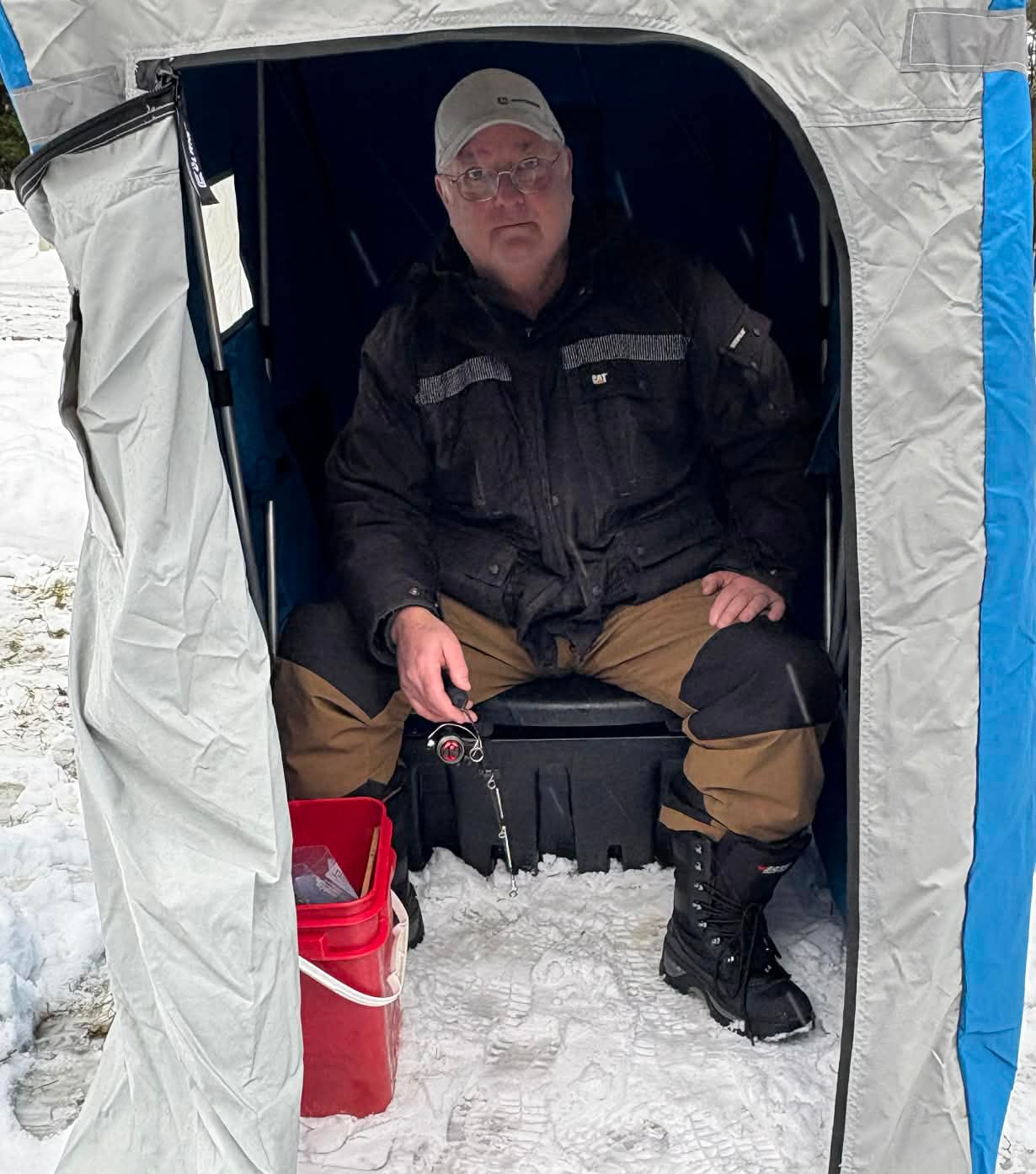 Mike Donovan mostly fishes from a lawn chair on the open ice or inside his pop-up tent when it’s windy. (Submitted by Mike Donovan)
Donovan said the problem has gotten worse off the wharf, where 50 to 100 shacks might appear on the ice during winter.
He and a group of people who care about being good stewards of the area have been helping the town clean up at the end of the season.
“There’s a big exodus of people, and they leave a lot of their stuff behind, and then there’s a group of us that come down, and we just start cleaning up everybody’s mess and take truckloads of stuff to the dump,” he said.
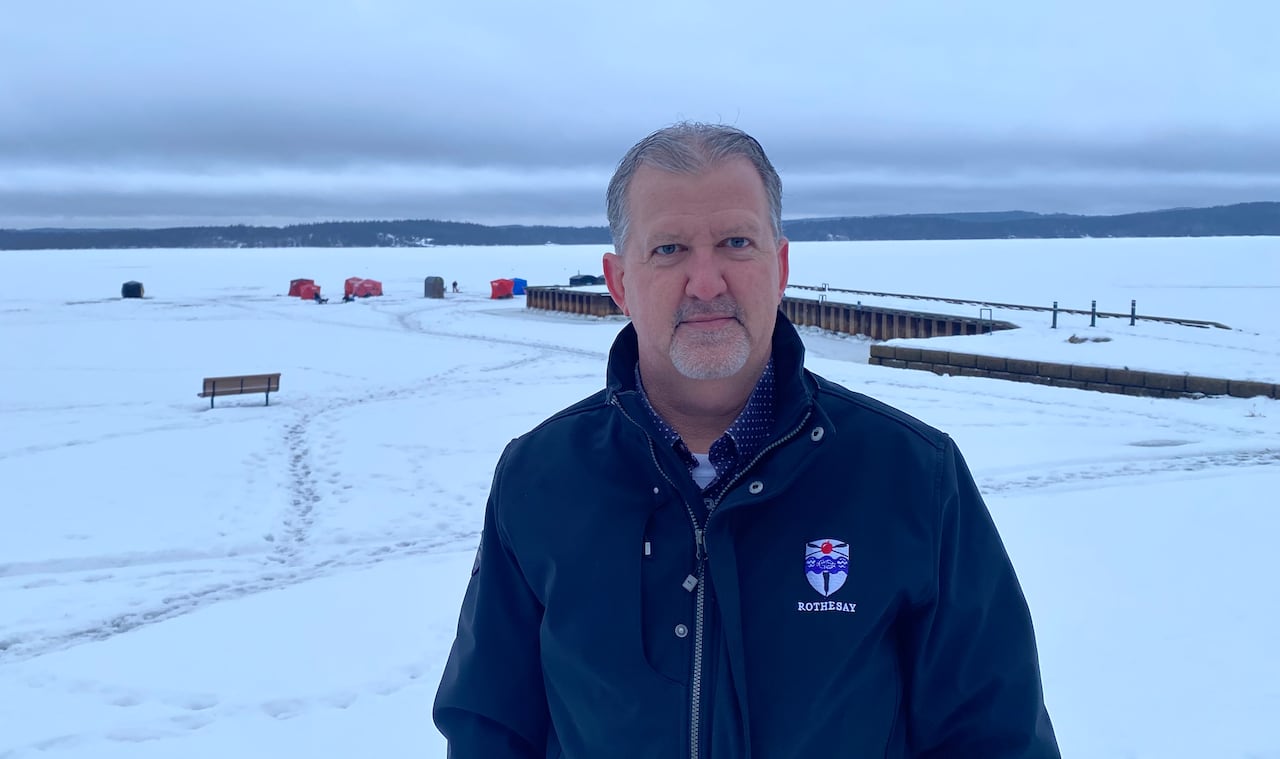 Rothesay Deputy Mayor Matt Alexander said the town would be open to the return of the shacks if the fishing community formed an association that helped keep the area clean. (Mark Leger/CBC)
But Donovan said the town should work with the fishing community and provincial and federal departments to make it work, rather than rid the area of the shacks altogether.
“Instead of punishing the many for the acts of a few, just have the proper authorities deal with the violators,” he said.
Alexander said the town is prepared to change its mind and allow shacks back on the ice, but he said the fishing community needs to be involved, rather than rely on the town and other government departments to make sure the area is taken care of.
“We definitely would be willing to work with [them] if there was an association that was established that could work with the town and work with everybody that’s out there,” Alexander said. “[We could] make sure that the ice is kept in pristine fashion and that materials are removed at the end of the year, that people are being safe.”
There are companies in the area renting pop-up tents and manufactured shacks.
Jack Ross, the owner of Kennebecasis Ice Adventures, said he has been inundated with requests for tent rentals since the town erected the gate.
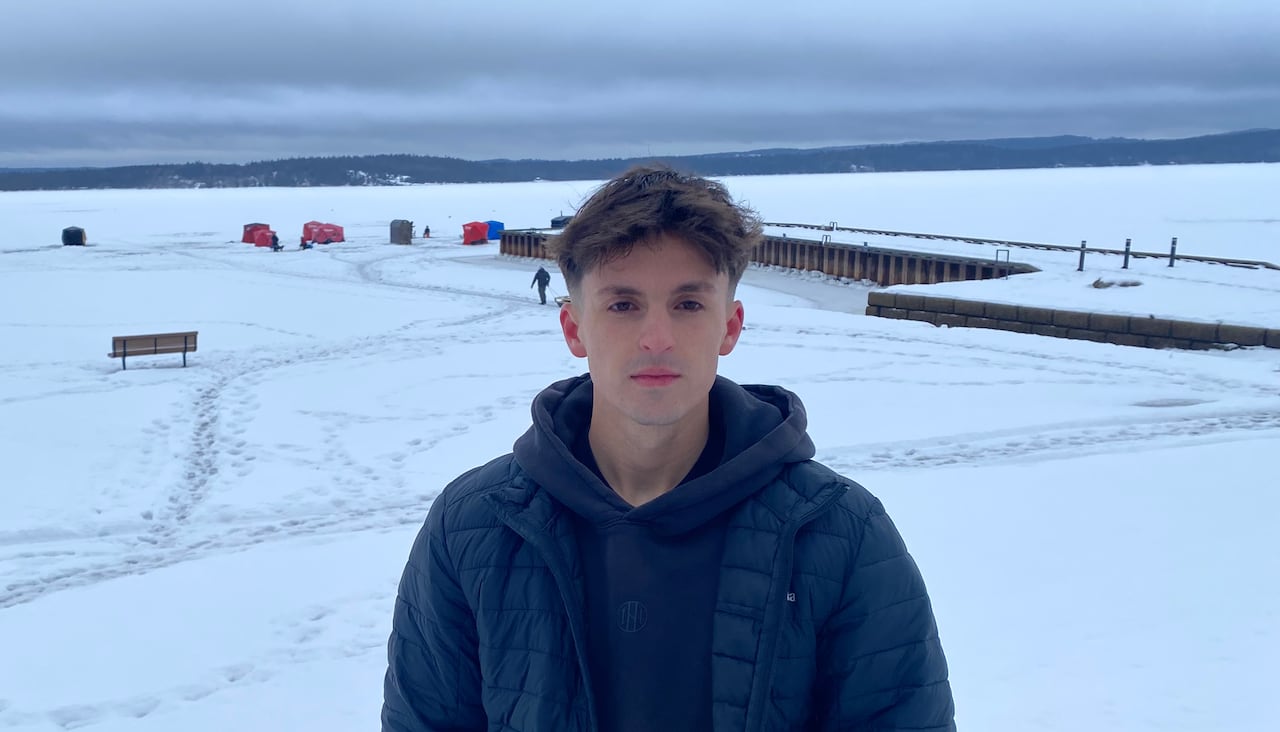 Jack Ross, who owns a company that rents tents at the ice-fishing village in Rothesay, says he’s been inundated with requests this year. (Mark Leger/CBC)
But he’s been ice-fishing for a long time himself and hopes the town and the fishing community find a resolution.
“There still should be hard shacks,” Ross said. “I guess it does work out for me, but hopefully they end it soon and everybody else can get out with the shacks.”
Donovan is worried people who’ve had shacks at Renforth, about 10 kilometres northeast of Saint John, will fish somewhere else, rather than rent or buy tents, bringing about the decline of the yearly winter village.
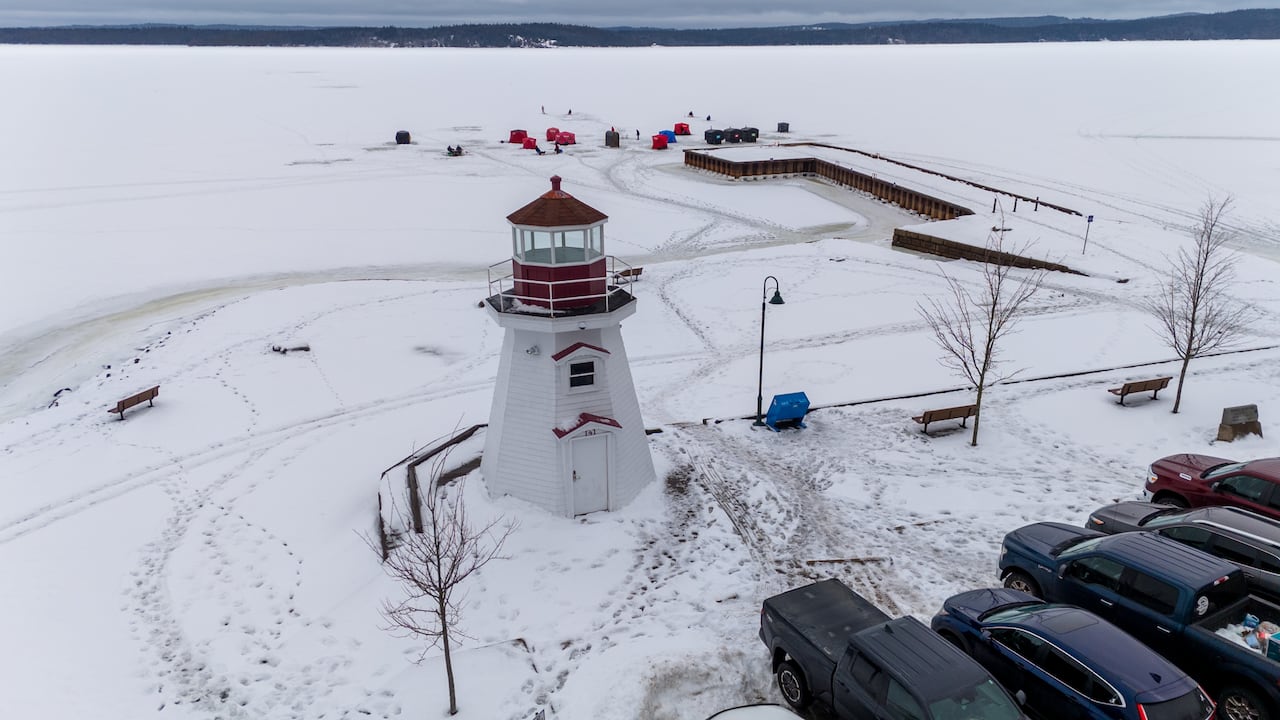 Donovan says that in the past, the village on the ice has been a popular attraction for tourists. (Mark Leger/CBC)
He said the colourful, customized shacks have been a big part of the culture of Renforth’s ice fishing village.
Locals loved them, but so did tourists from as far away as Africa, Asia and Europe, said Donovan.
“I always let them catch fish with my fishing rod,” he said. “It’s just really nice to see that type of culture and people coming together. They just love the shacks and are always taking lots of pictures … there’s a few people every year that set up on the wharf with their easels and they paint the shacks.
“It almost reminded me of the streets of Newfoundland, with all the brightly coloured houses…it was really unique.”