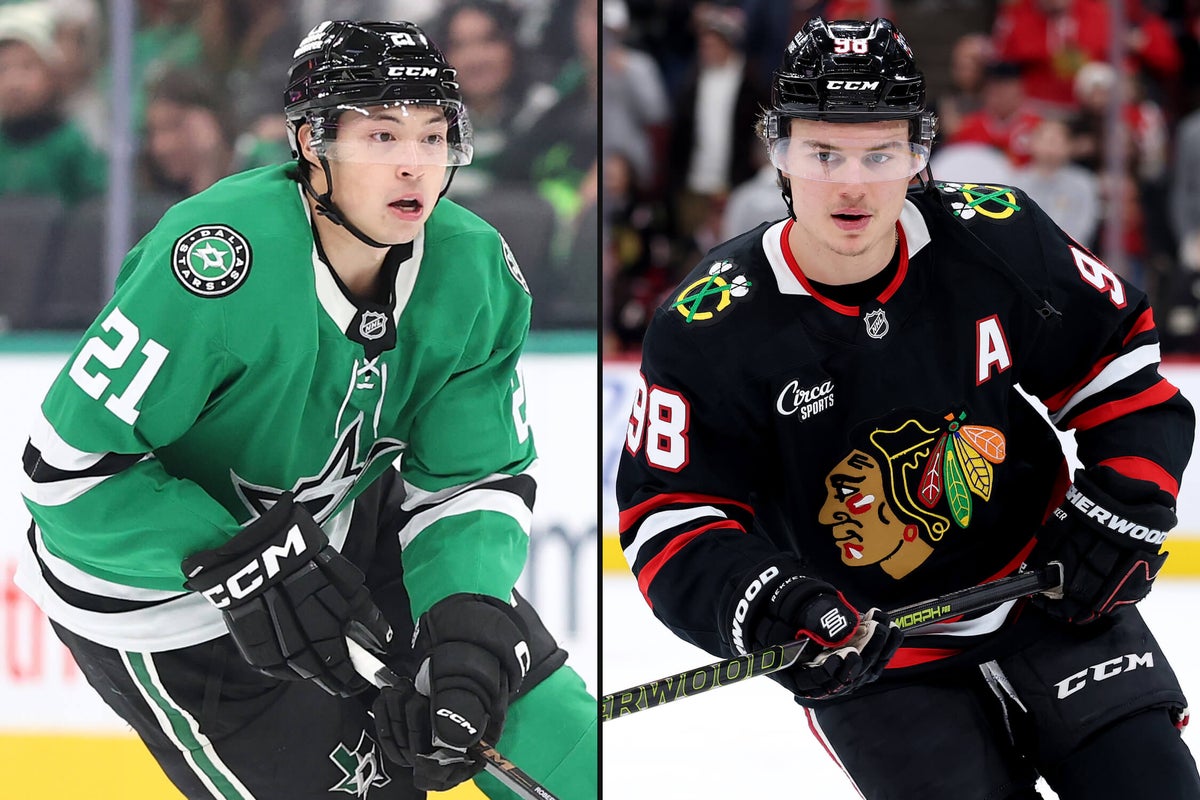
The start of the men’s hockey tournament at the Winter Olympics in Milan is just over a month away.
It’s been 12 years since we last saw NHL players at the Games, and after this past week, we have a clear picture of who will be participating — and who won’t.
From 4 Nations fall-offs to potential reserves to emerging young stars who fell just short, many players are likely feeling snubbed.
This week, we asked our reporters for their pick of the biggest Olympic snub from each NHL team.
Here are their choices.
Anaheim Ducks
Cutter Gauthier, USA
Jackson LaCombe is an honorable mention, but Gauthier’s 20 goals are among the leaders for American players. With that said, if a similar sniper in Jason Robertson couldn’t make Team USA with the kind of season he’s having, Gauthier wasn’t going to make it. — Eric Stephens
Boston Bruins
Hampus Lindholm, Sweden
Lindholm did not play for Sweden in the 4 Nations Face-Off because he was sidelined with a broken kneecap. He is at full health now and averaging the second-most ice time per game among Bruins defensemen after Charlie McAvoy. He is used in all situations. Lindholm defines the all-around defenseman teams require at the Olympics. — Fluto Shinzawa
Buffalo Sabres
Alex Tuch, USA
It’s tough to consider any Sabres player as a true Olympic snub, but Tuch had the best case of those left out. He’s on his typical scoring pace and also brings penalty-killing abilities that would have made him useful. But it’s tough to argue with USA’s roster. — Matthew Fairburn
Calgary Flames
Mikael Backlund, Sweden
A perennially underrated defensive center who has represented Sweden on numerous occasions, including at the 2018 World Championship, where he earned a gold medal. However, he has never represented his country on the Olympic stage. It won’t happen in February despite solid numbers in his age-36 season. Backlund would give Sweden a veteran, bottom-six presence; a solid faceoff taker and a penalty killer. — Julian McKenzie
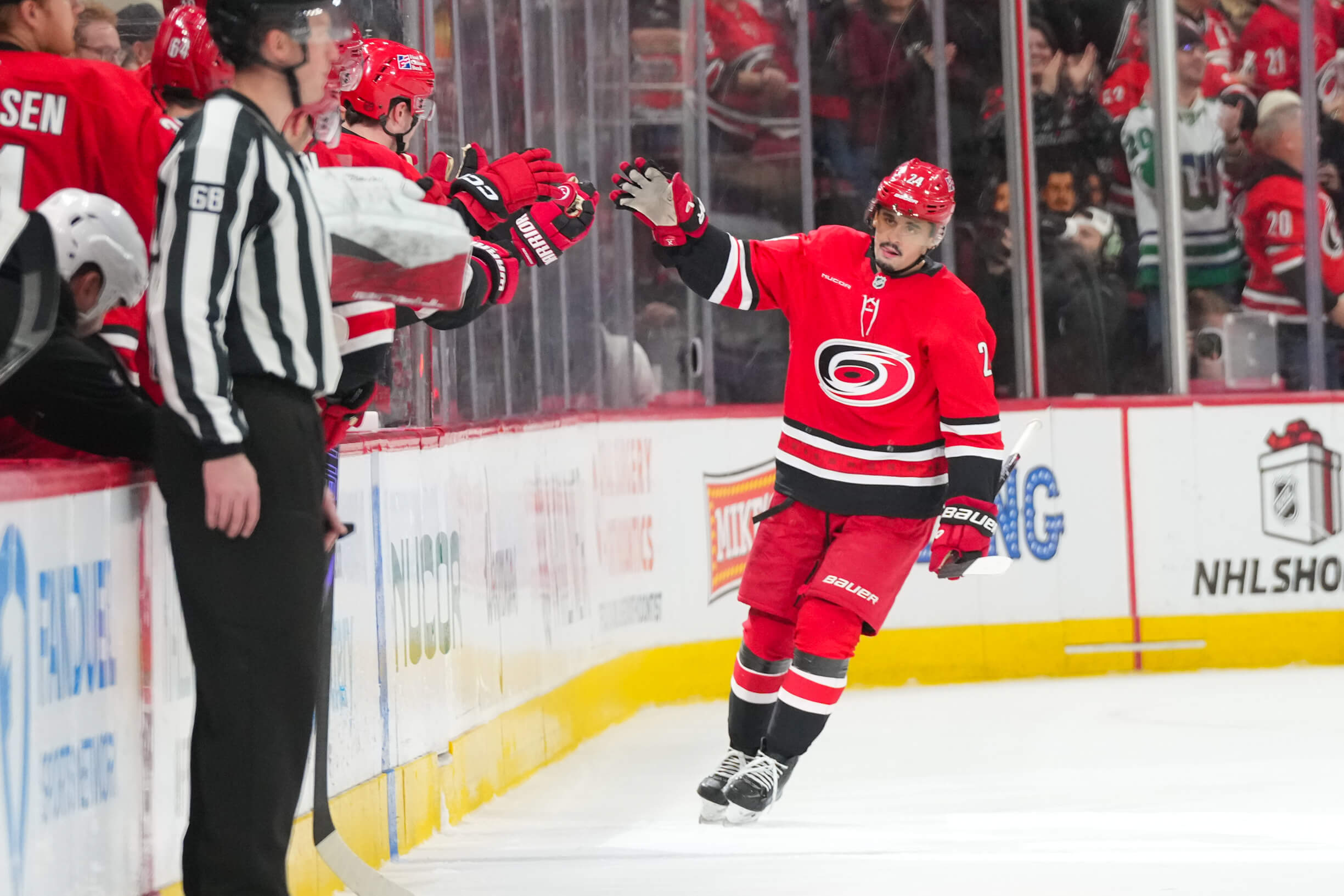
Seth Jarvis’ window to impress Team Canada was cut short by a rib injury. (James Guillory / Imagn Images)
Carolina Hurricanes
Seth Jarvis, Canada
Jarvis was one of the few members of Canada’s winning 4 Nations team not to be named to the country’s Olympic team. The question is why. Before his rib injury on Dec. 19, he was top 10 in the league in goals while continuing to be one of the best defensive wingers in hockey. While his window to impress the Team Canada brass was cut short by injury, there was enough familiarity to make an informed decision on his status. One has to wonder what changed to result in arguably the best forward on the Eastern Conference’s top team being omitted. — Cory Lavalette
Chicago Blackhawks
Connor Bedard, Canada
Bedard’s injury made the decision an easy one for Canada, but it would have been interesting to see what would have happened if he had remained healthy. He had built a case that he was deserving. He had elevated his game to an elite level and was producing with the league’s best before his shoulder injury. He also returned to Chicago’s lineup on Friday. — Scott Powers
Colorado Avalanche
Mackenzie Blackwood, Canada
When healthy, there’s no doubt Blackwood is one of the three best Canadian goalies. He was excellent last season and has been even better this season since returning from offseason surgery. The fact that he missed the first month and is currently back on IR could be reason enough to leave him off, but based on talent alone, Blackwood should be one of the three in Milan for Canada. — Jesse Granger
Columbus Blue Jackets
No one
You’d have to stretch pretty hard to believe a Blue Jackets player was snubbed by his country’s Olympic selection process. Zach Werenski was a slam dunk for Team USA. Elvis Merzļikins has been the goaltender of his generation in Latvia. Beyond that, there weren’t a lot of Blue Jackets on the bubble. Jet Greaves has been one of the best Canadian-born goaltenders in the NHL this season, but he’s a rookie who’s just getting started in his career. Adam Fantilli will most certainly be a candidate in 2030. — Aaron Portzline
Dallas Stars
Jason Robertson, USA
Herb Brooks in “Miracle” said that he wasn’t looking for the best players, but rather the “right players.” It made for a great line in a movie, but Team USA has stubbornly stuck to that ethos ever since. It also hasn’t won a best-on-best tournament since, other than the 1996 World Cup. No American player (and only two non-Americans) scored more goals in 2025 than Robertson’s 49. Sticking with J.T. Miller or Vincent Trocheck over Robertson was galaxy-brain at its worst. Robertson’s metrics say he’s a far better two-way player than Bill Guerin seems to give him credit for, too. He’s a plus-121 at five-on-five in his career. — Mark Lazerus
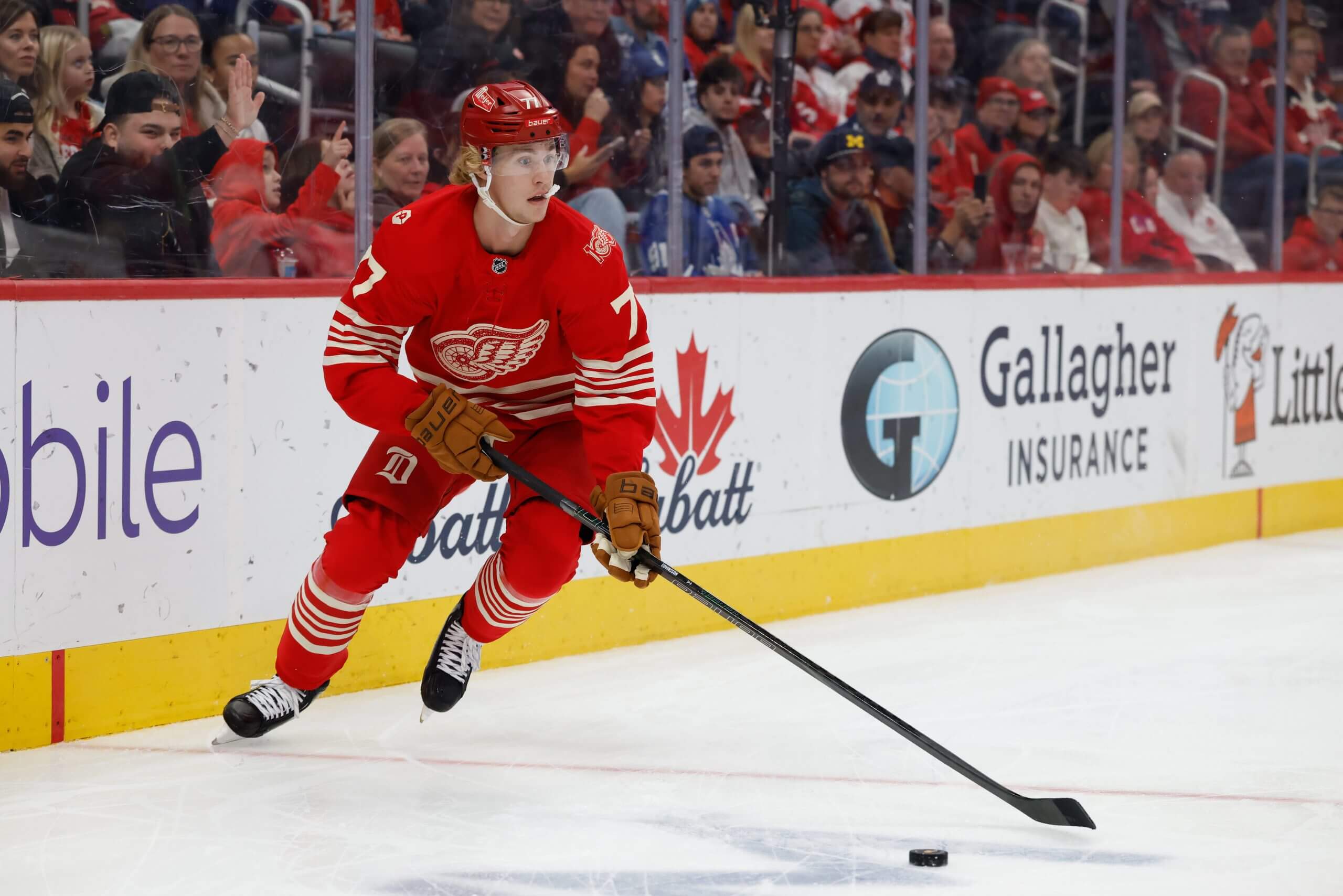
Simon Edvinsson posted a strong first half of the season for Detroit. (Rick Osentoski / Imagn Images)
Detroit Red Wings
Simon Edvinsson, Sweden
Alex DeBrincat made a strong case for Team USA as well, but it’s more surprising to see Edvinsson left off the Sweden blue line after an outstanding first half for the Red Wings. The 6-foot-6 defender can play in any situation, with the length and mobility to smother rush offense and block all kinds of shots, and is a breakout machine who can add offense as well. The 22-year-old will be on future Olympic teams, I’m sure, but his first half suggested he was ready in 2026. — Max Bultman
Edmonton Oilers
Evan Bouchard, Canada
Bouchard is a puck-moving defenseman with plenty of chaos in his game. There was some risk in taking him, but the rewards include exceptional outlet passing and deploying Connor McDavid’s chief passing connection on Team Canada. Bouchard is a five-on-five outscorer in Edmonton, and would do the same at the Olympics. Management has to let go of bias in order to ice an optimal Canadian Olympic team. Maybe next time. — Allan Mitchell
Florida Panthers
Sam Bennett, Canada
Bennett’s absence was perhaps the biggest surprise for Canada, after a dominant playoffs and showing at 4 Nations. But with so much talent to choose from and Bennett’s slow start to the season, he was narrowly edged out by the likes of Nick Suzuki and Bo Horvat. Expect he’ll be high on the injury replacement list, however. — James Mirtle
Los Angeles Kings
Brandt Clarke, Canada
The Kings have five Olympians, and there really aren’t any players who were snubbed. But we’ll use this to highlight Clarke, who has nudged aside Drew Doughty as L.A.’s top offensive blueliner while showing he has the chops to play quality defense. The 22-year-old could be in Canada’s mix in 2030. — Eric Stephens
Minnesota Wild
Marcus Johansson, Sweden
The 35-year-old is on pace for a career high in points and has already scored one more goal (12) than he had in either of the past two seasons (11 in 78 and 72 games, respectively). He also helped Sweden win bronze medals in the past two World Championships and a silver medal at the 2014 Olympics. After hearing he didn’t make the cut this time, he said, “It’s obviously sad and disappointing, but I’ve done what I can, I think. I think I’ve proven how I can play, and I guess it’s not enough.” — Michael Russo
Montreal Canadiens
Lane Hutson, USA
Very tough call as Cole Caufield also deserved inclusion on Team USA, but that Hutson didn’t even appear to be part of the conversation is simply absurd. He wasn’t even invited to their summer orientation camp. It is impossible to overstate just how good Hutson has been this season, especially since moving back to his natural left side on Dec. 11. He entered 2026 as a point-per-game defenseman, the Canadiens have ridiculously dominated his minutes at five-on-five since his move back to the left and his perceived defensive deficiencies are more based on size bias than reality. — Arpon Basu
Nashville Predators
Steven Stamkos, Canada
It’s not a huge surprise given the young talent that made the team instead of the 35-year-old Stamkos, but he is on a heater — he just collected his 600th goal — and it’s a shame he’ll end up never realizing the dream of playing in the Olympics for Team Canada. A broken leg kept him out of Sochi in 2014, and he would have been a lock in 2018 and 2022 when NHL players didn’t participate. — Joe Rexrode
New Jersey Devils
Brett Pesce, USA
There’s no great answer for the Devils to this prompt. The team’s Olympic hopefuls all made their rosters. Pesce wasn’t one of Team USA’s big snubs, but he’s probably the closest to Olympic level of any of the players not going. He is a strong defensive defenseman who can kill penalties: not a glamorous role, but one that teams always need. — Peter Baugh
New York Islanders
Matthew Schaefer, Canada
Sure, Schaefer is 18 years old, and players his age don’t often make Team Canada. However, Schaefer is playing at a ridiculous level this early in his NHL career, acing every challenge thrown his way. Once he showed he could thrive in matchup minutes, he should have made the team, even as a No. 7 or 8. Canada should want his dynamic skill as an option, and the opportunity for him to gain this type of experience early would only help this team in the long run. — Shayna Goldman
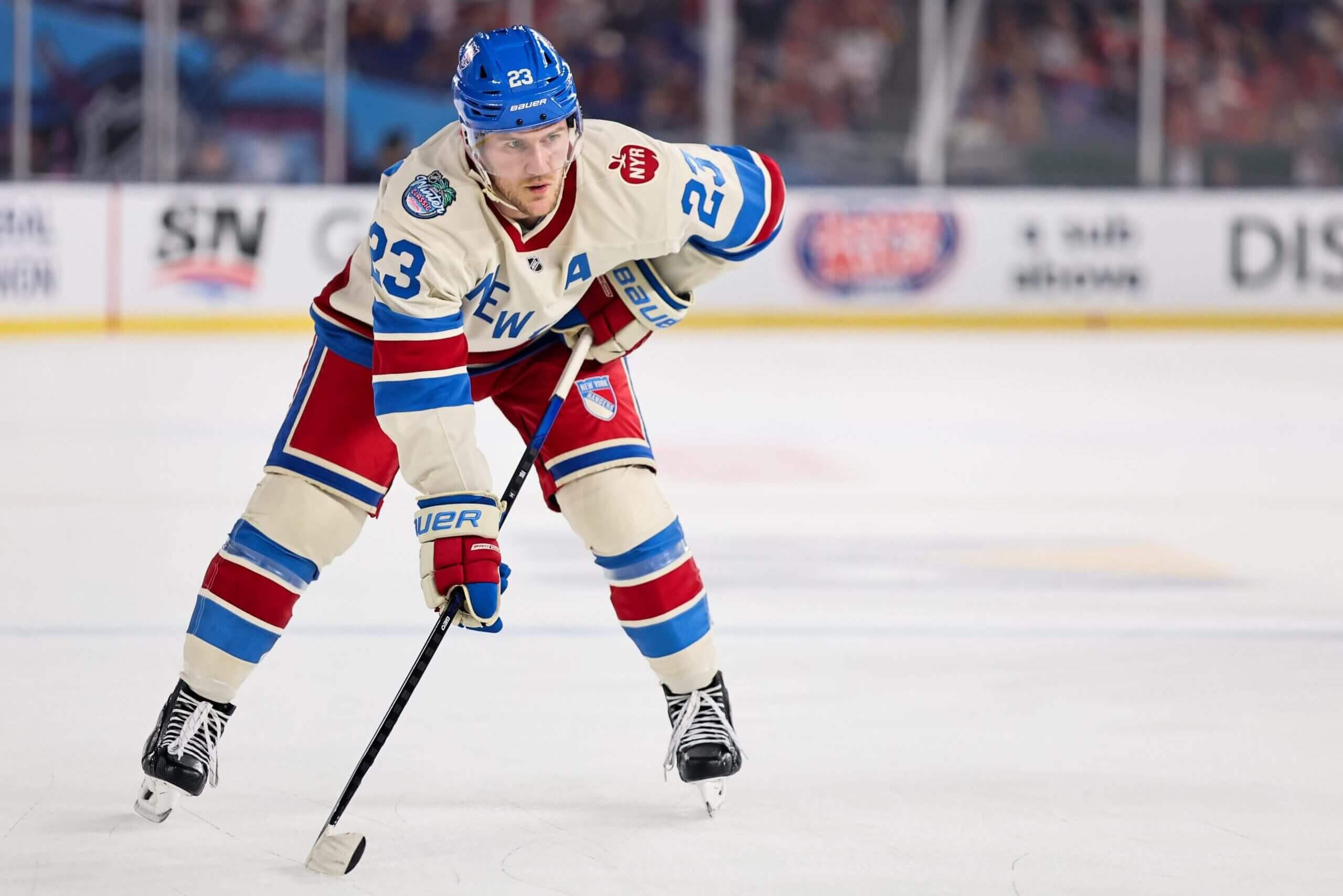
Adam Fox was trending toward a top-three Norris Trophy finish before a November shoulder injury. (Carmen Mandato / Getty Images)
New York Rangers
Adam Fox, USA
In less than a year, Fox went from one of the first six Americans picked for 4 Nations to off the Olympic roster entirely. If you want to make the case that he’s been surpassed by Quinn Hughes and Zach Werenski for power-play duties and you’d prefer the other four defensemen in the lineup to be bigger, shutdown types, fine. But not even carrying him as one of the two extra defensemen is hard to justify. The 27-year-old was trending toward a top-three Norris Trophy finish before a Nov. 29 shoulder injury and has an elite body of work over seven NHL seasons that should outweigh four subpar games at 4 Nations. — Vincent Z. Mercogliano
Ottawa Senators
Shane Pinto, USA
Pinto would’ve been a big help to Team USA with his two-way play as a shutdown center who can provide offense. Pinto played with the Americans last spring en route to a World Championship title. Team USA coach Mike Sullivan even commended Pinto’s play during a recent visit to Ottawa. If only Pinto hadn’t gotten injured in December, his case to make Team USA might’ve been stronger. — Julian McKenzie
Philadelphia Flyers
Trevor Zegras, USA
We could go with Travis Konecny here — he was part of Canada’s 4 Nations Face-Off roster — but that team is stacked, and Konecny was inconsistent for the first couple of months. So Zegras is the choice, as he continues to lead the Flyers in scoring and is well on his way to the best season of his career and an inevitable contract extension. Zegras can also come in clutch in the shootout, going 17 for 28 in his career, which could have come in handy at the Olympics. — Kevin Kurz
Pittsburgh Penguins
Bryan Rust, USA
Maybe calling Rust a “snub” is a stretch, but maybe not. He’s fast. He’s a 30-plus goal scorer. He’s tenacious. He kills penalties. He plays well with stars. He’s a big-game icon in Pittsburgh. Think this roster could use those attributes? I do. — Josh Yohe
San Jose Sharks
William Eklund, Sweden
Eklund wasn’t chosen over Pontus Holmberg, and is a much better offensive player who is tied for third on the Sharks in scoring. However, Sweden does have plenty of offensive talent through the lines up front, and Holmberg may fit Sam Hallam’s idea of a 13th forward more than the 23-year-old Eklund, who should have a better opportunity to participate in 2030. — Eric Stephens
Seattle Kraken
Brandon Montour, Canada
Like all Canadian defensemen who weren’t part of the 4 Nations Face-Off, Montour faced an uphill climb in cracking this Olympic roster. When he starred for Canada at the World Championship this spring, however, and put together a sensational first season in Seattle, it seemed as if perhaps Montour had cracked the door open to making a dark horse case for inclusion. A slow start to this season, however, and some recent bad injury luck put Montour just too far behind the eight ball, as Canada opted to return the same D-corps it used at 4 Nations. — Thomas Drance
St. Louis Blues
No one
There are no cases for a snub. The Blues have Colton Parayko and Jordan Binnington set to play for Canada, Philip Broberg for Sweden, Pius Suter for Switzerland and Dalibor Dvorsky for Czechia. At one point, Robert Thomas was in the conversation for Canada, but he hasn’t played well enough to earn it. If anything, Joel Hofer has a case for Canada, having unseated Binnington as the starter in St. Louis. However, Hofer doesn’t have the resume of Binnington, who won a gold medal with Canada at the 4 Nations Face-Off. — Jeremy Rutherford
Tampa Bay Lightning
No one
The Lightning will be sending 10 players to the Olympics, so there really aren’t any noteworthy snubs here. Anthony Cirelli and Brandon Hagel ultimately were both named to Team Canada, despite a deep pool of forward options. And J.J. Moser’s excellent play this season earned him a role on Team Switzerland. — Shayna Goldman
Toronto Maple Leafs
Matthew Knies, USA
I’m not sure that Knies was snubbed exactly. He is having a good, but not great, year for the Leafs. And it was probably going to take great for him to crack a deep American team. Knies is putting up almost a point per game, but the goal scoring, speed and physicality in his play haven’t been as punchy or consistent as last season. Nor has he fit with Auston Matthews, which would have boosted his case. — Jonas Siegel
Utah Mammoth
No one
Logan Cooley could have been a contender for one of the final U.S. Olympic team spots. Unfortunately, his leg injury jeopardized those chances. Clayton Keller was on the bubble and would have been a snub if left off, but he was named to the American roster, which leaves Utah without an obvious Olympic snub. — Harman Dayal
Vancouver Canucks
Thatcher Demko, USA
A Vezina finalist in 2023, Demko would’ve been a shoo-in Olympian for Team USA 24 months ago. He might’ve even been tabbed to battle with Connor Hellebuyck for the starter’s job. Injuries, however, have waylaid Demko’s progress. While he wasn’t invited to Team USA’s orientation camp this summer — with USA Hockey leadership preferring to reward World Championship-winning netminder Joey Daccord — Demko’s progress was still tracked by Bill Guerin and company. Another month-long injury absence this season and some inconsistency, however, caused Demko to be on the outside looking in. — Thomas Drance
Vegas Golden Knights
No one
The Golden Knights already have seven players named to Olympic rosters, and it’s tough to find a snub. The closest is probably goaltender Adin Hill, who was one of Canada’s three netminders at the 4 Nations Face-Off last February. However, Hill was injured after playing only five games this season and hasn’t seen game action since Oct. 20. That, combined with the resurgence of other Canadian goalies, makes it tough to consider him a true snub. — Jesse Granger
Washington Capitals
Jakob Chychrun, Canada
Canada’s defensive group is a tough nut to crack, but Chychrun deserved heavy consideration. At the position, only Cale Makar has posted a better Net Rating this season. Chychrun’s offensive production and impact have been immense, and he’s done it all in huge minutes against top competition. This is what it looks like when a good player becomes a great one. He should be on the Norris shortlist. — Sean Gentille
Winnipeg Jets
Mark Scheifele, Canada
Since the start of the 2024-25 season, Scheifele ranks third among all Canadian NHL players in goals and fifth in points. Simply put, he’s been an elite offensive producer. Scheifele’s defensive game has improved in recent years, and even if that was still a concern, he could have easily slid to the wing. It would have been nice to have another offensive game-breaker on Canada’s roster, in the event of an injury to one of the top scoring forwards or top-six chemistry issues (remember that Canada had a tough time finding the right top-six line combos at 4 Nations). — Harman Dayal