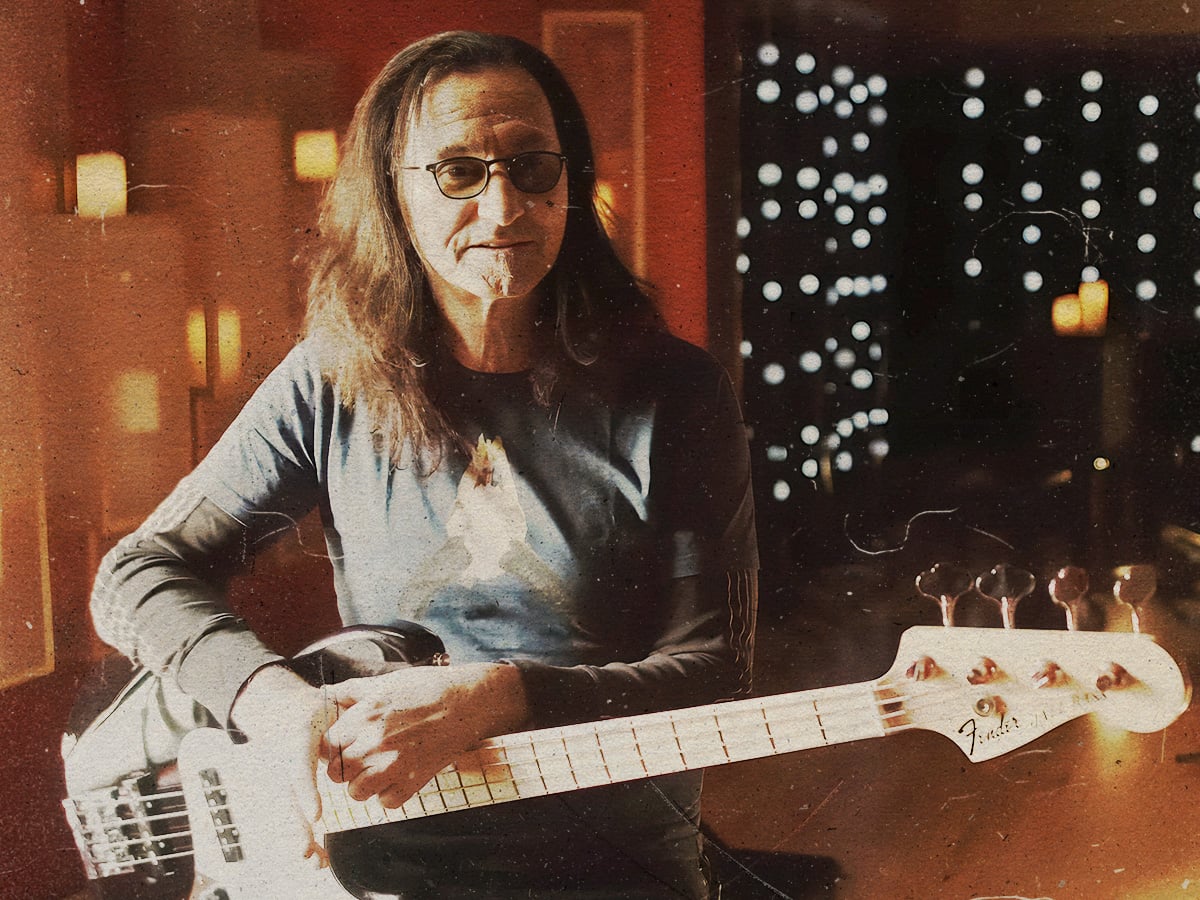
(Credits: Far Out / YouTube Still)
Sat 10 January 2026 15:47, UK
Anyone looking to play progressive music for a living needs to know what they’re getting themselves into. As much as people like to play scales up and down their instruments and call it a song, it takes a true master to take those years of practice and turn them into a track that people want to listen to again rather than just gawk in amazement. While Rush was one of the few bands who managed to do both simultaneously, Geddy Lee thought most of that came down strictly to Neil Peart.
But that might be selling the group short. Just like any power trio, every member needed to hold up their equal side of the music or the whole song would fall apart, and both Lee and Alex Lifeson have been known for putting some of their greatest melodies together over the top of Peart’s playing.
While Lifeson is the guitar player, Lee practically played lead guitar lines on a bass guitar neck, following in the footsteps of people like Jack Bruce of Cream and Chris Squire from Yes in terms of getting just the right tone out of his instrument. And despite being one of the less recognisable faces of the group, Lifeson has the same kind of ferocious approach to playing that put him on the level of someone like Jimmy Page, bringing the rock and roll edge to the band half the time he performed.
But as both the lyricist and one of the greatest drummers in the world, Peart was irreplaceable in the rock world. Rather than trying to play for the sake of being flashy, Peart always played what served the song, almost trying to make the band jump and surge throughout any piece while also delivering the kind of insane fill that takes superhuman strength not seen since John Bonham.
When talking about their dynamic in Classic Albums, even Lee had to admit that Peart was by far the most accomplished player in the group, saying, “Neil is the single most talented musician I’ve ever worked with, and the most driven musician I’ve ever worked with. I think that, really, sets his talent apart. It’s the fact that he’s so stubbornly driven that he won’t even play the same groove twice.”
 Neil Peart behind the drum kit. (Credits: Far Out / Alamy)
From Lee’s experience working in prog acts, that’s no small order for someone to reach, either. Outside of Rush being the only real group Lee has played in, he did eventually get to share the stage with members of the group Yes during their Rock and Roll Hall of Fame ceremony, yet Peart still towered above them all.
Amid all of the great percussion work, Peart is also criminally underrated as a lyricist, often making songs that span the more cerebral side of the spectrum. Although their 1970s prog prime saw him writing fanciful stories that could have come off as pretentious, hearing him switch to talking about personal struggles and overcoming pain on songs like ‘Far Cry’ kept him driven all the way to the end of his life.
And it’s not like Peart hasn’t amassed fans who agree with Lee, with everyone from Taylor Hawkins to Jimmy Chamberlain of Smashing Pumpkins crediting him as one of the greatest to ever touch a drumkit. Peart may have been all about finesse, but underneath the drum rolls was still a human being looking to make his art out of his percussion rig.
How important was Neil Peart to drumming?
It’s hard to put into context just how vital Neil Peart was to Rush and, by proxy, to the music industry as a whole. A man able to craft out and meticulously play some of the most complex drum fills the rock world has ever seen was equally able to thrash through an entirely improvised set without missing a single beat and, in the meantime, interplay with his surroundings while always remaining tight as stretched leather on a fat biker’s backside. It was this devastating combination of weapons that gave Peart one of the most devastating armouries in the music world.
Speaking to Modern Drummer in 1993, Peart once said: “One thing I have come to learn about influences is that although copying one style can never be original, copying many styles often is original… The best advice for someone who wants to develop an original style is: Don’t copy one drummer, copy twenty! I copied a hundred.”
Related Topics