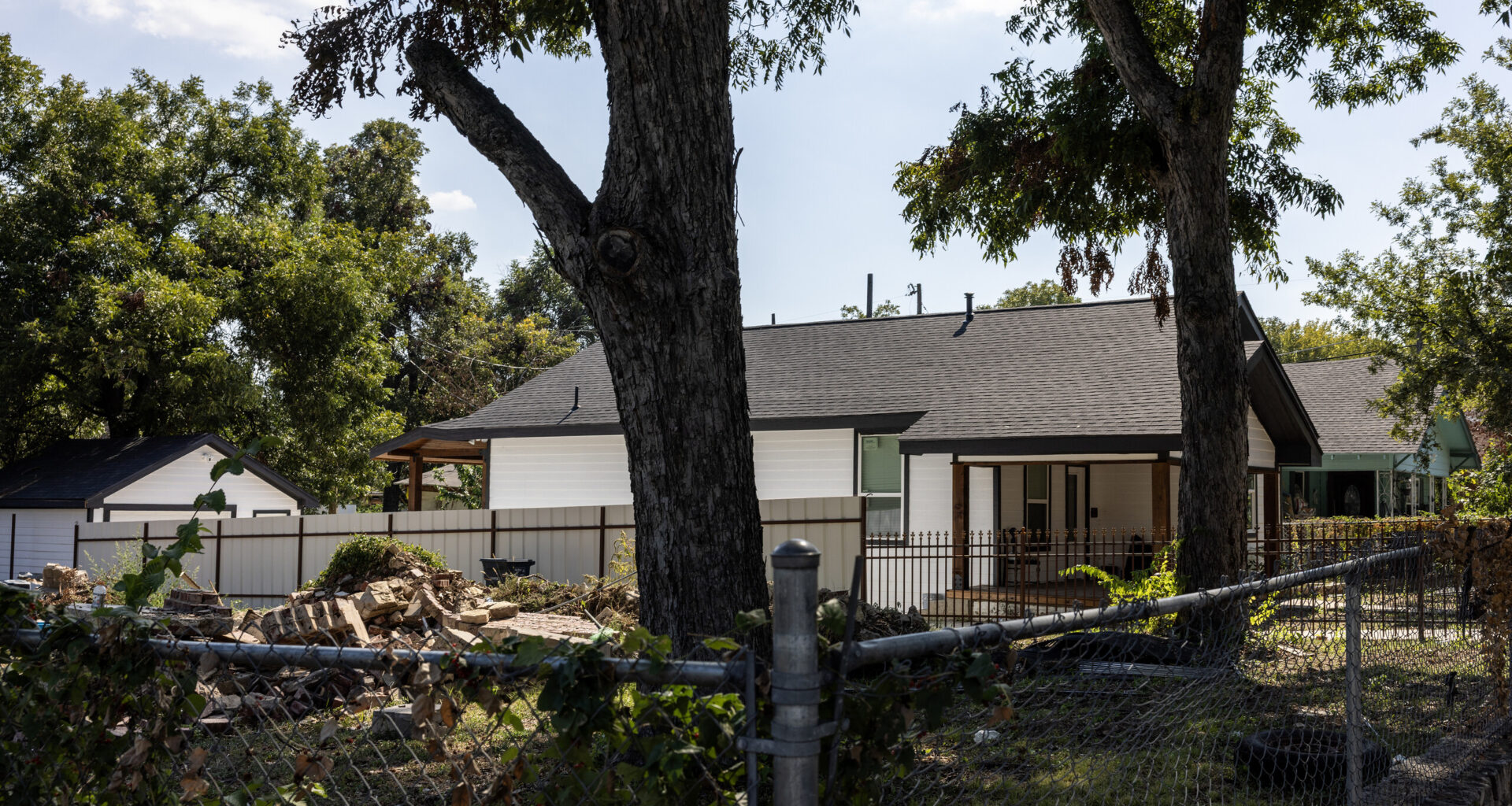
Fort Worth city leaders must educate the public on the realities of the local housing crisis and increase the amount of bond money dedicated to supporting attainable housing, advocates say.
This year’s bond election is expected to be the first time Fort Worth city leaders ask voters to support public dollars for affordable housing. The council is considering $5 million in a related proposition, according to the latest bond proposal. That’s less than 1% of the total $840 million bond package expected on the May 3 ballot.
The housing measure would pay for about two dozen single-family homes. Such an investment is not enough to meaningfully address the housing crisis in a city of 1 million residents, advocates say.
“People just aren’t used to the fact that you can’t buy a house here, and just be a teacher, fireman or whatever,” said Donna VanNess, president of the nonprofit Housing Channel. “Before, it was more accessible, and now it’s become out of reach for even the middle class.”
Council members meet Jan. 13 to hammer out how much funding to allocate toward each bond proposition. That planning will take into consideration the input residents gave during a series of community meetings last fall, City Manager Jay Chapa said at a December bond meeting.
Fort Worth faces an increasingly competitive housing market as it nears a spot in the country’s top 10 cities ranking. From 2017 to 2025, Fort Worth’s population grew by 16% while average home values rose from $188,536 to $305,476, according to the Tarrant Appraisal District.
Last year, average Fort Worth home prices hit $384,000, but hovered around $320,000 as of November, according to the Greater Fort Worth Association of Realtors.
At next week’s meeting, council member Chris Nettles plans to push for $40 million for the housing proposition. He wants such funds to have flexibility to use on multifamily housing as well.
“Fort Worth is a place that wants to see everybody thrive, and not just a certain class,” Nettles said. “I mean, I hope that’s the Fort Worth that we live in, and I think we do. But we have to tell that story and that narrative.”
City spokesperson Kevin Neal declined an interview about the current funding proposal, saying questions related to housing availability and costs had been addressed in public meetings.
Bond elections allow voters to decide whether government entities may borrow millions to billions of dollars for specific infrastructure projects. Those funds are repaid with a portion of the city’s tax rate.
The May ballot will include five other propositions to fund improvements for streets and mobility, parks and open space, public libraries, public safety, and animal care and shelter facilities.
Housing advocates, including VanNess, applaud city leaders for adding an affordable housing proposition after it wasn’t included in the original proposal. But they hope to see more dollars added before it’s sent to voters.
“By Fort Worth not really allocating money to affordable housing, it feels insulting. It feels like we’re neglecting the working-class population,” said local Realtor Whitney Wood Juarez. “It’s very important for Fort Worth to step up. They’re falling behind.”
What’s on the table?
If approved for the May ballot, the $5 million for housing would support about 20-25 single-family homes for buyers who earn between 80% and 120% of the area’s annual median income of about $92,000, according to a December city presentation.
About $1 million would go toward acquiring vacant lots that nonprofit and private developers would use to construct homes. The other $4 million would fund infrastructure costs — such as street, stormwater and sewer improvements — to support the new homes.
Neighborhood Services director Kacey Thomas said at a December council meeting that staff focused the proposition on single-family homes assuming that voters would be more likely to support an affordable housing proposal that way.
City management also cautioned against multifamily projects that might turn off voters at the ballot box.
Other cities across Texas such as Dallas, Denton and Austin have passed bond packages with funds for affordable housing ranging from $15 million to $350 million. In 2024, Dallas voters approved about $82 million dedicated to housing projects and homelessness reduction efforts across three bond propositions.
Wood Juarez said she’s had many clients who can’t afford a mortgage on a house at the median price of about $320,000.
She worries that a tough housing market will deter economic growth, as companies looking for headquarters are also looking for cities their employees can afford to live in.
“I want to see people have homes. I want to see businesses continue to move here. I want to see economic growth,” Wood Juarez said. “And I really want to see Fort Worth provide the community to its citizens that they claim that they create.”
Fort Worth must invest in affordable housing to deter homelessness and support the “overall health of the city,” VanNess stressed. Restaurant servers, teachers, police and other service workers are struggling to keep up with skyrocketing housing prices, she said.
“What’s great about putting investment in affordable housing is you’re putting investment in your workforce and families and helping support their economic growth,” VanNess said.
Council member Elizabeth Beck called the $5 million proposal “paltry,” saying “discrimination” and the stigma surrounding affordable housing has prevented city officials from pushing funding for such projects more aggressively in past bond programs.
“People hear the term ‘affordable housing,’ and they think Section 8, and they think of … places where we concentrated poverty and had facilities that were substandard,” Beck said. “What we’re talking about today is really attainable housing. It’s in large part for young professionals.”
Building more affordable housing helps combat the stigma surrounding it, Beck said. Planting “really nice developments” across Fort Worth neighborhoods shows residents with misconceptions “the type of house that we’re really looking for.”
Throughout the bond planning process, Chapa has repeated that increasing funds for the housing proposition would require cutting dollars from others.
Some residents have addressed the council and city staff at recent public meetings pushing for more affordable housing investment.
Michelle Kennedy, senior director of advocacy and government relations for Trinity Habitat for Humanity, told council members at a December meeting that attainable home ownership helps strengthen family’s lives.
“Tonight, thank you for recognizing that a home is foundational to a good start in the (lives) of our children,” Kennedy said.
Cecilia Lenzen is a government accountability reporter for the Fort Worth Report. Contact her at cecilia.lenzen@fortworthreport.org.
At the Fort Worth Report, news decisions are made independently of our board members and financial supporters. Read more about our editorial independence policy here.
This <a target=”_blank” href=”https://fortworthreport.org/2026/01/10/housing-advocates-say-fort-worths-5m-bond-proposal-isnt-enough/”>article</a> first appeared on <a target=”_blank” href=”https://fortworthreport.org”>Fort Worth Report</a> and is republished here under a <a target=”_blank” href=”https://creativecommons.org/licenses/by-nd/4.0/”>Creative Commons Attribution-NoDerivatives 4.0 International License</a>.<img src=”https://i0.wp.com/fortworthreport.org/wp-content/uploads/2021/04/cropped-favicon.png?resize=150%2C150&quality=80&ssl=1″ style=”width:1em;height:1em;margin-left:10px;”>
<img id=”republication-tracker-tool-source” src=”https://fortworthreport.org/?republication-pixel=true&post=335238&ga4=2820184429″ style=”width:1px;height:1px;”><script> PARSELY = { autotrack: false, onload: function() { PARSELY.beacon.trackPageView({ url: “https://fortworthreport.org/2026/01/10/housing-advocates-say-fort-worths-5m-bond-proposal-isnt-enough/”, urlref: window.location.href }); } } </script> <script id=”parsely-cfg” src=”//cdn.parsely.com/keys/fortworthreport.org/p.js”></script>