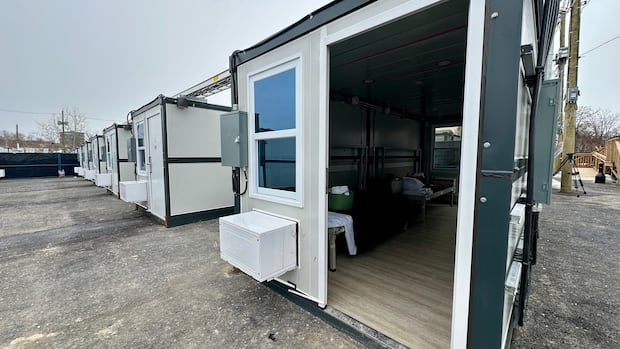
An audit of Hamilton’s outdoor shelter project found that when it came to constructing the shelters, “urgency overrode the importance of due diligence and good governance.”
According to Hamilton’s Office of the Auditor General (OAG), the project suffered from “a lack of accountability, governance and control mechanisms,” inadequate oversight over costs, and a failure to understand and manage risks.
Weak contracts and a lack of oversight and experience “created a permissive environment where vendors had the opportunity to ‘make a meal’ of the project while the city and its taxpayers absorbed the financial and operational fallout,” the OAG said.
The audit and 11 recommendations to city managers were published Thursday in an agenda ahead of a Jan. 15 Audit, Finance and Administration Committee meeting.
A report to the committee, prepared by the OAG, recommends the city manager be directed to respond to the recommendations and report back to the audit committee by July “on the nature and status of actions taken in response.”
It will be up to the 10 city councillors on the committee to approve or reject that recommendation.
CBC Hamilton asked the city for its response to the audit and recommendations. In a statement sent Friday evening, the city said it will review the report with council and “discuss the findings and opportunities for improvement through the appropriate process.”
It also defended the project, saying “it is important to recognize that this was a large, complex project delivered to respond collectively to the immediate homelessness and housing crisis. Decisions were made in good faith based on the information and circumstances available at the time with the intent of serving the community’s best interests,” spokesperson Lauren Vastano shared in an email on behalf of the city.
Audit launched in 2025 following complaints
The much-delayed initiative resulted in the creation of an outdoor compound on Barton Street W. with what they said would be temporary housing for up to 80 people, for whom traditional emergency shelters aren’t suitable. Social service provider Good Shepherd manages operations at the site.
The site, which fully opened last March, consists of multiple pre-fabricated cabins and several common buildings. It’s the first of its kind in Hamilton but follows in the footsteps of similar publicly and privately run projects based around tiny homes in communities such as Kitchener-Waterloo and Kingston.
In May, CBC Hamilton reported on a staff report noting the capital costs had almost tripled from $2.8 million to $7.9 million — $5.1 million over budget.
Months earlier, city councillors had questioned the suitability of MicroShelters, the company supplying the tiny homes. It turned out the Brantford, Ont., business went through an American company to order the units from China.
The auditor general launched a value-for-money audit in 2025 after receiving “a high volume” of fraud and waste hotline complaints related to the project, the office said. The hope for the audit is that “the city will capitalize on the experiences gained and lessons learned,” it said.
The audit involved sources of information such as a review of council and committee reports and meetings, contracts, invoices, communication records, construction documents, interviews with staff and examinations under oath.
The audit also included a legal opinion regarding contract management, which the city is not releasing publicly.
The OAG said its findings can be grouped into several themes including insufficient research, inadequate planning, a lack of understanding risks, and a failure to communicate with city council in a timely manner.
Lessons to be learned from the project include “the importance of adequate planning and due diligence, and a project team with experience that aligns with the nature of the work,” the OAG said in its report to the committee.
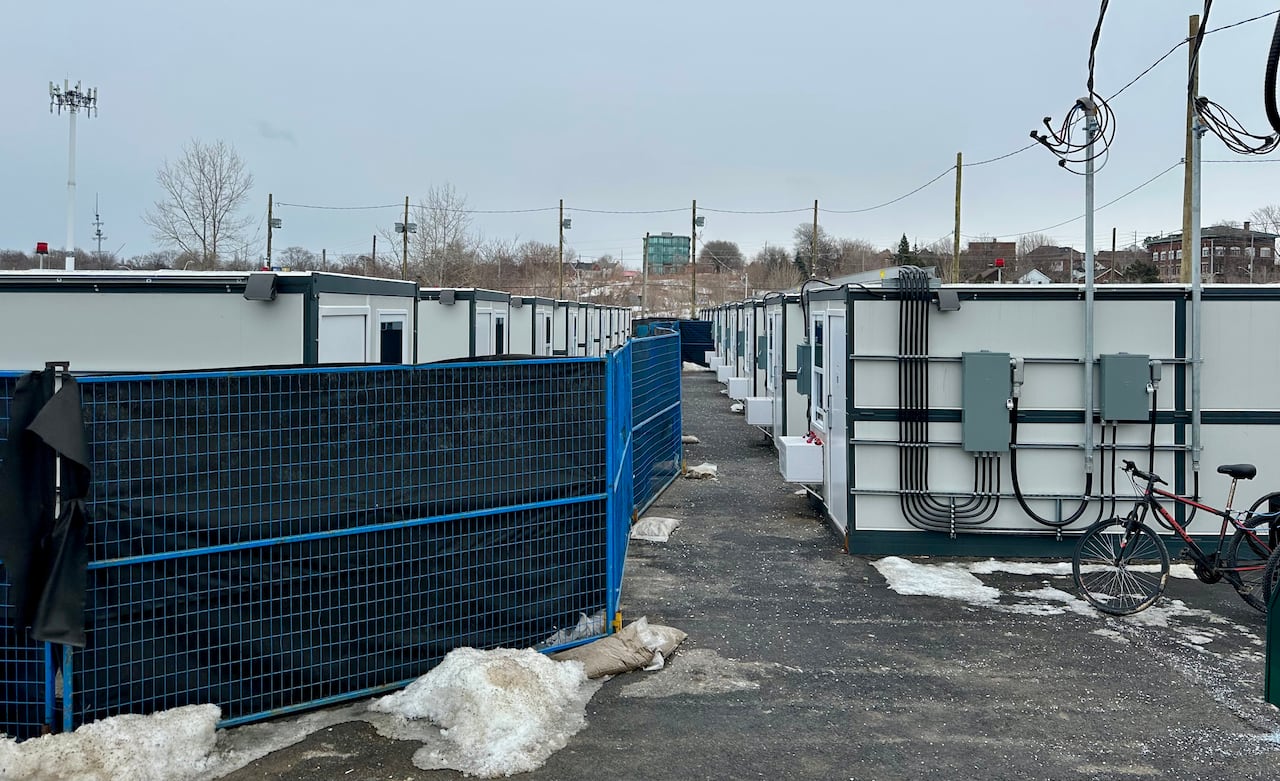 There are 40 cabins at the outdoor shelter, with space for up to 80 residents. (Samantha Beattie/CBC)
The OAG said Hamilton’s Housing Services project team was inexperienced in construction projects and noted numerous oversight issues, including that the city’s contracting approach was “not optimal” and “likely” contributed to increased costs.
The purchase of the shelter units was governed by a purchase order rather than a contract, the OAG said, and the city did not use what few tools it had available to hold vendors accountable.
The construction contract didn’t have what it needed to control or monitor costs, exposing the project to “uncontrolled cost escalation,” the OAG said.
Audit finds staff did ‘very little’ research
The vendor who supplied the shelter units, Microshelters, had no prior sales or track record in temporary shelters, the OAG said, but the city did not know “because basic due diligence was not performed.”
The audit said there was “no evidence” of an organized search for suppliers, no advertising and no formal call for expressions of interest in the project. There was also “very little” market research done to understand what types of tiny homes were available, the audit said, adding “such market research does not take a lot of effort.”
Microshelters was the only supplier the city asked for a formal quote after council approved single sourcing to save time. The company reached out to the city to market their project as early as May 2024.
The supplier, which has two staff who are also the corporate directors and executives, does not manufacture products or have sample merchandise, the audit said. The company said it sourced units through a California-based company but did not know who manufactured them.
“We are struck by the fact that Microshelters did not know who the manufacturer of what they were selling was; and it is obvious that the city never asked that important question,” the OAG said.
City paid $2.3 million for units without seeing them
In October 2024, the audit said, Hamilton paid nearly $1.2 million to the company before any city staff had physically examined the units, or gained any suitable understanding of the extent to which the structures would meet permitting and regulatory standards,” the OAG said.
In December 2024, the city paid a second and final instalment, meaning it paid the company roughly $2.3 million for the shelters “sight unseen,” the audit said.
By January 2025, the OAG said, the city learned the units would require “extensive and costly modifications” to meet Ontario standards.
At the time, MicroShelters’ co-founder Jeff Cooper told CBC Hamilton “all aspects of its business are proprietary and confidential” and declined to comment.
City staff previously defended the process.
In the lead up to the project, Mayor Andrea Horwath used strong mayor powers, which allow mayors to take quicker initiative on some issues, to direct staff to create some kind of “sanctioned” encampment site because of the need for temporary housing. Grace Mater, general manager of healthy and safe communities, defended city staff’s management of the project on a tight timeline.
“We’ve basically built a small subdivision in under four months,” she said. “As with all projects of this magnitude, there were challenges along the way.”
The audit said it found “no evidence that any city staff or administrators had personally benefited from, or undisclosed connections with, the transaction.”
“Even so,” the OAG said, “It was a disturbing departure from the responsible administration of taxpayer dollars to single source $2 million worth of product without exercising basic due diligence.”
“The outcome of such an under-researched purchase, without adequate due diligence, led to Microshelters Inc. overpromising and under delivering, and to costly modifications of the supplied structures.”
“Weaknesses” in the contract process “did not leave the city with a necessarily clear path for the type of remedies an owner would normally expect to see when facing these kinds of issues,” the audit said.
11 recommendations for city management
The OAG’s recommendation to improve future projects and “address lessons learned” include:
- Establish expectations for engaging experts and requiring “properly structured” contract and project management.
- Establish steering committees to oversee major projects.
- Train project leaders that procurement, contract management, financial control and project management “are core competencies of managerial leadership.”
- Establish standard procedures for due diligence on new vendors.
- Review potential claims with respect to unmet deliverables by Microshelters.
- Revise contract terms as per the confidential legal opinion attached to the audit to ensure they include appropriate provisions such as an “audit clause.”
- Develop “more robust” requirements for single-source procurement.
- Ensure the Public Works department be involved “early and meaningfully” in all construction projects.
- Create a policy avoiding advance payments to vendors and/or “strictly” controlling them.
- Adopt “enterprise risk management” as a standard business practice in managing programs, functions and projects.
- Consider having a set of pre-vetted contracts with key provisions for the types of parties the city might engage on a typical project, and a “playbook” outlining important contract mechanisms.
In addition to the OAG’s report being discussed next week, a day earlier, on Jan. 14, city council’s General Issues Committee will receive a different report and recommendations on the outdoor shelter project, focused on evaluating its efficacy as a program.