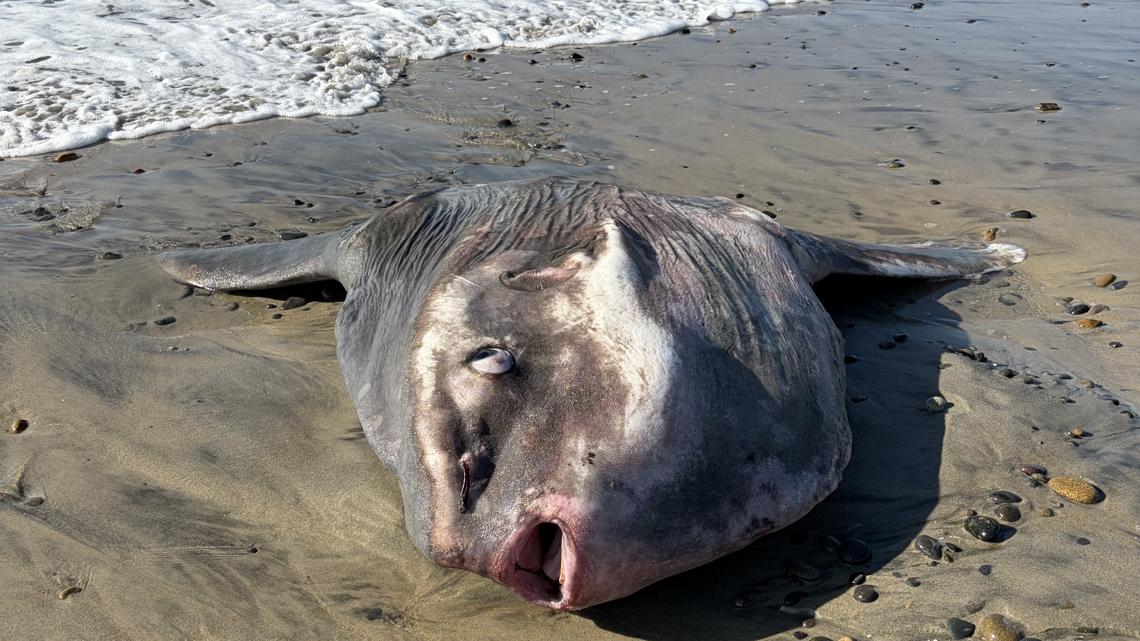
Tiny mouth, big eyes, fairly flat, with a docile personality. Sunfish, or Mola Mola, can be up to ten feet long and weigh 5,000 pounds.
ENCINITAS, Calif. — San Diego surfers are never technically alone in the water, but this week a giant ocean sunfish, or mola mola, swam right alongside them before sadly washing ashore at Cardiff State Beach.
They are out there, but being this close to shore is rare.
CBS 8 spoke to one of those surfers and the Scripps Institution of Oceanography.
Sunfish, or mola molas, have tiny mouths, huge eyes and fairly flat bodies. They’ve been described as looking like aliens or prehistoric creatures. The Monterey Bay Aquarium says they look like the invention of a mad scientist, but with the personality of the chill turtles in Finding Nemo — making this a unique and special encounter for surfers right off our coast.

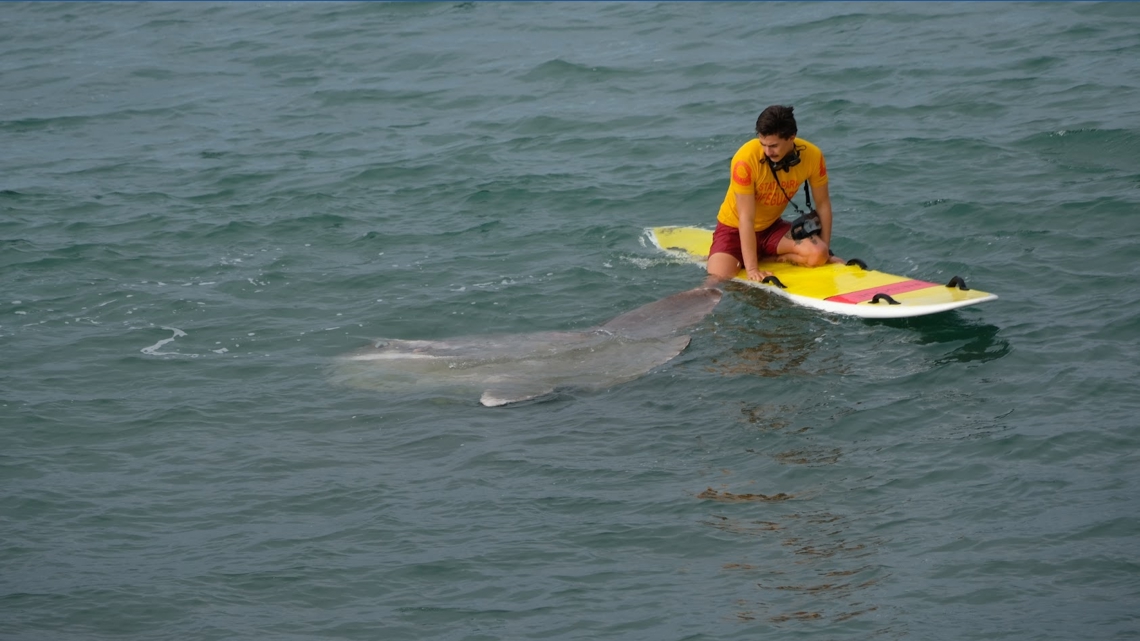
Witnesses say it was first spotted north of Swami’s, took its place in the surfing lineup, then made its way toward shore.
“Everybody was just in awe. You could see people diving down to get a better look because it was such a special encounter,” said Brandon Rowley, a surfer, photographer and wildlife biologist.
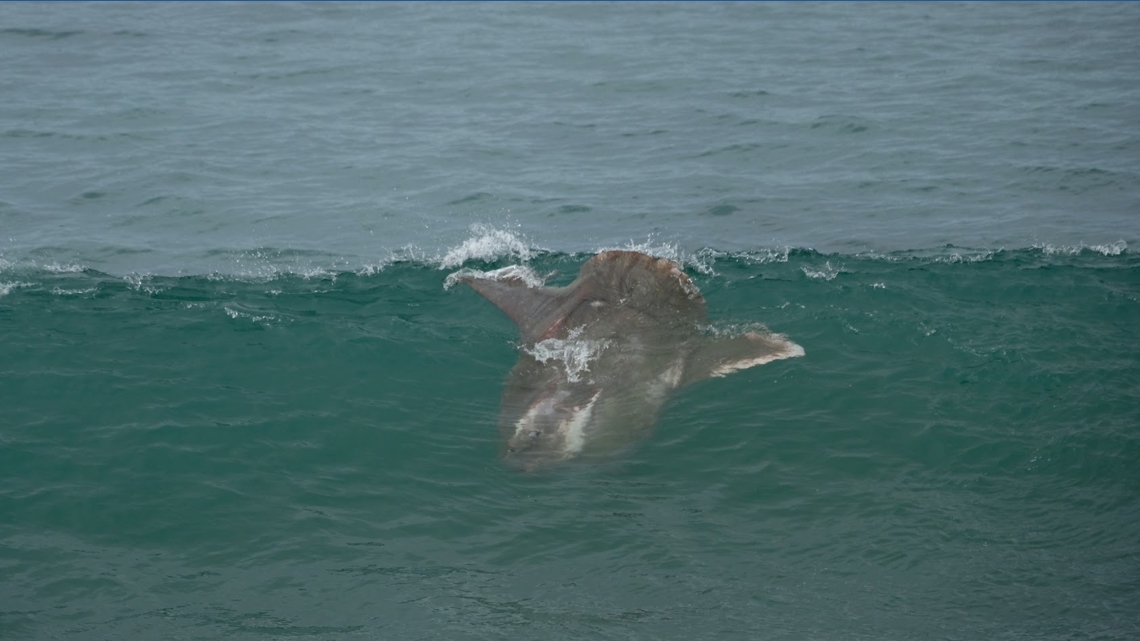
Rowley says no one knew what it was at first. It was even initially called in as a great white shark.
“It’s that giant dorsal fin sticking out of the water, so it makes sense that people might mistake it for a shark. Definitely unlike anything I’ve ever seen,” Rowley said.
The sunfish, or mola mola, is the world’s heaviest bony fish. For comparison, a whale shark is made up only of cartilage. Scripps Institution of Oceanography says they can be massive, but start out incredibly small. They’re most closely related to pufferfish but are not poisonous.

“I actually brought a little larvae mola, so this is how they start, and they can grow up to 10 feet and weigh 5,000 pounds,” said Ben Frable with Scripps.
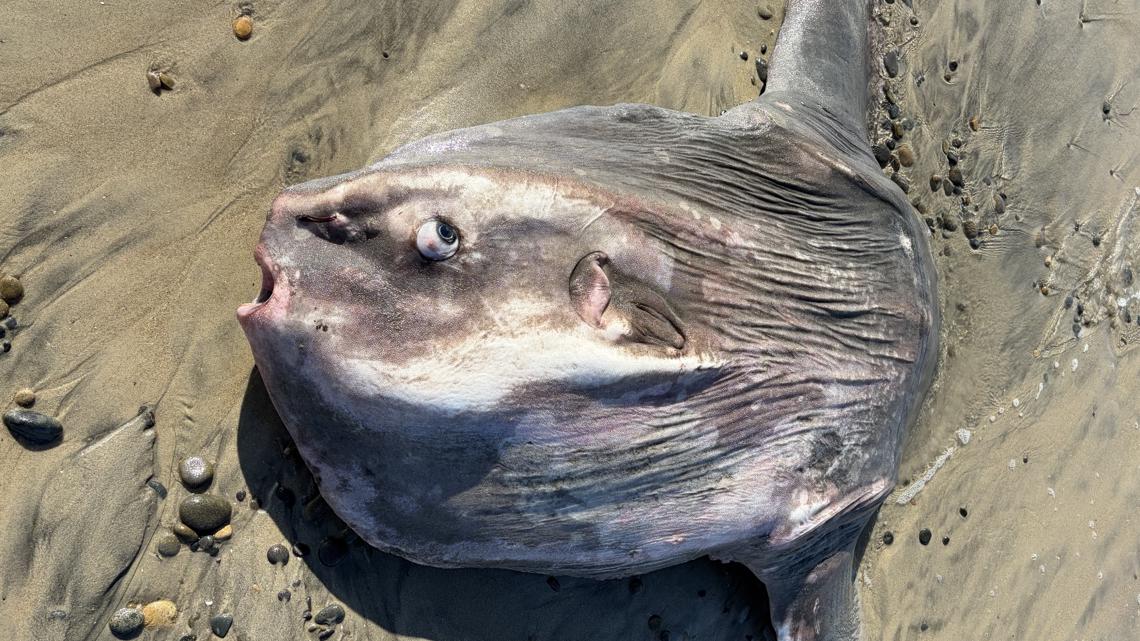
The one at Cardiff was estimated to be around four feet long and about 500 pounds.
You can sometimes spot them on local whale-watching trips because they prefer the deep open ocean, but they rarely make it to shore.
“They’re found throughout the world’s oceans. They’re called sunfish because they’re often basking on their side, sunbathing,” Frable added. “They swim about two miles per hour — pretty calm, pretty chill. Think the turtle from Finding Nemo and its attitude toward life.”
It could have been old or sick, or possibly struck by a boat, but this time it was likely the unusually high tides that churned the sea and washed another unique creature ashore.

“In a breeding season, a female mola can produce 300 million eggs. That’s more than any other vertebrate,” Frable said.
California State Parks says the fish was left on the beach overnight and eventually washed back out with the tide.
“We have an incredible and beautiful coastline. If you stick around long enough, you’re bound to see something really cool, and it helps you appreciate everything we have around us,” Rowley added.
Mola molas are listed as vulnerable, so if you want to help protect them, be extra mindful of plastic bags. They often hang out near the ocean’s surface, and their main diet consists of jellyfish — which can resemble plastic bags — possibly another reason this one made it to shore.