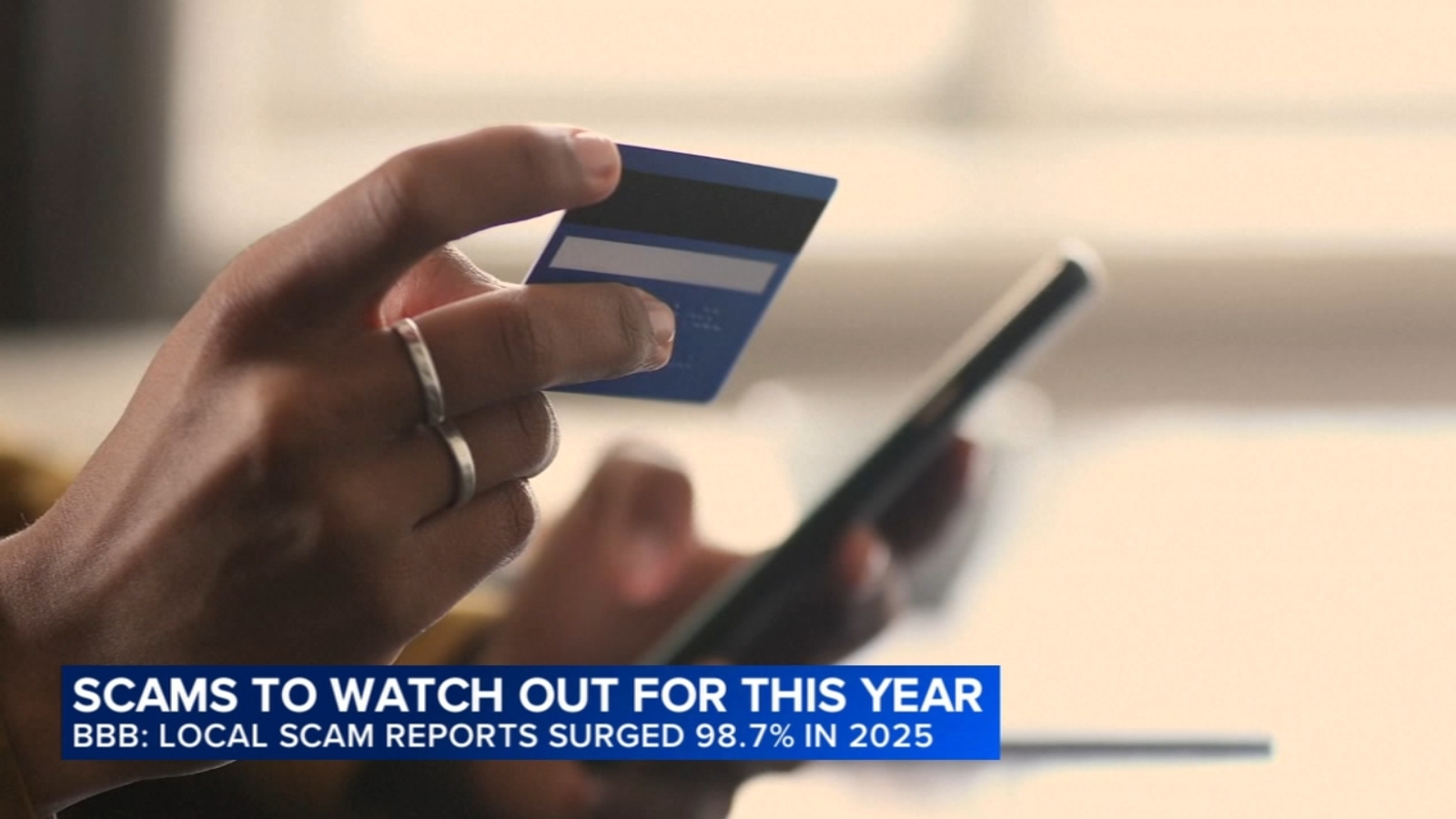
CHICAGO (WLS) — In a stunning development, the overall volume of the local top scams spiked off the charts, almost doubling year over year from 1,196 to 2,553 in the year ending on Dec. 31, 2025.
The Better Business Bureau of Chicago and Northern Illinois released its annual top scams, and online shopping scams have topped the list for the sixth consecutive year, driven by a robust economy and the ever-growing popularity of buying online, often pulled in by phony or deceptive pop-up ads.
ABC7 Chicago is now streaming 24/7. Click here to watch
In fact, the top three scams from last year remain unchanged, with phishing and employment scams continuing to follow closely behind. The numbers are off the charts this year. Online purchase, phishing, and employment remained the top three, each more than doubled in count. BBB urges people anytime they encounter a scam, whether they have lost money or not, to report it to the BBB ScamTracker. Posting information helps to prevent this from happening to others.
Steve J. Bernas, president and CEO of BBB says, “In many years, we have never seen anywhere near this type of increase. These results show that con artists keep coming up with various schemes and ways to entice all age groups, from young to old. The only way to put scammers out of business is not to give them your business.”
Scammers continue to add twists, even setting traps with AI and deepfake technology. They conduct fake virtual or phone interviews in the ever-menacing employment scams. One thing always remains the same: fraudsters play with people’s emotions and rush them to make quick buying decisions.
Bernas adds, “The key red flags remain the one-two punch of fraudsters… evoking a high emotion of excitement or fear and demanding immediate payment, often in the form of bank transfers, gift cards, or wires.”
Below is the official list and some descriptions of the local top scams.
Top 10 local scams to watch out for in 2026
1. Online Purchase – (Ranked #1 for the sixth year in a row – most often fake websites – often Pets)
2. Phishing Scams – (Clicking on scam links can lead to malware – Imposter scams)
3.Employment – (Scam job offers – often “work from home”)
4. Counterfeit Products – (Clothing, electronics, shoes, purses, etc.)
5. Advance Fee Loans – (Online claims and temping offers can be a myriad of misinformation)
6. Identity Theft – (These scams have surged with advances in technology)
7. Credit Cards – (Phony offers, thefts, and scary texts saying your account has been hacked)
8. Debt Collections – (Scare tactics and threats, saying you owe money and they need payment immediately)
9. Government Agency Imposter – (Messages from scammers pretending to be IRS, Medicare, Social Security and other agencies demanding money or personal information)
10. Retail Business – (Growing impersonation of trusted retail brands such as Amazon, Apple, Walmart and many others. Scammers use phony lookalike websites and offer special low prices and other lures designed to steal your money and personal information.)
While some scams have fallen off the top 10, such as investment and tech support scams, they are still common with big money losses, especially investment scams, which include gold and cryptocurrency.
Some additional information on some of the top 10:
– Online Purchase: Numerous reports of online scams involving fake websites, fraudulent transactions, and non-delivery of purchased items. Shoppers have lost money through various schemes, including fake product sales, unauthorized charges, and phishing attempts.
– Phishing:Scammers often impersonate legitimate organizations or individuals to gain trust. Victims receive emails, messages, or phone calls that appear to be from trusted sources. The communication usually contains a sense of urgency, prompting people to act quickly. Scammers request sensitive information such as passwords, credit card numbers, or social security numbers. People may be directed to fake websites that mimic legitimate ones to capture their information. Phishing scams can lead to identity theft, financial loss, and unauthorized access to personal accounts.
– Employment: There have been several job offer scams in which individuals were promised employment but asked to provide personal information, pay for training, or purchase equipment. These scams often involved fake companies and fraudulent checks.
– Debt Collections: Scammers pose as legitimate debt collectors or law enforcement officials. People receive threatening calls or messages demanding immediate payment of a supposed debt. Scammers often use aggressive tactics, including threats of arrest, lawsuits, or wage garnishment. People are pressured to pay using untraceable methods such as wire transfers, prepaid cards, or cryptocurrency.
– Counterfeit Products: There were multiple complaints about receiving fake or low-quality products that did not match the advertised descriptions. People faced difficulties obtaining refunds or returning items, often due to unresponsive customer service.
– Government Agency Imposter:Scammers pose as officials from government agencies such as the IRS, Social Security Administration, or local law enforcement. People receive threatening calls, emails, or letters claiming they owe money or need to provide personal information. Scammers often use scare tactics, such as threats of arrest, deportation, or fines, to pressure people into compliance. People are instructed to use nontraditional methods of payment. Scammers may use spoofed phone numbers or official-looking documents to appear legitimate. Victims may be asked to provide sensitive information, which can lead to identity theft and financial loss.
Copyright © 2026 WLS-TV. All Rights Reserved.