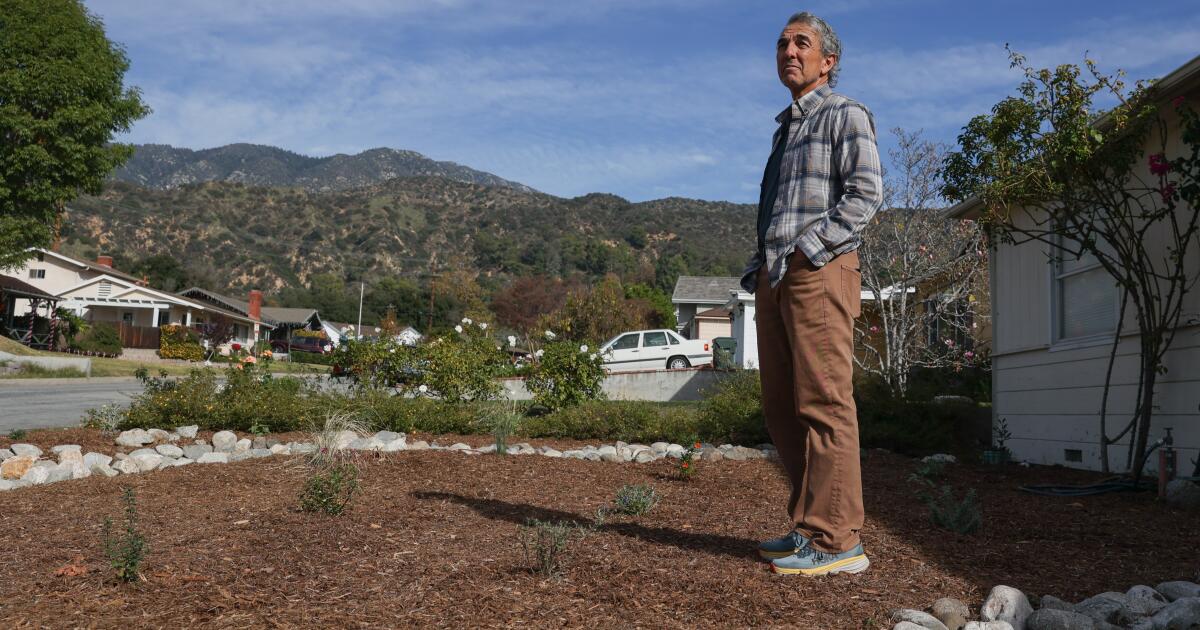
For the longest time, I resisted replacing my lawn. I take great pride in mowing my own grass, trimming the edges, plucking dandelions by hand and snickering at my water-conscious friends’ drought tolerant alternatives. My attitude: You can take my lawn when you pry it from my cold, dead hands.
But on Jan. 7, Mother Nature forced my hand. The gale-force winds that fueled devastating fires in Altadena and Pacific Palisades toppled over two gorgeous Texas Umbrella trees that had shaded my front yard since long before I bought my house in Monrovia. When the trees tipped over, the extensive root system tore up my manicured lawn.
I developed a new attitude: If a government rebate program will help pay for it, why not overhaul my front yard?
The timing turned out to be fortunate: My lawn had gone dormant for the winter, so I likely wouldn’t have to battle a regrowth of my grass until next spring.
I’m coming late to the water-saving party. Southern California’s turf replacement program, funded by the Metropolitan Water District, began 17 years ago and has helped remove about 233 million square feet of lawn, saving about 29,000 acre-feet of water per year. That’s enough to serve 88,000 homes annually, according to the MWD. More than 65,000 households have gotten a rebate.
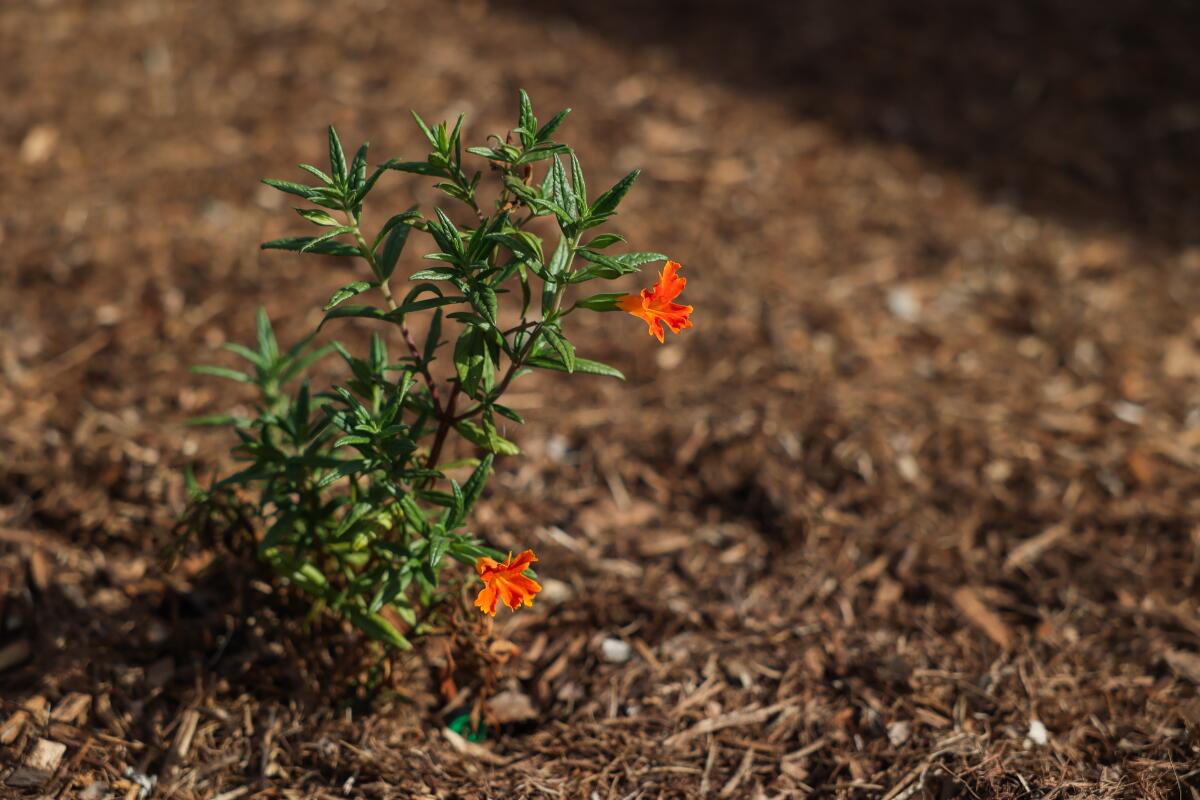
A drought-resistant plant in Times editor Hugo Martín’s front yard.
(Juliana Yamada/Los Angeles Times)
A nearby nonprofit — Grow Monrovia — gave me an estimate to remove my lawn, design a new drought-tolerant landscape, buy the plants and mulch and perform the work. But being an avid DIY homeowner (and a cheapskate), I opted to do the work myself and pay Grow Monrovia for the supplies only.
There’s nothing like an extensive landscaping project to draw a procession of critics and commentators. As I toiled on my front yard project over several weekends, a parade of neighbors and friends stopped by to unload nuggets of advice. (Curiously, not one offered to help.)
The most popular topic my walk-by pundits wanted to cover was how best to kill my lawn and keep the blades from springing back.
Friends who live nearby advised me to cover my lawn with a layer of cardboard, topped with three inches of mulch.
But a neighbor who saw me laying down sheets of cardboard on top of my existing lawn had other thoughts. “That’s not going to work,” he said, while eyeing my work. “You have to rent a tiller and dig up the grass first.”
A college friend who runs a landscaping company offered an additional idea: “Dig it up and then lay down herbicide,” she said.
But my yard is often visited by wild rabbits and deer, so potentially harmful chemical agents were out of the question.
“Rent a sod cutter,” another neighbor suggested, referring to a mower-type machine that slices out an 18-inch row of lawn as it plows along my yard.
In the end, I rejected the idea of renting equipment (again, I’m a cheapskate) and went with an old-fashioned pick ax to dig up my lawn. I added a layer of cardboard (filched from nearby dumpsters) and mulch on top. A few truckloads of river rock provided the material to build a dry riverbed that cut diagonally across my yard.
Will remnants of my buried lawn come back to life? Probably. I imagine myself, in the warmth of spring, doubled over, plucking shoots of grass emerging from the river rock, only to hear some passing neighbor call out: “You know, there’s a better way of doing that!”
You’re reading the Essential California newsletter The week’s biggest stories 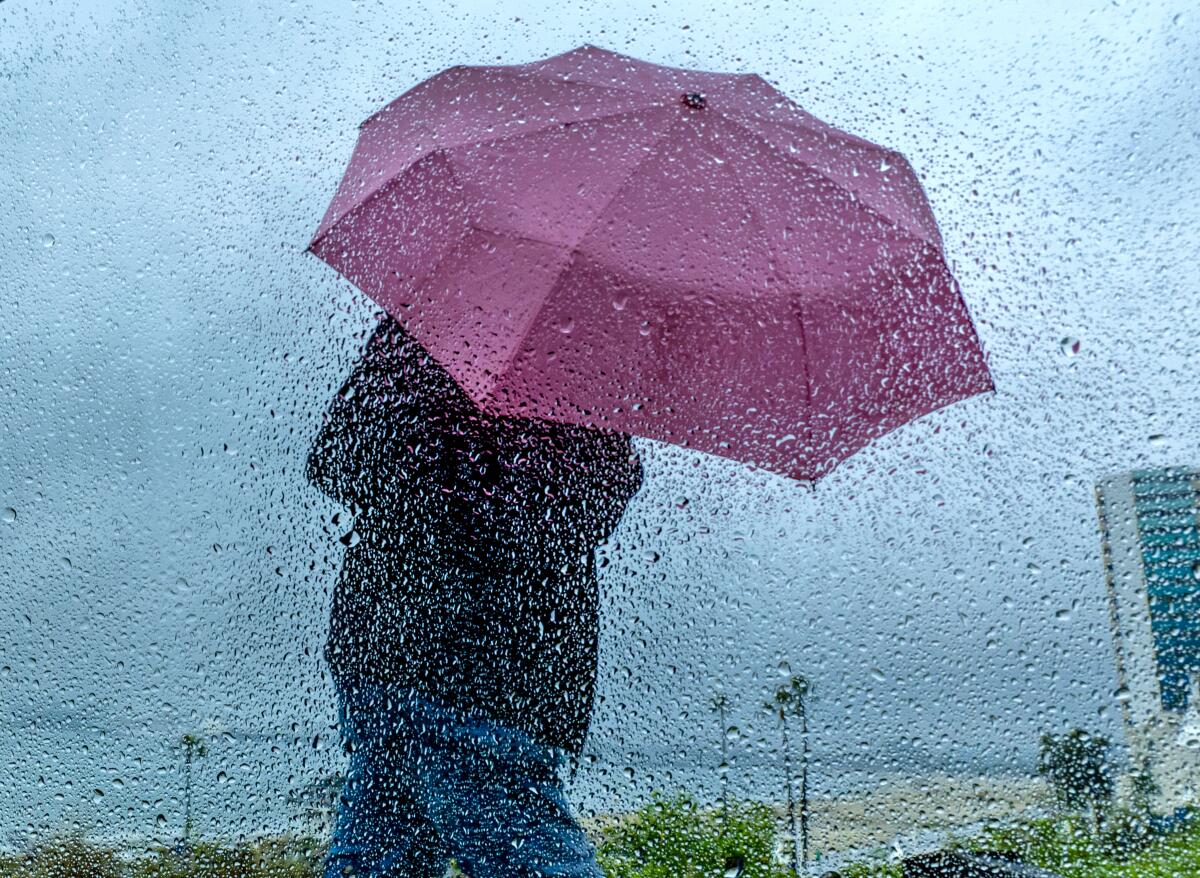
A pedestrian carries an umbrella in Long Beach on Jan. 2.
(Allen J. Schaben/Los Angeles Times)
California hits a major climate milestone
- California has zero areas of abnormal dryness for the first time in 25 years after an exceptionally wet holiday season soaked the state.
- Currently, 14 of the state’s 17 major water reservoirs are at 70% capacity or higher, and wildfire risk is minimal.
- Despite the welcome relief, climate change is expected to intensify weather swings from heavy rainfall to extreme dryness in a cycle that can fuel catastrophic wildfires.
Why LAPD and other police agencies discourage shooting at cars — and why ICE still does
- Many U.S. police departments, including the LAPD, discourage officers from shooting at moving vehicles due to the high risk of stray gunfire.
- Recent ICE shootings in Portland and Minneapolis have reignited debate over when deadly force against motorists is justified or necessary.
- Since January 2015, LAPD officers have fired their weapons at least 36 times at vehicles, killing seven motorists or passengers and wounding 12 others.
Nick Reiner’s case
- Famed defense attorney Alan Jackson withdrew from Nick Reiner’s case and was replaced by an L.A. County public defender.
- Jackson said he was leaving the case due to “circumstances beyond my control.”
- Reiner’s arraignment was delayed to Feb. 23, and he still has not yet entered a plea in response to charges that he killed his parents, Rob and Michele.
What else is going onMust readOther must readsFor your downtime 
Heritage pork chop with roasted squashes and winter greens at Betsy in Altadena.
(Myung J. Chun / Los Angeles Times)
Going outStaying inL.A. Affairs
Get wrapped up in tantalizing stories about dating, relationships and marriage.
Have a great day, from the Essential California team
Jim Rainey, staff reporter
Hugo Martín, assistant editor, fast break desk
Kevinisha Walker, multiplatform editor
Andrew J. Campa, weekend writer
Karim Doumar, head of newsletters
How can we make this newsletter more useful? Send comments to essentialcalifornia@latimes.com. Check our top stories, topics and the latest articles on latimes.com.