Over a year after a city audit found the San Antonio Police Department failed to meet state deadlines for submitting hundreds of sexual assault evidence kits in a three-year period, new records show the department has largely brought its handling of the kits into compliance.
A 2019 Texas law requires law enforcement agencies to submit sexual assault evidence to an accredited crime laboratory within 30 days of receiving it. The requirement is intended to prevent kits from sitting untested for extended periods. A city audit released in the summer of 2024 found SAPD missed that deadline 117 times between October 2021 and September 2023, affecting nearly 10% of kits collected during that period, KSAT reported. The audit prompted criticism from some city leaders and led SAPD to overhaul how kits are tracked and transported to the Bexar County Criminal Investigation Laboratory.
New records obtained by the San Antonio Report from SAPD show that in the 12-month period from November 2024 to October 2025 the department collected 681 sexual assault nurse examination kits, commonly known as SANE kits. Of those, only five were submitted to a crime lab beyond the state’s 30-day deadline, records show.
Fewer missed deadlines
According to SAPD’s response, three of the five late submissions during the 12-month period involved suspect comparison kits, which are kits used to gather biological samples from a suspect for later comparison with evidence found at a crime scene. SAPD officials said these kits are not tracked in the same way under the state system as SANE kits.
The remaining two delayed cases involved SANE kits. One was submitted 20 days late due to a jurisdictional dispute, and another was submitted five days late because of what SAPD described as a logistical delay in December of 2024.
As of Dec. 22, the department reported 19 kits awaiting transfer to the crime lab for testing, all still within the 30-day window. Monthly figures show that SAPD collected an average of about 57 kits per month during the reporting period, with April 2025 seeing the highest number of collections with 86 kits logged that month.
Data from SAPD shows most kits were transferred to a lab within two to three weeks of collection. Some were submitted sooner, while others approached the 30-day deadline but remained within the state’s requirement.
What changed after the audit
Following the audit SAPD moved to make various staffing and procedural changes to the process; those policies have been codified in the Special Victims Unit Standard Operating Procedure dated June 1, 2025.
In response to an open records request, SAPD officials said the changes include a weekly report from the property room that handles the kits. Every Monday SVU receives the weekly list indicating the date the test was created and the date of the 30-day timeline in order to track cases that require transfer.
Additionally, one SVU administrative assistant has been trained to backup the property control agents in collecting and processing SANE kits from the medical provider. Two have been trained to prepare the required documentation required for submission.
“These staffing adjustments strengthen continuity and accountability in SANE kit handling,” the department wrote.
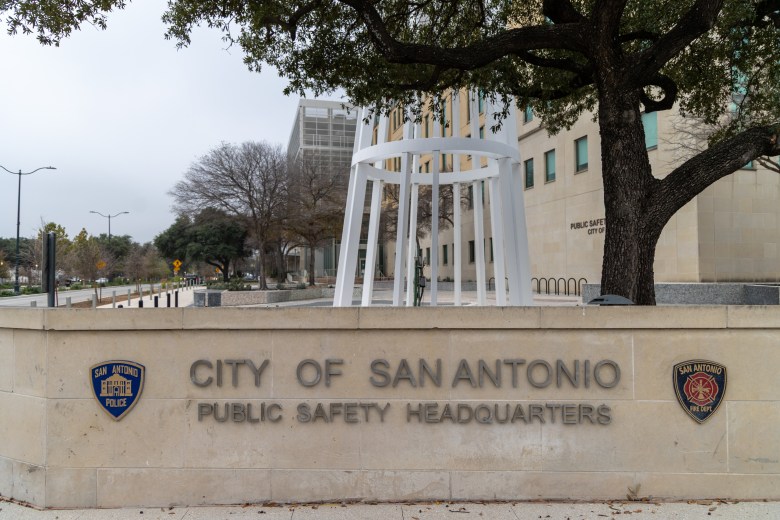 The San Antonio Police and Fire Departments are headquartered at the city’s Public Safety Headquarters. Credit: Diego Medel / San Antonio Report
The San Antonio Report requested an interview with a member of the department that directly handles the processing of the kits, SAPD declined to interview citing a previous interview in April of 2025 with KSAT, The following statement was additionally provided.
“Since the audit, survivors can now go to any major hospital for a SANE exam, when they previously could only go to two hospitals,” Camelia Juarez, San Antonio Police Public Information Officer wrote. “This makes the process more convenient and faster for survivors.”
SANE exams are available at nearly every hospital in the city. These specialized nurses can see assault victims at hospitals within the Methodist Healthcare System, University Health, Baptist Health System and CHRISTUS Health System.
A changing landscape for sexual assault evidence
The update comes on the heels of expanded access to forensic testing for sexual assault survivors in Texas through a new state program created under House Bill 1422, which took effect this year.
Under the new law, survivors can now undergo a forensic medical exam and have DNA evidence collected and tested without filing a police report. Survivors will be notified if foreign DNA is found in the test kit, they will then have the option to move forwarded with releasing the results to a law enforcement agency to pursue an investigation.
“House Bill 1422 removes one of the biggest barriers sexual assault survivors face when deciding whether to seek help: the fear that getting a forensic exam means they must immediately involve law enforcement,” said Senator Joan Huffman (R-Houston), a primary sponsor of the bill, wrote in a Texas Department of Public Safety press release.
In that December release, DPS announced that it had begun processing the first kits collected under the program, known as the Limited Consent for DNA Testing Program. Evidence collected through the program is tested at DPS’ Houston crime lab, with results stored for up to five years, allowing survivors time to decide whether to report the offense to law enforcement.
Kits are required to be tested within 90 days of receipt by DPS, only evidence collected on or after Dec. 1, 2025 is eligible for the program. Funding for the program comes from the governor’s office.
Previously, sexual assault survivors would have had to involve law enforcement in order to have DNA evidence tested.
State officials have described the program as an effort to give survivors more control over when and whether they engage law enforcement, while still preserving forensic evidence that could later support an investigation.