🎭 NEW! Houston Theatre Newsletter
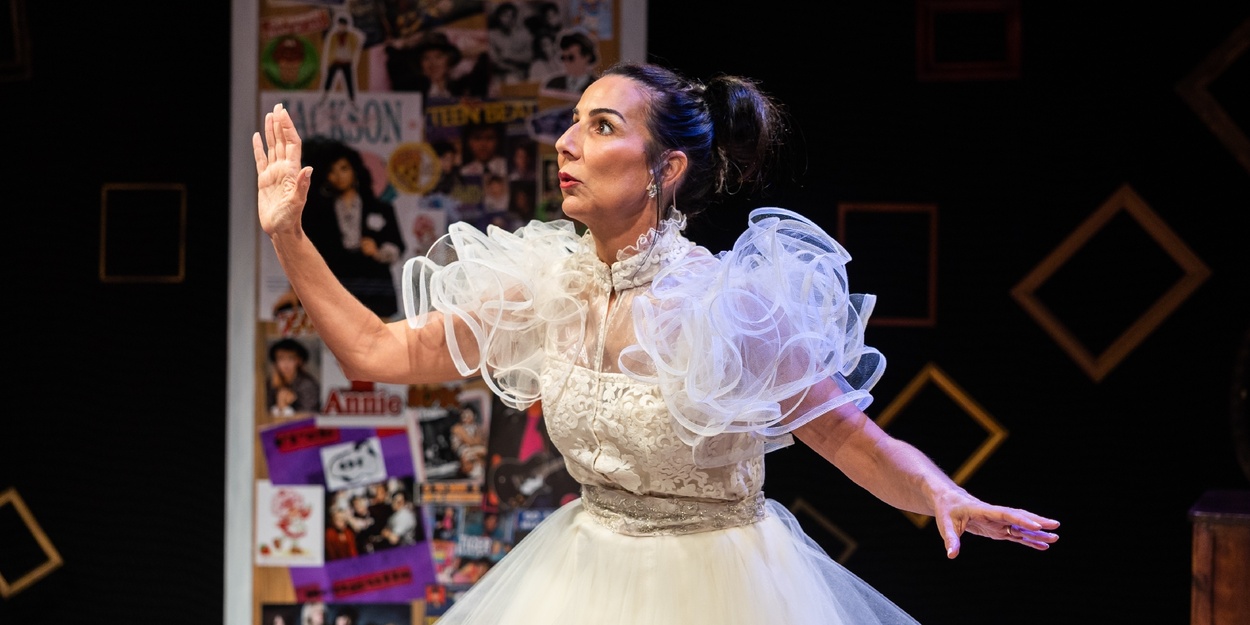
Denise Fennell Pasqualone and Rick Pasqualone are heading to Houston to bring back THE BRIDE OR DOES THIS DRESS MAKE ME LOOK MARRIED, opening at STAGES on January 16th and running through February 8th. Denise is known to Houston audiences as the reverent and strict Sister who teaches Catholic catechism classes at Stages, tailoring each season’s curriculum to match. THE BRIDE was written by Rick Pasqualone, debuted in Houston, and gave Denise a chance to kick the habit and reveal a little bit more of herself. She found love later in life, and it became the inspiration for this show. Audiences will get a chance to get to know her softer side in a poofy bridal gown, with nary a rosary in sight. BROADWAY WORLD writer Brett Cullum had a unique opportunity to speak with Denise and her husband, “Ricky,” about their show and what it has meant to them.
🎭 NEW! Houston Theatre Newsletter
Brett Cullum: Tell me a little bit about what the show is about. Is it loosely based on you guys?
Denise Fennell Pasqualone: I’m gonna really defer to Ricky, because he is the writer, so I’m gonna let you give the description of the show, since you wrote it based on my life and your life.
Rick Pasqualone: We had this idea of a show, and it started with this conversation about a Sunday supper and this nostalgia for the way we grew up; we had very similar upbringings. We didn’t quite know what it was. As we started to talk more about it with Kenn McLaughlin, the previous artistic director of Stages, he said, “I like it. But what if the character was a bride?” Denise and I had just gotten married. And we both said, “Huh, that’s interesting.” And, with that, I started to dive into the work, and then the story completely changed. It started to evolve into something that neither one of us was expecting. As I was writing this, we were going through quite a bit of turmoil in our family, and Denise said, “Look, you take this and run with it, because I don’t even know if I can do this.” I was committed to doing it, and we got [back] together, and we decided to read the new script out loud for the very first time. Denise read it cold. They were absolutely enthralled, and at that moment, they all said. “We don’t know what this is yet either, but it’s something, so keep going.” That was the genesis of how THE BRIDE started.
Denise Fennell Pasqualone: It was interesting for me, the creation of THE BRIDE and being able to create it in Houston with Stages and such an incredibly creative team behind it. There was a safety net for me, and I made a complete surrender to the experience. I had never read the script until I did the cold reading of it, and I, too, was very surprised as to what it was, and I had no idea what it would resonate with people. For me, theater is just such an exchange of energy. So once I can start to feel everybody else in the room being connected to what I’m saying, that’s really when I start to tick and start to dive into the material, and there’s something there. We went into the rehearsal process. Kenn and I would be working together. Todd Moleski was in the room. So many people contributed to this. It was such a collaborative effort. I never knew what pages were coming the next day. So, it was always such a discovery for me to just get through one portion of the play, and then there would be a discussion at the end of the rehearsals, and then Rick would go back and rewrite some pages, and then we would come back the next day. And, you know, for me, a big part of what I do in interactive theater is that I always need to know where I’m going next. How does this end so that I can build up to this? And, we didn’t know. There was no ending to this play, and there was no ending to this play until, I don’t know, babe, what, the day before we opened?
Rick Pasqualone: Well, we didn’t cut it that close, but it was maybe a week, and nobody knew how the play ended.
Denise Fennell Pasqualone: It was so terrifying to me, but I think they all knew how the play ended. And, it was such beautiful, it was so beautiful to me, and finally getting to perform it, and perform it so raw at that moment. I was able to capture the feeling of what Ricky was trying to leave the audience with. This play is beautiful to perform. I need to be having a good time. I really need to resonate with the material. And THE BRIDE, the first time we did it in Houston, it was so special and so unique. Then, it just turned out to be this little phenomenon. And all of a sudden, other theaters, for the first time, were like, wait a second, Denise Fennell has a new one-woman show, what is it? And, immediately, it started to book.
Taking it from the very intimate space in Stages to bigger and grander stages, we’ve learned so much more about the play. This material resonates in such a different way; it’s just gotten better and better, and more heartfelt to me. What we’ve learned from the whole experience, from the run at stages, and then being able to implement some of the new stuff in our couple of other runs, and now being able to have a remount on the Sterling stage, which is the big, grand space at Stages. I’ve never performed on that stage. So, for me, this is a real, coming-home, a real triumph. I get to circle back and be able to re-represent myself and this beautiful piece of theater that was created with the people that I love at Stages, and the people that I love in Houston, and to be able to show them what we’ve done with it based on their reactions and their input when we first put the show up. That is really the most exciting. Our baby’s all grown up. And we’re gonna try some new stuff!
Houston never disappoints, so I’m sure there will be a ton of comedy that comes from it, along with some beautiful, heartfelt moments. So that, to me, is another big leap of faith that we’re taking when we come back to the stage, where we’re like, “Let’s open it up again, let’s try something new and make it fresh!” We’re excited. And I’ve also asked for my dress to just be a little bit more poofy.
Brett Cullum: That’s gonna be hard, because I’ve seen the poofiness of the first one. I’m so glad that you’re bringing this back to where it all started, and we get to see the lessons you’ve learned as you’ve gone through and refined this. Rick, it must drive you crazy, because I’m sure she comes up with new stuff all the time. Saying, “What if we did this? What if we did that?”
Rick Pasqualone: I say this like a joke, but it’s true. My wife walks around saying funny stuff all day long. I’m just the guy who writes it down and takes all the credit. If you go to see the Stones, you want them to play “Satisfaction,” and the audiences want to come, they want to play with Denise, and we were kind of shying away from it. We were like, “We don’t want this just to be another interactive play.” Now we’re like, “Screw it. Play with everybody all day long, they love it.
Brett Cullum: Well, what is the percentage? I think, Denise, one time you told me, 60-70% scripted, written, and the rest is interaction? More? Less?
Denise Fennell Pasqualone: Typically, it should be 80% to 20%. Returning to Houston so often, I’ve been given the grace to tinker and play around a little bit more, and still respect the written word. What’s so beautiful about Ricky and me working together, and working with somebody like Kenn, and also Todd Moleski. It’s interesting because the director [Kenn] comes in, he works with you, and he leaves. The writer comes in [Rick], he writes, and then he goes back to LA, so it was really Todd and me. We were left alone with THE BRIDE for many weeks to work this thing out. He was really the person, for me, that was like, “If you held this just a little bit longer, if you don’t say this, that’s not gonna make sense later on.” We’ve been able to, as a group, collaborate and figure out what will work performance-wise, and then what the audience is going to respond to, and where my strengths are, and where the interactions are.
Todd was somebody who was really helpful in that regard. And then, of course, with somebody like Ricky, I always want to respect his written piece, because there are pieces of THE BRIDE where if I don’t get that dialogue out, the end of the play is not going to make sense. So the script is really important. But the interaction is also what keeps it spontaneous and in the moment, making it different every single time, so that people like Miranda and those like you and all the other patrons in Houston want to come back, because they crave that raw experience. They know! They say, “Wait a second, she’s flying by the seat of her pants right now, she has no idea what this person is saying. What is she gonna say next?”
I love that working with my husband as a writer on this one, he allows me that freedom to adjust a little bit and go out and perform, but again, my team keeps me very, very focused on the plot, the play, and how it all does really need to make sense, because you leave me out there, and I’ll just free-for-all all day long. Believe me, nobody knows more than me if I didn’t get the right stuff out, because at the end of the plays is where everything my husband writes so beautifully, where it all adds up. If I didn’t deliver it, I’d be like, “ Oh, wait a second, I never said that, so what I’m saying right now doesn’t make sense! “ Whoops!
Brett Cullum: On this show, though, you are playing a character, right? I mean, it’s not Denise. It’s not… I’m not gonna come in and see Denise. It’s not the exact story of Denise and Rick, is it?
Rick Pasqualone: We call it two truths and a lie, Brett. There’s a shocking amount of truth in it. A lot of the characters are real. The names were not changed to protect the innocent. And it was funny, because the first couple of times that our own family members saw it, they were like, “Oh, you really went there!” And then there’s stuff that’s completely fabricated, and some of it came from stories that were part of my family’s lore. There’s still a lot of truth in all of it, but we did bend certain things for dramatic and comedic effect; there is always that weight of reality. Just when you think this thing has gone completely off the rails, something brings you back that’s so human and so real, and that’s where people can’t quite wrap their heads around it until it’s completely over, and then it’s like, “Oh, I see now, I get it now.” And then they hang out with us, and they find out we’re just all big fakers.
Denise Fennell Pasqualone: Yeah, like, they want to know what was true and what was made up, and because the writing is so good, it all feels so true. Every single thing is connected to me so deeply in some way that even if it didn’t happen, I believe that it happened. So, you know, but it really is loosely based on our actual wedding, and what led up to our wedding, and how we actually met, and what transpired the day of our wedding, and a lot of that is true. And you’re gonna think the most outrageous stuff in this play is not true, and that’s the stuff that is true.
Brett Cullum: I always say the truth is stranger than anything that anybody can make up. And especially when it involves two creative theatrical types coming together. How did you two meet?
Denise Fennell Pasqualone: Rick and I were both part of TONY AND TINA’S WEDDING, but decades apart, so Rick was in the New York Company when it was just, like, the hottest thing off-Broadway. It was so new and inventive, and immersive theater hadn’t yet hit the circuit. It was really LATE NIGHT CATECHISM and TONY AND TINA’S wedding that started all of this. I started in the Boston Company 10 years after him, and then I eventually moved into the off-Broadway company, but by then, Rick had already moved to Los Angeles. There just happened to be a tour going to LA. A private company had brought TONY AND TINA’S WEDDING to this casino in Temecula, and the producers decided that since most of the male bridal party were living in Los Angeles, who had previously done the show, they could save some money on tickets, so they just took the girls, the bride, and her bridal party from New York. The first time Rick and I ever met, we got married. We played Tony and Tina. I thought he was so handsome, and I was just so attracted to him, and I had so much fun working with him. I was enamored by him, and then after the show, I thought, maybe I could hang out with him. At the time, he was married. I met his wife, and I met his friends, and they were all really cool, and then I just went back to New York and lived my life for another, you know, 10 to 15 years, and and then the TONY AND TINA’S 25-year anniversary revival came to Broadway, and they they wanted to use some past cast members and bring some new younger cast members in, and when they called me to return to the show, I was really excited. And then they said, “Well, we want you to play the bride’s mother.” Yeah, that was a humbling moment, Brett, you know, when you age out a little bit. And, they said, “Well, we’re looking at a guy out of LA named Rick Pasqualone,” and I remembered him from all of those years ago. I honestly signed on to do the project because I just thought to myself, “If this guy’s coming back to New York to do TONY AND TINA’S WEDDING, this must be a good thing. So, he and I became sort of the matriarchs of the revivals. And, we guided a younger cast through the experience. I realized that he was no longer married, and I had just gotten to know him as a human being. We became friends, and I fell in love with him. Then, he went back to LA, and we just kind of stayed friends, talking creatively about other projects we were working on. I was out in LA visiting him when the pandemic happened. I got quarantined with him and the kids. It was a time in my life when the world stood still, and I got to experience what it was like to be truly grounded, part of a family, and watch him be a dad. I fell in love with that lifestyle, and I fell in love with all of them. By the grace of God, when it was all over, to my surprise, one day he asked me to marry him. I had never thought I would get married. I was a bride of a certain age, and we touch upon that in THE BRIDE, you know, being a bride of a certain age. They say sometimes just gotta wait, and I did.
Brett Cullum: You did, and if THE BRIDE and LESSONS LEARNED are examples of you two working together, then I am excited to see what else comes out of this union. Did getting married change things for you?
Denise Fennell Pasqualone: You know, for a girl who never thought she was gonna get married, or thought it would change me in any way, it did. After we said our vows, it really was “Okay, I have a bigger purpose in my life now. It’s not just about me. It’s about my family, it’s about our future, it’s about standing by each other in good times and in bad. The vows for me, they really meant something. And, I was shocked, honestly, during our wedding, how emotional and how they resonated with me, because Rick and I have done TONY AND TINA’S WEDDING. Together, we probably said these vows over 25,000 times in plays. That, to me, is what the exciting part of the new stuff that we’re bringing back in THE BRIDE is the vows, and I’m really looking forward to talking to people about the vows, and did you write your own? Did you go with the standards? Did you, you know, did you read them yourself? Did you speak from your heart? Did you live up to them? That’s such an interesting conversation. It’s something to open it up to the audience to get their opinions.
Rick Pasqualone: When you set out to create something, a piece of theater, you don’t say to yourself, I’m gonna create something universal that everybody’s gonna relate to. You just write what you know; you write your own story, and we found that the specifics of our quirky little union became universal. Many people found relatability in the things we were discussing. It turns out that it’s so everybody. And that’s really cool. It’s really cool, and totally unexpected.
Brett Cullum: It’s amazing that people are coming because they love Denise, and leaving realizing how much of themselves they see. I think that is what theater is all about, sharing stories we all relate to with each other in the dark.
Denise Fennell Pasqualone: And, and I don’t take one second of it for granted. And now I’m getting my feet on the Sterling stage. I’m gonna just be chewing the balcony. Just brace yourself! You have no idea what I’m about to bring. I’m bringing it so hard.
Brett Cullum: So, I’ve got another project for you now, okay? We need a sequel to THE BRIDE! We need THE WEDDING PARTY, and you need to have Rick on stage with you. You need to make this whole thing where you
Denise Fennell Pasqualone: I love that you’re thinking about what comes next for us. That’s just another reason I love Houston, it’s just, like, what’s next? What’s next? And it’s such a great feeling to know that I will always have a home in Houston, and that people always get on board with my husband and me for what we create. I love the idea of being on stage with Ricky; that would be outrageous.
Brett Cullum: That’s what we need. No, I’m telling you, that’s what we need. I mean, you’ve already done it; you did it with TONY AND TINA, so you already know it works. It’s a joy to speak with you again, Denise and Rick. Continue working on projects together so that I can continue conducting these interviews!
Photo provided by Melissa Taylor.
This interview is dedicated to the memory of Denise’s mother.