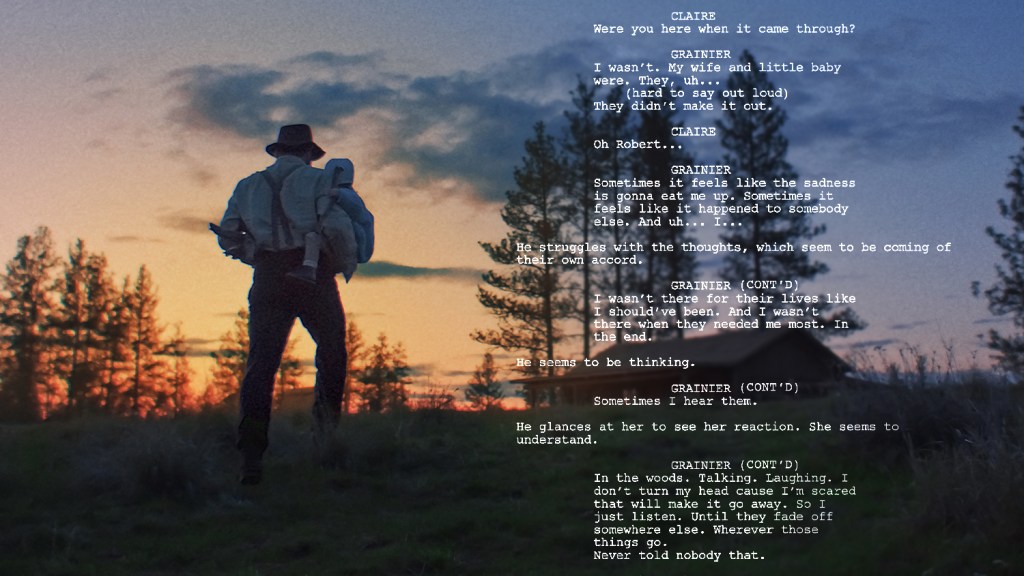
Deadline’s Read the Screenplay series highlighting the scripts behind the buzziest movies of the awards season continues with Train Dreams, Netflix‘s period drama directed by Clint Bentley, who again collaborated with his Sing Sing co-director and co-screenwriter Greg Kwedar to adapt Denis Johnson’s 2011 Pulitzer-finalist novella. Joel Edgerton, Felicity Jones, William H. Macy and Kerry Condon star.
The film debuted at Sundance where it was scooped up by Netflix and, as if carried on the railroads built by its protagonist, has gained steam ever since for its tale of Robert Grainier (played by Edgerton), a laborer in the early 20th century Pacific Northwest who we watch experience love, loss and the rapidly changing world around him.
Train Dreams this week picked up a Best Picture PGA Award nomination after landing four Independent Spirit Award and five Critics Choice nominations, the latter including for Best Picture, Best Actor for Edgerton and Best Adapted Screenplay. The script from Bentley and Kwedar, who scored an Adapted Screenplay Oscar nomination for their prison-set Sing Sing, repeated as this year’s National Board of Review screenplay winner and scored noms at the Gotham Awards and at the USC Scripters, the latter of which honors the screenwriters and the author of the book from which the film had been adapted.
Edgerton also landed a Golden Globes nom, as did the film’s title song by Nick Cave and Bryce Dessner. The song was also of three mentions on the Oscar shortlists, which also included spots for Adolpho Veloso’s cinematography and Dessner’s score.
The film itself borrows from Bentley and Kwedar’s penchant for telling real stories (both bonded over their love of documentary) using narrative storytelling, as they did with Sing Sing, their 2006 debut Transpecos about U.S. border agents, and their 2021 pic Jockey (starring Clifton Collins Jr who also is in Train Dreams). The longtime collaborators’ production company, Ethos, cites as part of its mission telling stories of human connection in impossible places.
In this case, it was telling Grainier’s story as told by Johnson, using sparse dialogue in painting a portrait of a man who tries to makes sense of it all as he carried along by the winds of progress, with the beauty and harshness beautiful the land he is working (shooting took place in Idaho) and the beauty and harshness of life in full view.
Read the screenplay below.