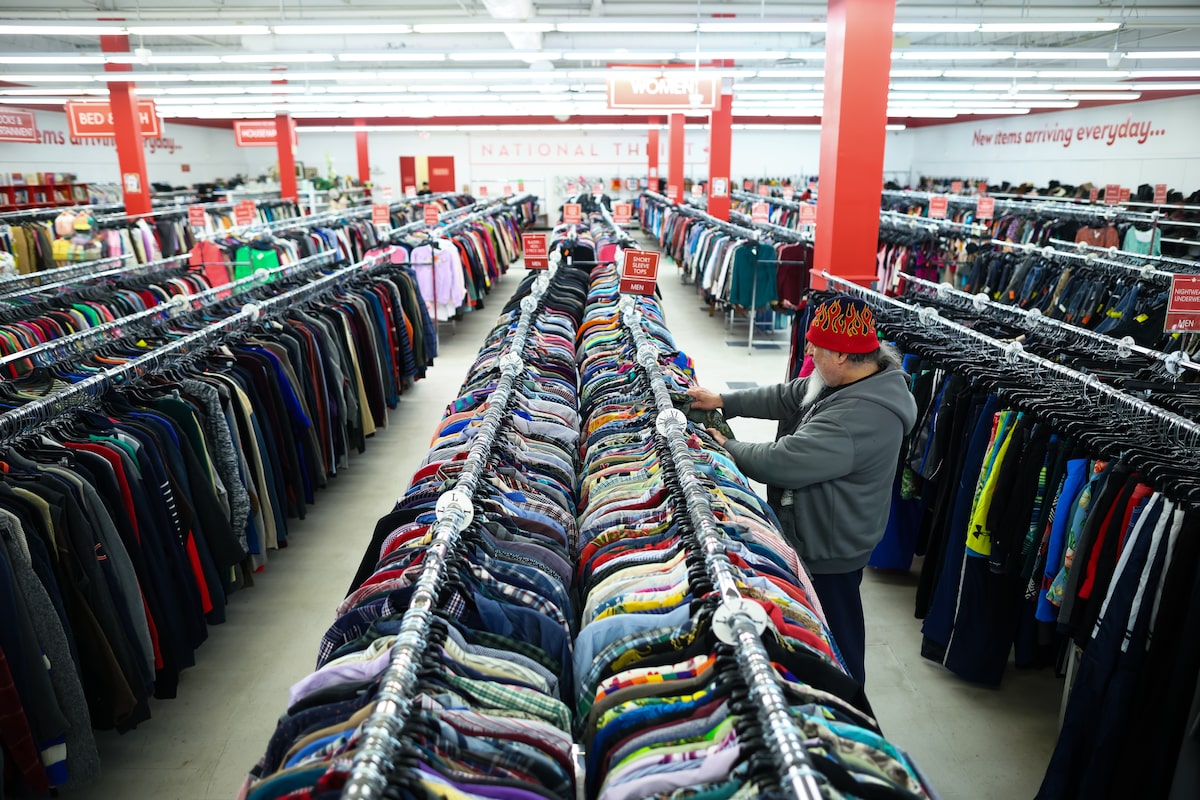
A customer browses shirts at National Thrift in Toronto, on Dec. 31, 2025.Cole Burston/The Globe and Mail
Thrifting has long been an affordable way for shoppers looking to stretch their budgets, but rising prices at vintage clothing stores are leading to sticker shock and forcing customers to reconsider whether secondhand shopping is still worth the effort.
“Prices have gone up an insane amount,” said Ksenia Kazantseva, a frequent thrifter and vintage shop owner, who recently spent $160 on slightly dented Moschino sunglasses. “Before, you could spend $100 and walk out with 15 items. That’s not realistic any more.”
Shoppers, stylists and vintage store owners point to several factors behind rising prices in recent years, including younger buyers’ appetite for unique, sustainable clothing; social-media-fuelled trends; and increased competition from the online resale market.
But for store owners, there are several costs – from labour and rent to the sourcing of desirable products – that all factor into what ends up on the tag.
“As a vintage [store] owner, people will give you feedback if something is overpriced, but they don’t realize how much time it takes to source, clean and list these pieces,” said Ms. Kazantseva, owner of Eleventh Vintage in Toronto.
Store supervisor Viraj Padsala sorts clothes on racks at National Thrift.Cole Burston/The Globe and Mail
Mohammed Nasser knows these challenges firsthand. The president of National Thrift in Toronto, Mr. Nasser has made attempts to keep prices low – only for those plans to backfire.
“Last year, we actually lowered our prices, but it ended up being the worst thing we could have done. We went [into] a huge loss,” Mr. Nasser said. He was recently forced to raise prices again.
Mr. Nasser said there are several forces pushing prices higher, starting with labour and operating expenses. Rent, utilities and security costs have also risen sharply, he added, along with higher theft and inventory loss rates.
“Your cost of labour goes up every year,” he explained. “When you have 60, 70, 80 employees, that adds up quickly.”
Karla Ahlqvist, owner of Wildlife Thrift Store, which has locations in both Vancouver and Toronto, said unlike other vintage stores, she has intentionally avoided price hikes, despite rising operating costs.
Clothes for sale at National Thrift. Shoppers, stylists and vintage store owners point to several factors behind rising prices at thrift shops.Cole Burston/The Globe and Mail
Her store benefits from a donation-only model, which helps keep prices lower – unlike some vintage shops that now source inventory through estate sales, auctions and private sellers, which can be far more expensive.
“It’s such a competitive business now,” Ms. Ahlqvist said. “Any time we’ve tried to raise prices, we hear about it immediately – in reviews, from customers and in our sales.”
Even as shoppers face higher prices, the appetite for vintage fashion remains strong. Mana Mansour, an on-air style expert and TV producer, said the demand for secondhand clothing has grown in recent years.
“In my 15 years covering fashion, I’ve never seen demand this high,” she said. “Secondhand shopping is more mainstream than it has ever been.”
Lizzie Wheeler, a fashion industry expert and founder of vintage bridal atelier Studio Dorothy, said the rise in demand is partly driven by social media and celebrity influence.
“Celebrity archival dressing has driven the perception of vintage as luxury, allowing a broader tier of resellers to price vintage at a designer price point,” Ms. Wheeler said.
Mohammed Nasser, president of National Thrift, said there are several forces pushing prices higher, such as labour and operating expenses.Cole Burston/The Globe and Mail
Ms. Wheeler said that over time, the term “thrifting” has become less about finding deals, and is now focused more on curation, sourcing and collecting, which she said implies scarcity and rarity.
As social media accelerates trends and fast-fashion brands flood the market, consumers are feeling “trend fatigue,” Ms. Wheeler added, and gravitating toward original pieces that are built to last.
“Five to 10 years ago, older items would generally be understood as less valuable than current product,” Ms. Wheeler said. “Well-sourced vintage gives customers an air of savvy and culture that simply buying an expensive piece cannot give.”
On platforms such as TikTok and Instagram, #thrifting has gained traction, with creators pointing followers to their favourite vintage shops and showing how secondhand finds can be styled into fashionable everyday looks.
Even as shoppers face higher prices, the appetite for vintage fashion remains strong.Cole Burston/The Globe and Mail
What was once a low-cost alternative is now a competitive space, Ms. Mansour said, where shoppers and storeowners often compete against online resellers for the most sought-after items.
“The internet has made it incredibly easy to sell vintage,” Ms. Mansour said. “You don’t need a storefront any more. That accessibility has increased competition and prices reflect that.”
Rising prices are hitting students and low-income families hardest – shoppers who long depended on thrift stores to stretch their dollars.
Elayna Medeiros, a postsecondary student, has been an avid thrifter for years, which has helped her source professional attire for school or job interviews at reasonable prices.
Recently, however, she has cut back on vintage shopping because of rising prices and has even returned to fast-fashion retailers, a reluctant choice given her environmental concerns.
“Thrift stores are becoming inaccessible,” Ms. Medeiros said. “People who rely on low thrift prices cannot keep up with the rising prices.”
Cole Burston/The Globe and Mail