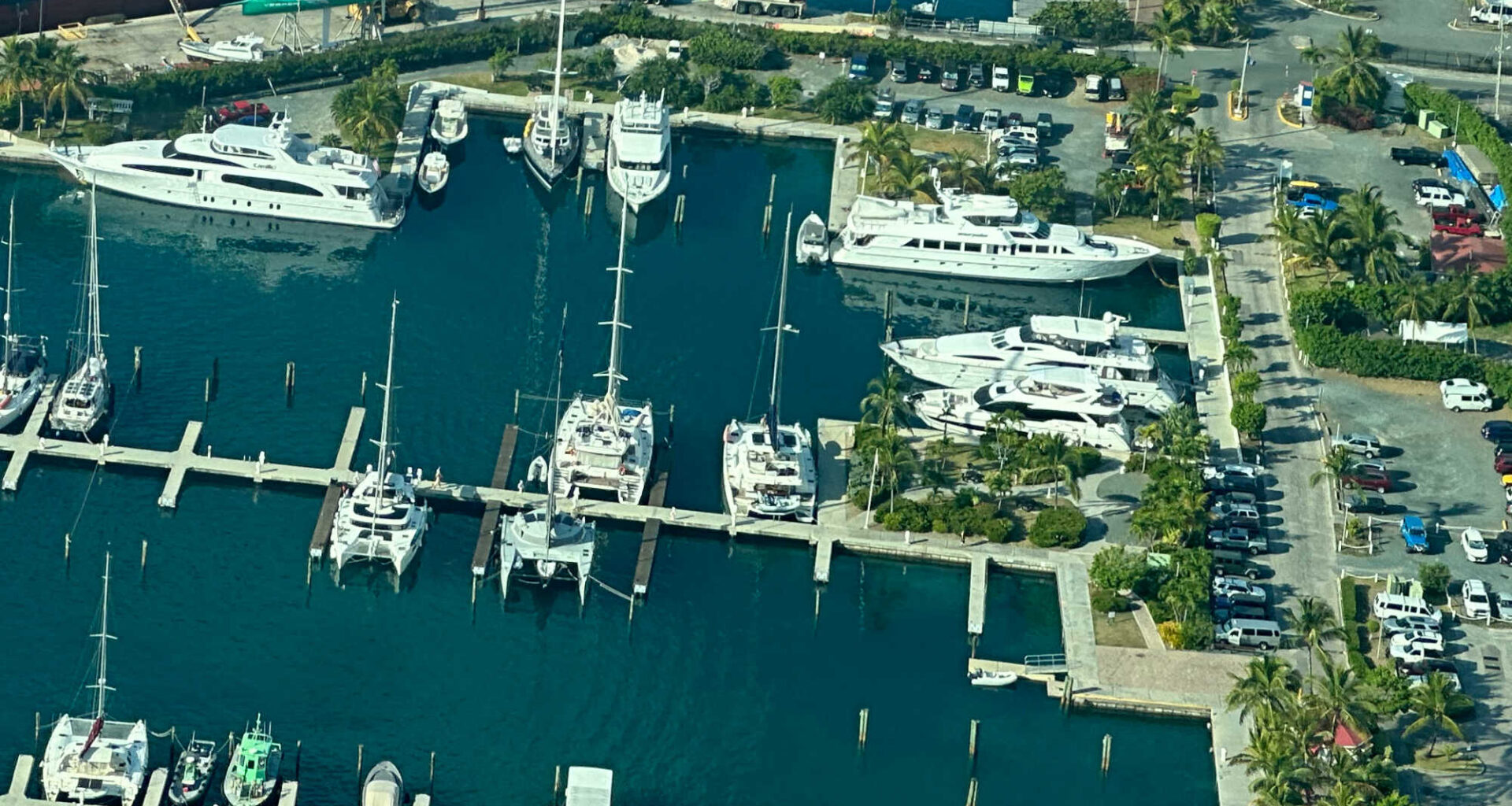
A new federal trade report to Congress has placed the U.S. Virgin Islands–British Virgin Islands charter dispute into a broader policy spotlight, stating that the British Virgin Islands’ steep fee increases on foreign charter vessels are “significantly affecting” the USVI marine tourism industry — an industry the report says supports as many as 5,000 jobs and contributes approximately $166 million to the local economy.

The reference appears in the latest report to Congress on the Caribbean Basin Economic Recovery Act, which flags the BVI’s Commercial Recreational Vessel Licensing Act changes as a trade-distorting measure and notes that the USVI’s marine tourism sector is closely integrated with the BVI. The report links the fee changes to business fallout on the U.S. side, including charter operators being forced to close or relocate.
The issue has been building for more than a year, with multiple rounds of high-level talks, warnings of retaliation, industry meetings, and escalating claims of economic harm as vessels and spending shift away from the U.S. Virgin Islands.
A dispute rooted in fees and a highly integrated marine economy
The charter relationship between the USVI and BVI has long depended on easy movement across waters that are central to the region’s marine tourism product. While both territories have discussed reciprocal frameworks in prior years, tensions sharpened as the BVI moved toward a new licensing structure for non-BVI-based charter operators.
In early March 2025, Governor Albert Bryan Jr. announced he would meet with BVI Premier Dr. Natalio Wheatley for what he described as “an open and candid conversation” about proposed fee increases impacting U.S. Virgin Islands–based charter yacht operations in the BVI. Bryan said he was seeking “an equitable resolution that builds our charter yacht industry, promotes this friendship, and creates economic wins for both territories.” Later, Bryan criticized what he described as the BVI’s abrupt posture, saying: “That is not how families treat each other.”
Bryan warned at the time that if an amicable outcome could not be reached, he could pursue a strategy that included seeking federal support for tariffs, saying: “We are moving forward with our own strategy, and if we need help from the White House, I’ll get it from there too.”
Days later, Wheatley said publicly he was “willing to make some concessions,” particularly for day-trippers, noting that day charter companies were likely to be “smaller operations.” He also framed the proposed increases as part of a strategy aimed at keeping the BVI tourism model sustainable, saying the territory’s tourism product “is not based on mass volume,” and emphasizing the desire to keep the environment “pristine.”
The back-and-forth continued into April 2025, when Bryan and Wheatley met again and discussed revised rates. During those talks, the BVI presented updated licensing terms, including continued high-dollar options for frequent entries and changes for day charters. Under the revised structure presented during that meeting, the fee for day trips was reduced to $8,500 per year, while water taxis remained at $2,500 per year. Term charter fees were structured around a $7,500 base fee for up to seven entries, with additional charges per entry thereafter, alongside an unlimited entry option priced at $24,000 annually.
Bryan also raised concerns about the vessel entry and exit process and offered U.S. Virgin Islands assistance in developing an automated system to streamline clearance procedures, with BVI officials indicating they were working on a system and anticipated a summer 2025 launch.
While discussions continued, the marine industry warned the impact would not stop at charter operators. During one major meeting addressing the proposed hikes, the V.I. Professional Charter Association’s executive director Staci Smith noted the broader importance of the sector, saying: “Marine tourism is a vital economic driver to the USVI, contributing more than $100 million annually,” and warning that proposed increases threatened the USVI charter industry’s growth and viability.
Industry representatives also raised concerns about ripple effects across suppliers and service businesses tied to charter activity, including provisioning, fuel, maintenance, restaurants, transportation, and marina operations — the same network of industries later described in the push for federal action.
Federal action push and claims of vessels relocating
By late 2025, a coalition representing the U.S. Virgin Islands maritime sector said the new fee structure had already produced significant economic damage and prompted charter vessels to relocate. A delegation led by Crown Bay Marina president Kosei Ohno and joined by attorney Michelle T. Meade traveled to Washington, D.C., seeking federal intervention and briefed or initiated outreach with agencies including the U.S. Department of State, the United States Trade Representative, the U.S. Small Business Administration, and the U.S. Department of Commerce, while coordinating efforts with the V.I. Delegate to Congress.
Explaining the urgency of the trip, Ohno said: “We came to Washington during the holidays because our season is starting right now. Without swift action, the U.S. Virgin Islands will continue losing American businesses, American jobs, and critical maritime capacity.”
The coalition said the BVI’s enacted fee increases — including high-cost annual licensing for multi-night charters and steep day-trip licensing — were driving the shift. It also asserted that dozens of vessels that once operated from the U.S. Virgin Islands had relocated to the British Virgin Islands, pulling spending out of the U.S. Virgin Islands economy and projecting larger annual losses when accounting for onshore impacts such as provisioning, maintenance, hospitality, and transportation.
Separately, the V.I. Bureau of Economic Research has pointed to the charter sector’s significance in the U.S. Virgin Islands economy. In a discussion held during the territory’s Workforce Development Summit, BER Director Haldane Davies said the sector appeared to be “facing some challenges,” as relocations to the BVI continued to shape expectations for the year ahead.
According to BER estimates presented in that setting, the charter yacht industry generated about $92 million for the U.S. Virgin Islands in 2024 and supported approximately 800 jobs, even as speakers warned that the sector could be down in the following year due to the way conditions were unfolding.

The new U.S. trade report’s inclusion of the BVI fee issue — with its estimate of up to 5,000 jobs tied to the USVI marine tourism industry and approximately $166 million in local economic contribution — adds a fresh federal point of reference as the dispute continues to reverberate through policy circles, business planning, and the marine economy across both territories.