Terrell Heights was almost exclusively white at the start of the 1900s before a new wave of Black entrepreneurs began purchasing properties in the south Fort Worth neighborhood.
One of these new prominent movers and shakers was William “Gooseneck Bill” McDonald, who is widely believed to be the first Black millionaire in Texas.
The legacy of McDonald and other leaders who built up the first middle-class Black community in Fort Worth are part of a new historic art show that spotlights those key figures.
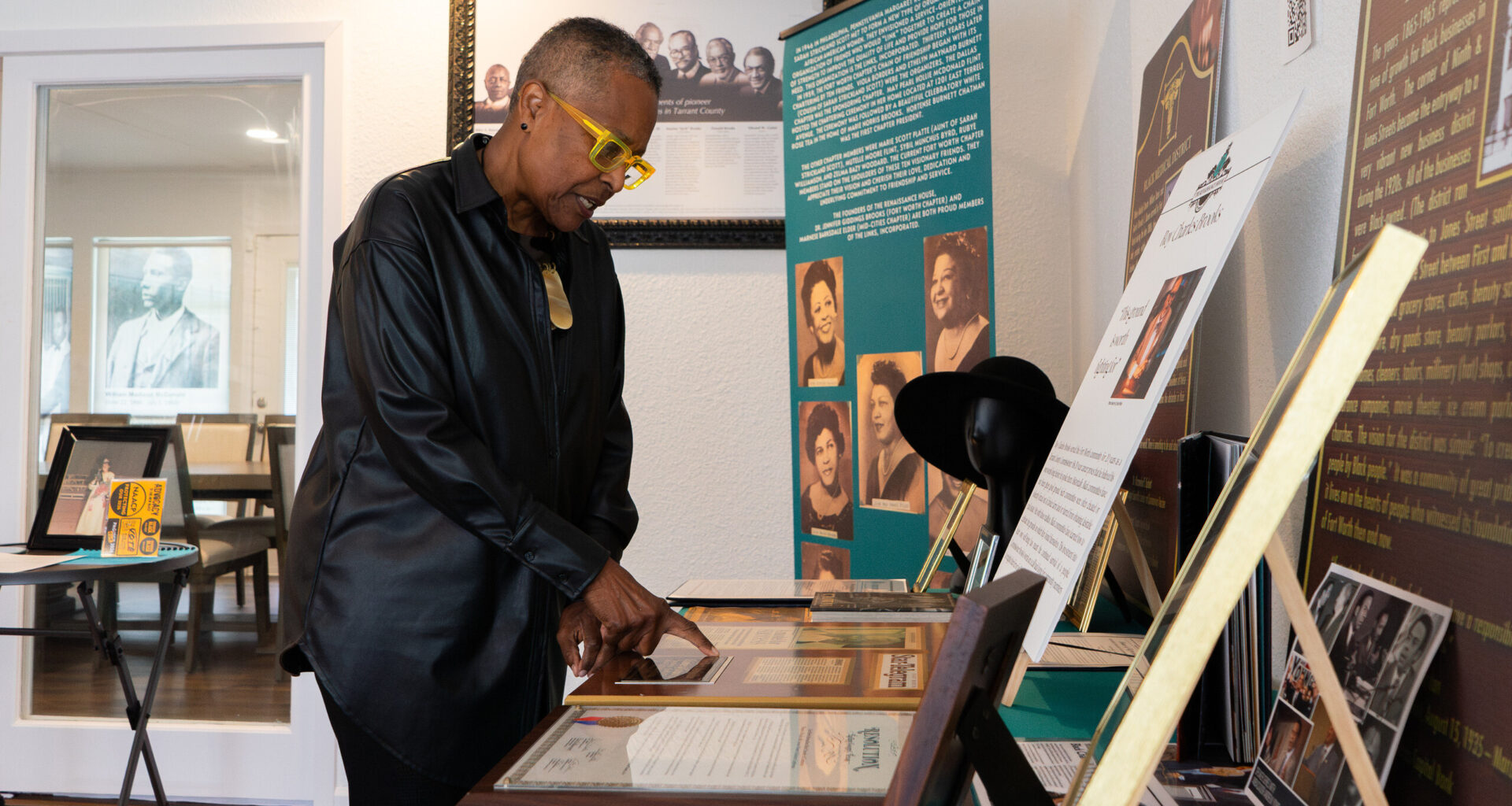
The “Heritage Exhibition” at The Renaissance House compiles over a century of archives starting in 1906, detailing the history of the Terrell Heights neighborhood in the Historic Southside.
The community has faced several economic challenges in the past few decades and is now home to residents with the shortest life expectancy in Texas. The Renaissance House opened as an educational and health space in February 2024 as one of several projects working to revitalize the Historic Southside.
Jennifer Brooks, co-founder of The Renaissance House, said in order to build the neighborhood’s future, community leaders need to have a deep understanding of its past.
“We definitely need to know the shoulders on which we stand,” she said. “Often people are so involved with their lives that sometimes we don’t pause to look back on others who have done outstanding things so that we can be that one who continues to make a difference.”
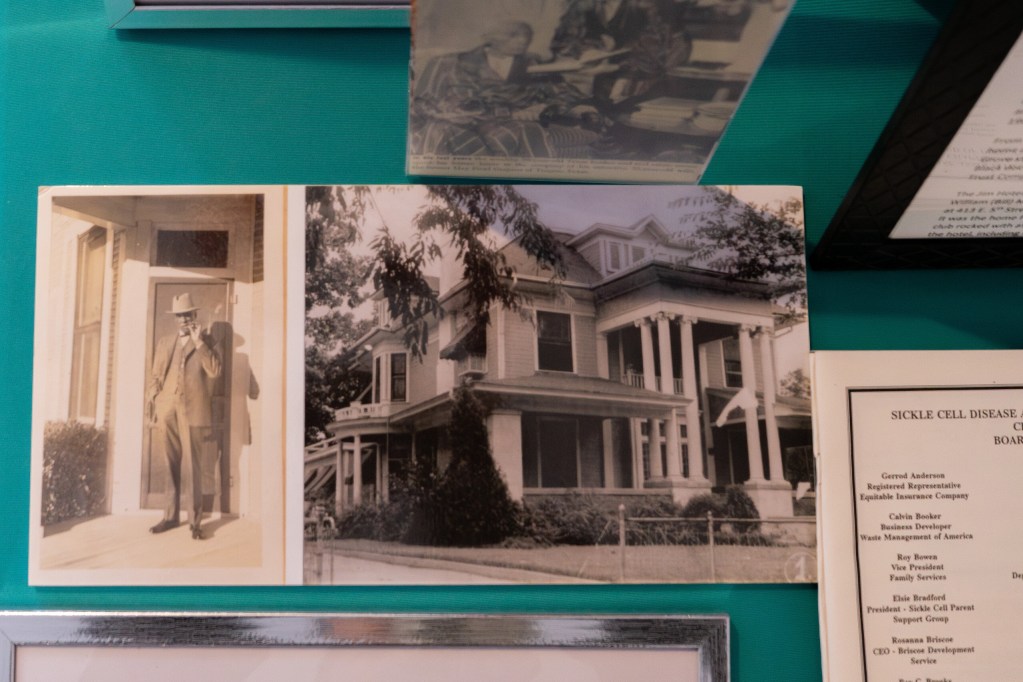 An early 20th century photo of William “Gooseneck Bill” McDonald and his Terrell Heights home lay on a table inside Renaissance House on Dec. 16, 2025. (David Moreno | Fort Worth Report)
The exhibit includes a collection of photographs, documents and artifacts that were compiled in partnership with Stacie McCormick and Sonja Watson at Texas Christian University and the Tarrant County Black Historical & Genealogical Society.
In one photo, McDonald is pictured in his three-piece suit while another shows his two-story, Classical Revival-style mansion on East Terrell Avenue.
McDonald became an influential banker who opened the Fraternal Bank and Trust in 1906. He also was a political force who helped shape Fort Worth at the end of the 20th century and used his wealth to uplift the city’s Black community, according to KERA News.
After McDonald’s death in July 1950, his widow May Pearl remarried local businessman Clarence W. Flint Jr. The couple tore down the mansion and built a midcentury home on the lot. The property was renovated to serve as the current site of The Renaissance House.
The first table in the exhibition features photographs and documents spotlighting how the Flints opened their home as a hub for community gatherings and celebrations for Black social leaders for over two decades through the 1970s. It also features letters from local residents who attended Wiley University, a historically Black college in Marshall.
Another table features artifacts from the Black business and medical districts in downtown Fort Worth.
The corridors were thriving centers for Black entrepreneurs and physicians centered around Ninth and Jones streets, including prominent doctors Riley A. Ransom and Eddie L. Dorsey. Two historic markers acknowledging the districts can be found on 816 Main Street.
Brooks’ father-in-law, Dr. Marion Brooks, was an outspoken medical activist for fair treatment in the early 1950s. He and his brother, Dr. Donald Brooks, later established the now-closed Brooks Clinic in the Historic Southside.
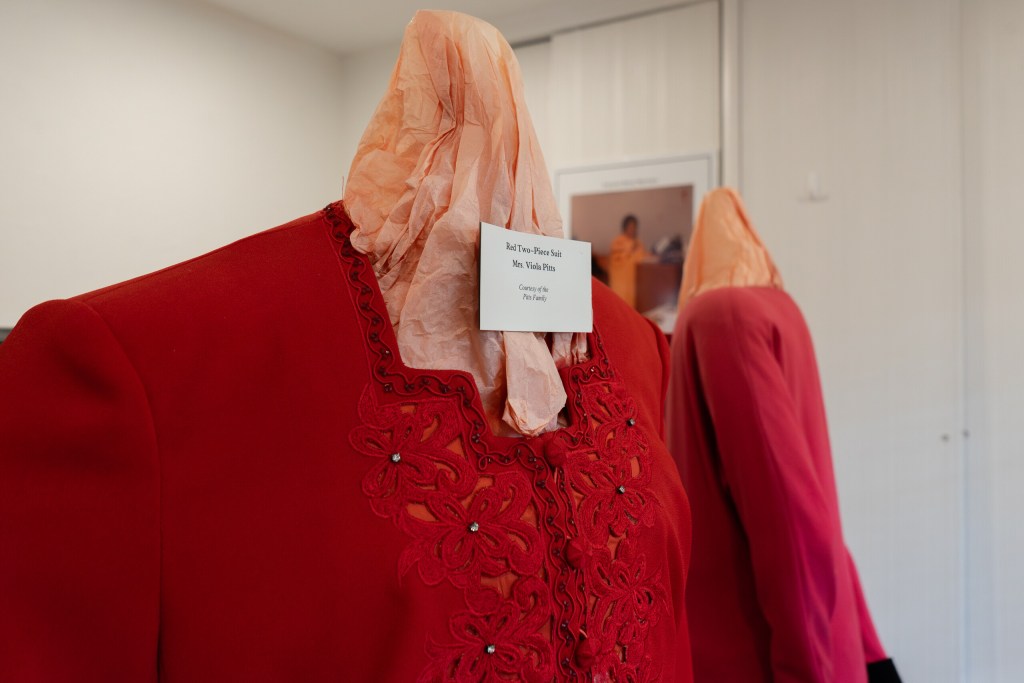 A red dress previously worn by Viola Pitts is on display at Renaissance House on Dec. 16. Pitts was a Fort Worth civil rights activist who died in 2004. (David Moreno | Fort Worth Report)
Costumes take center stage in a separate room, including bright-colored dresses previously owned by Hazel Harvey Peace, a revered Black educator who lived in Terrell Heights, and Viola Pitts, known as the unofficial mayor of Fort Worth’s Como neighborhood. Pitts was known for almost always wearing red, Brooks noted.
The exhibit includes copies of Sepia Magazine, a Black-owned publication founded in Fort Worth in 1946 that ran its final issue in 1983, and a classroom-style space for visitors to reflect.
While the exhibition already details so much of the community’s history, Brooks and fellow Renaissance House co-founder Marnese Elder continue to collect more archives to add to the show. The duo hopes to eventually write a history book on Terrell Heights.
“Although the community has changed and there have been some ups and downs, there are some outstanding people that grew up here who deserve to have their stories told,” Brooks said.
Interested in touring the historical Terrell Heights exhibition?
Visits to The Renaissance House are by appointment only. Contact Jennifer Brooks at jennifergiddingsbrooks@gmail.com.
David Moreno is the arts and culture reporter for the Fort Worth Report. Contact him at david.moreno@fortworthreport.org or @davidmreports.
At the Fort Worth Report, news decisions are made independently of our board members and financial supporters. Read more about our editorial independence policy here.
This <a target=”_blank” href=”https://fortworthreport.org/2026/01/12/history-of-fort-worths-first-middle-class-black-community-detailed-in-new-exhibition/”>article</a> first appeared on <a target=”_blank” href=”https://fortworthreport.org”>Fort Worth Report</a> and is republished here under a <a target=”_blank” href=”https://creativecommons.org/licenses/by-nd/4.0/”>Creative Commons Attribution-NoDerivatives 4.0 International License</a>.<img src=”https://i0.wp.com/fortworthreport.org/wp-content/uploads/2021/04/cropped-favicon.png?resize=150%2C150&quality=80&ssl=1″ style=”width:1em;height:1em;margin-left:10px;”>
<img id=”republication-tracker-tool-source” src=”https://fortworthreport.org/?republication-pixel=true&post=365602&ga4=2820184429″ style=”width:1px;height:1px;”><script> PARSELY = { autotrack: false, onload: function() { PARSELY.beacon.trackPageView({ url: “https://fortworthreport.org/2026/01/12/history-of-fort-worths-first-middle-class-black-community-detailed-in-new-exhibition/”, urlref: window.location.href }); } } </script> <script id=”parsely-cfg” src=”//cdn.parsely.com/keys/fortworthreport.org/p.js”></script>