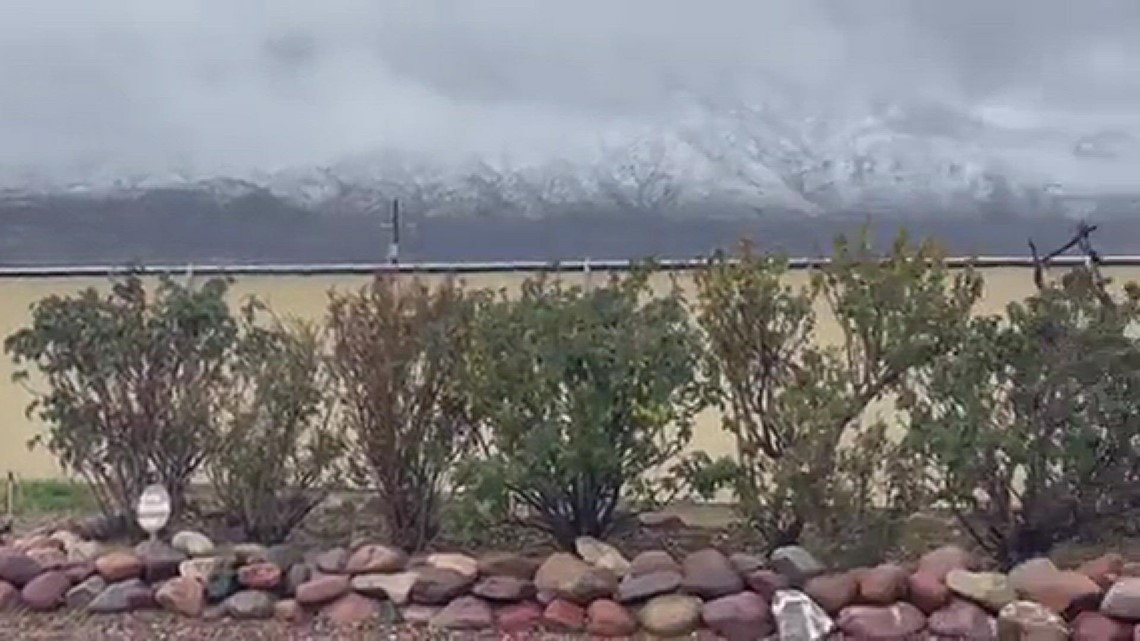
Phoenix winters are warming, with nights at freezing temperatures nearly vanishing due to urbanization and climate change.
PHOENIX — If you’ve lived in the Valley of the Sun for more than a decade, you remember what winter weather used to be like. We would typically see several mornings when you had to scrape a thin layer of frost off your windshield before driving into work, or when you rushed outside the night before to cover sensitive citrus trees with burlap sacks or frost cloth.
>> Download the 12News app for the latest local breaking news straight to your phone.
Lately, however, those burlap sacks are gathering dust in the garage.
There is a sense among long-time residents that “winter just isn’t winter anymore.” So, is that perception based solely on feelings or is there hard data to back it up? In this case, the data confirms the feeling dramatically: The Phoenix freeze is becoming an endangered species.
An analysis of official climatological data from Phoenix Sky Harbor International Airport reveals an undeniable, accelerating trend toward warmer winters and a near-total disappearance of nights where the mercury dips to 32° or lower. In fact, in the past 10 years, Phoenix has only reached the freezing mark twice!
Here is a look at the numbers, the reasons behind the warming, and what this new normal means for the desert.
The Data: A Downward Trend
To understand the present, we need context from the past.
If we look back to the mid-20th century (the 1950s through the 1970s), a typical Phoenix winter featured anywhere from 10 to 20 nights at or below freezing. It was a reliable, necessary part of the desert’s ecological cycle.
By the period of 1981–2010 (the previous 30-year climatological “normal”), that average had dropped to roughly six freezing nights per winter at Sky Harbor.
Yet, looking at the last decade—roughly 2015 through the winter of 2024-2025—the decline has fallen off a cliff.
We are now in an era when experiencing zero freezes at Sky Harbor during an entire winter season is becoming common. The winter of 2023-2024, for example, recorded zero official freezes. The average over the last twenty years has hovered close to just one or two freezing nights per year.
While outlying suburbs like Queen Creek, Buckeye, Maricopa, or Cave Creek still see frost more frequently due to their geography, the urban core of Phoenix is effectively losing its meteorological winter.
The “Double Whammy”: Why It’s Happening
Two primary forces are working in tandem to limit our freezing nights. It’s a meteorological “double whammy.”
1. The Urban Heat Island Effect (UHI)
The Phoenix area is a perfect example of the Urban Heat Island effect, which is the primary local driver of our milder winter weather.
As the Phoenix has grown over the past few decades, we’ve replaced vast stretches of sprawling, natural desert vegetation and irrigated agriculture with concrete, asphalt, rooftops, and dark surfaces.
During the day, these man-made materials absorb intense solar radiation. In a natural desert landscape, heat radiates efficiently back into space once the sun sets, causing temperatures to drop quickly. But concrete and asphalt hold onto that heat, slowly releasing it throughout the night. This keeps overnight lows artificially elevated, often by 10 degrees or more compared to surrounding undeveloped areas.
The UHI effect means the temperature “floor” at night is now much higher. On nights that would have hit 30° in 1980, the heat retained by the city now keeps us at a comparatively mild 38° or 40°.
2. The Background Signal: A Warming Climate
While the UHI is a significant local factor, it is operating against the backdrop of global climate change.
Think of climate change as a rising ocean tide, and the Urban Heat Island as a wave riding on top of it. The baseline temperature of the planet is increasing due to rising greenhouse gas concentrations. This means that even without urbanization, we would be seeing fewer extreme cold events. When you layer the intense, localized heating of the UHI on top of a generally warming atmosphere, the threshold for reaching 32°F becomes even more difficult to cross.
The Impacts of a Freeze-Free Desert
Why does it matter if we need a jacket less often in January? The disappearance of the desert frost has real-world consequences.
- Pest Control: Hard freezes act as a natural reset button for insect populations. Without significant cold snaps to kill off larvae, pests like mosquitoes and whiteflies can survive the winter in larger numbers, leading to higher populations earlier in the spring.
- Agriculture and Gardening: Many plants, including certain fruit trees that thrive in the Valley, require “chill hours” (time spent below a certain temperature threshold, usually 45°) to properly set fruit. While they may not need a hard freeze, the overall lack of winter chill can impact yields and sweetness. Conversely, tropical plants like bougainvillea, hibiscus, and ficus are now thriving year-round in areas where they once froze back annually.
- Utilities and Health: While heating bills are lower, the lack of overnight relief in the “shoulder seasons” (late fall and early spring) means air conditioners are running longer into the year, straining the grid and increasing electricity costs.
In the short-term, as we move deeper into January 2026, forecast models show a continuation of this pattern: Above-average temperatures and little chance of a significant freeze event in the Phoenix urban core.
The long-term trend line is becoming pretty clear. The “Phoenix Freeze” is quickly transitioning from a regular occurrence to meteorological history.
Watch 12News for free
You can now watch 12News content anytime, anywhere thanks to the 12+ app!
The free 12+ app from 12News lets users stream live events — including daily newscasts like “Today in AZ” and “12 News” and our daily lifestyle program, “Arizona Midday”—on Roku, Apple TV and Amazon Fire TV.
12+ showcases live video throughout the day for breaking news, local news, weather and even an occasional moment of Zen showcasing breathtaking sights from across Arizona.
Users can also watch on-demand videos of top stories, local politics, I-Team investigations, Arizona-specific features and vintage videos from the 12News archives.
Roku: Add the channel from the Roku store or by searching for “12 News KPNX.”
Amazon Fire TV: Search for “12 News KPNX” to find the free 12+ app to add to your account, or have the 12+ app delivered directly to your Amazon Fire TV through Amazon.com or the Amazon app.