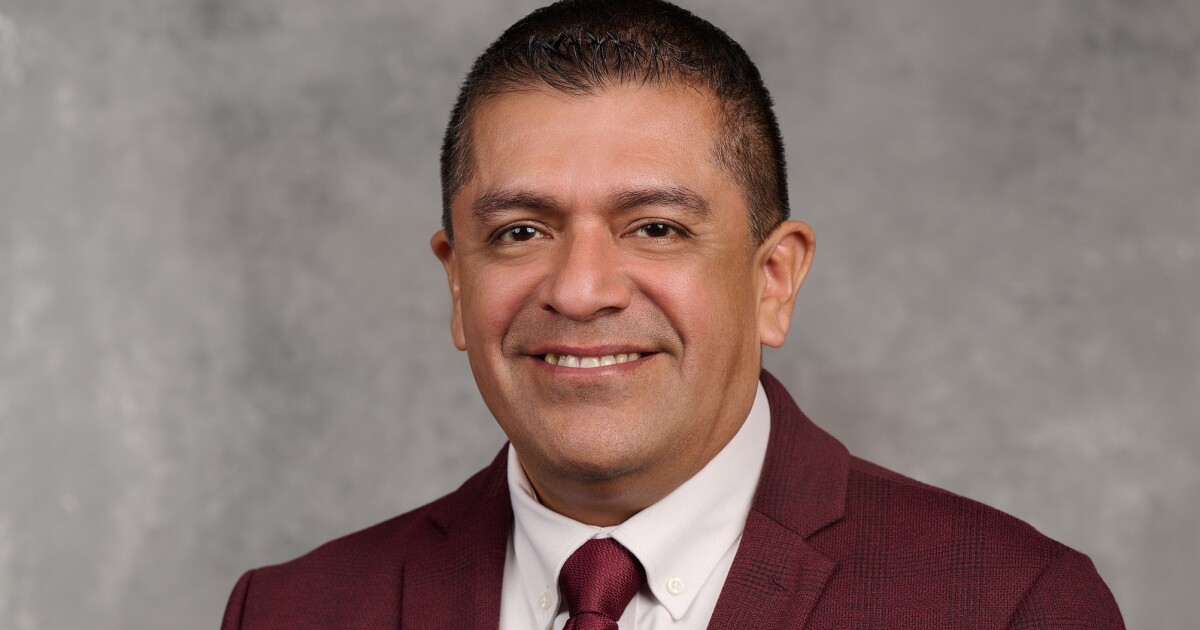
 “The Dallas ISD name is well known. We have a strong credit rating. Our finances are very strong and healthy,” Chief Financial Officer Eduardo Ramos said.
Dallas Independent School District
Dallas Independent School District heads to the municipal market this week with its biggest-ever new money bond issue, while it considers asking voters for as much as $6.24 billion in future debt.
Processing Content
Texas’ second-largest public school system will sell $760.37 million of unlimited tax school building bonds that, along with $330 million of variable-rate bonds scheduled to price Feb. 4, will tap remaining authorization from $3.47 billion of general obligation debt voters approved in 2020, according to Eduardo Ramos, the district’s chief financial officer.
The deal should be “very well received,” he said.
“The Dallas ISD name is well-known. We have a strong credit rating. Our finances are very strong and healthy,” Ramos told The Bond Buyer.
The bonds, which are being sold with the Texas Permanent School Fund’s triple-A-rated guarantee, fetched underlying ratings of Aa1 from Moody’s Investors Service and AAA from KBRA with stable outlooks.
Moody’s said its rating “incorporates a long history of conservative budgeting that has led to consistently strong financial performance with robust reserves of around 60% of revenue for the past several years, including audited fiscal 2025.”
KBRA also pointed to the district’s financial management, as well as a “large, diverse, and growing tax base,” which provides a reliable source of payment for the unlimited tax bonds.
The district has AA-plus underlying ratings with stable outlooks from S&P Global Ratings and Fitch Ratings, both of which did not rate the upcoming issue.
Dallas ISD, which serves 134,500 students at its 133 elementary, 56 middle, and 39 high schools, has maintained its credit standing despite a troubling trend.
In the first half of 2025, S&P’s rating downgrades of school systems nationally outpaced upgrades, with the ratio of 1.8 downgrades for every upgrade of a Texas district exceeding the national average of 1.2, according to a December report by the rating agency.
“With expenditures outpacing revenue growth and enrollment declining in many places across the nation, K-12 school credit quality has already started to deteriorate, with more pressure on the horizon,” the report said. “By the time the (Elementary and Secondary School Emergency Relief) spending deadline arrived in September 2024, the number of schools with operating deficits had already started to climb.”
In Texas, stagnant state funding for schools since 2019 contributed to budgetary strains that led to negative actions affecting underlying ratings. Most school debt is rated AAA under the PSF guarantee. While the state increased funding by $8.5 billion for the fiscal 2026-27 biennium, many public school advocates said the boost was inadequate given the rise in inflation.
While Moody’s has a negative outlook for the U.S. K-12 sector in 2026, analyst Heather O’Malley said the overall credit profiles for Texas schools “remain very stable.”
Dallas ISD’s fixed-rate deal, expected to price Wednesday according to an investor presentation, is structured with serial maturities from 2027 through 2056, according to the preliminary official statement.
Cabrera Capital Markets leads the underwriting team consisting of co-senior manager UMB Bank and co-managers Mesirow Financial, TRB Capital Markets, and Wells Fargo Securities. Bracewell and West & Associates are co-bond counsel, McCall, Parkhurst & Horton is disclosure counsel, and RBC Capital Markets and Nickel Hayden Advisors are co-financial advisors.
For the variable-rate bond deal, Stifel is senior manager and Stern Brothers is co-senior manager.
Post-sales, the district’s outstanding GO debt will total approximately $5.74 billion, according to Moody’s.
The school system could be asking its voters as soon as in May to authorize a big bond package. A three-part $4.95 billion option would keep the interest and sinking property tax rate unchanged. A four-part $6.24 billion option would require a rate increase. A Citizens’ Bond Steering Committee has recommended the higher amount, according to Ramos.
The majority of proceeds would be allocated to construction projects, including the replacement of 26 schools, as well as technology, security, and other improvements. Proposition C would allow Dallas ISD to convert $143.34 million of limited maintenance tax qualified school construction notes issued in 2013 into GO bonds paid with the district’s interest and sinking property taxes.
Ramos said the proposition’s approval would enable the district to restructure the tax credit debt for an estimated $10 million savings, while $100 million the district has set aside so far for a 2033 balloon payment would be freed up for operational use.
The bond propositions could face a declining appetite for school debt on the part of Texas voters. In the Nov. 4 election, 35.8% of the $10.43 billion of bonds Texas schools sought failed to pass, according to Texas Bond Review Board data. Results for the May 3 election showed voters rejected 10.5% of the nearly $13 billion of school bond propositions.
A two-part, $4.4 billion bond proposition for Houston ISD, the state’s largest district, fell well short of passage in November 2024. A 2023 state takeover of the district on the basis of academic performance played a role in the defeat.
In 2020, Dallas ISD voters approved bond propositions for school construction and technology, but turned down three others for sports stadiums, a performing arts facility, and swimming pools.
As a result of investments funded by the 2020 bond program, the district, which has a student population that is 88% economically disadvantaged, saw large academic gains and that is producing “a lot of positive momentum” for a new bond program, Ramos said.
The onset of Texas’ private school voucher program is looming.
Lawmakers last year passed a $1 billion Texas Education Freedom Accounts program long sought by Republican Gov. Greg Abbott. The application window for the 2026-27 school year opens Feb. 4 to obtain $10,474 per student attending an approved private school, with disabled students getting up to $30,000 and homeschooled children receiving $2,000.
O’Malley said the increased competition is a negative credit factor for public and charter schools in Texas.
“Since the money follows the students, it will divert funds away from the public schools. We could see some schools with enrollment declines,” she said, adding affected districts are expected to adjust their budgets as needed.
The Texas Comptroller’s Office, which administers the voucher program, has so far approved 775 private schools, 195 of which are in the Dallas-Fort Worth area.
Dallas ISD is using its overall rating from the Texas Education Agency, which improved to B from C, to win back students from charter schools and to mitigate the effect of vouchers, Ramos said, adding state payments will not fully cover tuition for most of the area’s private schools.
“So we’re thinking that the vouchers, at least in Dallas ISD, will have a minimal impact, but that’s yet to be seen,” he said.