Following six consecutive days of rain to start the year, San Diego is finally dry again. But how did all that rain change our conditions across the county?
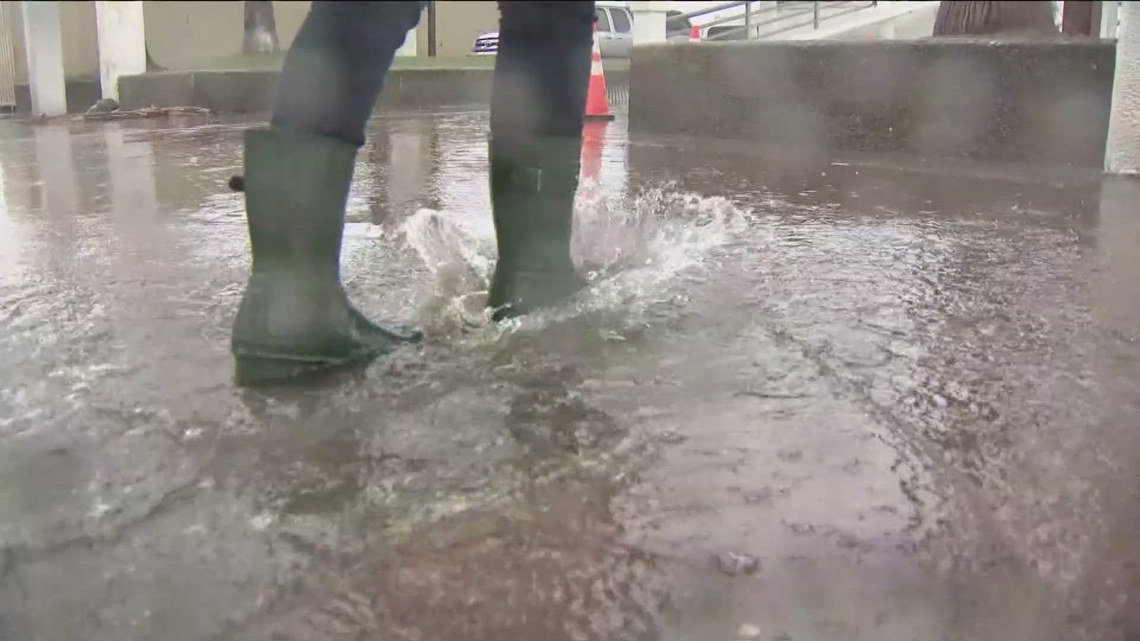
SAN DIEGO COUNTY, Calif. — In lockstep with Christmas Eve and New Year’s Eve celebrations, rain returned to San Diego County with vengeance, leading to record-breaking daily totals and palm fronds littering the road.
Five cities in the county recorded their wettest New Year’s Day on record, including San Diego and Chula Vista, which unsurprisingly led to flooding in Fashion Valley along the San Diego River. Despite our previous Water Year ending with about a 40% deficit, our new Water Year (which began October 1) now shows a huge surplus that will help alleviate drought conditions. Furthermore, our latest Drought Monitor now shows that none of the state of California is classified as abnormally dry. It’s the first time in 25 years that has happened.
What about the sprinklers you turned off during the rain? Experts say if you have good soil, you can probably keep them off until next week at least. Beyond that, you’ll start to notice some stress on your grass. They emphasize not to wait too long, as you don’t want to risk starting to see irreversible stress.
With dry skies sticking around in the forecast this week, we would still need rainfall similar to the last few weeks in the months ahead to keep our fire danger low through the spring and summer.
The recent rounds of rain have been a welcome and, frankly, remarkable reset for Southern California. After years of living with water restrictions, shrinking reservoirs, and persistent drought headlines, the storms that soaked San Diego County over the holidays served as a powerful reminder of how critical seasonal rainfall is to our region. Beyond filling local rivers and turning hillsides green, this moisture is recharging groundwater basins, improving soil health, and giving stressed ecosystems a chance to recover after a long dry stretch.
Even with this surplus to start the new Water Year, conservation remains just as important as ever. Southern California’s water supply is highly variable, and one wet period does not erase the risk of future drought. Simple habits still make a difference: fix leaking faucets and irrigation lines, run dishwashers and washing machines only with full loads, and take shorter showers. Outdoors, consider adjusting sprinkler schedules based on actual weather conditions, watering early in the morning to reduce evaporation, and replacing thirsty turf with native or drought-tolerant plants that thrive with less water.
The recent rains also highlight the value of working with nature instead of against it. Healthy soil retains moisture longer, meaning landscapes can stay greener with less frequent watering after a good soaking. Adding mulch to gardens, aerating compacted soil, and capturing rainwater in barrels or cisterns can all extend the benefits of rainfall well beyond the last storm. These small steps help homeowners stretch natural precipitation further while easing demand on imported water supplies.
Perhaps most importantly, this rainfall plays a critical role in reducing wildfire risk as we head toward spring and summer. Saturated soils, higher fuel moisture, and improved vegetation health all help keep fire danger lower—at least temporarily. To maintain that advantage, Southern California will need continued storms in the months ahead, paired with responsible water use year-round. The recent storms are a gift, but how we manage water moving forward will determine how resilient our region remains when the next dry spell inevitably returns.