Sign up for the Slatest to get the most insightful analysis, criticism, and advice out there, delivered to your inbox daily.
It was the most unlikely response to the widely expected overturning of Roe v. Wade. In the summer of 2021, a small group of about 12 individuals, including some health care workers, elected officials, and local community activists, in the deep-red state of Wyoming—which didn’t have a single abortion clinic at the time—began planning to open a new clinic in the college town of Casper. This was at the same time that most abortion clinics in red states, seeing the writing on the wall, had begun planning to close or move to a more hospitable location. But not in Wyoming.
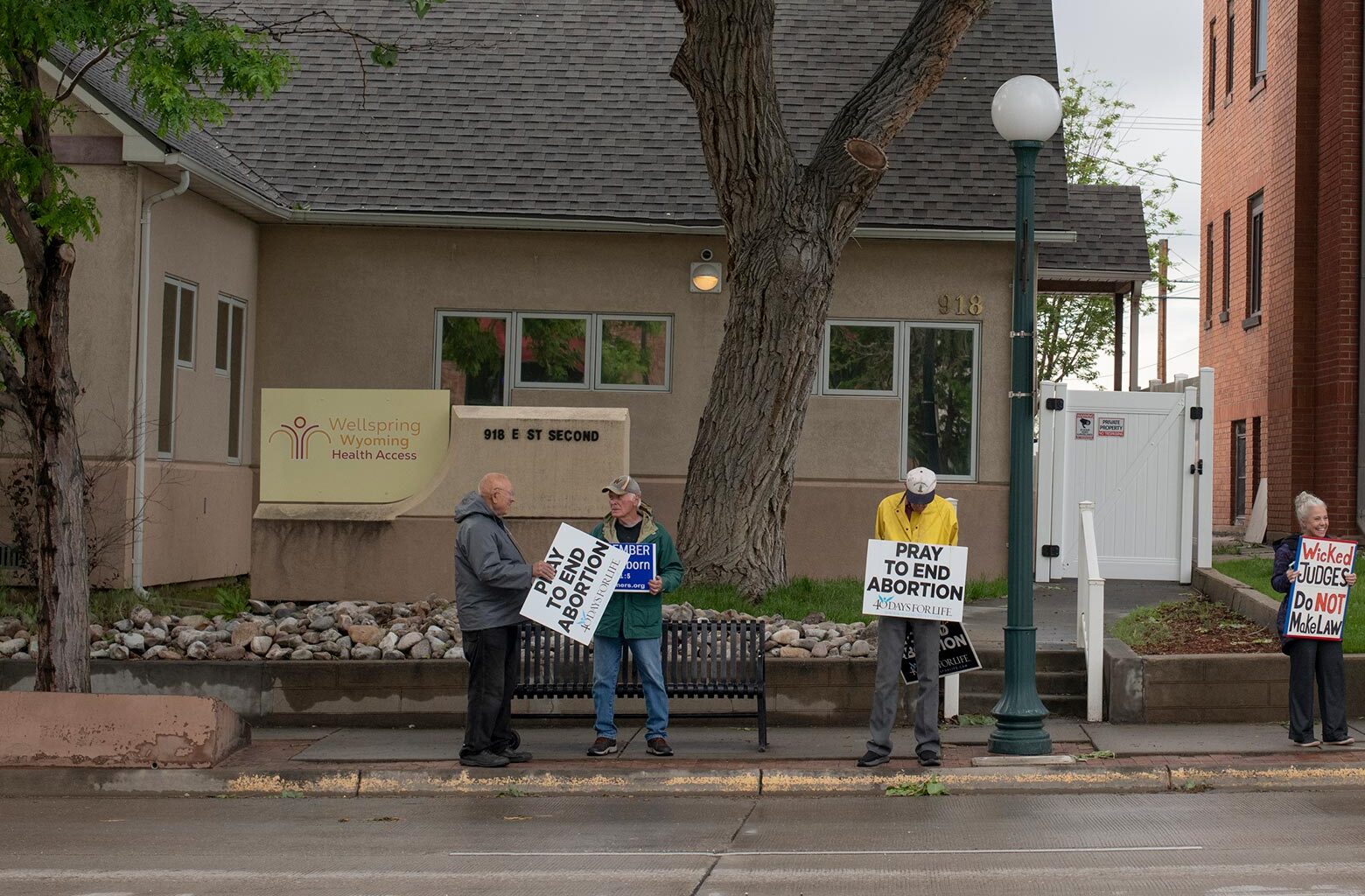
And this long-shot gamble paid off. Wellspring Health Access, which provides abortions as well as other services including family planning, general gynecology, and gender affirming care, opened its doors in spring 2023, almost a year after the Supreme Court decided Dobbs v. Jackson Women’s Health Organization. Since then, the clinic has faced unending legal challenges from the state. However, at each turn, the clinic has prevailed, culminating in a big win before the Wyoming Supreme Court last week. This ruling, which may have significance for abortion rights beyond Wyoming, struck down the state’s general abortion ban as well as a specific ban on mifepristone, one of the two drugs used in a medication abortion.
How did this implausible turn of events come to pass? Beyond the determination of the community group in Casper, two main factors explain the ultimate success of this venture: Wyoming’s unique libertarian constitution and the savvy and determination of a woman named Julie Burkhart. In a wonderful instance of karma, the famously libertarian citizens of Wyoming, enraged by the passage of the Affordable Care Act, aka “Obamacare,” in 2010, amended their constitution, stipulating that individuals have the right to make their own health care decisions. This amendment became the heart of the legal strategy used by the would-be clinic’s lawyers, and this argument ultimately prevailed.
But there needed to be someone to use that constitutional provision, and that’s where Julie Burkhart came in. Julie is a longtime, well-known figure in abortion-providing circles. She is not a clinician, but rather an abortion access strategist and a skillful clinic operator who has a track record of opening abortion facilities in hostile and underserved areas. It was this reputation that led the Casper group to invite her to work with them even when Roe was about to be overturned.
Julie’s involvement with abortion care began in 2001, when she began work with Dr. George Tiller, the Kansas doctor who was assassinated in 2009 in his church by an anti-abortion fanatic. Tiller’s mentorship was deeply influential for Julie, and she has worked in the abortion field since his death. She purchased his Wichita clinic from his widow and reestablished abortion there, a city that had been left without such care after Tiller’s death. She also went on to open a clinic in Oklahoma, as well as several other places.
As part of a book project on how people in various sectors of the abortion-providing community were preparing for and then responding to the Dobbs, we interviewed Julie three times over the course of 2022. These interviews took place at the very beginning of that year, immediately after the decision was announced in June, and finally at the end of 2022.
Our first interview with Julie, in January 2022, took place while she and her Casper allies were already actively planning how to move forward with an abortion clinic. A lucky break occurred, she told us, when a wealthy donor purchased a facility from a medical practice that had closed and donated it to the group. This purchase was especially fortuitous as the facility was in an area already zoned to permit a medical clinic.
Finding a contractor to upgrade the clinic for abortion services was a challenge, though. Abortion providers have long faced difficulties finding people willing to work with them. Even if the individual workers involved are not opposed to abortion, they often have realistic fears of being targeted by anti-abortion forces and being subjected to boycotts. Julie did manage to convince a local contractor to do the necessary work, vaguely telling him the clinic was for a “women’s health center.” The contractor did eventually learn the intended purpose of the facility, but continued to do the work, and tellingly, did not post a sign on the site giving the name of his company, as is normally done.
Robyn Nicole Sanders
Sonia Sotomayor Just Vindicated the Rights of the Incarcerated to Seek Appeals
Read More
Julie’s fervent hope was to open the clinic about a month before Dobbs was expected to be announced, on the theory that since the clinic would offer a range of services, it could not be shut down, even if providing abortions was no longer legal in the state. As she put it, “So if something does happen in Wyoming, we will have that presence. We will have community ties. We will have standing if we have to go to court.”
But this hope of a pre-Dobbs opening was dashed in May 2022 when Julie awoke to a phone call informing her that the nearly finished clinic had been firebombed. Upon going to the clinic, she learned that most of the building would need to be gutted and rebuilt. The arsonist was eventually caught, but this set the clinic’s opening back by almost a year.
The summer of 2022 got even worse weeks later with the announcement of the Dobbs decision. When we spoke to her shortly after the Supreme Court ruling, Julie was predictably devastated. “I was so angry, so hurt,” she said. Julie spent the day after the decision listening to music at very high volume—including old feminist anthems from the 1970s. But neither the firebombing, the Dobbs decision, nor the Wyoming Legislature’s vote to ban abortion, if the Supreme Court allowed it to do so, broke her and caused her to retreat. As she said to us with more passion in her voice than in previous conversations, “I want to tell you, in Wyoming, we are going to litigate; we are going to fight this thing to the end.”
Finding legal representation proved yet another challenge. Several national legal groups who represented abortion clinics, while very supportive of the idea of a new clinic in Wyoming, were reluctant to get involved, feeling that the aspiration was unrealistic and that their limited resources in the face of a hostile U.S. Supreme Court were better spent elsewhere. But Julie and her comrades finally located local lawyers willing to represent them. Together, they promptly seized the above-mentioned constitutional amendment as their core legal argument.
-
This Content is Available for Slate Plus members onlyYou’ve Heard About Who ICE Is Recruiting. The Truth Is Far Worse. I’m the Proof.
-
I Can’t Stop Thinking About the Last Thing the ICE Agent Said to Renee Good
-
I Saw the Dark Side of Tort Law. It’s Way More Shocking Than You’d Expect.
This strategy quickly paid off. Several lower court victories allowed the clinic to open in 2023, when it began serving not only people in Wyoming but also those from surrounding states which have banned abortion. Julie has since told us there has been both community support and opposition to the clinic. Tellingly in this era of anti-trans sentiment, in some instances, the hostility is as much about the clinic’s provision of gender-affirming care as about abortion.
With the resounding victory from the Wyoming Supreme Court last week, Julie was celebratory when we emailed with her. However, nothing is “over” when it comes to abortion conflicts, especially in a place like Wyoming. In response to the decision, the state’s governor has called for a ballot measure in the 2026 election to amend the state constitution to ban abortion. These kinds of measures since Dobbs have mostly supported the pro-choice position, even in red states. It is unclear how the vote would go in Wyoming, if indeed it is on the ballot. If the measure is before the voters, it is clear that Julie and the Casper community will be actively helping to defeat it.

Sign up for Slate’s evening newsletter.