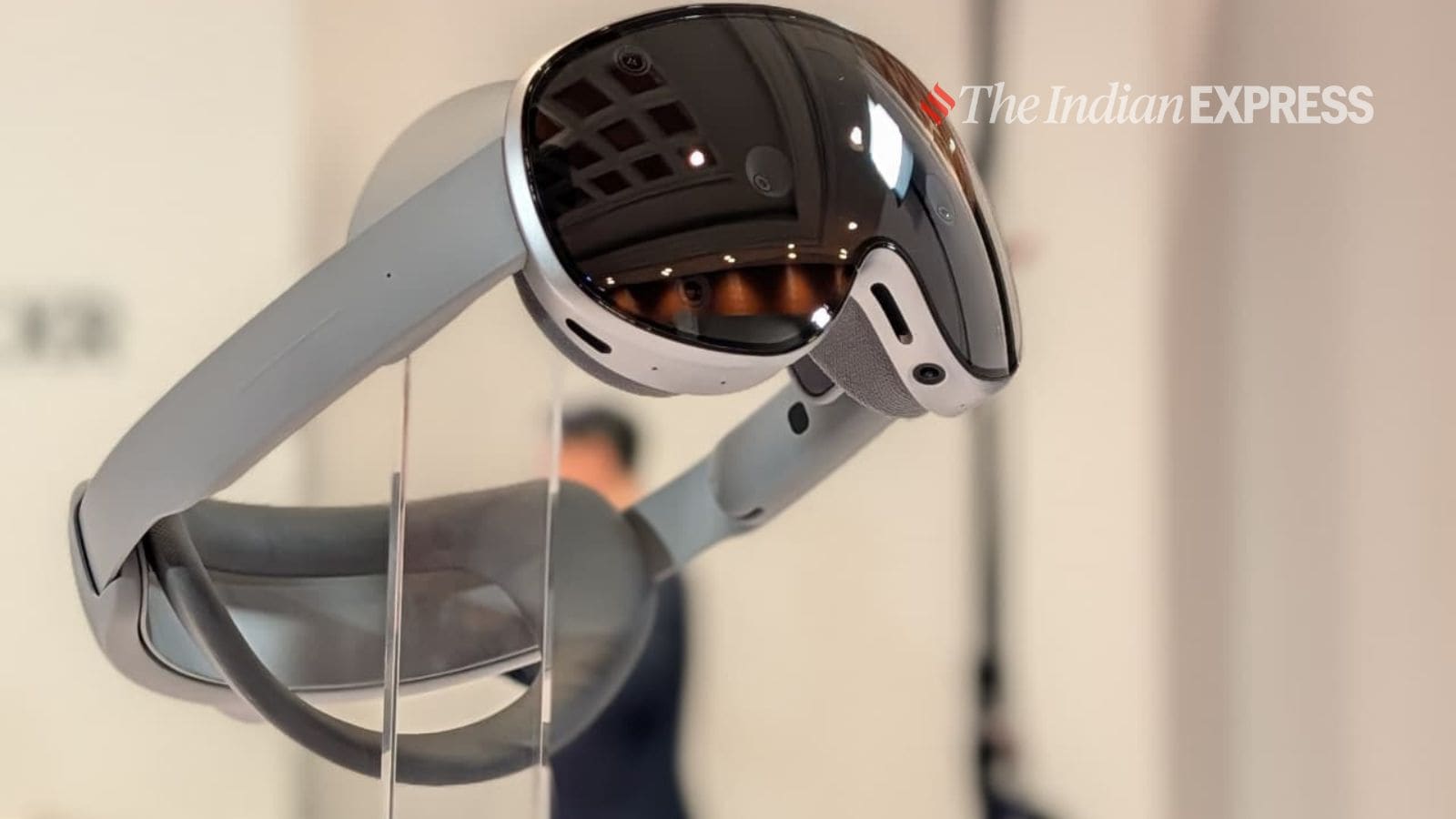
There was a strange feeling when I slipped the Samsung Galaxy XR headset off my head. I paused, and the person who had been guiding me through the demo asked how it felt. I told the person that while the Galaxy XR feels a little weird, like any other mixed-reality headset I have tried before, it also feels instantly familiar, as the user interface is just like my Android smartphone.
Of course, there are certain tweaks designed specifically for a mixed-reality headset, and that, to me, is the highlight of the Galaxy XR. It is not a smartphone, and I acknowledge that very well, but it is designed like one – obviously, the form factor is different, and so are my expectations from a $1,799 device.
In the few minutes I spent with the Galaxy XR, a joint collaboration between Samsung, Google, and Qualcomm at the CES tech show in Las Vegas, the headset felt as though it shared the same DNA as a smartphone, even though the environment was different. However, like other headsets I’ve used, such as the Apple Vision Pro and Meta Quest, there’s a sense of commonality. In that regard, the Galaxy XR is, well, much like them. It also differs in some respects (more on that later).
Here are my first impressions of the Galaxy XR, which is powered by Google’s Android XR, a brand-new operating system designed for headsets like these and smart glasses.
Sleek and lightweight
Each time I wore the Apple Vision Pro, I felt the headset was too heavy and had the urge to take it off. I didn’t experience that feeling with the Galaxy XR, at least during my short time with the device. Part of the reason the Galaxy XR feels less annoying is that it’s lighter and slightly more comfortable to wear than the Apple Vision Pro. The headset weighs 545 grams, which is a tad heavier than the Meta Quest 3 but lighter than the 750-gram Apple Vision Pro.
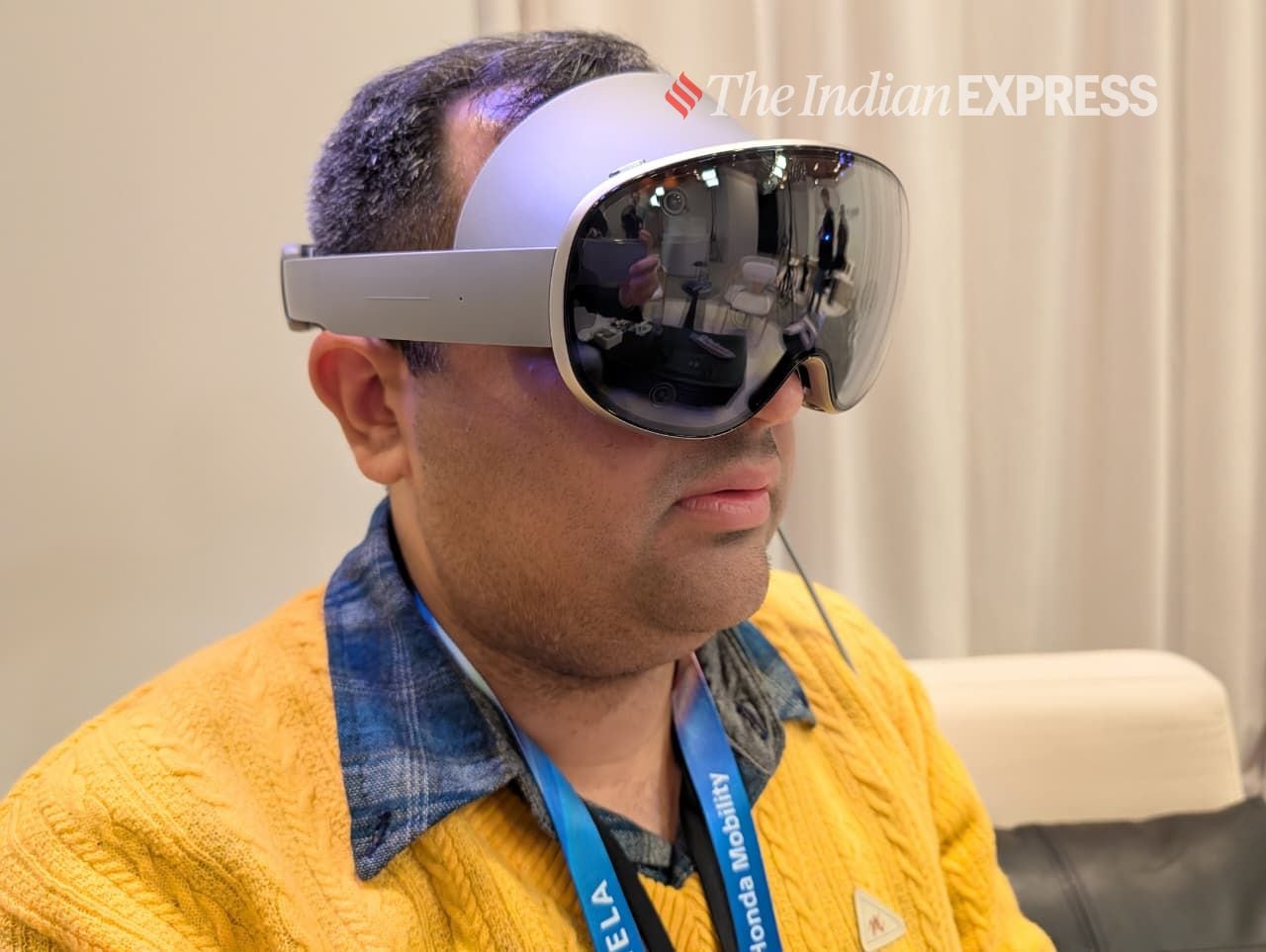
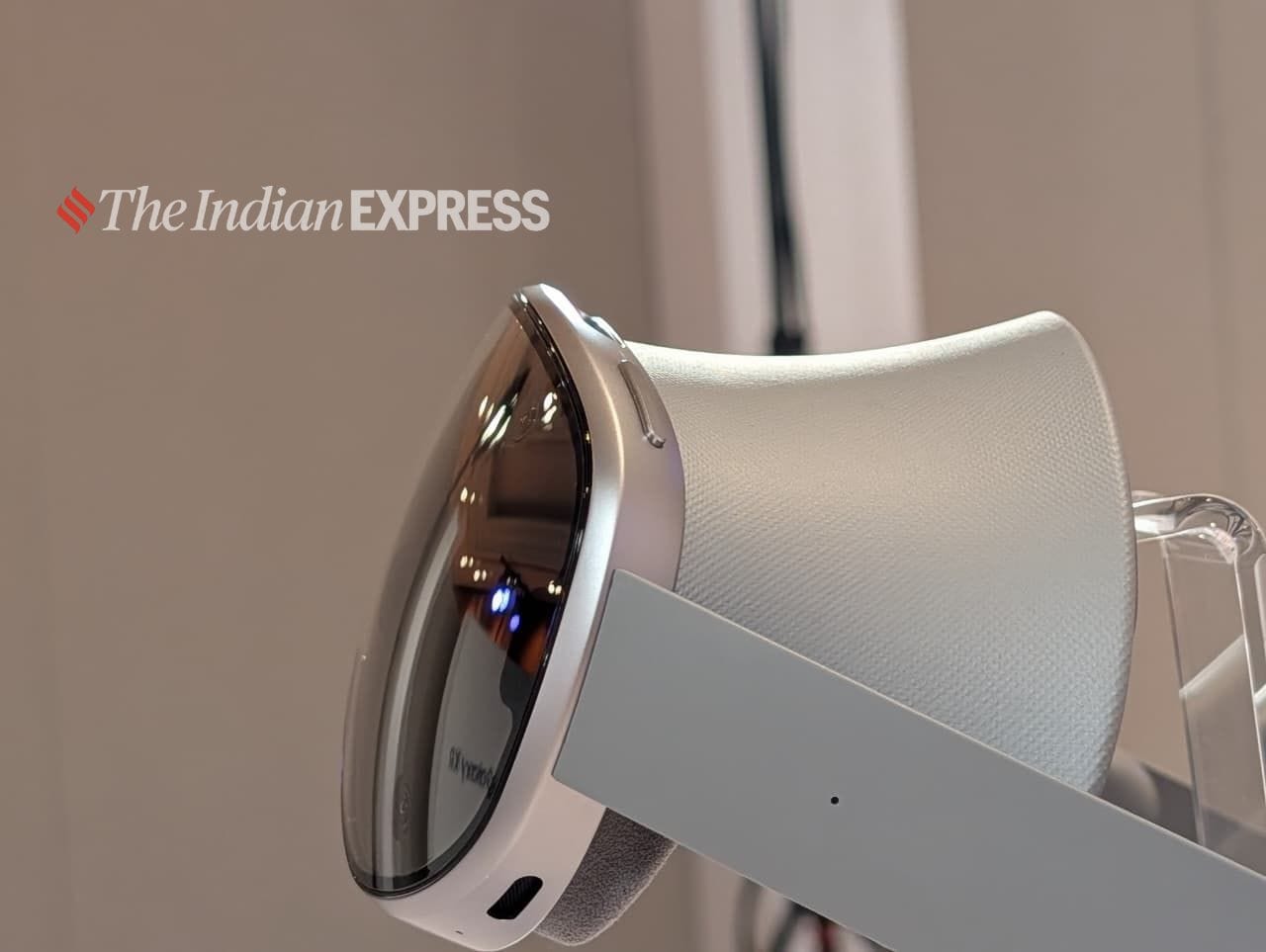 The headset is loaded with cameras. (Image: Anuj Bhatia/The Indian Express)
That said, like any other mixed-reality headset, including the Galaxy XR, there’s a limited amount of time you can comfortably keep it on. It isn’t designed for all-day use like Meta’s Ray-Ban display glasses, which can be worn throughout the day. During my time with the Galaxy XR, I maxed out at around 30 minutes.
The device looks very similar to the Apple Vision Pro – almost identical, I would say. However, it feels more plastic-heavy and less premium than the Vision Pro, and it includes a tethered battery pack. This design choice helps keep the headset itself lighter. As for battery life, it lasts around two hours, or up to two and a half hours when watching video. That’s on par with the original Vision Pro, though the newer M5 version extends battery life to about two-and-a-half hours with mixed use.
Story continues below this ad
As I said before, the Galaxy XR is more comfortable to wear; however, I noticed that tightening the rear dial often puts pressure on the forehead, which heats up when the internal fans turn on, making sweat almost unavoidable during extended use. While the included magnetic light shields help block ambient light, some light bleed still reaches the XR experience.
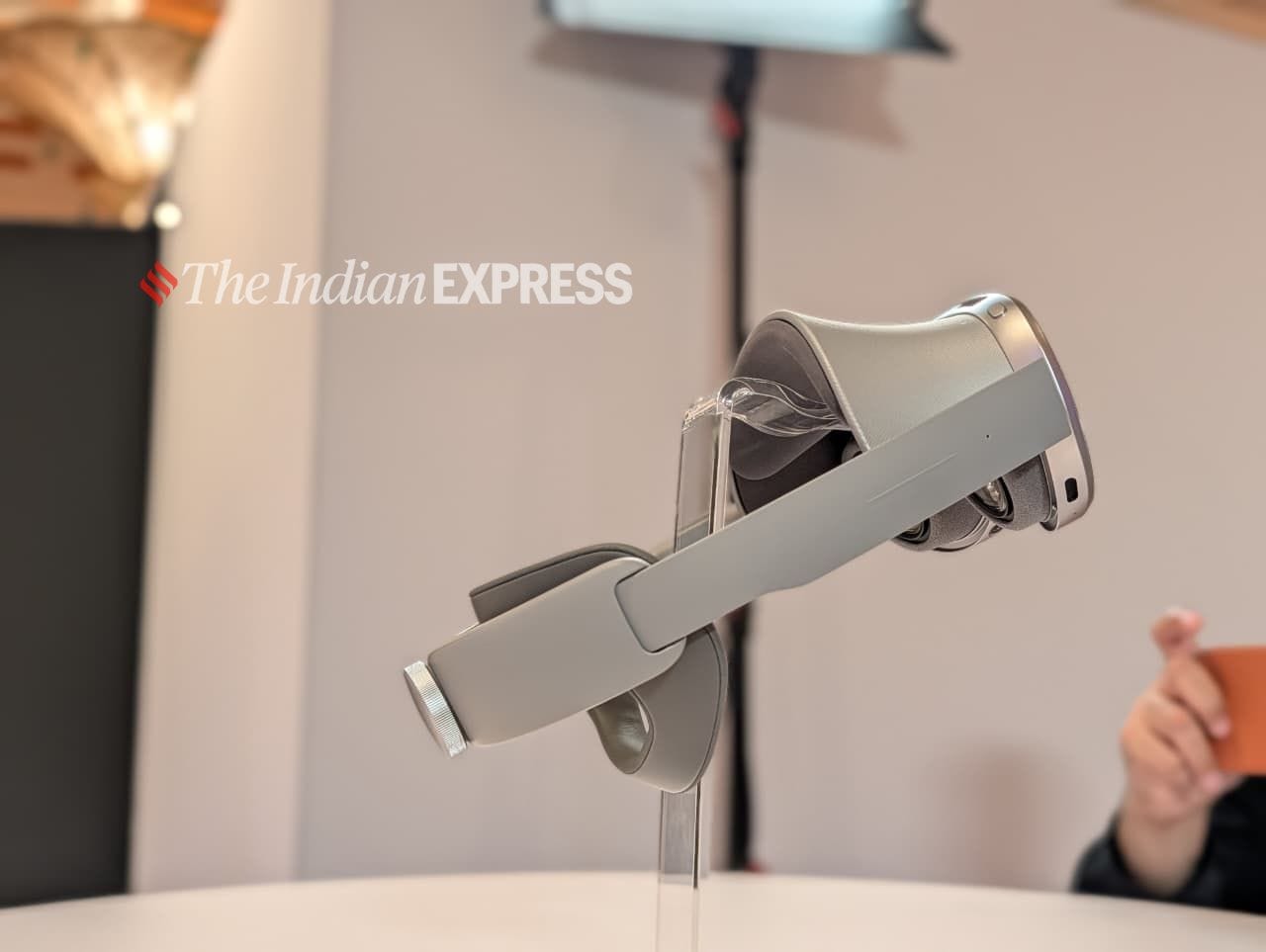 The device looks very similar to the Apple Vision Pro – almost identical. (Image: Anuj Bhatia/The Indian Express)
Before I headed into a closed-door session for select journalists at the Wynn Hotel, I was asked whether I wear glasses. A staff member then took my glasses, measured my prescription, and fitted the correct optical inserts into my unit.
Overall, the demo is a great way to get to know the device, and it’s something you should do if you are planning to get the Galaxy XR and live in the US.
A redefined hardware
Once I wore the headset after the staff cross-checked everything, the demo person held a Galaxy tablet and started giving instructions on how to use the headset, so I could get familiar with the device, its interface, and the gestures. The demo person could see what I saw on the headset through the tablet, so whenever I went wrong, he could guide me.
Story continues below this ad
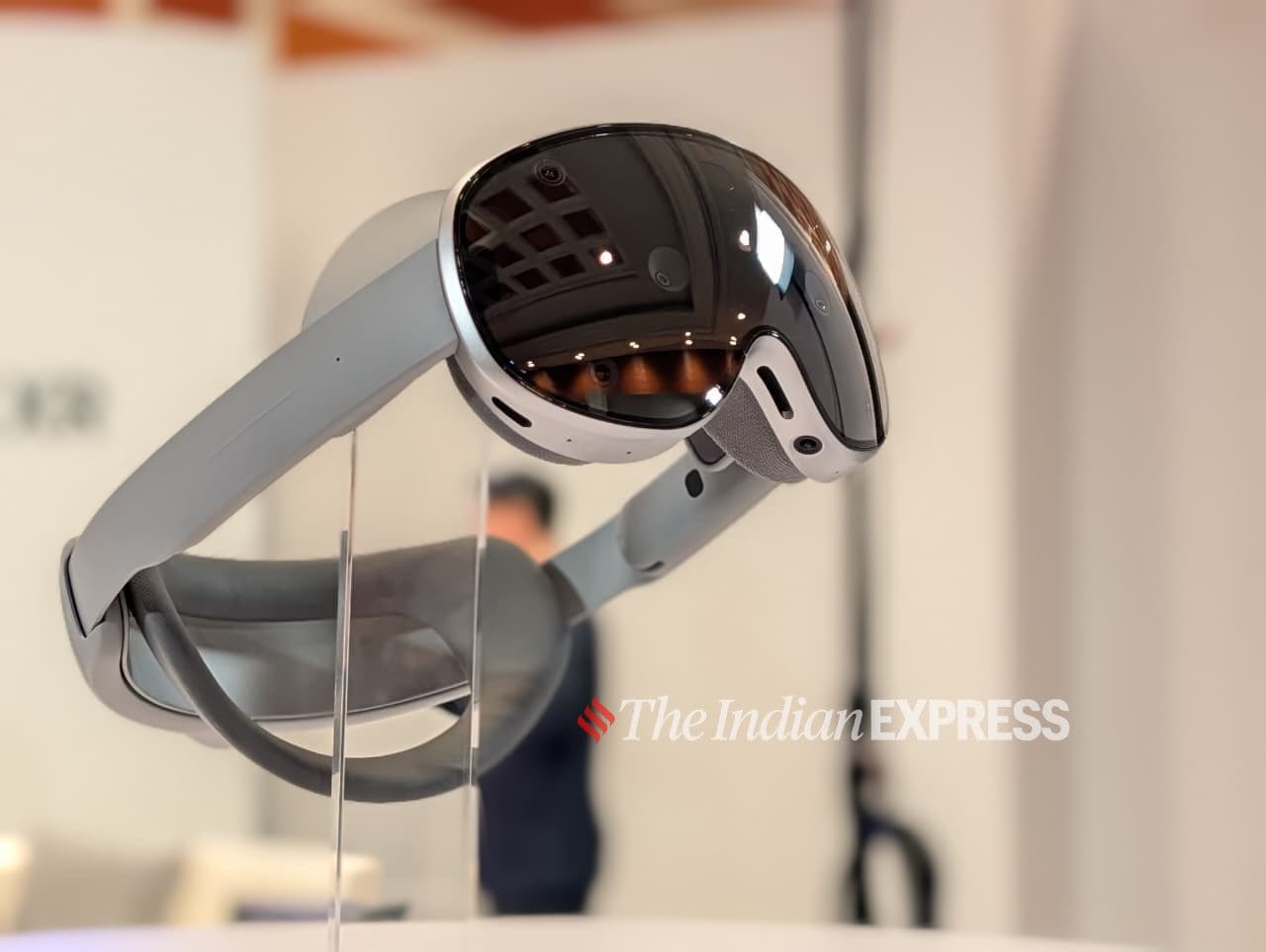 The micro-OLED displays are particularly impressive. (Image: Anuj Bhatia/The Indian Express)
Inside, the Galaxy XR uses Qualcomm’s Snapdragon XR2 Plus Gen 2 processor, which is powerful, though not as capable as Apple’s M5 chip in the Vision Pro. Based on my experience, the chip performed well, with no stuttering or noticeable slowdowns, and it also supports 4K video playback.
In fact, the field of view and display resolution on the Galaxy XR felt better than on the Apple Vision Pro. The micro-OLED displays are particularly impressive, offering a resolution of 3,552×3,840 pixels per eye (around 29 million pixels in total). That’s higher than the Vision Pro’s reported 23 million pixels and 3,660 x 3,220 pixels per eye, although the Galaxy XR currently tops out at 90Hz, compared to the M5 iPad Pro’s 120 Hz.
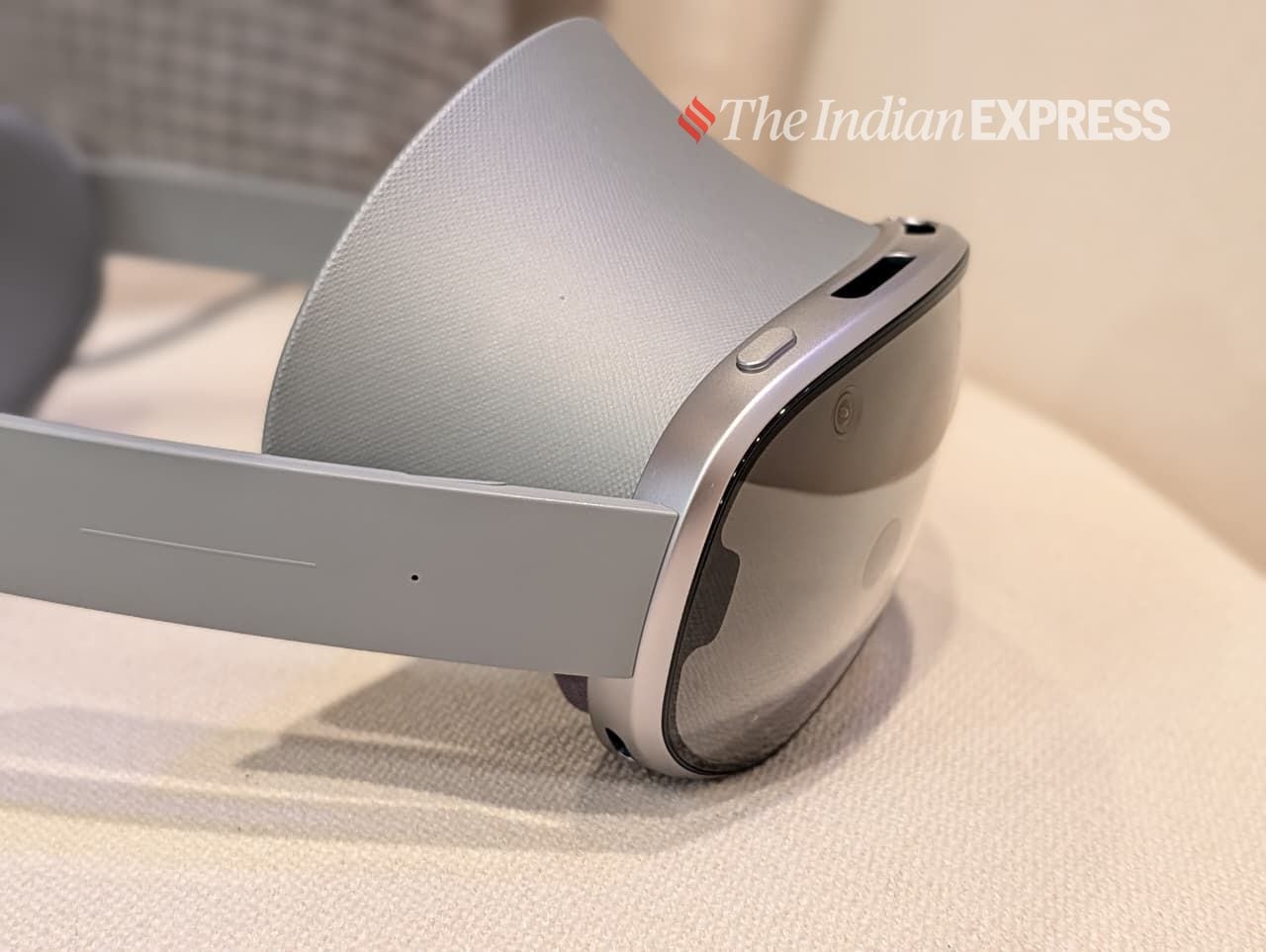 It features an action button on the top-right of the headset, and a volume rocker on the upper-left side. (Image: Anuj Bhatia/The Indian Express)
The headset comes with 16 GB of RAM and 256 GB of storage, similar to the Vision Pro’s base configuration. It features a touch-sensitive strip on the right side of the headband, an action button on the top-right of the headset, and a volume rocker on the upper-left side. It’s a fairly standard control layout, but, as I mentioned earlier, the Galaxy XR is noticeably more comfortable to wear.
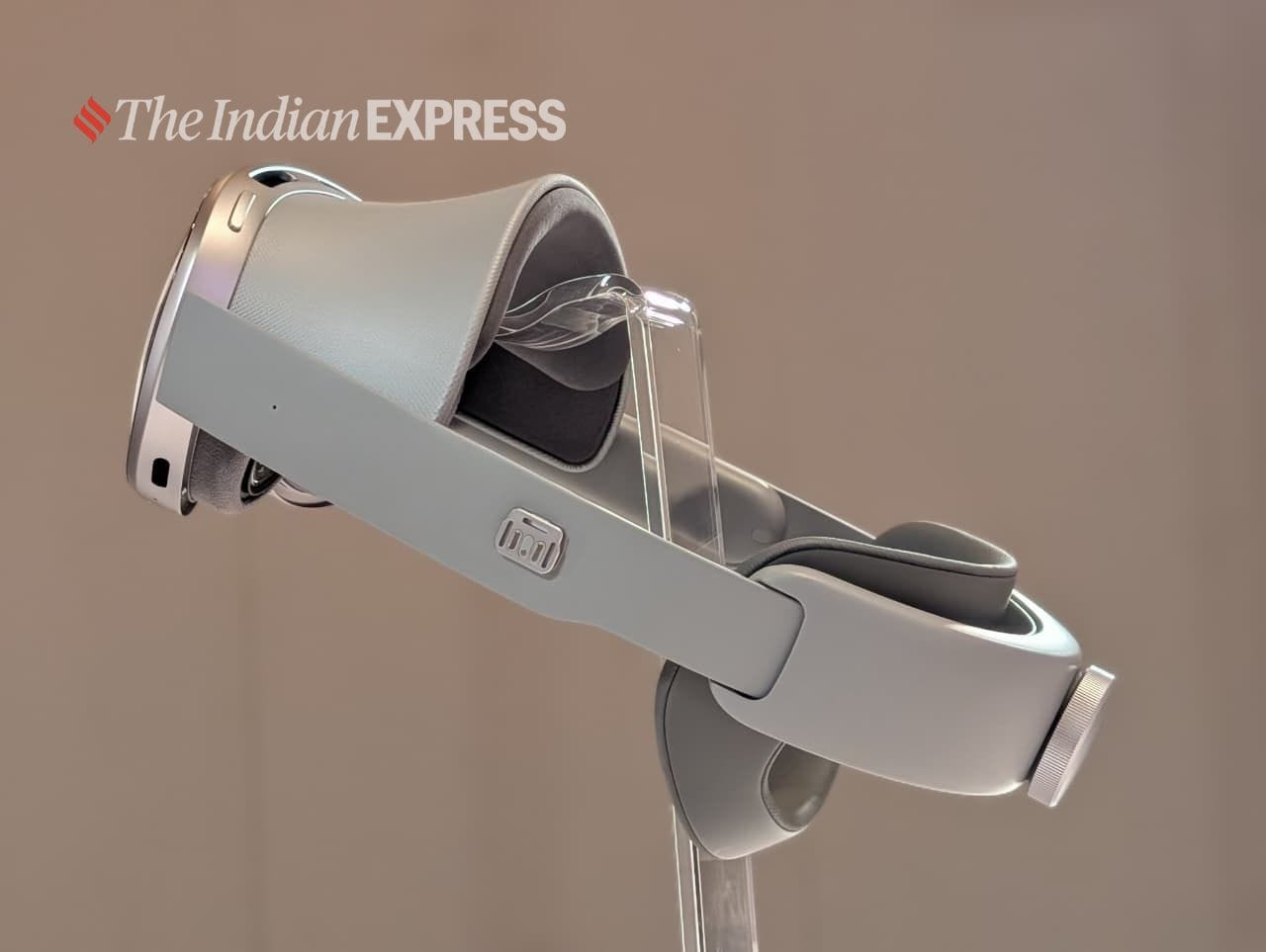 The Galaxy XR uses Qualcomm’s Snapdragon XR2 Plus Gen 2 processor. (Image: Anuj Bhatia/The Indian Express)
The headset is loaded with cameras, as you would expect from a mixed-reality device. It features two high-resolution cameras for passthrough video that look better than on the Vision Pro, along with six external tracking cameras and four internal eye-tracking cameras. These support iris scanning for secure app logins and payments. There’s also facial tracking for animating avatars in Google Hangouts, though Samsung disabled it during my demo.
Story continues below this ad
When I first strapped on the headset, I was greeted with a passthrough view of my surroundings. It was easy to tell that everything was digitised, but the view was also high-resolution and responsive. The primary way to interact with the headset is through hand gestures. You use pinch gestures in the air to select and grab items, and a palm-facing gesture to bring up the main menu. It took me about 10 minutes to get used to it, but I picked it up quickly.
Gemini is the killer app
For me, using the Galaxy XR felt a lot like using a smartphone, and that’s what impressed me. When I tried the Apple Vision Pro for the first time a few years ago, the interface felt very different from the iPhone, and yes, there was a steep learning curve. However, on the Galaxy XR, the user felt at home and instantly familiar if you are an Android smartphone user.
Once you put the headset on, you can see the room around you with a layer of virtual content overlaid. As I mentioned earlier, your hands are the primary input method (Samsung also offers physical controllers, available as a separate purchase), and the system uses eye tracking to determine what you want to select.
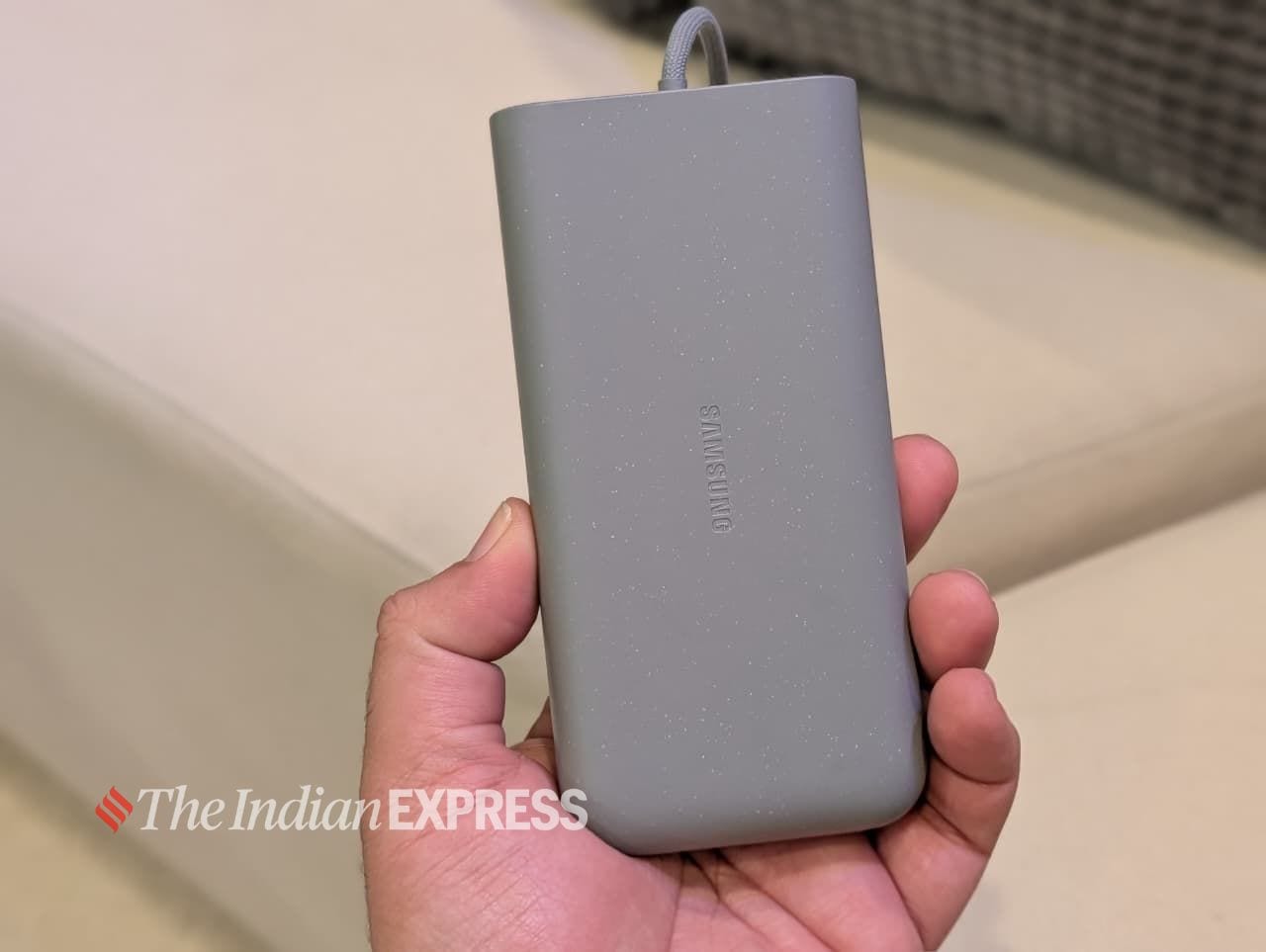 It includes a tethered battery pack. (Image: Anuj Bhatia/The Indian Express)
The main menu feels very similar to what you would find on an Android smartphone, but there are subtle touches that remind you that you are wearing a headset, not using a phone. The demo focused solely on trying a handful of Google apps, including YouTube, Google Maps, and Photos. The headset, of course, supports the Google Play Store, and apps can be downloaded and experienced directly on the device. I am told XR apps will carry a “Made for XR” label. Samsung hasn’t made its own apps and is relying on Google’s Android XR operating system.
Story continues below this ad
The Galaxy XR can do much of what the Apple Vision Pro can. Samsung’s headset can run multiple apps at once in floating windows, play movies on vivid 4K displays, and even handle immersive games. But it’s Google Gemini that makes the biggest difference – and to me, that’s the Galaxy XR’s killer app.
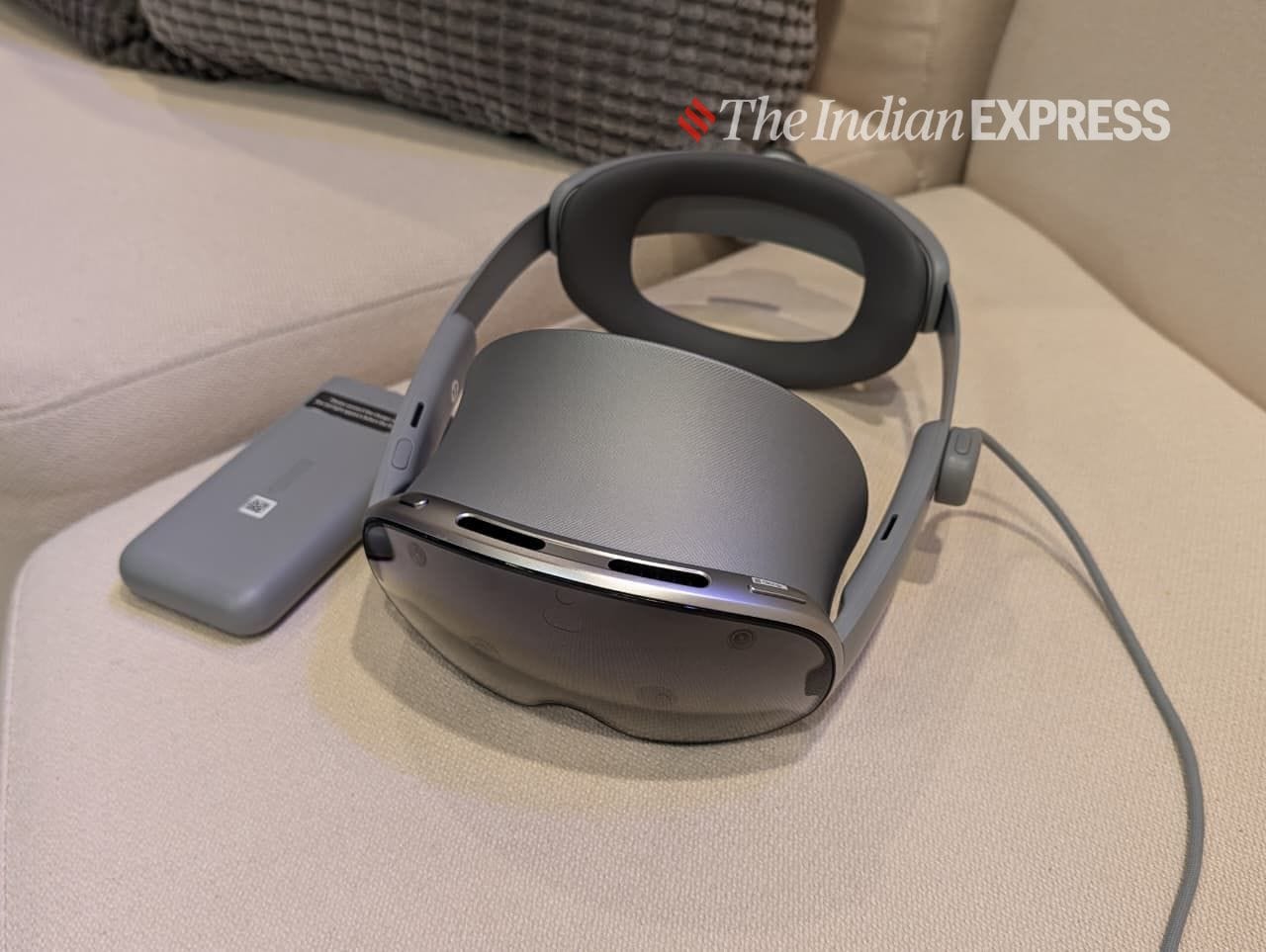 It lasts around two hours, or up to two and a half hours when watching video. (Image: Anuj Bhatia/The Indian Express)
The demo person said I could ask anything, and Gemini would do it for me – from fetching answers to finding a particular spot on Google Maps. Gemini can be summoned by pressing a button on the headset and defaults to Gemini Live. In one demo moment, I asked Gemini to find the Empire State Building on Google Maps, and with the entire New York map open, it quickly snapped to the location. Google Maps, of course, wowed me on the Galaxy XR. The immersive 3D views make Maps so compelling on the headset that it’s hard to imagine experiencing it the same way on a smartphone.
After briefly using the headset, I got the sense that the Galaxy XR is designed as an entertainment companion, not to replace your smartphone, tablet, or personal computer. When you watch movies, you can immerse yourself in a virtual theatre. It’s magical.
 In one demo moment, I asked Gemini to find the Empire State Building on Google Maps. (Image: Anuj Bhatia/The Indian Express)
The Galaxy XR is also a test device for bringing AI to headsets and face computers, a feature other headsets don’t yet offer. Honestly, the Galaxy XR felt a lot like a VR headset with mixed-reality functions. It’s not like a pair of smart glasses, and I could feel that, but it’s a terrific VR headset that lets you see the world around you in your peripheral vision.
Story continues below this ad
The audio and video quality seemed very good, especially the 4K displays. As of now, Google hasn’t announced a software update strategy for Android XR, as it does for its phones, but expect it to receive regular updates to fix bugs and possibly add more immersive features.
Interestingly, it is possible to connect a Bluetooth keyboard and mouse and work in a virtual space, though Samsung didn’t focus much on this aspect. However, Samsung did showcase the Galaxy XR’s use in enterprise training by partnering with Samsung Heavy Industries for shipbuilding training. Google says Android XR will support the Android Enterprise Framework.
Early outlook
The Galaxy XR isn’t trying to reinvent the mixed-reality headset; the formula is the same, but the implementation is more refined. While Samsung brings its hardware expertise, Google adds its software prowess, and Qualcomm offers years of experience in chips, the result is the Galaxy XR.
I hope the Galaxy XR finds support from the audience; a slightly more accessible price could help. That said, mixed-reality headsets and VR devices haven’t had a great commercial track record, so a lot depends on how well the Galaxy XR fares commercially.
Story continues below this ad
At the same time, a new wave of smart glasses is already being seen as the next big thing in tech, and companies are starting to bet big on them. CES 2026 was proof of this. In fact, Samsung and Google are working to bring glasses onto the Android XR platform. This is a space I am already excited about, with a lot of potential.