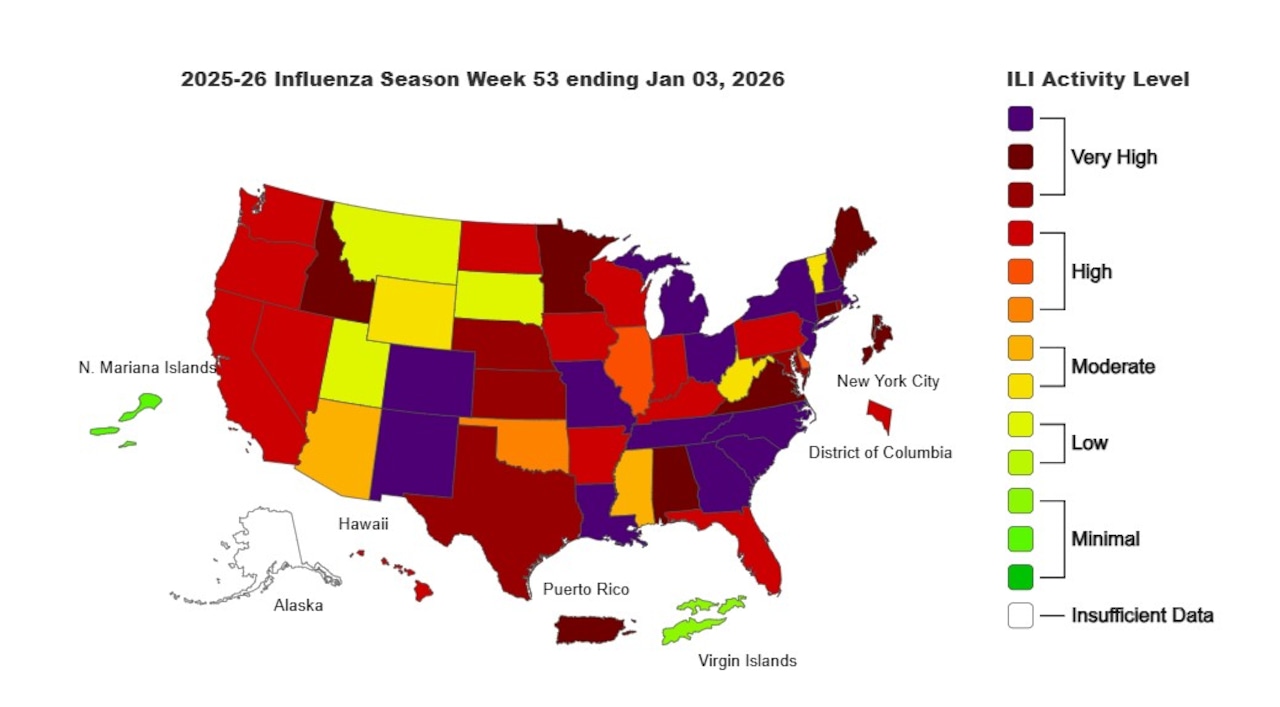
Respiratory illnesses continue to account for more than 10% of outpatient health care visits in Michigan, outpacing the national average.
Influenza-like illness saw a slight decrease from 11.3% of outpatient visits to 10% during the week ending Jan. 3. The decrease ended a six-week run of consecutive rate increases, according to data from the Michigan Department of Health and Human Services (MDHHS).
Similarly, the national average dipped from 8.2% to 7.2%. Twenty-two states, including Michigan, had “very high” flu levels for the week ending Jan. 3, according to a 13-level gauge established by the U.S. Centers for Disease Control and Prevention (CDC).
Last year’s flu season was among the worst in the last 15 years, highlighted by high hospitalization rates and the most pediatric flu deaths in a season since at least 2004.
This flu season has surged more quickly than last year, though it’s not clear if it’ll rival its above-average peak. Last season’s weekly case count maxed out in February.
The CDC estimated at least 15 million Americans have been sickened by the flu this season, of whom at least 180,000 have been hospitalized and 7,400 have died. Seven flu-associated pediatric deaths have been reported, none of which were in Michigan.
Hospitalizations have hit all age groups, though most are 65 and older. In Southeast Michigan, children 4 and younger make up the second-hardest hit age group behind seniors.
Dr. Aarti Raheja, a pediatrician at Michigan Medicine, is concerned about the intensity of the current flu season. She said the flu isn’t mild for many children and often those who die were not vaccinated.
In addition to flu, Raheja has seen an increase in RSV cases, and she’s worried about measles and whooping cough amid declining immunization rates.
Physicians recommend staying home and avoiding others if you’re feeling ill. Stay vigilant about washing hands and avoiding touching your face.
It’s not too late to get a flu shot. Health officials said it remains the best tool to reduce risk of severe illness from the flu, though less than 25% of residents have received this year’s booster.
To find a vaccine near you, contact your physician or pharmacy, or visit the Vaccine Finder website. Shots are typically free if you have insurance, and there are options for free or low-cost shots for individuals who don’t have health insurance.