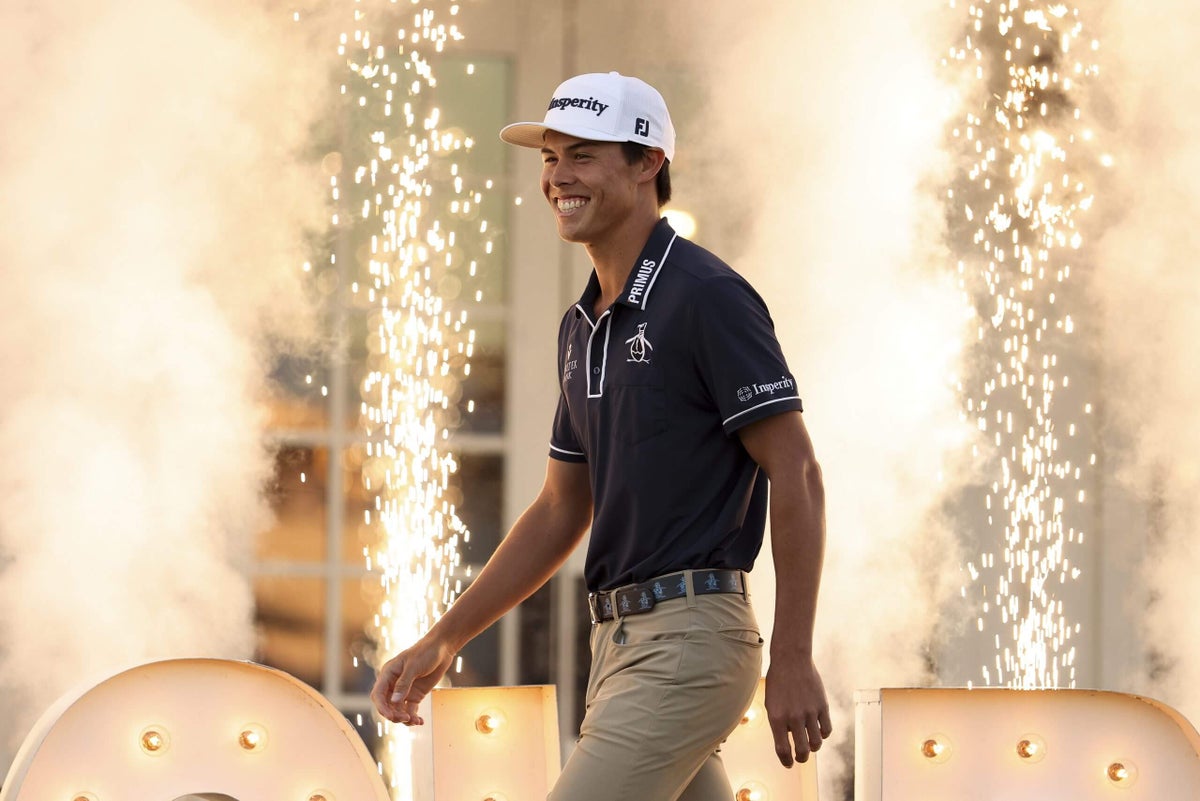
Johnny Keefer is the world’s fastest-rising golfer you’ve never heard of.
Keefer is making his debut as a card-holding PGA Tour member this week at the Sony Open in Hawaii. He’s 25, two years out of school, and still lives at home with his parents.
Keefer’s ascent happened quietly, but quickly. It was historically rapid and vastly underrated. The result? Keefer is a PGA Tour rookie who has a tee time at the 2026 Masters.
In 38 starts as a professional, Keefer rose from No. 1,654 in the world to No. 45. He entered the top 50 in one year, three months and 26 days. If the Official World Golf Ranking (OWGR) has you inside its top 50 at the end of the year, that means a ticket to Augusta National: Keefer’s mom and dad hid the paper invitation from him until Christmas Day.
“If you told me a year ago that we were talking about the Masters, talking about booking houses and stuff, playing in my third major, I’d be like OK, sure. Whatever. You’re crazy,” Keefer said.
Let Nosferatu’s judgment prevail — the rankings guru, not the vampire film. Close followers of golf may recognize that pseudonym from X, where an anonymous profile (@VC606 is his username) has become golf’s de facto authority on the OWGR system.
Nosferatu believes Keefer’s feat to be unprecedented.
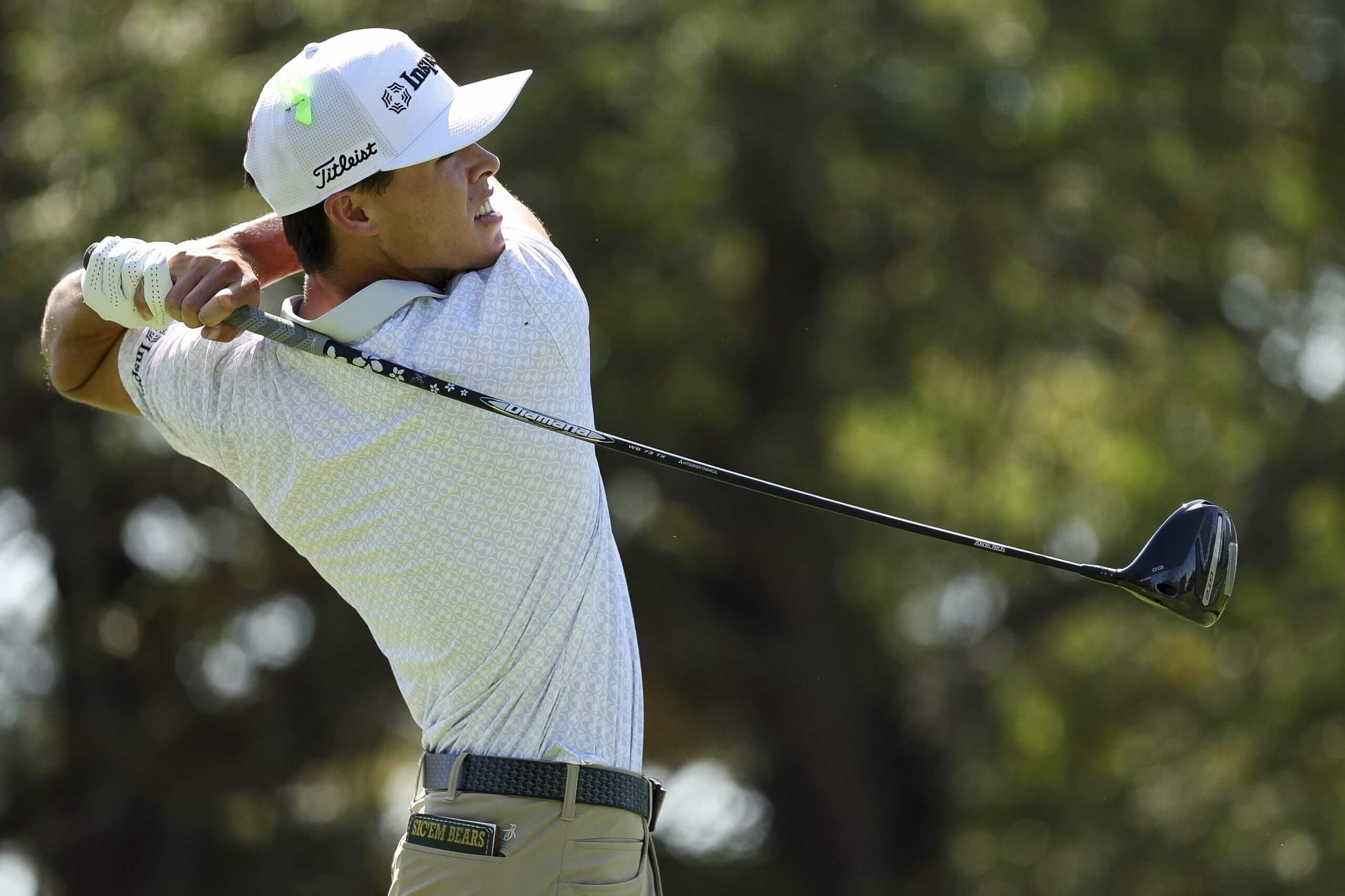
Johnny Keefer will make his PGA Tour debut this week at the Sony Open. (Mike Mulholland / Getty Images)
Keefer made it to the top 50 by accruing points mainly on feeder tours. That’s aside from a few points earned in the 2025 U.S. Open, which Keefer played his way into, and a 2025-ending T7 at the RSM Classic, which he got in via sponsor exemption. He unintentionally gamed the system, capitalizing on the OWGR’s preference for multiple wins in short spans of time.
One season on the PGA Tour Americas and another on the Korn Ferry Tour were all Keefer needed to make his climb. According to the OWGR expert, the only other player to come close to achieving that same feat was Michael Sim, an Australian golfer, more than 15 years ago.
Keefer barely snuck onto the PGA Tour Americas in his first year as a pro. After a late surge at Baylor during his fifth-year season, he became the 25th out of 25 players to receive status on that developmental tour, as part of the PGA Tour University ranking. That summer, he only finished outside the top 5 twice in 10 events, with one win. That made him the circuit’s player of the year. His scoring average was 66, the best by 1.3 shots.
On the Korn Ferry Tour, it was more of the same. Two wins. Two runner-up finishes. Nine top-10s. Korn Ferry Tour Player of the Year and Rookie of the Year. The only other two players to win both awards in the same year? Sungjae Im (2018) and Scottie Scheffler (2019).
Keefer picked up golf later than most, after one too many concussions playing football and lacrosse convinced his parents a change in sport was necessary. His mother and father’s work in the construction industry took the Keefer family from Baltimore to San Diego to San Antonio by the time he was in high school.
After accepting a recruiting offer from Baylor, Keefer became a good collegiate player, but he was no Ludvig Aberg or Luke Clanton. One semester in college, Keefer’s game fell apart. He was shooting 78s, staying on the range for hours, trying to figure it out. At Baylor, players shag their own balls. Want to hit more? Pick ’em up. All of them. Too many nights fetching wayward shots made Keefer realize something had to change.
“I switched up parts of my mental game and stopped beating myself up,” he said. “I started trying to have as much fun as possible.”
Keefer started playing the best golf of his career when the stakes were the highest: at the pro level. But how? Why?
An unorthodox practice philosophy trained Keefer to thrive on low-scoring leaderboards. Keefer’s childhood coach, Johnny Gonzalez, wouldn’t let him move back to a longer tee box until he could break 65 at his current tee. At Baylor, it was the same: Play up, and go as low as humanly possible.
“I used to play from the red tees a lot just for fun,” Keefer said. “Our home course at Baylor is a shorter track. It teaches you that 5 or 6 under is what you want, versus 1 or 2 under on a course that’ll just beat you up. We had a course that helped with early professional golf.”
Bryson DeChambeau has spoken out about practicing from the forward tees, and he recommends the strategy to aspiring junior golfers. Scoring low on shorter courses isn’t as easy as it looks. Fairways naturally narrow close to the green, promoting accuracy off the tee. And the rest of the challenge is all in your short game. On the Korn Ferry Tour, where winning scores float between 20 and 30 under par, that practice paid off for Keefer.
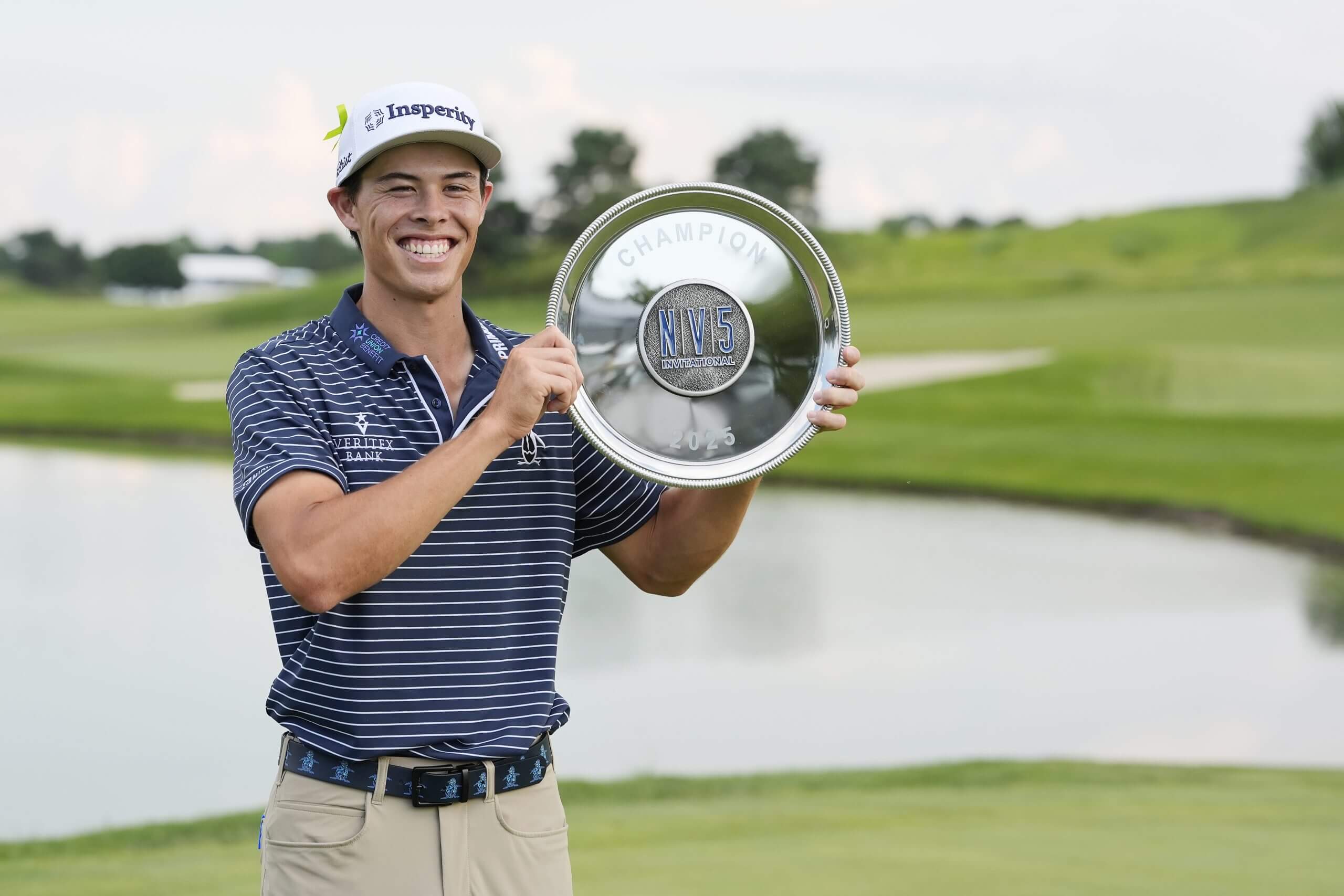
A pair of Korn Ferry Tour wins were the highlights of Johnny Keefer’s season. (Patrick McDermott / Getty Images)
The contributing factors to Keefer’s ranking rise aren’t to be discounted. The OWGR hasn’t been the same since the onset of LIV Golf, which is still trying to earn ranking points in Year 5. Jon Rahm is No. 87, for instance. On DataGolf.com, a ranking that more heavily accounts for recent form, Keefer is No. 92.
Keefer has never been particularly concerned with the numbers attached to his name. But in May, after his first win on the Korn Ferry Tour, their importance became more apparent.
“Everyone was asking me, ‘What’s your world ranking?’ I was like, I don’t know, why would I know?” he said.
Two weeks later, Keefer checked his email. He’d been invited to play in his first major, the PGA Championship, because he was inside the top 100.
“With the amount of times that I’ve been on the bubble in a short career, barely squeaking into the PGA Championship, barely squeaking into the Masters, barely squeaking onto PGA Tour University, I realized that every shot matters,” he said. “I hate losing, so I’m never going to try to give away a shot for no reason.”
This season on the PGA Tour, Keefer’s loftiest goal is to make the Tour Championship at East Lake. He’ll take the same approach that he did on the last two tours he played on. Stay aggressive, but not destructive. Keep things light. Play smart. Don’t give up.
Keefer adds: “I’m pretty boring.”
It’s a good thing that boring works.