Read our review of The Disappear, a world-premiere play written and directed by Erica Schmidt at Audible’s Minetta Lane Theatre through February 22.
When egotistical filmmaker Benjamin Braxton (Hamish Linklater) conceives a Gone Girl-ish movie where a wife fakes her death as revenge against her unfaithful husband, it stands in for his own marital disillusionment. So shoddily hidden is the personal inspiration that Benjamin’s character Mirabelle shares a similar name to his novelist wife, Mira Blair (Tony Award winner Miriam Silverman). The male auteur’s corrosion of his life unravels a web of conflicts in writer/director Erica Schmidt’s lofty, unbalanced seriocomedy The Disappear at the Minetta Lane Theatre.
First, the “serio”: Benjamin scapegoats Mira for not gratifying his artistic ego, while she weighs her marital sacrifices with her artistic pursuits. Adding to the dysfunction, their climate-activist daughter Dolly (a wonderful Anna Mirodin) bears the cost of their careers in terms of her psychological stability and their carbon footprint. The “comedy”: plenty of explosive zingers and Linklater’s clownish body gags pushing farce to the fore.
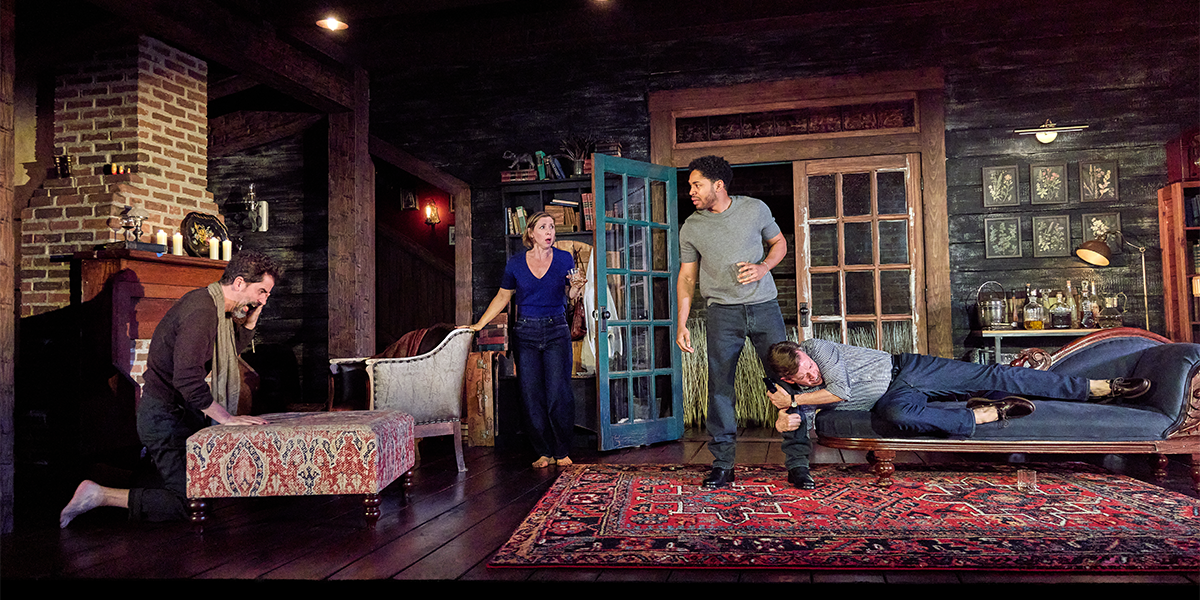
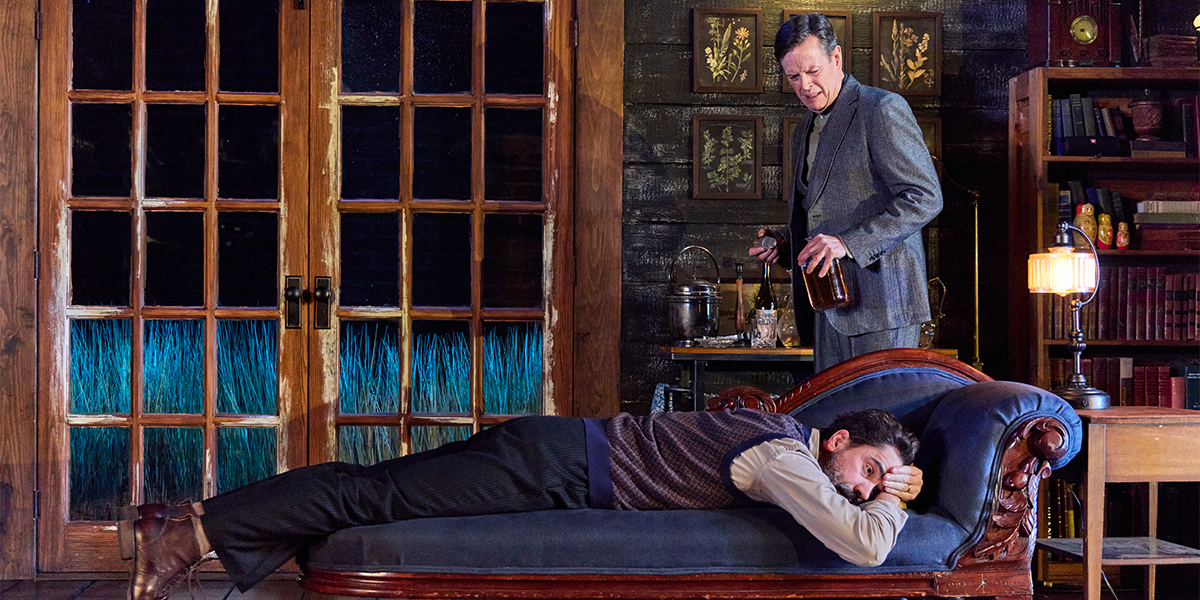
Hypnotic as it is to watch Linklater’s go-for-broke bid for the Narcissistic Husbands Hall of Fame (his habit of prostrating on the floor becomes a running gag), The Disappear often feels distracted, not enhanced, by his clowning. Luckily, Silverman’s acidity as Mira does much to counterpoint the cartoonishness. She deserves better than Benjamin, but we hear her loud and clear that she intends to uphold the marriage, though she eventually reckons with the gender-related double standard that demands her sacrifice to domestic duty. She’d never be offered as much slack as her arrogant husband.
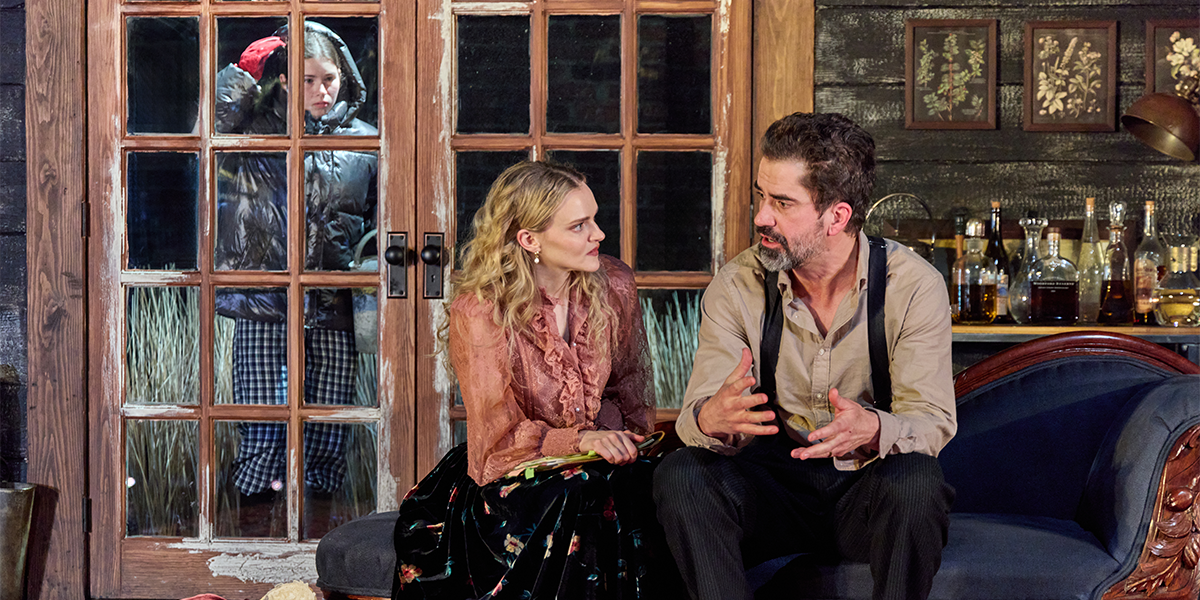
Enter Madeline Brewer as 20something emerging actress Julie Wells, with a suspect British accent, a straw bonnet, and a perky getup as if she were auditioning for Bo Peep (costumes are by Jennifer Moeller and Miriam Kelleher). Benjamin is eager to mold her into his mistress and muse by erecting the movie around her, much to the chagrin of his producer Michael Bloom (a bullheaded Dylan Baker), who finds her eccentricity off-putting. Brewer cunningly weaponizes ingénue ditziness to belie her ambition, even as she’s genuinely attracted to Benjamin. She captures a coexistence of pretentiousness and sincere artistic intelligence.
Wells’s co-star Raf Night (Kelvin Harrison Jr.) throws in another disruption: Upon his casting, he advocates for Mira to be the film’s screenwriter, a request that offends Benjamin as much as it gives Mira an opportunity to step outside her comfort zone. Disappointingly, Harrison’s own onscreen credentials do not translate into Raf’s fabled A-list aura. This may owe to Schmidt’s direction, portraying Raf as easygoing while lines about suicidal incident land as airless. The play as a whole also doesn’t completely earn its stormy mood shift in the final 20 minutes.
The Disappear bites off more it can chew, attempting to ruminate on intergenerational tensions in the film industry, the scars left by art, composing art amid climate disaster (the Los Angeles fires seem to get a nod), and more all at once, leaving me pining for a cohesive version of this play.
The Disappear summary
In an isolated cabin, a marriage deteriorates between 50something filmmaker Benjamin Braxton and novelist Mira Blair, who share teenage daughter Dolly. Mira resolves to hold onto their union and weather Benjamin’s mid-life crisis while her husband becomes infatuated with a young breakout actress, Julie Wells, and writes her as the star of his next avant-garde movie. Matters complicate when A-list actor Raf Night reels Mira into collaborating on the movie, but the gig may just help emancipate her.
What to expect at The Disappear
The play is situated in an elegant, secluded cabin that encompasses the Minetta Lane stage. Scenic designer Brett J. Banakis incorporates one choice that appears bizarre but acquires a thematic purpose: Benjamin’s writing desk is planted outdoors among the tall grass, a liminal space that represents his remove from his domestic space. The audience can also glimpse the outdoor grounds where Dolly tends to her so-called “apology garden” to offset the carbon footprint of her parents’ careers.
What audiences are saying about The Disappear
Theatregoers have taken to social platforms like Mezzanine and TikTok to discuss The Disappear, sharing mixed reactions.
- TikTok user @goodnoticingpod commented that The Disappear was a funny, interesting look at “what do we owe a genius man… why don’t women get the same [fame]?”
- “The show was very predictable, but still very good. Act one was a little meh, but then act two felt more explosive. Overall, the show had my complete attention and I would definitely recommend it to a friend.” – Mezzanine user Nick Cairano
- “Way too long and all the characters’ schticks grow old halfway through the second act. Cast was wonderful and there were a lot of fun moments but it didn’t really come together to anything interesting.” – Mezzanine user Derek Kahle
- “The toxic traits of the director were really well highlighted — the gaslighting was so intense. I love seeing awful people onstage. Maybe the characters weren’t narcissists themselves, but they all learned how to be selfish from a narcissist. The show did a good job of pointing out how darkness from a bright person can be the inspiration to better their own lives.” – My +1 at the show
Read more audience reviews of The Disappear on Show-Score.
Who should see The Disappear
- For followers of Erica Schmidt’s work, The Disappear is a spiritual successor to Lucy, her previous play about the cracks of stable facades and simmering questions about maternal versus work commitments, also presented in the Minetta Lane Theatre.
- The Disappear boasts an alluring cast, from the Tony-winning Miriam Silverman (The Sign in Sidney Brustein’s Window); Kelvin Harrison Jr. (who starred in the movie musical adaptation of Schmidt’s Cyrano); Hamish Linklater (Midnight Mass), and Madeline Brewer (The Handmaid’s Tale).
- A fan of well-executed scenic design would love another one of Brett J. Banakis’ encompassing visual contributions, following recent work on John Proctor Is the Villain, The Outsiders, and The Notebook on Broadway.
Learn more about The Disappear off Broadway
Though entertaining, Erica Schmidt’s The Disappear is a patchy examination of artistic and personal sacrifices.
Photo credit: The Disappear off Broadway. (Photos by Jeremy Daniels)