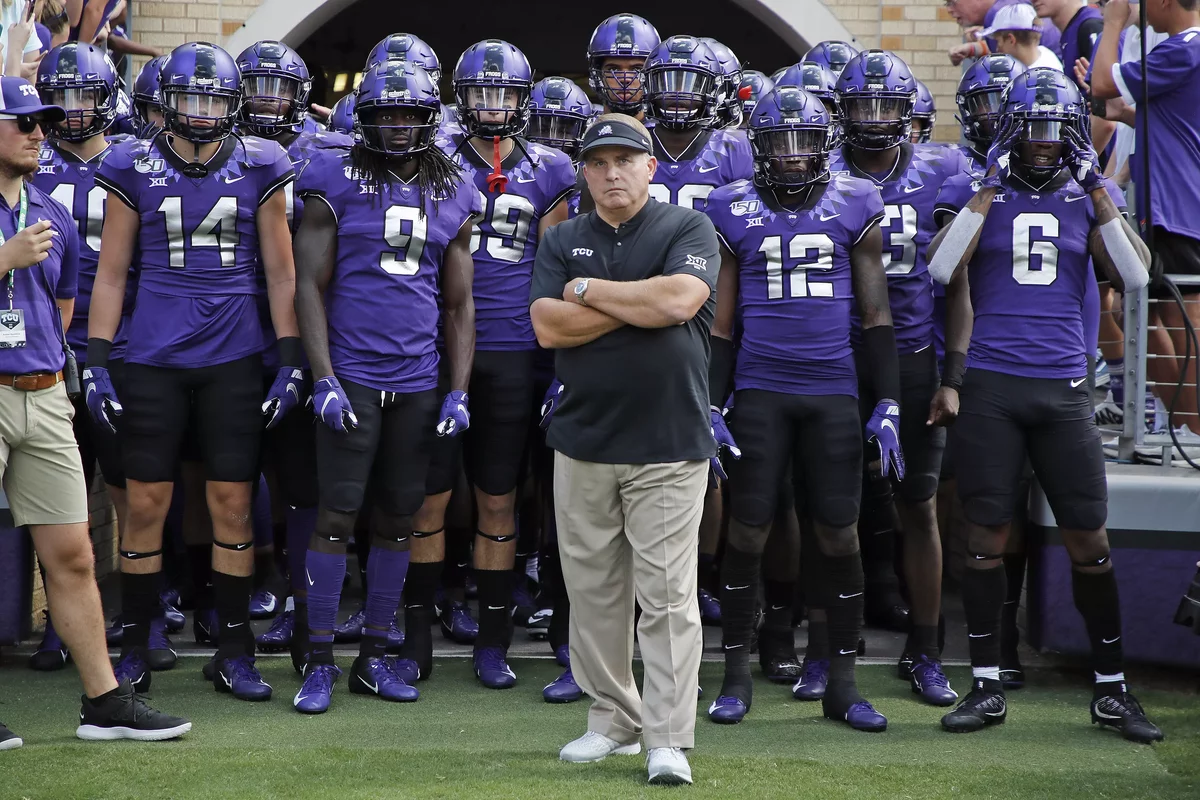
Across 22 seasons at TCU, Patterson compiled a 181–79 record while dragging the Horned Frogs through three conferences and into a permanent seat at the big table. Conference USA became the Mountain West, which became the Big 12, and through it all Patterson kept the program’s spine intact — disciplined, defensive, and unapologetically physical. His teams finished in the final AP Top 25 11 times, seven of them in the top 10, including a No. 2 ranking in 2010 and a No. 3 finish in 2014. Those 181 victories rank him 12th all-time among coaches who stayed in one place, and 35th in the history of the sport, according to a release.
The bowl wins came next, eighteen trips in all, highlighted by a Rose Bowl victory in 2011 that felt like a cultural milestone as much as an athletic one. TCU had finally crossed the invisible line separating the outsiders from the establishment. Patterson’s teams went 11–6 in bowls, won the Peach Bowl, played for a Fiesta Bowl title, and finished a perfect 13–0 in 2010, proof that the Frogs could beat anyone, anywhere, with anyone watching.
Defense was always Patterson’s calling card. Five of Patterson’s units finished No. 1 nationally in total defense, and his résumé reads like a coaching clinic — 21 First Team All-Americans, three Academic All-Americans, and 90 First Team all-conference players who learned to see the field the way he did. Quarterbacks Andy Dalton and Trevone Boykin finished in the top 10 of Heisman Trophy voting during their TCU careers. Patterson also guided six conference championships across three leagues.
The awards followed, sometimes in bunches. Conference Coach of the Year four times. National Coach of the Year honors piling up until they reached 22, with the Associated Press, AFCA, FWAA, and Walter Camp all tipping their caps in both 2009 and 2014. By then, Patterson was no longer chasing respect. He was defining it.
His journey started far from the Rose Bowl spotlight — a Kansas State safety and linebacker who took assistant coaching jobs wherever football could be found, from Cal Lutheran to Navy, from Sonoma State to New Mexico. When he arrived at TCU, it was not a destination job. He made it one.
Off the field, Patterson’s imprint runs just as deep. Alongside Fort Worth native Leon Bridges, he co-founded The Big Good Foundation, which has raised more than $5 million for education, children’s health, and workforce readiness. He served as president of the American Football Coaches Association in 2020, earned the Distinguished Texan Award, entered the TCU Athletics Hall of Fame, and is set to receive the Davey O’Brien Legends Award this February.
When Patterson is inducted in December 2026 at the Bellagio in Las Vegas, he will become the tenth Horned Frog coach or player to enter the Hall of Fame — the first since LaDainian Tomlinson. Fewer than two one-hundredths of one percent of the people who have ever played or coached college football will share that room.
“Gary Patterson’s induction into the College Football Hall of Fame is certainly no surprise,” said TCU Director of Athletics Mike Buddie. “His profound impact on our football program, our athletic department, the city of Fort Worth, and the game itself is obvious, and we are thrilled for Gary, his wife Kelsey, and the entire Patterson family to have earned this incredible honor. Along with the thousands of players Gary impacted during his career, we congratulate him on today’s news and look forward to celebrating this honor in December 2026 at the official induction ceremony.