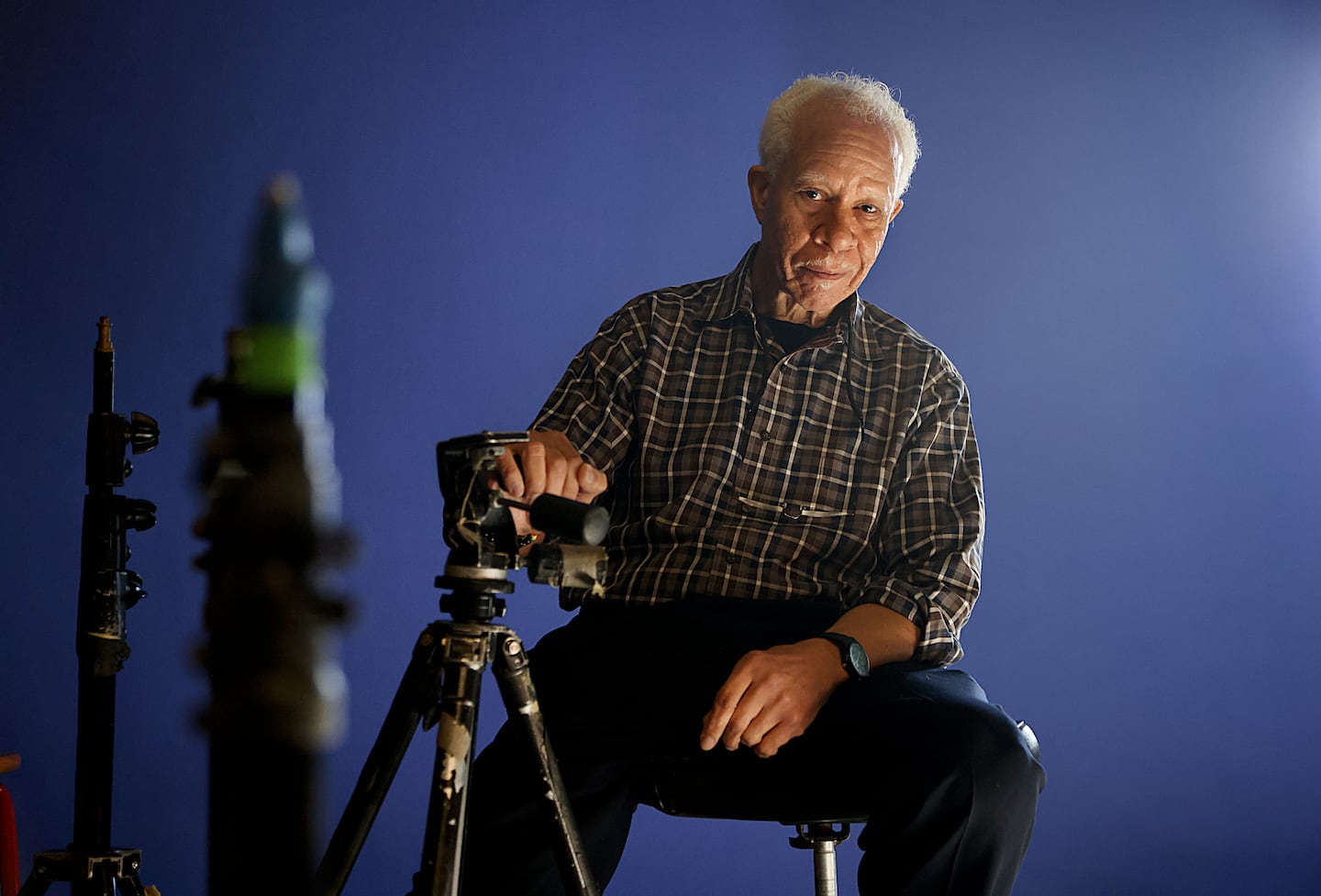
“They paid me a pittance, but it completely changed my career,” said Jones, who is still working at the age of 80. “It was interesting for this little nobody, and I took it to the extreme.”
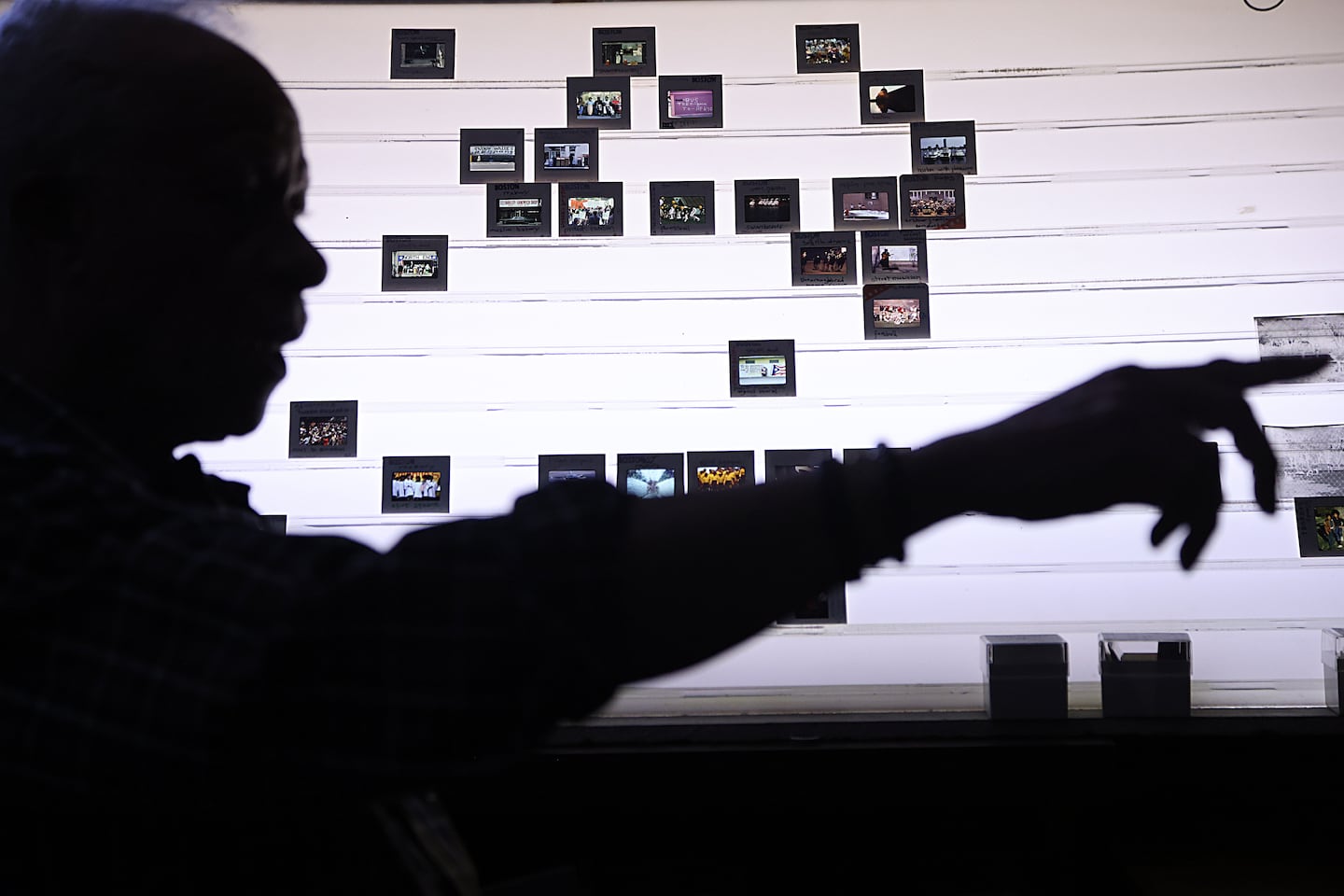 Jones spoke about his photography in front of of his slides placed on a light box. Suzanne Kreiter/Globe Staff
Instead of simply photographing handshakes and historic sites, Jones journeyed into the neighborhoods, where he took his cameras to out-of-the-way streets to show what the Bicentennial meant to ordinary and marginalized Bostonians.
As the nation celebrates its 250th anniversary, Jones’s work from a half-century ago is receiving renewed attention.
A native of Washington, D.C., who moved to the South End in the late 1960s, Jones found his way to the Bicentennial celebration as a fledgling photographer with Boston 200, which managed the city’s commemoration of that anniversary.
“I’m an outsider, remember, and I’m just learning my craft,” Jones recalled.
The importance of the Bicentennial initially did not carry much meaning for him, Jones said. And in a city painfully divided by court-ordered busing to desegregate its schools, the promise of the Declaration of Independence could prompt celebration or cynicism depending on one’s address.
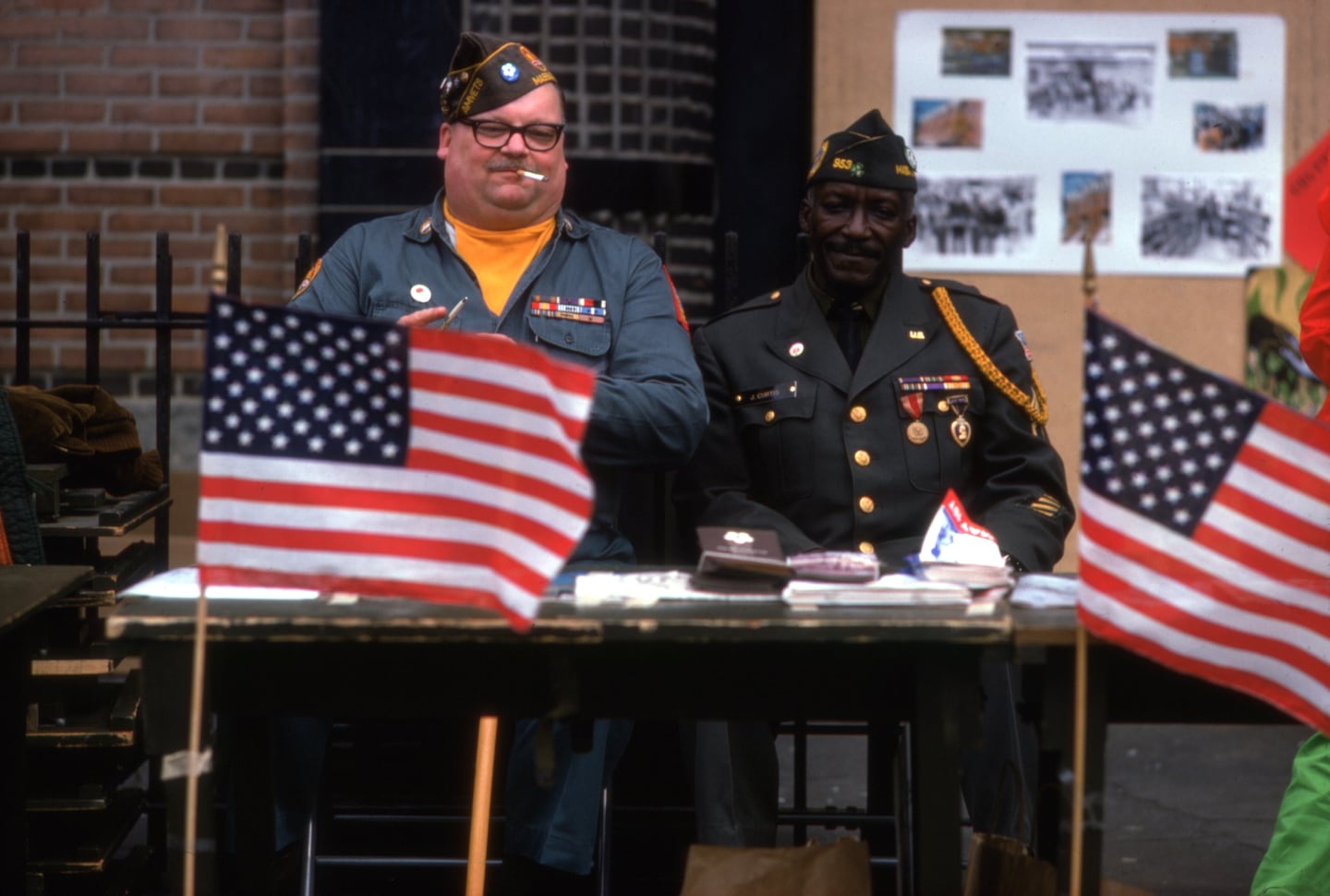 “First Day of the Bicentennial Celebration,” taken by photographer Lou Jones at Eliot Square, Roxbury, in 1975.Lou Jones
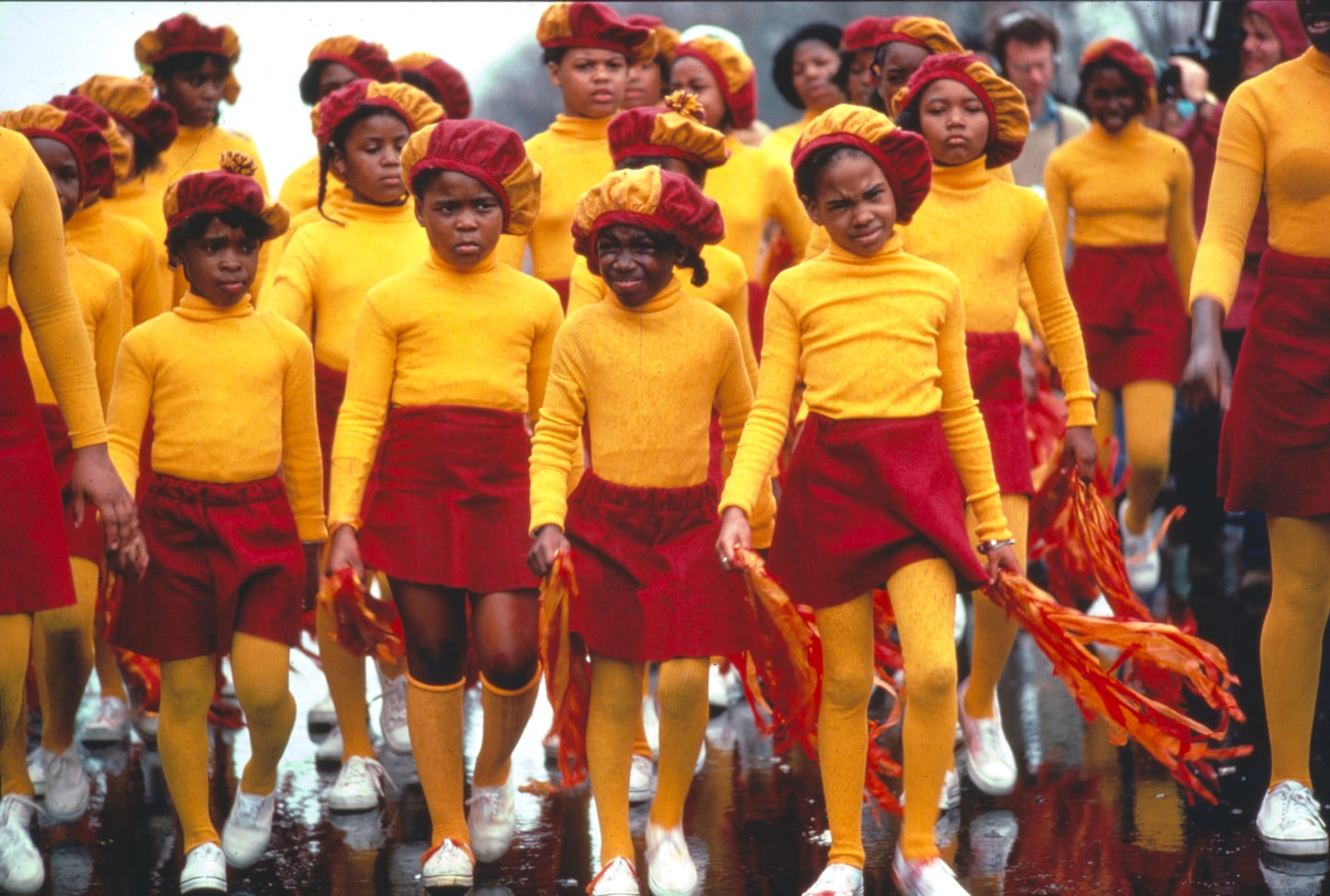 Girls marched in a Bicentennial parade in Eliot Square, Roxbury, in April 1975 in a photograph taken by Lou Jones. Lou Jones
“I learned that the difference between the haves and the have-nots was far bigger than I had ever encountered,” Jones said. “I learned that Boston would be a complicated relationship for me going forward.”
That relationship became a close one with his adopted home, despite what Jones sees as a still-evolving conversation about race.
“I think a lot of the same problems exist. Some people are very resistant to Black people moving in,” Jones said. “But Boston has tried very hard. I find Boston to be a lot more capable of dealing with diversity.”
Fifty years ago, Jones recalled, “I couldn’t get hired for anything as a Black man, not even as an assistant. But think about it. I’ve now been in this business for 50 years as a photographer.
“Back then, I would not have believed it.”
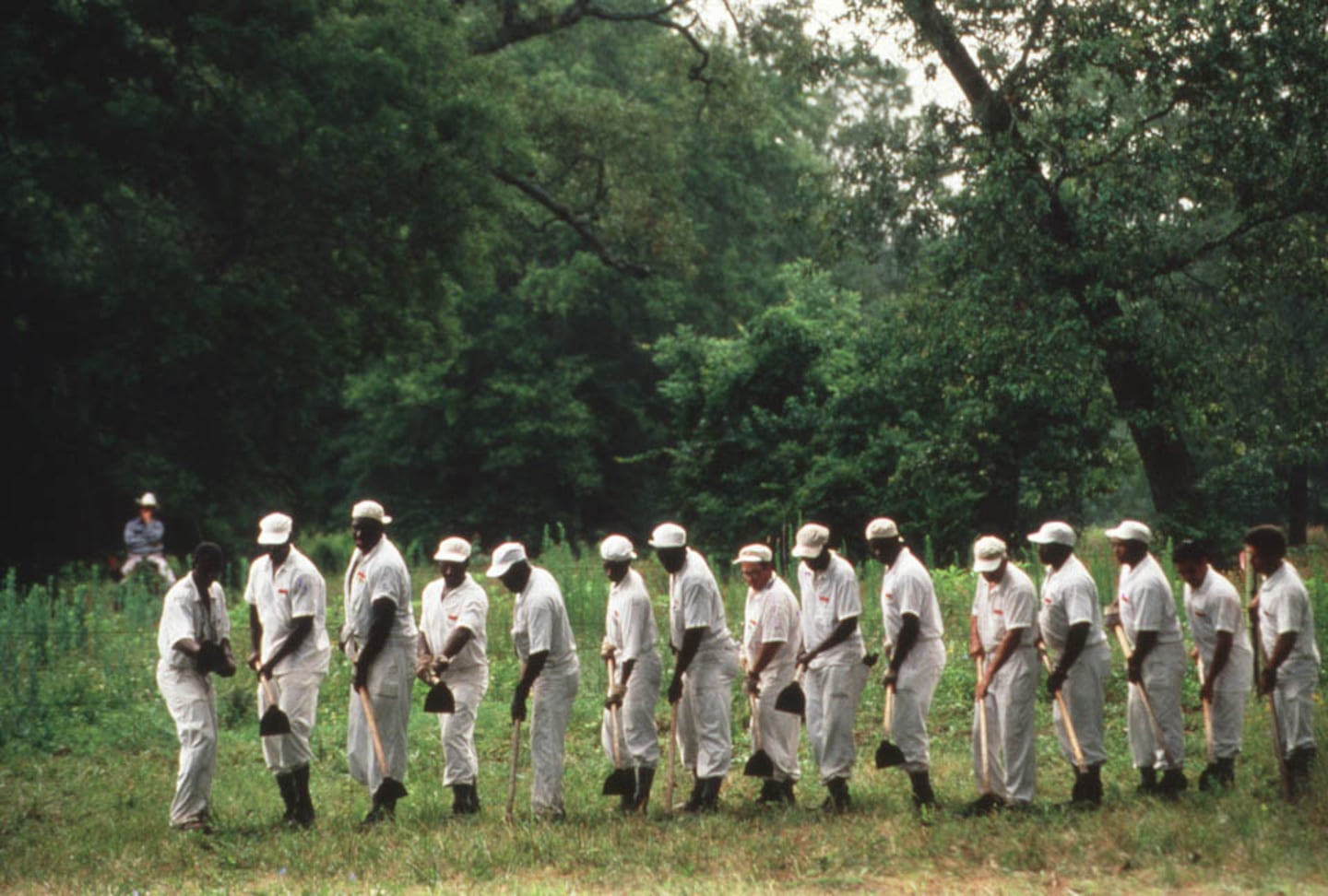 “Chain Gang,” a photo taken by Lou Jones in Huntsville, Texas, on May 4, 2011. Part of Jones’s “Final Exposure” project, the image shows Death Row inmates working in a field.Lou Jones
Along the way, Jones’s self-taught photography has become part of the permanent collections of prestigious institutions such as Harvard University, the Boston Athenaeum, and the Boston Public Library, which holds more than 250 pieces of Jones’s work.
“The quality of Lou’s work over decades as a commercial, editorial, and fine-arts photographer is unmatched,” said Aaron Schmidt, the library’s curator of photography.
Through his lenses, Jones said, “I look at everything.”
That wasn’t always the case. Jones graduated with a physics degree from Rensselaer Polytechnic Institute and then worked briefly for NASA. Eventually, and ever since, he became captivated by the art and creativity of photography.
“I never thought for a minute I would be taking pictures,” Jones said. “I had no education in photography.”
The Bicentennial provided a springboard for his developing passion, even if Jones first regarded the work as only a temporary diversion.
“In the beginning, nobody knew what the Bicentennial was, but it got bigger and bigger and bigger,” Jones said.
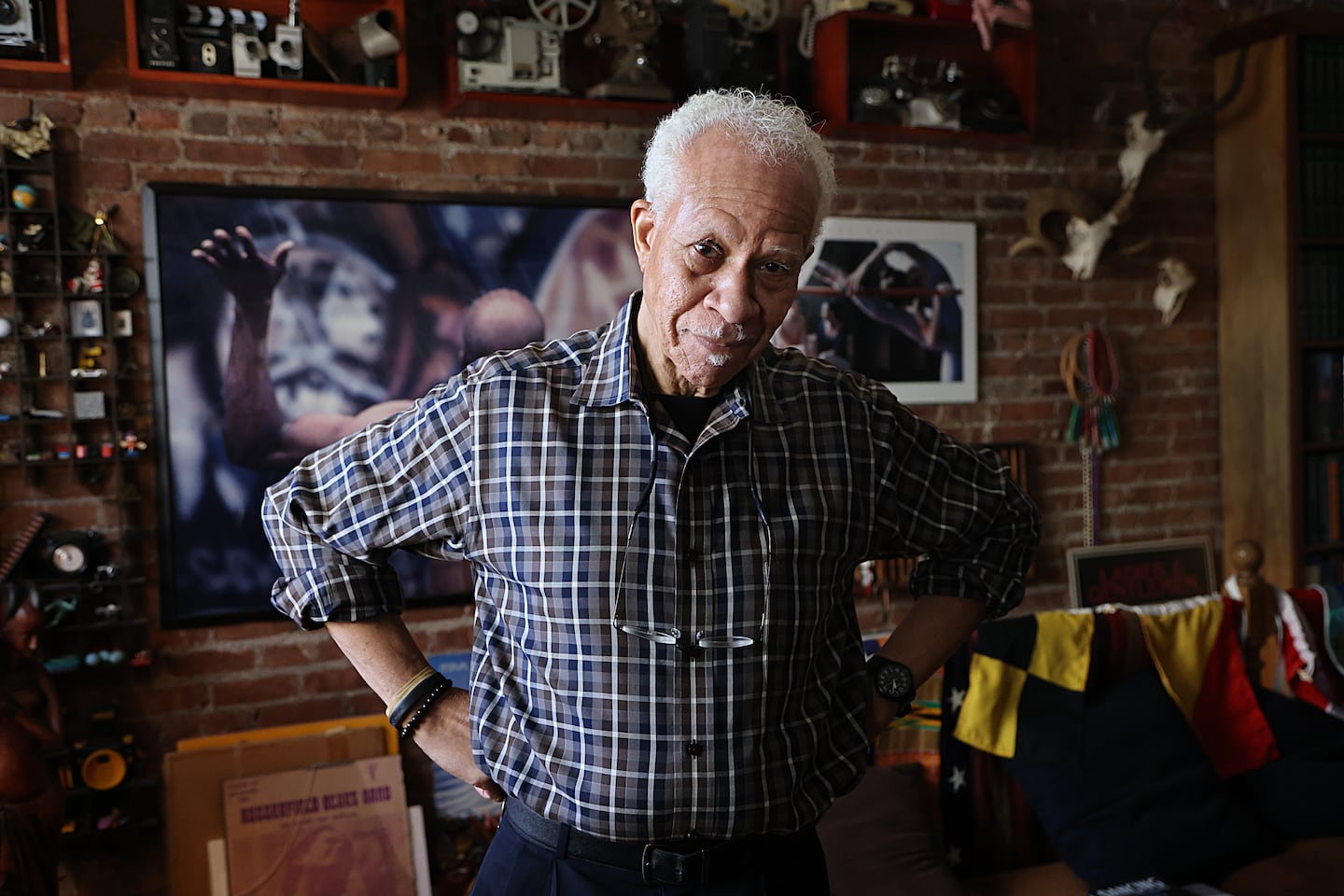 Jones stood in his home in East Boston. He was honored last year by Revolutionary Spaces with its Community Changemaker Award, recognizing his lifetime achievements as well as his work during the Bicentennial.Suzanne Kreiter/Globe Staff
“People started to get very, very into it. It was very palpable,” he added. “I suddenly realized I had access that I could not get in my normal life, and I thought, ‘I can leverage this.’ ”
Jones took his cameras into Roxbury, where he photographed street fairs and summer showers from open hydrants. And he looked for pictures at the St. Patrick’s Day parade in South Boston amid a mixed reception of taunts and curiousity.
“I was learning that Boston had these very segmented, segregated neighborhoods,” Jones said. “I was promoting the city, and at the same time, some people are saying we’ve been ignored.
“I saw that as my responsibility,” he added. “They needed more representation.”
Revolutionary Spaces, a nonprofit organization that stimulates civic dialogue through its management of the Old State House and Old South Meeting House, honored Jones last year with its Community Changemaker Award.
“Beyond the headline events and public figures, Lou captured intimate shots of ordinary people in all of Boston’s neighborhoods, documenting in a vivid fashion the complex relationship that Bostonians have with their city’s rich history,” said Nathaniel Sheidley, president of Revolutionary Spaces.
“His photographs remind us that who is seen, and how, defines how we remember the past, just as our memory of the past tells us who matters, and why. These lessons are more important now than ever.”
For Jones, the journey always has been about people, and it has been seasoned with innumerable, practical lessons about how to make those encounters happen.
To embed himself with one of the international Tall Ships during their Bicentennial parade into Boston Harbor, Jones didn’t wait for a city-brokered invitation. He wrote to the ship crews himself and found himself atop one of the dizzyingly high masts of the Christian Radich, a Norwegian ship, where he photographed a sailor climbing up the rigging.
Photographers with vertigo need not apply.
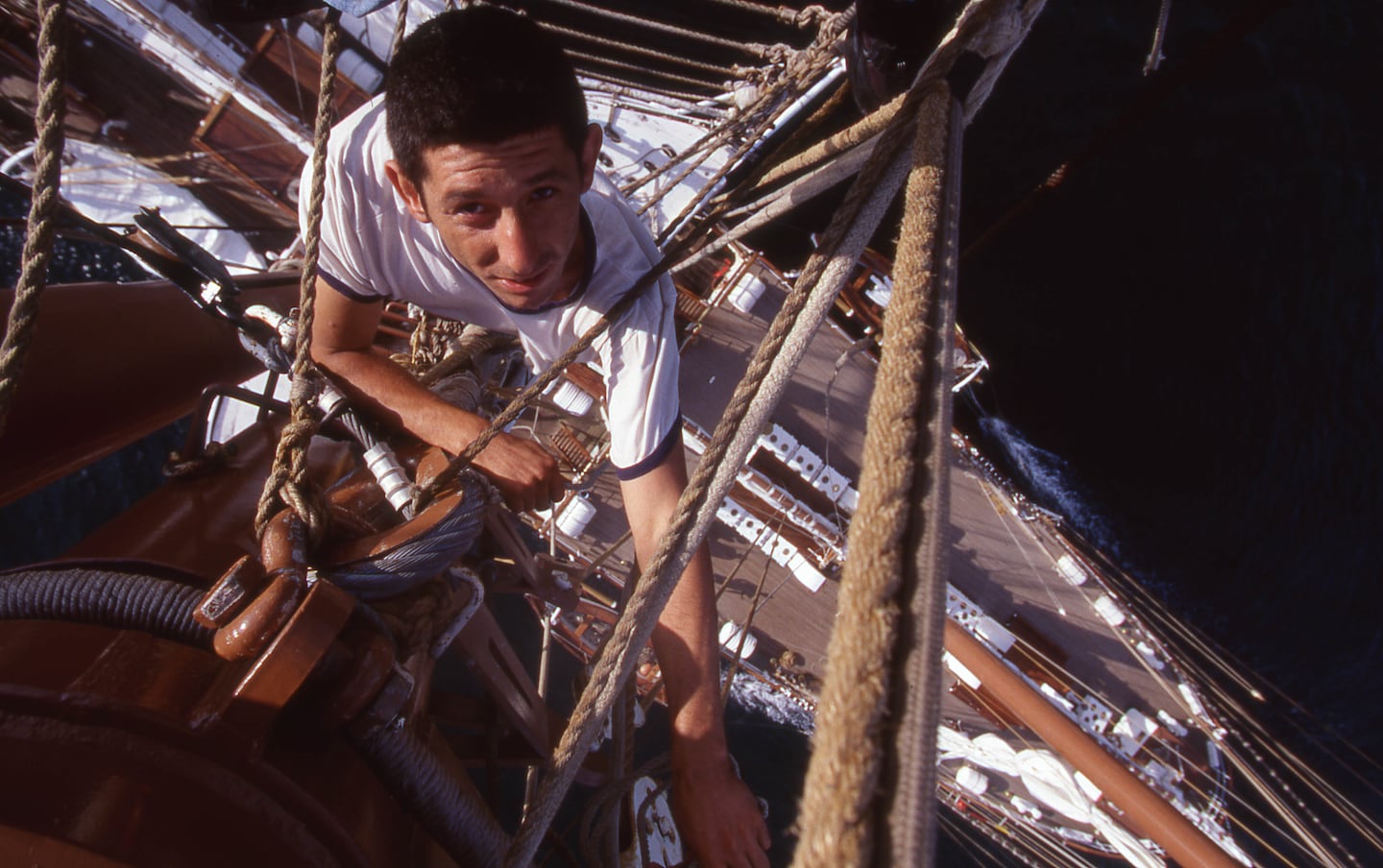 “In the Rigging of a Tall Ship,” taken by photographer Lou Jones in the Atlantic Ocean in 1976.Lou Jones
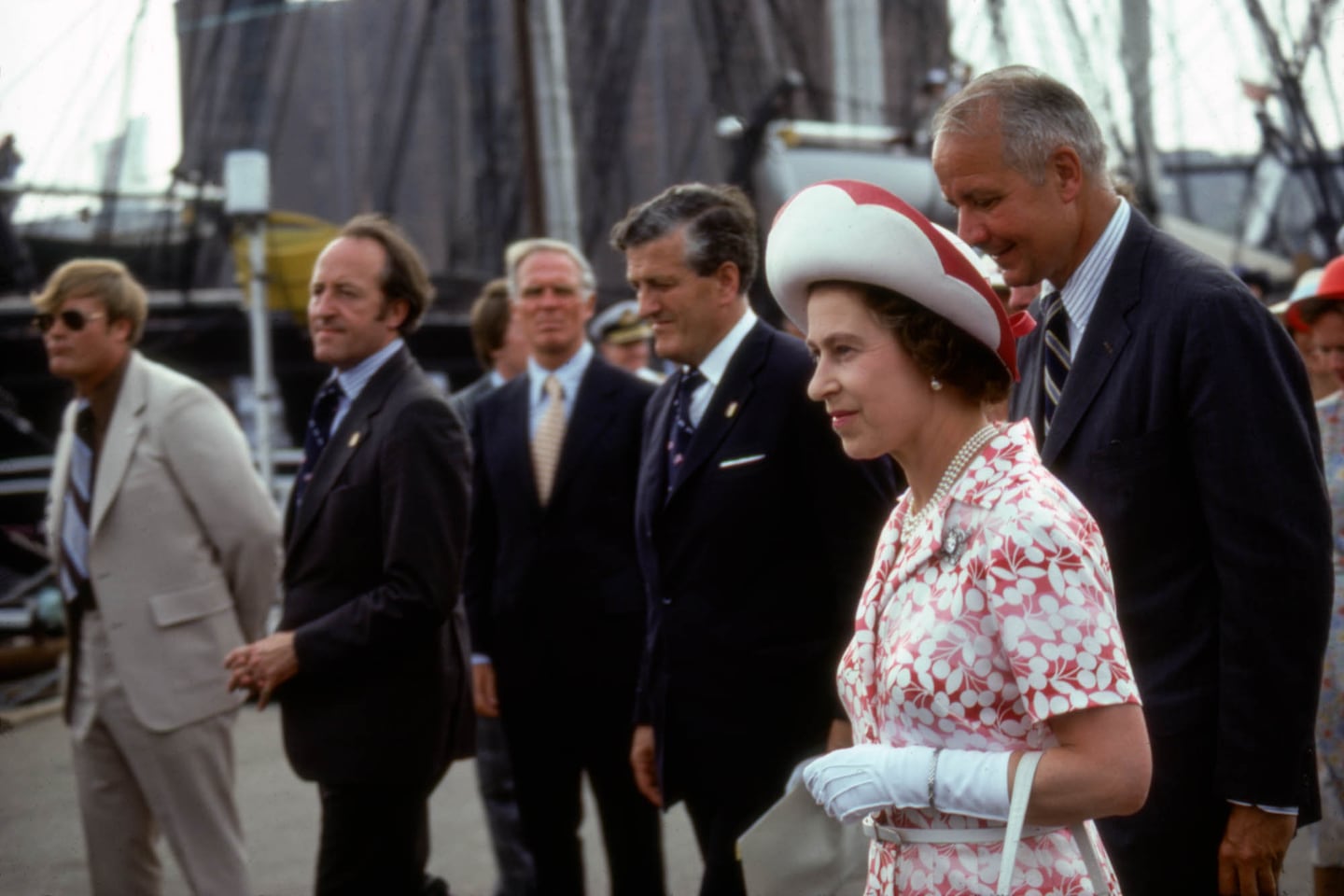 “Queen Elizabeth II and Mayor Kevin White,” photographed by Lou Jones at Government Center in 1976.Lou Jones
Jones also wouldn’t take no for an answer when Queen Elizabeth II, the first reigning British monarch to visit the cradle of the Revolution, toured the city with Prince Philip in July 1976.
He talked his way past security at the doors to the Old State House, where the queen addressed a crowd from the same balcony where the Declaration of Independence was first read to Bostonians.
And without seeking permission, he ducked past yet another stern-faced, security agent, who had been posted at the upper-floor entrance to the chamber that led to the balcony.
“I heard, ‘Where are you going?’ but just bent down, went under his arm, and never looked back,” Jones said with a laugh.
As the queen left the balcony, Jones recalled, he began walking backward in what he calls “the photographer’s two-step — “two steps, click; two steps, click.”
“All of a sudden, I hear a grumble,” Jones said. “I had backed Prince Philip into the corner bookcase! I thought I would hear, ‘Off with his head.’ ”
After a half-century, Jones hasn’t put his cameras away. Instead, he is preparing for yet another extended trip for his “panAFRICAproject,” which he describes as “redefining the modern image” of the continent.
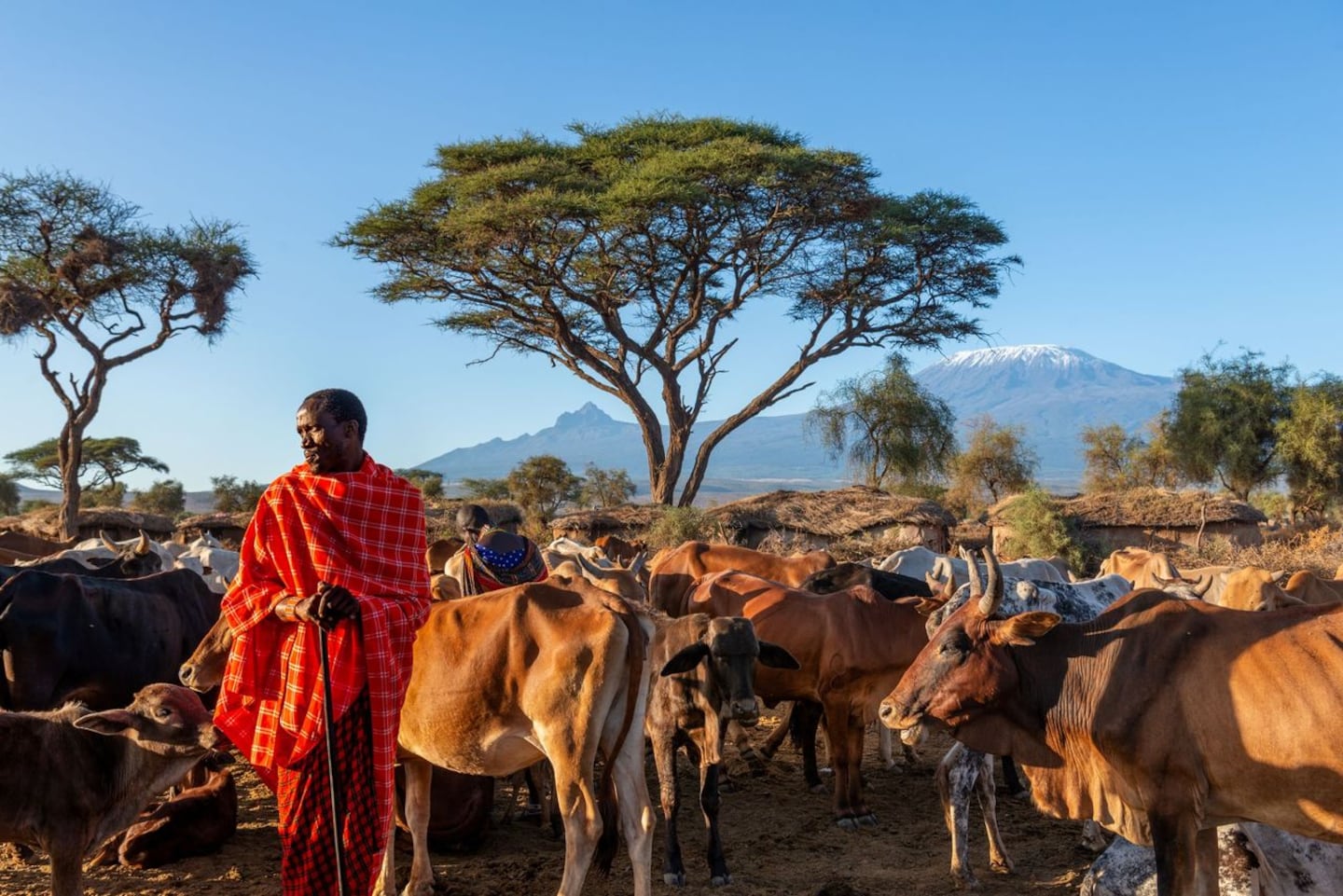 “Massai Warrior,” taken by Lou Jones in Amboseli National Park, Kenya, on April 19, 2022. Part of Jones’s “panAFRICAproject”, the photo highlights the importance of cattle to local tribes.Lou Jones
It’s a project that reemphasizes Jones’s career-long interest in people — whether on Death Row in Texas or the side streets of Roxbury and South Boston — and his commitment to portray them with humanity, dignity, and context.
“I devour photography,” Jones said, reflecting on a long career unexpectedly jump-started by the Bicentennial.
Jones paused and smiled when asked what the nation’s 250th anniversary means to him.
“It means survival,” he said with a chuckle. “Fifty years is a long time.”
Brian MacQuarrie can be reached at brian.macquarrie@globe.com.