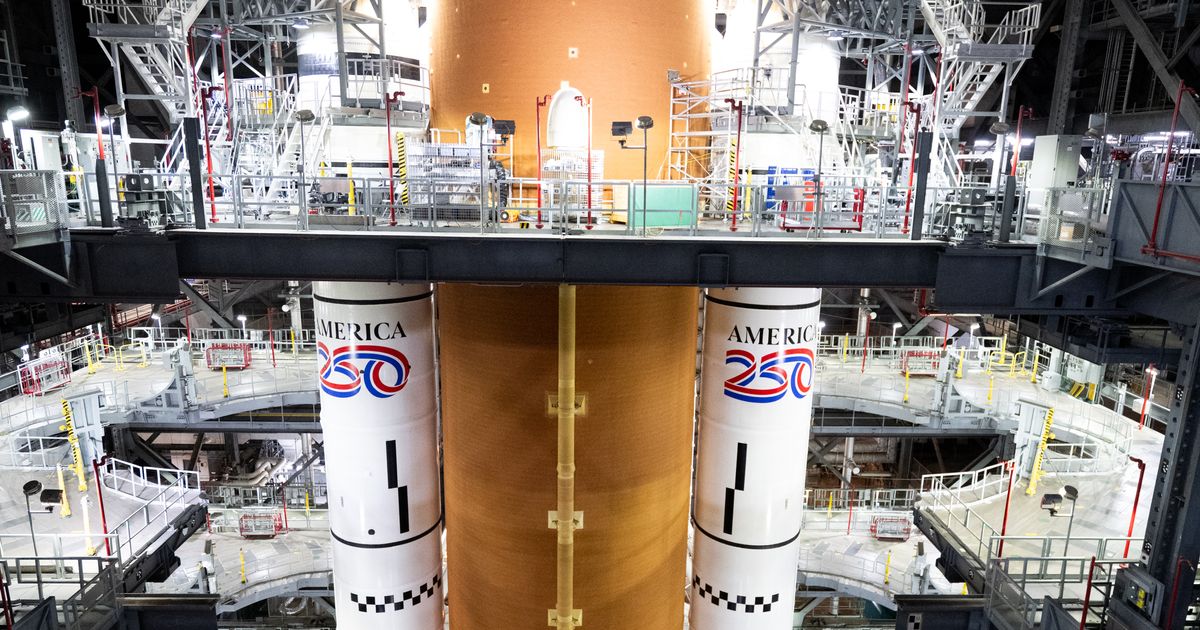
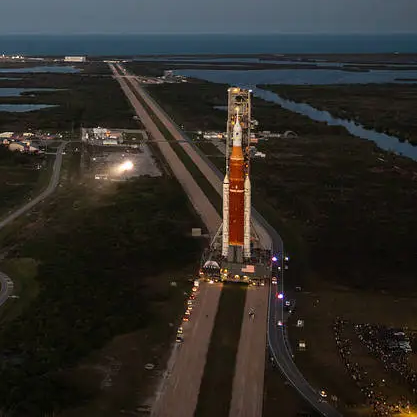
NASA is preparing to roll the Space Launch System (SLS) rocket, topped by the Orion spacecraft, from the Vehicle Assembly Building to Launch Complex 39B at Kennedy Space Center on Saturday.
The 4.2-mile journey is expected to take up to 12 hours,.
Expected 6 mph winds, and temperatures in the low 50s should be well within weather criteria to begin rollout. Forecasters at the 45th Weather Squadron on the adjacent Cape Canaveral Space Force Base will provide the final go/no-go decision.
Crawler-Transporter
The machine which transports the massive SLS rocket from the Vehicle Assembly Buliding to the launch pad has served NASA for more than five decades. The same pair of crawler-transporters have carried Saturn V launch vehicles in the 60s and early 70s then another 135 Space Shuttle stacks from 1981 to 2011.
Built in the mid 60s by the Marion Power Shovel company of Ohio, the 6-million pound machines were inspired by massive mining equipment seen by a NASA engineer near his father’s farm in Paradise, Kentucky.
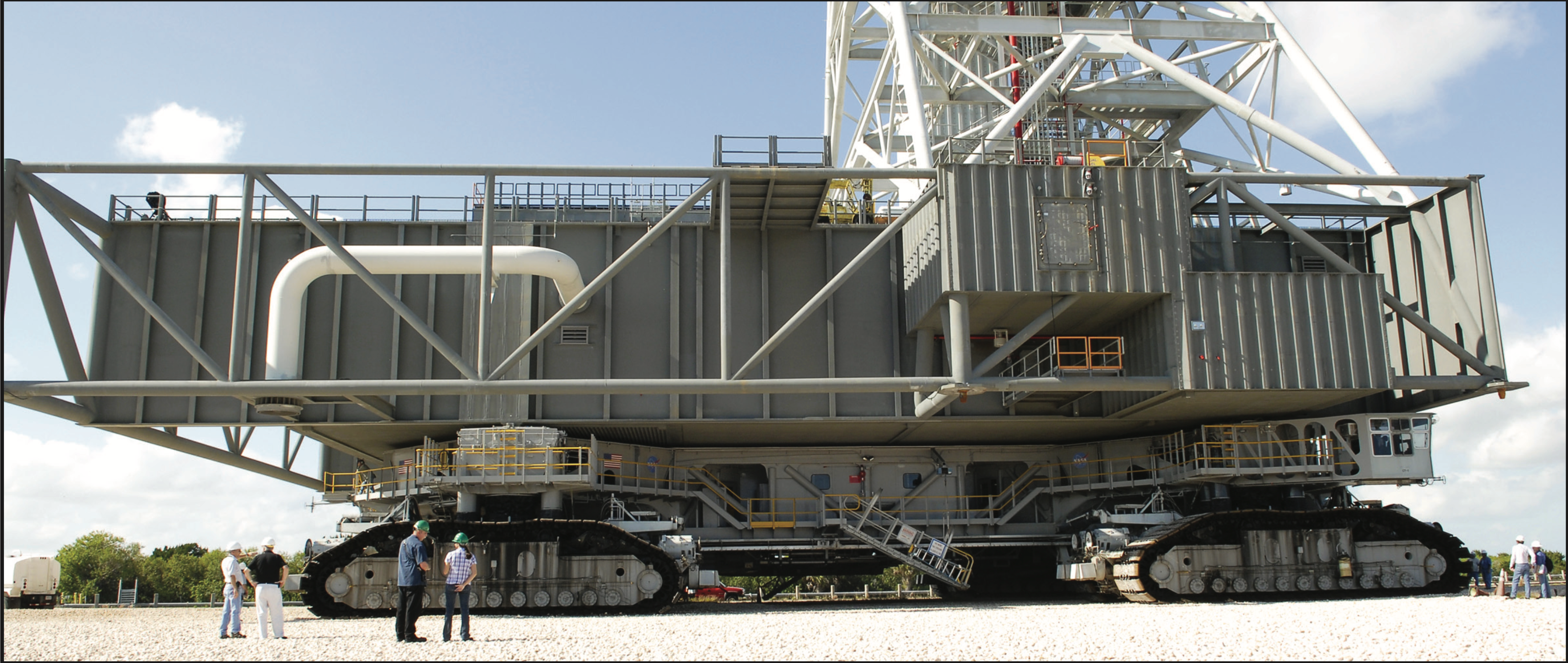 Crawler Transporter-2 was upgraded to support the increased weight of the SLS rocket
The company drew on decades of experience designing and building giant shovels and draglines used in strip mining, as well as heavy equipment dating back to projects such as the Panama Canal and the Hoover Dam.
The crawler moves more than 11 million pounds of rocket, launch tower, and mobile launch platform along the 4.2-mile journey from the Vehicle Assembly Building to Launch Complex 39B at about 1 mph.
That route, NASA calls it the crawlerway, is engineered for extreme loads. It is surfaced with quartz river rock chosen for its hardness and nearly spherical shape. Tests conducted during the Apollo era showed that asphalt was too soft and adhesive under such immense weight. The river rock, sourced from Alabama, has proven both inexpensive and effective, behaving like millions of tiny ball bearings that allow the crawler to steer smoothly.
Once the crawler reaches the base of the launch pad, it must climb a three-story-high ramp which straddles the flame trench that channels rocket exhaust toward the Atlantic Ocean at liftoff.
As the crawler ascends the ramp’s 5 percent grade, it keeps the towering stack precisely level using a system of jacking, equalization, and leveling (JEL) cylinders at each corner of the vehicle. These hydraulic cylinders can extend up to six feet, continuously adjusting the platform to keep the football-field-sized launch structure upright as it creeps toward the pad.
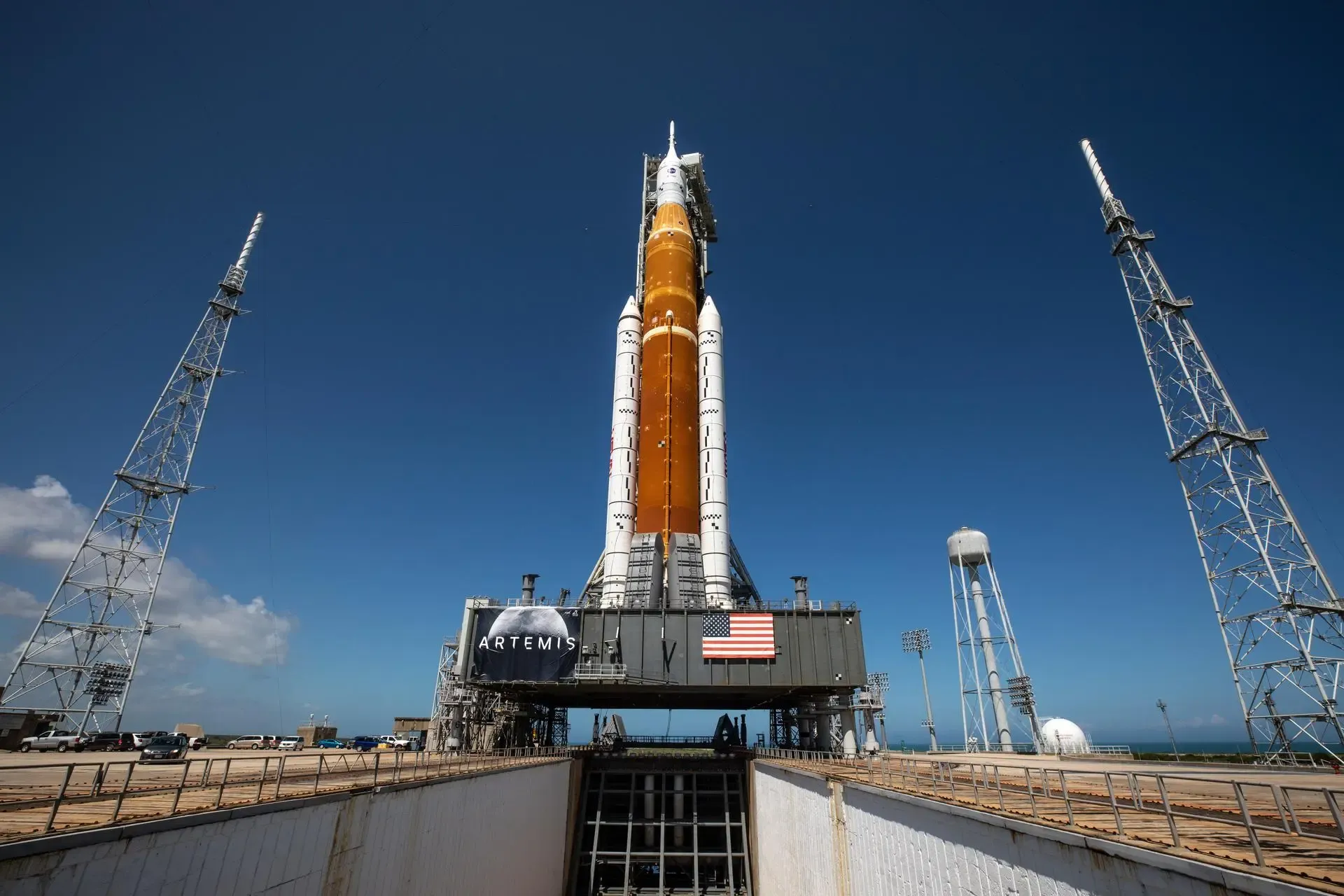
The crawler will lower the mobile launcher, tower, and rocket onto six massive posts at the pad, then return to the VAB at its blistering unloaded speed: 2 mph.
Live coverage of the rollout begins at 7 a.m. on NASA’s YouTube channel.