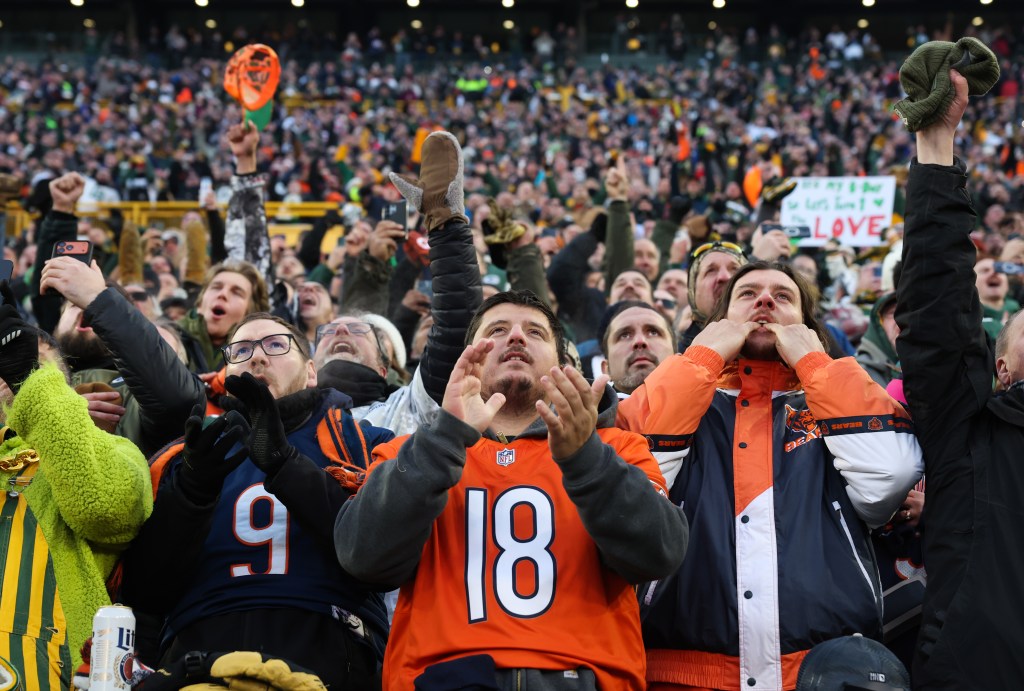
Finally, a feel-good moment for Chicago. For the first time in 15 years, the Bears will be in the NFC’s divisional playoff. A victory Sunday night before the home crowd in Soldier Field would put the team — admittedly the underdogs — just one win away from their first Super Bowl appearance since 2007.
Chicago is totally digging it. After everything the city has gone through lately, most locals are reveling in the team’s dramatic showing and their widely held belief that success by the Bears or any of Chicago’s other pro sports teams can unify the city’s often fractious people, interests and neighborhoods and boost the city’s reputation across the country.
We certainly need a lift. Since the COVID-19 lockdowns turned downtown Chicago into a ghost town that’s still pockmarked with zombie office towers and empty storefronts almost six years later, the city has had a plague of widely publicized (and politicized) problems that have worried even boosters about our hometown’s direction.
Amid a tsunami of violence and lawlessness across the U.S. in 2021, Chicago became the undisputed “murder capital” of the U.S. by total numbers, logging roughly 800 homicides. (Fortunately, killings and violent crime in general have steadily declined since then, with total homicides retreating last year to their lowest total in 60 years.)
In 2022, Texas began sending immigrants here by the busload, an influx that eventually topped 50,000 and overwhelmed the capacity of the city’s makeshift emergency shelters. Last year, Chicago began facing a new immigrant-related crisis when the Trump administration began deploying masked and heavily armed agents to round up and deport migrants in the country without legal permission.
And all the while, President Donald Trump has kept a running public commentary on Chicago, calling the city a “hellhole,” the “worst and most dangerous city in the world” and “embarrassing to us as a nation.” Right-leaning media have regularly chimed in, too, with one outlet tagging Mayor Brandon Johnson as “America’s worst mayor.”
Phew!
But as we make our way into the new year, our city at long last has something definitively positive going for it that’s earning national media attention — the Cinderella Chicago Bears. Let’s take advantage of it, say supermajorities in a new Outward Intelligence poll of city and suburban Cook County residents.
More than 9 in 10 respondents say they think professional sports success influences national perceptions of Chicago, with 44% saying it’s “very” or “extremely” influential. Half also believe that the success of a major-league team improves how outsiders view Chicago.
More than 90%, once again, think Chicago sports teams bring us together across neighborhoods, backgrounds and political views, with more than half saying that power of team affinity is “a lot” or “a great deal.” And 56% say they feel more proud to live in Chicago when our teams are winning.
There are subtle differences between women and men. Women are slightly more likely to see sports as a way to bridge differences among people and to believe that team success raises outsiders’ opinions of Chicago. They also are more likely than men to be proud of a triumphant Chicago team.
Regardless of demographics, the pride is naturally bigger when the win is bigger. Although it’s been a while, those of us who are older remember the elation we felt when a Chicago team won their league championship, and the residual rush when we traveled around the country or even abroad later on and spotted people wearing Bulls jerseys in the 1990s or Cubs caps after the 2016 World Series.
Winning the Super Bowl might even change elected officials’ minds about subsidizing a new Bears stadium in northwest suburban Arlington Heights to keep the team from defecting to northwest Indiana when they hang it up at Soldier Field in the next few years.
Or maybe not. Though Gov. JB Pritzker has said he’s still talking with team owners about public investments in stadium-related infrastructure, he has reiterated that he’s most concerned about “not wasting taxpayer money.”
He’s not the only skeptic. In previous polling, 94% of Chicagoland residents said pro sports are an important part of our culture, and three-quarters agreed that losing a team to another locale would hurt. But 60% also said public financing of a sports stadium is a bad idea. (A caveat: That survey was conducted when the Bears were closing a 5-12 season.)
Of course, the Bears could end up losing Sunday night, which would shift national media attention immediately to Los Angeles. If that happens, Chicago’s die-hard fans will respond like they always have: Wait till next year.
Will Johnson is the Chicago-based CEO of Outward Intelligence, an artificial intelligence-powered quantitative research company, and former CEO of The Harris Poll.
Submit a letter, of no more than 400 words, to the editor here or email letters@chicagotribune.com.