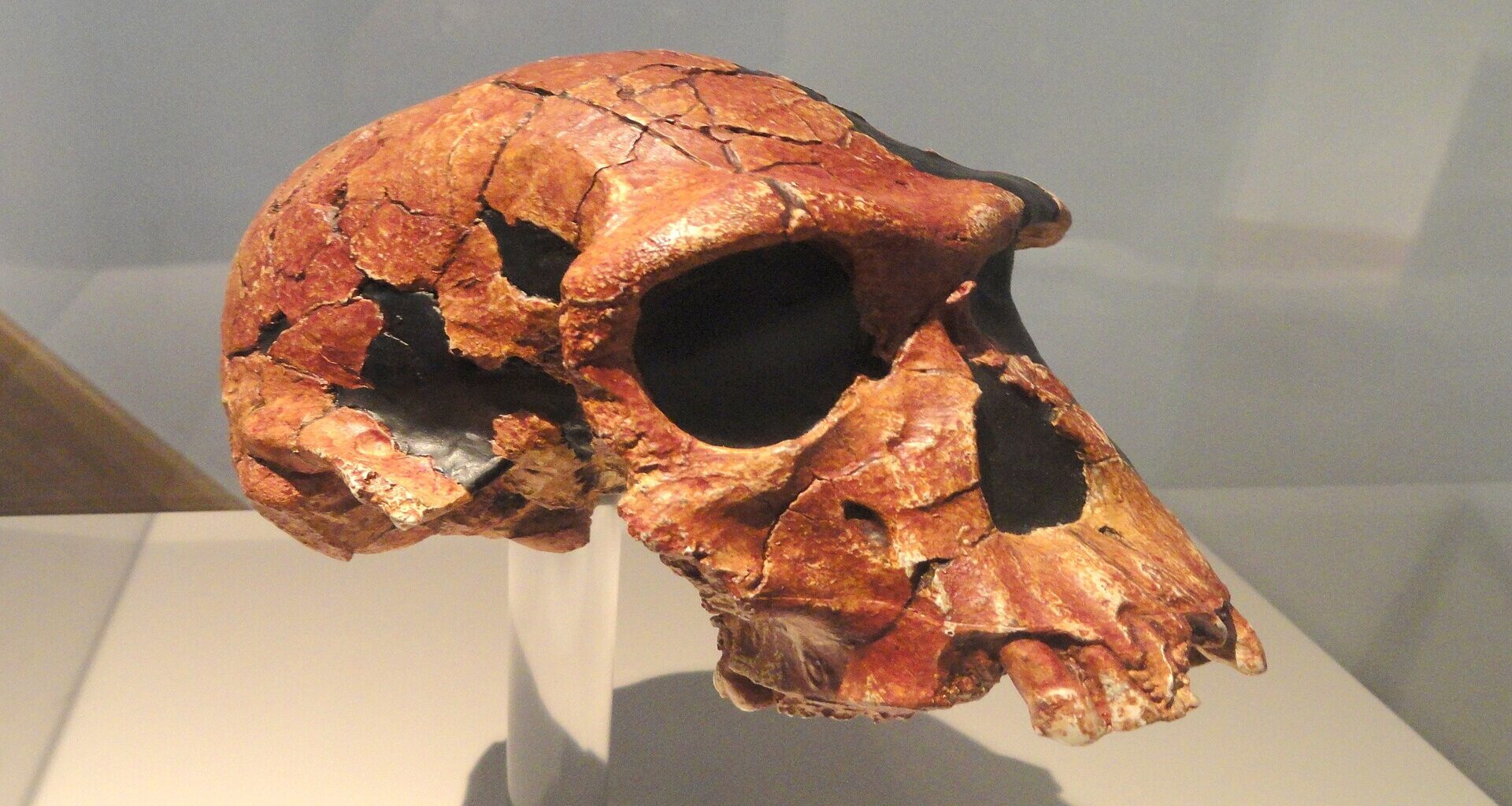
A groundbreaking study published in The Anatomical has challenged previous assumptions about human evolution.
Scientists once believed that our early ancestors took a significant evolutionary leap away from apes around the two-million-year mark.
However, the discovery of an exceptionally well-preserved (though partial) Homo habilis skeleton in Kenya surprised researchers, as the individual exhibited signs of human intelligence while appearing remarkably primitive.
The oldest “homo” species may have still possessed ape-like characteristics, a fact previously unknown to scientists due to a lack of specimens. This skeleton has helped bridge a critical gap in the fossil record.
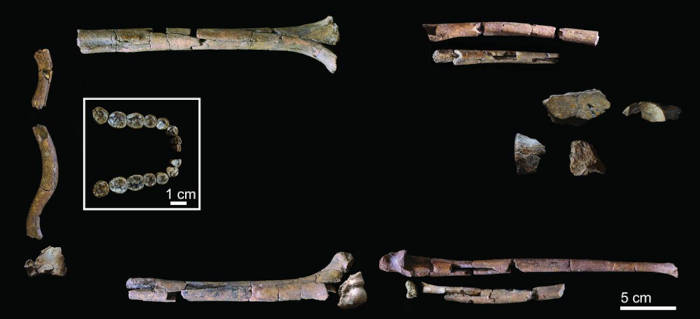 Skeletal remains of H. habilis / The Anatomical Record)
The oldest human was an ape
In 2012, study authors discovered KNM-ER 64061, a collection of 100 bones, at Koobi Fora on the eastern side of Lake Turkana in Kenya. Since the bones had been scattered, researchers required nearly a decade to confirm they belonged to the same individual, as reported by Ancient Origins.
Through painstaking effort, they reassembled the most complete H. habilis skeleton ever found. The assemblage includes fragments of the shoulder blades, pelvis, and sacrum, along with nearly complete upper and lower arm bones, a jaw, and teeth, according to Discover Magazine.
The individual was 23 inches tall and over two million years old, weighing between 65 and 70 pounds. Although it may have had a head more similar to a human’s than an ape’s, scientists were surprised to find that the overall body structure retained characteristics of older hominins. Specifically, the longer arms suggest a greater reliance on the upper body. Over time, this adaptation would likely evolve into shorter arms and longer legs.
While the head appeared more human-like, the upper body—which was analyzed alongside the few recovered lower-body fragments—still showed ape-like traits.
This finding was unexpected.
Based on the skeletal evidence, the researchers realized they had discovered a true hybrid of ape and human. The forearms resembled those of the well-known ancestor “Lucy,” whose anatomy indicated that her species lived in trees, as noted by IFL Science.
We were both ape and human
Since H. habilis is considered the first “Homo” species, it seems they occupied a transitional state rather than having fully transitioned into a modern human-like form. The shape of the pelvis suggested that this H. habilis walked upright, yet its forearms might not have evolved beyond those of its ape-like ancestors.
Were they just beginning to walk upright?
The skeleton appears to represent a crucial moment in human evolution; however, lacking physical evidence for definitive claims, the study authors could not make concrete statements.
“The relatively long forearm ofH. habilis may have enabled a greater degree of arboreal locomotion in this species than in H. erectus, but whether arboreality was indeed practiced by H. habilis must remain a matter of speculation,” the study authors stated via IFL Science.
Based on the assembled bones, humans had not yet fully transitioned to their modern appearance by the era researchers expected to find a specimen closer to human than ape—in fact, the opposite was discovered.
In reality, evolutionary change might take more time than we often realize. The forearms suggest a stronger link to apes, even as early humans began to stand on two legs.
“Going forward, we need lower limb fossils of Homo habilis, which may further change our perspectives on this key species,” a study author concluded in Discover Magazine.
The search is now underway for those missing lower limbs.