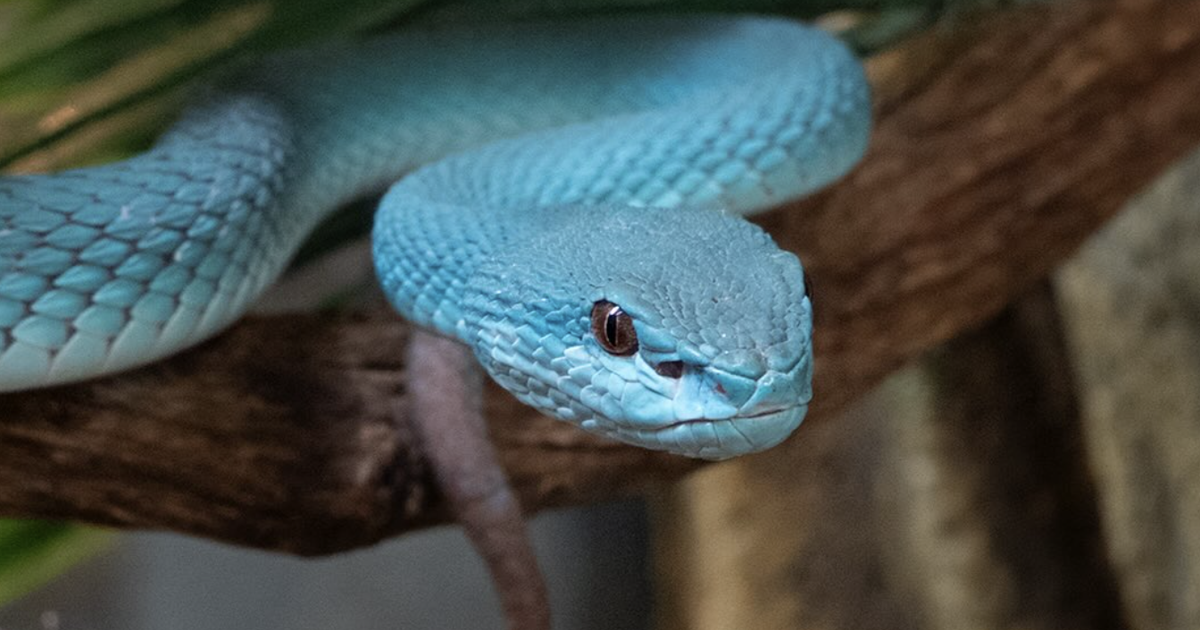
Founded in 2001 by three longtime reptile enthusiasts, Phoenix Herpetological Sanctuary has grown from a small passion project into one of Arizona’s leading reptile rescue, rehabilitation and conservation education centers. Located on 2.5 acres in North Scottsdale, the Sanctuary works closely with law enforcement and wildlife agencies to provide a safe landing place for abandoned, confiscated and misunderstood reptiles from across the country.
In the following Q&A, Tarra Patton, administrative assistant at Phoenix Herpetological Sanctuary, shares her personal journey into reptile advocacy, the mission behind the Sanctuary’s work and why changing perceptions is key to protecting these animals and the ecosystems they support.
Q: Can you share your background and how your passion for reptiles led you to Phoenix Herpetological Sanctuary (PHS)?
A: I’ve always loved animals, but reptiles became a passion as an adult when I realized how misunderstood they are. I’ve grown into keeping and caring for a large, personal reptile collection, along with birds and a tortoise at home.
That same passion led me to PHS. I wanted to support an organization truly making a difference every day. As an Administrative Assistant, I get to be part of the mission while supporting the people doing the hands-on rescue and education work.
Q: What does the rescue and rehabilitation process look like when a new animal arrives at the Sanctuary?
A: When a new animal arrives, we:
-
Identify the species and check legality
-
Evaluate health and condition
-
Quarantine for safety and health of all our animals
-
Decide whether the animal can be rehabilitated, adopted, transferred, or will live here permanently
We work with law enforcement, wildlife agencies, humane societies, animal control, and everyday citizens. There’s a lot of coordination behind the scenes to make sure every animal’s legal and welfare needs are met.
Q: Can you expand on the Sanctuary’s main goals?
A: Our work really centers on two main goals
-
Rescue and Rehabilitation
Most animals we take in started as pets but were abandoned, surrendered, or confiscated.
-
Conservation Education
We reach about 250,000 people a year—mostly kids. Teaching them early helps shift how future adults see reptiles. Today’s student on a field trip could be tomorrow’s wildlife advocate… or simply someone who calls for relocation instead of killing a snake in their yard.
Q: Can you share information for readers interested in getting involved?
A: PHS offers a Facility Volunteer Program and a Rattlesnake Relocation Volunteer Program for qualified individuals who want to support animal care, education, and field work.
We also have a Virtual Adoption program where supporters can “adopt” a specific animal or species at the sanctuary, helping cover the cost of food, habitat upkeep, and medical care. Different donation levels make it accessible for a wide range of budgets.
Q: What are your short and long term goals for PHS?
A: Short term, my goal is to help educate to the best of my ability about animal care, continue to schedule tours and programs, and let people know how they can get involved.
Long term I want PHS to still be here, thriving, decades from now—educating new generations about housing animals safely and changing minds daily.
PHS offers far more than tours, with school programs, birthday parties, science nights, professional trainings, relocation workshops and more. Education happens here almost every single day.
Q: Are there any individual animals whose stories have particularly touched you or illustrate the Sanctuary’s impact?
A: One of my favorite things we do is save wild rattlesnakes stuck in glue traps. We clean them up, medically stabilize them, and once they’re healthy, release them back where they belong. It shows that every animal matters here, even the ones people fear most.
Q: What’s a common misconception people have about reptiles and amphibians, and how do your programs help shift that mindset?
A: Many people still think reptiles are cold, dangerous, slimy, or incapable of feeling anything. Our tours and programs flip that narrative fast.
Visitors see reptiles up close, hear their rescue stories, and learn how important they are in nature. When someone sees a snake hide instead of bite, or learns that they control rodent populations, fear turns into curiosity—and often respect.
Q: What do you hope visitors take away after visiting PHS?
A: A new level of respect for reptiles, and a sense of responsibility. If someone walks out a little less afraid, a lot more informed, and inspired to be kinder to animals they once wrote off as “creepy,” we’ve done our job.
For more information about Phoenix Herpetological Sanctuary, visit phoenixherp.com.