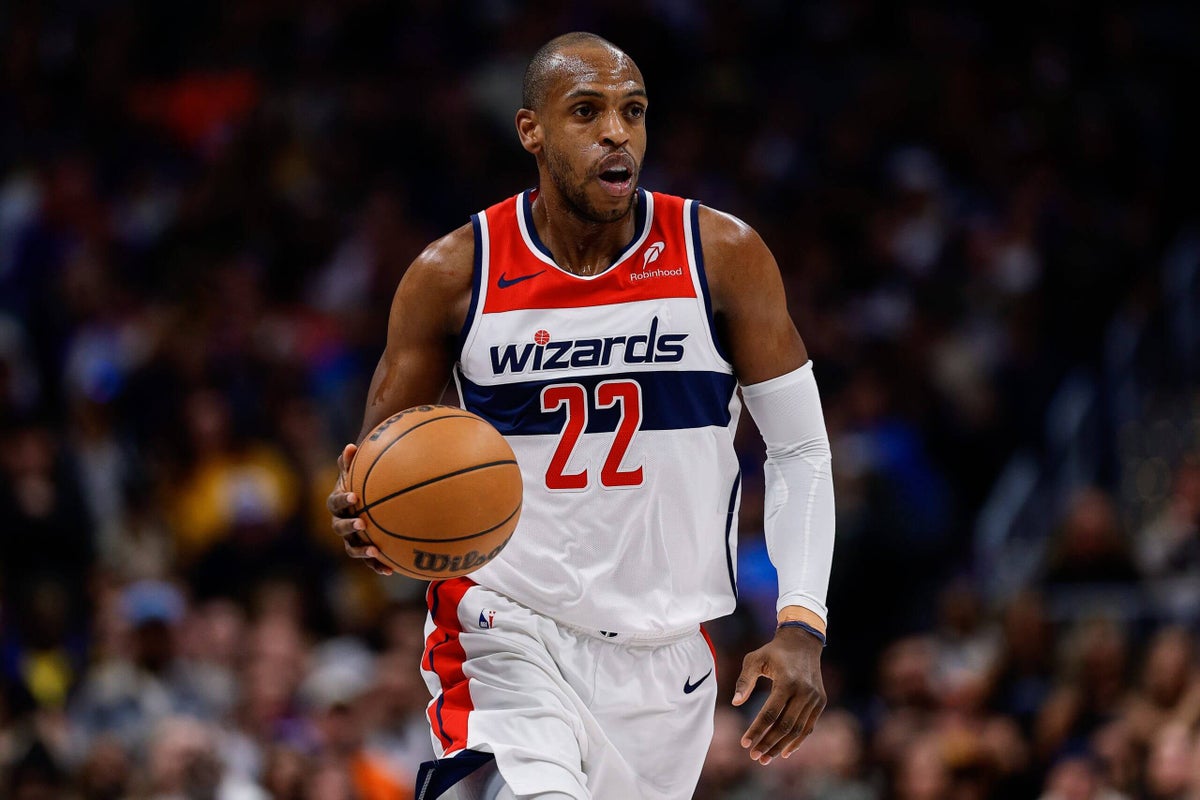
The Washington Wizards have already made a major deal in this trade-deadline cycle with their acquisition of former All-Star Trae Young, but team sources and league sources have told The Athletic in recent days that they expect the Wizards to remain active until the deadline arrives on Feb. 5.
The sources said the Wizards remain open to absorbing other teams’ multi-year contracts if potential trade partners attach sweeteners such as future draft picks or intriguing young players. That is the most likely trade-deadline scenario for Washington, league sources said. As one league source said, the Wizards could be a salary “dumping ground for assets.”
The notion of Washington taking on long-term money is not a major revelation. Since Michael Winger joined the organization as Monumental Basketball president and Winger hired Will Dawkins as the Wizards’ general manager, Winger and Dawkins have prioritized adding future draft picks in trades and young prospects.
Washington has several expiring contracts to work with, including Khris Middleton’s $33.3 million salary, Malaki Branham’s $5.0 million salary and Marvin Bagley III’s $2.3 million salary.
Examples of undesirable multi-year contracts thought to be in play by their respective teams include the contracts of Portland’s Jerami Grant and Toronto’s Immanuel Quickley.
Grant, a 31-year-old forward and arguably one of the league’s most overpaid players, is earning $32.0 million this season, is due $34.2 million next season and holds a $36.4 million player option for 2027-28.
Quickley, a 26-year-old guard and a much better all-around player than Grant, could be available because he’s due to earn $32.5 million annually through the end of the 2028-29 season, a significant long-term salary commitment.
What would complicate any trade with either Portland or Toronto, three league sources said, is that Portland and Toronto are not thought to be looking solely for long-term salary relief. Both teams are said to want trade packages that could help them win now. The Trail Blazers are solidly in the Western Conference Play-In hunt, with victories in 10 of their last 13 games. The Raptors occupy fourth place in the Eastern Conference.
“I think any smart front office would first obviously use those salaries to get better,” one official from a rival team said, referring to the Blazers and Raptors.
Middleton, 34, has shown some signs of life lately, but no longer looks like a potential difference-maker for a contending team. The majority of league sources whom The Athletic spoke with said they think Middleton’s most likely outcome is to remain with the Wizards through the deadline and be a buyout candidate.
Swapping Grant for Middleton would save Portland significant long-term money, but it would be a net gain of $1.3 million in salary this season for Portland. That would leave the Trail Blazers with precious little wiggle room under the luxury tax this year and little room to maneuver to make other moves before the deadline.
There is another potential trade-deadline scenario for Washington. Several league sources who have watched the Wizards’ dealings from afar think the Wizards would consider making an additional opportunistic move, along the lines of this month’s low-cost trade for Young, to add another so-called “distressed asset.”
Young is a four-time All-Star, but his trade value had never been lower. The Wizards struck, acquiring Young for the minimal cost of CJ McCollum (and McCollum’s expiring $30.7 million contract), reserve swingman Corey Kispert and, crucially, no outgoing draft capital. McCollum’s strong play in December and early January and desire to prove his worth for a new contract jeopardized the Wizards’ chances for the all-critical 2026 NBA Draft, and McCollum did not fit into the franchise’s long-term plans, anyway. Kispert’s path to extensive minutes was blocked by the Wizards’ depth of younger players at the wing spots.
Wizards officials and players prized McCollum and Kispert in part because of the examples that McCollum and Kispert set for the young roster. Wizards officials determined that the Young trade was a gamble worth taking despite the concerns that emerged in Atlanta over Young’s ball-dominance and far below-average defense.
One league source described the Wizards’ trade for Young as “a pretty healthy management win.” “They really didn’t give anything up for the guy,” the source said. “He’s a four-time All-Star. Maybe he isn’t the version that he was, but he isn’t busted, either.”
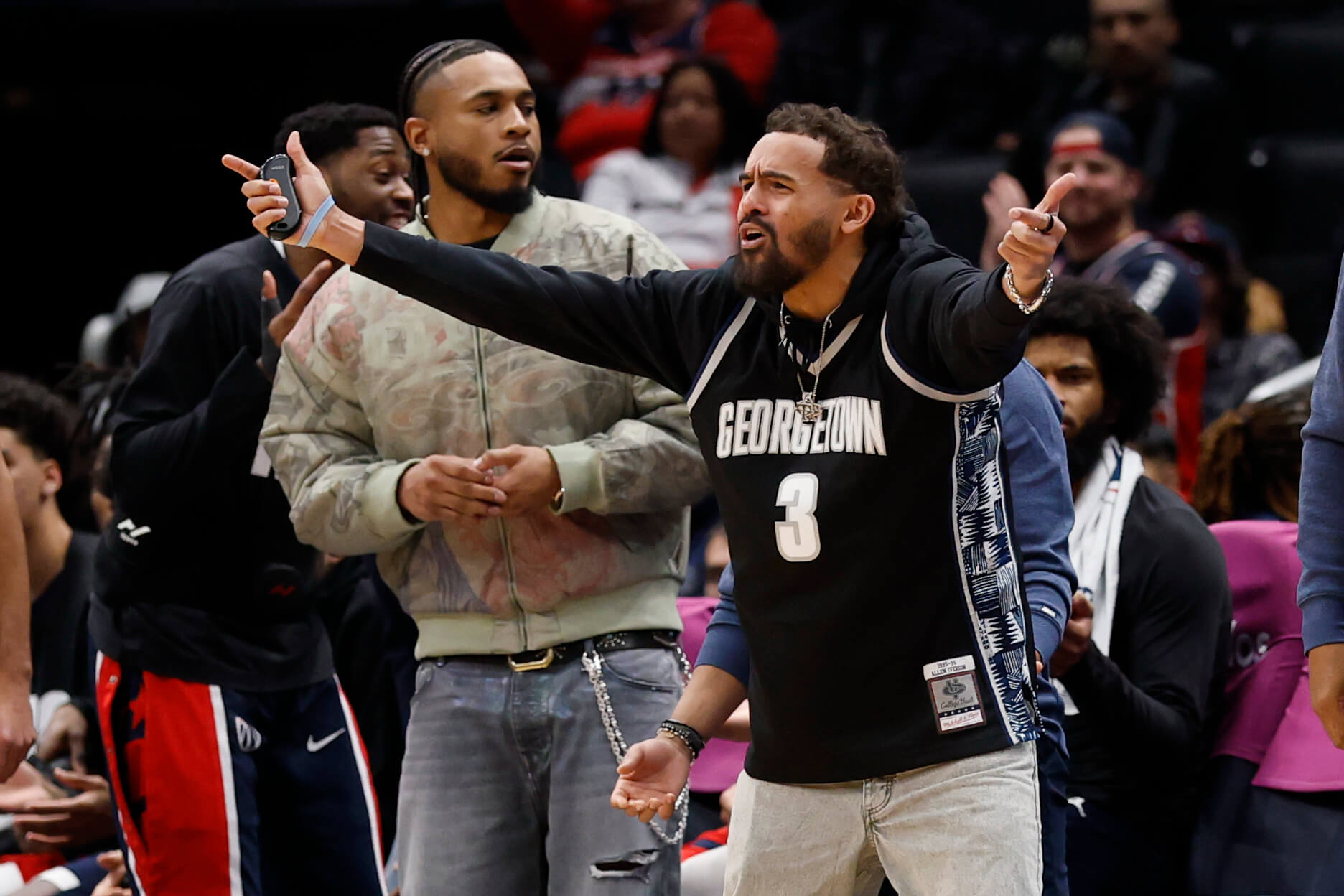
The Wizards made a trade this month to add Trae Young, a former All-Star whose value had sunk. Could that deal for Young serve as a template for another move by the Wizards before this season’s trade deadline on Feb. 5? (Geoff Burke / Imagn Images)
With the Young trade as the template of a low-cost trade for a distressed asset, league sources speculated that New Orleans Pelicans big man Zion Williamson would be someone the Wizards would have to consider if the price is right.
The Pelicans reportedly have told teams they’re not going to trade Williamson, Herb Jones, Trey Murphy III, Derik Queen or Jeremiah Fears. As it pertains to Williamson only, however, league sources expressed skepticism to The Athletic about that report.
League sources said they cannot envision any scenario in which Washington would give up one of its own future first-round picks. But one source speculated that a pick owed to the Wizards, such as the least favorable of the Houston Rockets’ (top-four protected), LA Clippers and Oklahoma City Thunder’s 2026 first-round picks, might satisfy the Pelicans’ goals.
To be crystal clear: The Wizards trading for Williamson appears to be an extreme long shot. But it was mentioned as a possibility by enough league sources that it at least should be mentioned here.
Even at a low cost, trading for Williamson would be a risk from a health standpoint and, perhaps, from a culture perspective. But one league source who spoke with The Athletic cited the Wizards’ trade for Young and last summer’s trade for Cam Whitmore as evidence that, under the right circumstances, the Wizards are willing to trade for high-upside players who have clear on-court deficiencies that have frustrated their prior teams. The Hawks wanted to part with Young. Whitmore was unable to carve out consistent playing time on the Rockets, leaving the Rockets eager to part with him, and the Wizards traded a pair of future second-round picks to Houston for him.
Forward Jonathan Kuminga, unable to earn consistent minutes with Golden State from coach Steve Kerr, would be an example of another distressed asset whom the Wizards at least would check on before the deadline arrives. That is the kind of inquiry opportunistic teams looking to add talent would make, even if it’s a due-diligence call.
The Wizards remain unlikely to trade for anyone who would block the development pathways for the young players already on the roster, a group that includes 20-year-old big man Alex Sarr, 22-year-old point forward Kyshawn George, 19-year-old shooting guard Tre Johnson, 21-year-old wing Bilal Coulibaly and 20-year-old combo guard Bub Carrington.
That said, Washington doesn’t have a clear long-term solution at power forward, although Sarr is versatile enough to play both of the big-man positions. If Washington doesn’t take on significant long-term money during the remainder of this trade-deadline cycle, league sources expect the franchise to dip its toes into the free-agent market for a physical big who can add defensive rebounding and additional shot-blocking alongside Sarr or when Sarr is off the court.
Sarr, George, Johnson and Coulibaly should receive more open shots and more shots off cuts with Young as the Wizards’ point guard. Young, however, could take away some of the ballhandling reps from everyone.
When asked about the Wizards’ trade for Young, a scout said, “I think it helps Sarr, for sure. In pick-and-rolls, that’s going to help Sarr. I think it will help Kyshawn probably a little less because he’s handled the ball so much and because he’ll have to take a backseat.”
Carrington, the scout added, may be the Wizards prospect who stands to lose the most with Young now in the fold. Carrington will continue to receive heavy minutes this season while Young sits, but Young’s presence next season almost certainly will relegate Carrington to a role off the bench as long as other players on the roster remain healthy.