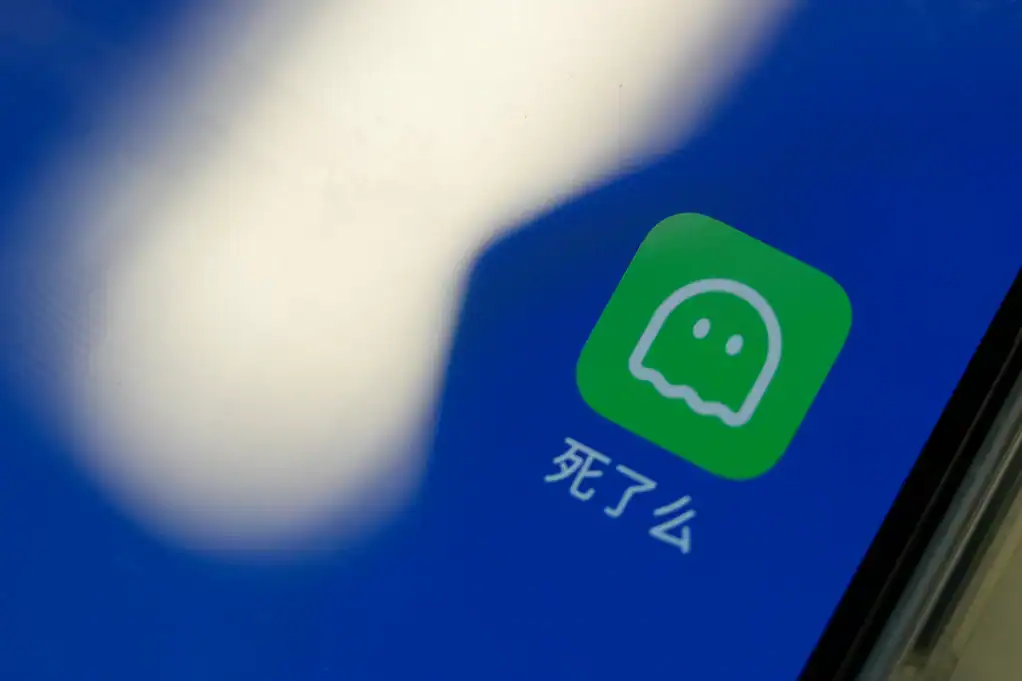
 The app Are You Dead? pictured on a smartphone in Beijing. The app surged in popularity among young people in China in recent weeks before developers announced a rebrand to a less controversial name.
In the sprawling, neon-lit megacities of China, a new kind of ghost is haunting the Apple App Store, encased in a bright green button. This is the interface for Are You Dead? (or Si-le-ma), an app that has surged to the top of the charts by asking a question most of us spend our lives trying to ignore.
The premise is brutally efficient: tap the ghost every day to prove you are still breathing. If you fail to check in for two consecutive days, the app triggers an alert to your emergency contact on the third. It is a digital dead-man’s switch for a generation of solo dwellers who fear that their greatest tragedy wouldn’t just be dying, but dying unnoticed.
While the name sounds like a premise for a Black Mirror episode, the app is very much real and very popular. Yet its very popularity is a sociological distress signal. For 8 Chinese yuan ($1.15), users are buying a tiny insurance policy against their greatest fear of decomposing alone in some modern apartment block.
The Architecture of Solitude
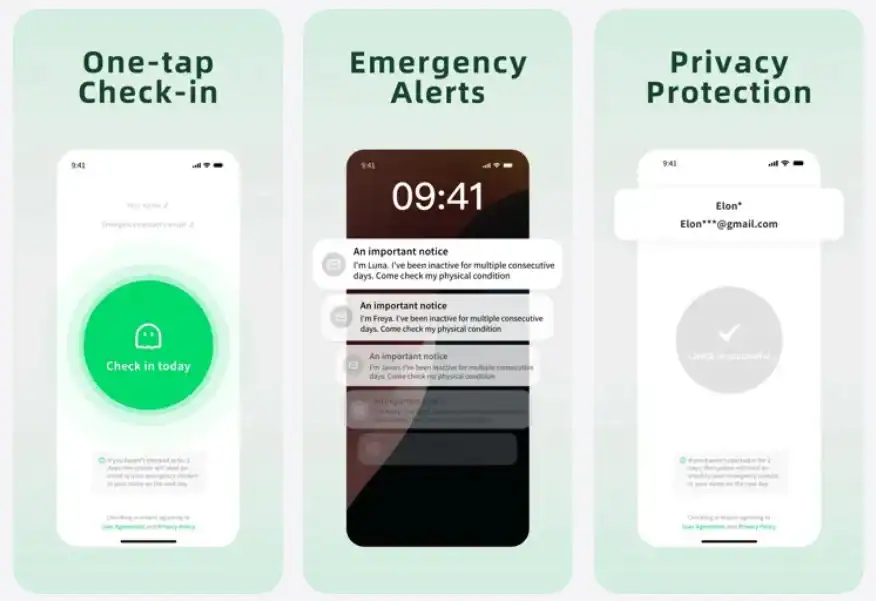
The developers — a trio of Gen Z creators born after 1995 — describe their creation as a “lightweight safety tool crafted for solo dwellers.” But the app’s success is built on the ruins of traditional social structures. China is currently grappling with the long-term fallout of its one-child policy and a rapid urbanization that has severed the ties between rural family hubs and urban workers.
China’s population has shrunk for the fourth straight year as birth rates hit a record low, national data shows. In 2025, the population shrank by 2.4 per cent, or 3.39 million people, with experts predicting further decline.
According to state-run media reports, China is on track to have as many as 200 million one-person households by 2030. In this environment, the app serves as a digital tether for those who have moved away from their ancestral homes to chase better-paying jobs in cities like Beijing and Shanghai.
“I sometimes fear, what if I’m not noticed by others when I fall down because I faint or from sickness? Or in an extreme case I die, but it goes unnoticed? So this app actually alleviates such fear from loneliness to some degree,” says Yu Maohuan, a 29-year-old geologist in Beijing, in an interview with the Sydney Morning Herald.
From Only Child to Lonely Adult
This isn’t just a Chinese phenomenon, though the country’s demographic crunch is particularly acute.
×
Thank you! One more thing…
Please check your inbox and confirm your subscription.
The shift from the “only child” era to the “lonely adult” era has created a psychological gap that technology is rushing to fill. For many Millennials and Gen Z-ers, the decision to shun marriage and children isn’t just about personal preference. It’s a response to an economy where getting ahead feels like a zero-sum game.
Dr. Fuxian Yi, a demographer at the University of Wisconsin-Madison, notes that “People are reluctant to socialise, reluctant to marry and have children.” This social withdrawal creates a vacuum where the only thing monitoring your vitals is a $1.15 app on your smartphone.
The app’s original name, Si-le-ma, is a dark pun on Ele.me (“Are You Hungry?”), China’s massive food delivery giant. This sardonic branding is part of the appeal, tapping into a “sang” culture. This type of cynical, defeatist humor is popular among Chinese youth who feel overwhelmed by the pressures of modern life.
However, the bluntness has also sparked a backlash. Some users have called for a pivot to a more hopeful branding. One user from Sichuan Province noted, “Death has both a literal and sociological meaning. If it were changed to ‘Are You Alive,’ I would pay to download it.”
In response to the international attention, the developers are rebranding the app as Demumu for the global market — a portmanteau of “death” and “Labubu,” the trendy designer toys.
“We feel honored and deeply grateful to receive such widespread attention,” the team told the Global Times. They are now working on adding features like heart-rate monitoring and SMS notifications to replace the current email-only alerts.
A Global Echo of Isolation
While Demumu dominates the Chinese charts, it has also climbed into the top ten paid apps in the United States. This suggests that the “loneliness epidemic” is a borderless contagion. U.S. Census data shows that over 27% of American households are now single-person homes, a massive leap from less than 8% in the mid-20th century.
Whether we are in a high-rise in Shenzhen or a studio in New York, we are increasingly living in what sociologists call “fragmented societies.” We have traded the stifling oversight of the village for the terrifying freedom of the city, and we are finding that the cost of that freedom is the risk of disappearing unnoticed by anyone.
“We would like to call on more people to pay attention to those living alone and to give them more care and understanding. They have dreams and strive to live well; they deserve to be seen, respected, and protected,” the developers said in a statement on Weibo (Chinese social media).