
Nearly three months after the Stars and Mavericks filed suit against each other, the legal battle between Dallas’ NBA and NHL teams is once again heating up.
The legal teams for both franchises will meet twice over the next week for a series of hearings as the teams continue to work out their legal differences.
Related

On Thursday, the parties are set for a scheduling conference — one of many that Judge Bill Whitehill is holding over the next few months as a check-in with both sides. Then, on Monday, they are scheduled for a motion for summary judgment where the parties can request the judge to rule on parts of the case without it going to a full trial.
Sports Roundup
A jury trial is still scheduled for May.
Ahead of those hearings, here is all you need to know to catch up on the last few months in the dispute between the Stars and Mavericks:
Why are the Mavericks and Stars suing each other?
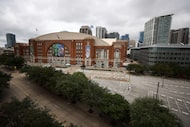
On Oct. 28, Mavericks ownership filed in Texas Business Court a 253-page petition for injunctive relief against Stars’ ownership, seeking legal finality on a breach of contract dispute the Mavericks raised in October 2024.
The Mavericks allege the Stars are in breach of a clause in their 1998 franchise agreement with the City of Dallas that requires their corporate headquarters to be located within city limits. The Stars, however, have had their headquarters and practice facility in Frisco since 2003.
The Mavericks first raised awareness of the clause in October 2024, a few weeks before the team and the city say the Stars backed out of a $300 million deal to renovate American Airlines Center. In the deal, according to the city and the Mavericks, the Stars agreed to remain in AAC through 2061 and would have paid no renovation costs, with the city and the Mavericks footing the bill 50-50.
The Stars strongly deny they agreed to the deal and say had it gone through, the Mavericks and Stars would have shared half of the renovation costs. The Stars maintain they agreed to a different deal that would extend the existing lease with both teams staying at AAC through 2035.
Days after the deal allegedly fell through, the Mavericks sent the Stars a letter and $110 in cash, alerting them of the breach of contract and stating that the Mavericks would be taking over the Stars’ interest in Center Operating Co., the joint venture between the franchises that operates American Airlines Center.
For the past year, the Stars have not had access to their quarterly arena proceeds. The Stars say the amount is “in the tens of millions.” The Mavericks say that their arena distributions are frozen, as well.
Hours after the Mavericks’ filing, the Stars filed a counterclaim, alleging the Mavericks had no right to claim a breach of agreement — only the city could — and that the Mavericks cannot claim the Stars’ interest in Center Operating Co. until a court of competent jurisdiction finds that the Stars breached certain obligations owed to the city.
The Stars later amended their counterclaim to also accuse the Mavericks of violating their franchise agreement with the city when they changed their principal location to Las Vegas in 2024 during Mark Cuban’s sale of the team to Miriam Adelson and the Dumont family.
Related
 What has the city said about this?
The city has not publicly commented on the litigation, but it became clear the city has sided with the Mavericks through documents obtained by The Dallas Morning News.
In an Oct. 3 letter to Stars owner Tom Gaglardi, City Manager Kimberly Bizor Tolbert recapped the Stars’ “baffling change of course” and ensuing fallout, including the team’s months of mostly silence before, on Sept. 9, upping their AAC improvements request to at least $400 million to $500 million.
Tolbert reiterated the Stars’ importance to Dallas and implored Gaglardi to personally return to the negotiating table. She also officially notified him that the Stars did breach a clause in their 1998 franchise agreement, signed after voters approved funding for AAC’s construction.
Some council members have said the city should intervene in the legal battle. Others have said the city must do all it can to keep both the Stars and Mavericks in Dallas, as both teams have had wandering eyes to the suburbs.
Upon learning about the alleged contract breach, the Stars opened an office in Dallas, and in October, Stars president and CEO Brad Alberts met with council member Chad West, who is the chairman of the city’s ad hoc committee on sports recruitment and retention, at that office.
What do we know about Texas Business Court?
The Business Court is new, established during Texas’ 2023 legislative session, and its judges weren’t sworn in until Sept. 19, 2024.
Part of Gov. Greg Abbott’s agenda to make Texas the best state for business, the Business Court is specifically designed to handle complex corporate litigation and compete with Delaware’s Chancery Court.
Delaware’s Chancery Court emerged as the U.S.’s preeminent business court in the early 20th century, and now two-thirds of the Fortune 500, and many other companies, are incorporated in Delaware ― in part to get access to the legal body. This includes both Dallas Sports Group, the Mavericks’ parent company, and DSE Hockey Club, the Stars’ parent company.
Texas would like to add more incorporations to go alongside the rising number of company headquarters and stock exchange listings, leading to the establishment of its own business court system.
The Texas Business Court is led by 10 governor-appointed judges across five divisions, each highly regarded jurists with experience handling major corporate litigation. It is available to companies that do business in Texas, and will only handle cases in which the amount of money in controversy exceeds $5 million.
As opposed to district court, where judges have dockets of 1,000 or more cases on average, Business Court judges have dockets of around 50 cases, meaning getting a case through the court could happen more quickly. Also, the judges are expected to have more of an expertise and be better primed to give careful attention to complex cases, as Mavericks vs. Stars figures to be.
The Mavericks and Stars case has been assigned to Judge Whitehill, who is working out of the mock trial courtroom at SMU’s Dedman School of Law.
What about the Stars’ case in bankruptcy court?
The Stars also filed a motion to reopen their 2011 bankruptcy case, asking a U.S. bankruptcy court judge in Delaware last week to uphold the ruling in that case.
The Stars argued that the Mavs were well aware of their Frisco headquarters in 2011 and that the confirmation order of the bankruptcy case cleared them from any future objections to the terms agreed upon in that case.
The judge ultimately denied the motion, telling the teams the Texas courts were just as suited to resolve the matter.
What does this mean for the teams’ futures at American Airlines Center?
Both teams have contemplated leaving American Airlines Center once the current lease expires in 2031.
The Mavericks are looking to build a new basketball-only arena elsewhere in Dallas while the Stars have explored building an arena and entertainment district in Plano.
If the Mavericks win the case, they could earn full control of Center Operating Co., meaning they could effectively make the Stars their tenant at the building while still building their own arena elsewhere.
However, it is unlikely that the Stars would remain at American Airlines Center past 2031 under those circumstances. A Mavs victory would likely mean the Stars seriously consider moving to the suburbs.
Twitter/X: @Lassimak
Find more Stars coverage from The Dallas Morning News here.
Find more Mavericks coverage from The Dallas Morning News here.