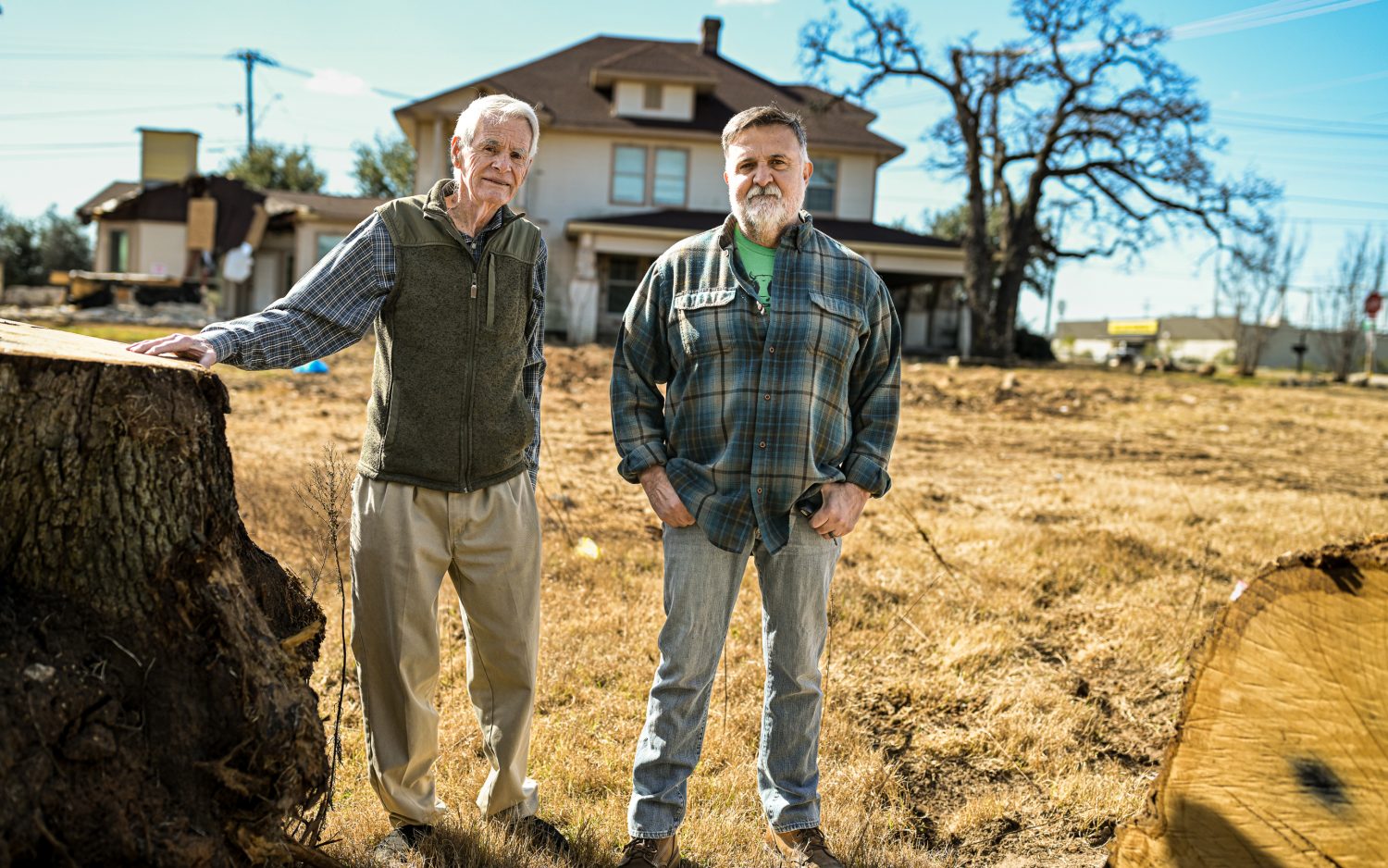
Bill Freeman would like to know how old the post oak tree that stood two doors down from him was before it was chopped down.
Was it 100, 200 years old? As old as our country, celebrating 250 years, or even older? Even chopped to pieces, the tree is the type of large that can only be achieved with time. The stump, yanked out of the ground and resting on a bed of gnarled roots, reaches the top of the man’s ribcage. Nearby, the post oak’s discarded trunk is not much shorter.
Freeman would have liked to stop the tree from being felled. He’d like to stop a lot of what he sees as developers coming into his neighborhood, Kleberg, and doing what they want regardless of the rules.
Kleberg sits tucked away from Dallas, so far south that the downtown skyline has disappeared in your rearview mirror by the time you arrive. If you look past the potholes and the orange traffic cones that denote stalled project after stalled project, you’ll find the area’s rural charm: cows grazing, dogs running along fences with tongues lolling and the sun rising over dewy fields.
People move here to escape from the city, said David Carranza, president of the Kleberg Neighborhood Association. But in making that escape, neighbors feel like the city has forgotten about Kleberg.
Carranza and other neighborhood advocates, like Freeman, have been asking the city to invest more in Kleberg for years, with varying levels of success. There are promises everywhere: a creek bed crossed by sewage lines that neighbors have been told will be converted into a park by the end of 2027; a trail system for which the city has the land but has yet to build; and traffic control plans that are repeatedly pushed back year after year.
Now, the planned demolition of a home that neighbors believe has historical significance has raised new questions about the city’s care for the area and the effectiveness of city departments that handle issues such as permitting and preservation. It has also inspired yet another promise: to allocate resources to evaluate which buildings in Kleberg require historical protection and to provide better education for residents on how to initiate this process.
“History is important. Things keep on coming back around, and if we don’t learn from our history and learn from our mistakes, what’s the point?” Carranza said. “We’ve got to start figuring out what in District 8 we need to save.”
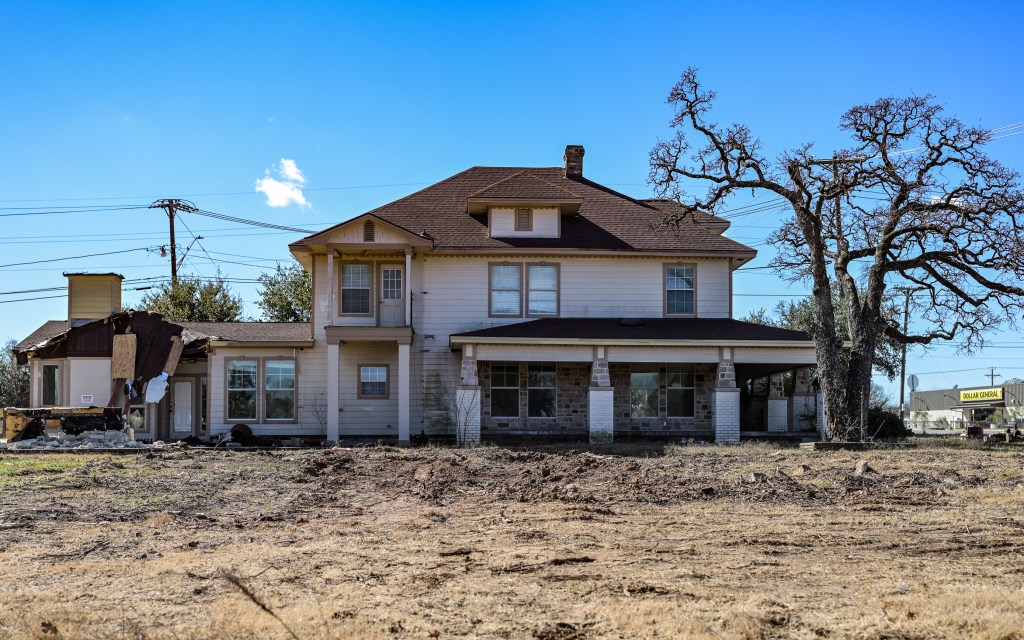 Kleberg history advocates delayed the demolition of the Ridgell house built between 1925-1927.
The Most Notable Home in Kleberg
Frustration in Kleberg came to a head at the end of December, when Freeman, who moved to the area in the early ‘70s and has spent nearly two decades advocating for the neighborhood on the Dallas County Trail and Preserve Program Board, caught wind of plans to tear down the 100-year-old home that sits at the end of his street.
Construction machinery had been moved onto the large property, which marks the start of a rural residential neighborhood and overlooks a commercial area on Belt Line Road in the other direction. A large home, wrapped in stonework and windows framed in tan trim, rests on the corner of the property. Trees and tall prairie grass fill the rest of the area.
City records indicate that the home was built between 1925 and 1927 for Dr. J. W. Ridgell. An old newspaper clipping that has been passed around Kleberg so many times it’s difficult to know when the article was written or for which publication describes Ridgell as bringing “many of the residents [of Kleberg] into this world and [attending] to their needs for years by traveling for miles in his horse and buggy to treat patients.”
“If you should happen to drive through this small community, you can’t help but notice the large two-story yellow house that sits on the southeast corner of Kleberg and Belt Line roads,” the article says, with two large images of the home printed in the center of the page. “I know there are a great many stories to be told by the descendants of these pioneers who settled in and around the town of Kleberg, and I strongly urge that they be written down so that they might be passed on to the ones yet to come so that they will not be forgotten.”
That warning was not one that many took seriously, as current-day Kleberg residents have come to realize.
Freeman panicked when he saw the construction equipment. There was no evidence of plans to tear down the home on the city’s permitting website, but the yellow CAT cavalry had come. A gouge in the home’s eastern-facing roof proved that the property owners meant business. Freeman called Carranza, who called everyone in the city he could think of to stop the demolition. But Carranza was unimpressed by the speed at which things moved on the city’s end, so he decided to take the matter into his own hands.
At 6 a.m. on Dec. 31, Freeman, Carranza and their own Kleberg cavalry arrived at the house, determined to prevent contractors from tearing it down. They were too late to save the massive tree, but they were prepared to prevent the demolition until someone from the city took notice of what was happening.
“We stood between them and the house, and I said I hope this works, because that’s a big machine,” Freeman said.
Carranza said that once it became clear the demolition was on hold, they returned to their cars to wait for city officials. A little after 8 a.m., the area’s City Council representative, Lori Blair, showed up with code compliance officials in tow.
Freeman said he was impressed with the way Blair took control, informing the contractor on site that he’d failed to obtain the proper permits to proceed with the demolition. According to a spokesperson for the city of Dallas, the property owners obtained a building permit in November; however, they did not obtain a demolition permit, which is a separate but required element.
Neighbors left the confrontation feeling there might be a chance the home could be saved. Freeman, who lives just down the road on 50 acres, even offered to pay to have the home moved onto his land. (He claims the property owners declined the suggestion, pointing to the time it would take to arrange such a move.)
Now that the city has had some time to assess the situation, it appears that little can be done to save Ridgell’s home. Blair said too much work has been done on the house in recent years for the argument to be made that it has retained its historical value. A demolition permit request was submitted to the city on Jan. 7.
“Code Compliance Services issued a Notice of Violation after it was determined that demolition had begun without the required demolition permit,” the city said in a statement provided to the Observer. “The demolition permit is expected to be issued, provided that all applicable codes and submittal requirements are satisfied.”
Once the home comes down, a 6,800-square-foot AutoZone is planned to take its place.
How did developers get a building permit from the city without obtaining a demolition permit? Why is the land, which sits at the front of a residential area, zoned for commercial use? (City records suggest the zoning happened in 1989.) And why is it that Kleberg, where residents have spent years begging for a grocery store or a coffee shop, seems slated only for dollar stores and auto shops? (There is already an AutoZone located 2 miles from the home on Belt Line Road.)
They’re questions that Carranza isn’t expecting answers to anytime soon.
“People (at City Hall) are just rubber-stamping stuff, and no one is checking,” he said.
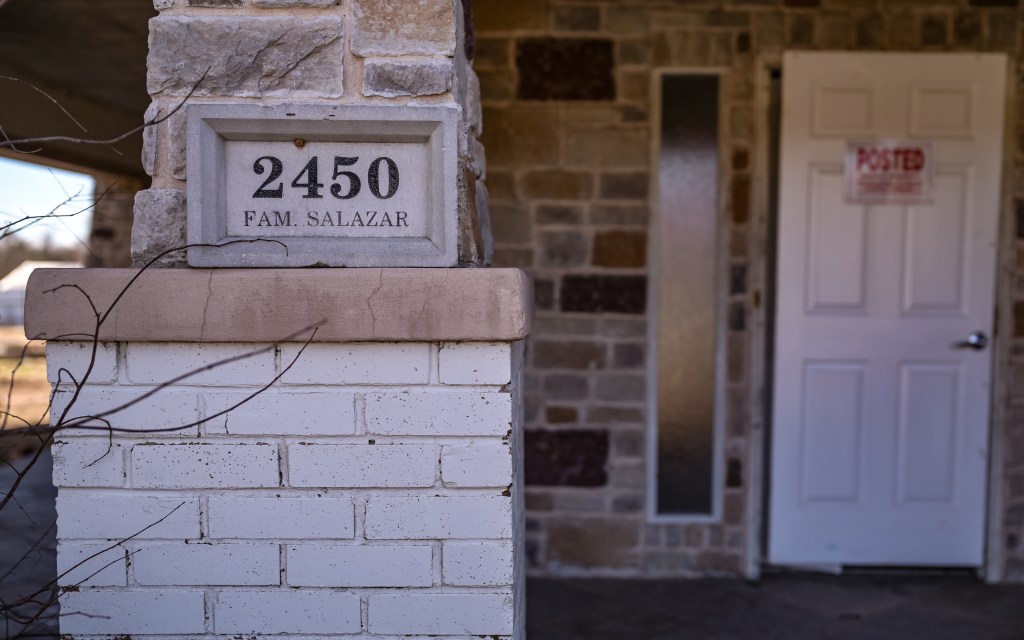 Kleberg residents feel forgotten by the city of Dallas.
Unkept Promises
If anyone has an ax to grind with Dallas, it’s David Hawes.
Hawes was born and raised in Kleberg, but the town of his childhood was vastly different from the Kleberg of today; he recalls five-and-dime stores, a bustling train station and a volunteer fire marshal’s service run by his father.
“It was country people with country attitudes,” he said.
Hawes left Kleberg for a four-year stint in the Air Force, then returned to North Texas for college at the University of North Texas. After that, he was back in the small town he’d grown up in to care for his ailing parents. He describes Dallas’ decision to annex Kleberg in 1978 as one that “broke his father’s heart.” The debate was divisive; city records state that the vote to consolidate with Dallas passed 559 to 342, with loud voices on both sides of the issue.
“Dallas made a lot of promises that we’re still waiting on,” Hawes said. “The city is asleep at the wheel when it comes to ensuring services out here. They allow things out here that they’d never allow in North Dallas.”
Over lunch, the men describe their various attempts to get the city to confront the area’s problems with prostitution, homeless encampments, random gunfire and the illegal dumping of trash and animals. Carranza is incensed by the lack of sidewalks along roads surrounding elementary schools; Hawes is positive that his neighbors are doing “something nefarious,” having erected massive privacy fences around their property that code compliance has sworn for months it is working to address.
City officials have taken steps to address these issues in virtually every other part of the city. Resources are being poured into relieving downtown homelessness, and the Dallas Police Department has launched pilot systems that identify random gunfire in select neighborhoods.
Hawes worries that Kleberg has been written off; its separation from the rest of Dallas has left neighbors out of sight and out of the city’s mind.
Another major worry is permitless development.
The debacle at the Ridgell house was not simply the case of a lone developer failing to obtain proper permits, Carranza claimed. In Kleberg, it happens frequently. On a drive through the rural streets, he points to structures here, there, everywhere, that he believes were built improperly.
According to a city spokesperson, the Dallas Code Compliance department has identified 197 instances of work being done without a permit in the Kleberg-Rylie area in the last six months. The department issued 45 citations for the violations during that time.
“This represents less than 10% of the occurrences of this violation type across the city in the same time period,” the city spokesperson said.
To put that into perspective, recent census data suggests that around 24,000 of Dallas’ 1.3 million residents live in Kleberg. That’s less than 2% of the city’s population.
Hawes believes Dallas’ treatment of Kleberg is the result of stigma. A disproportionate share of Dallas’ mobile homes are found in the area, and while the town was primarily white when Hawes was growing up, it is now a primarily Black and Hispanic community. Increasingly, the last names of Kleberg’s earliest pioneers — the Woodys, the Glenns, the McCoys — are rarer to come by.
“They just think we’re hicks out here,” Hawes said. “[Developers are] coming in here and offering quick money to the heirs who don’t want anything to do with us, and the city of Dallas has gotten used to it. They think there’s nothing of worth here.”
Holding on to History
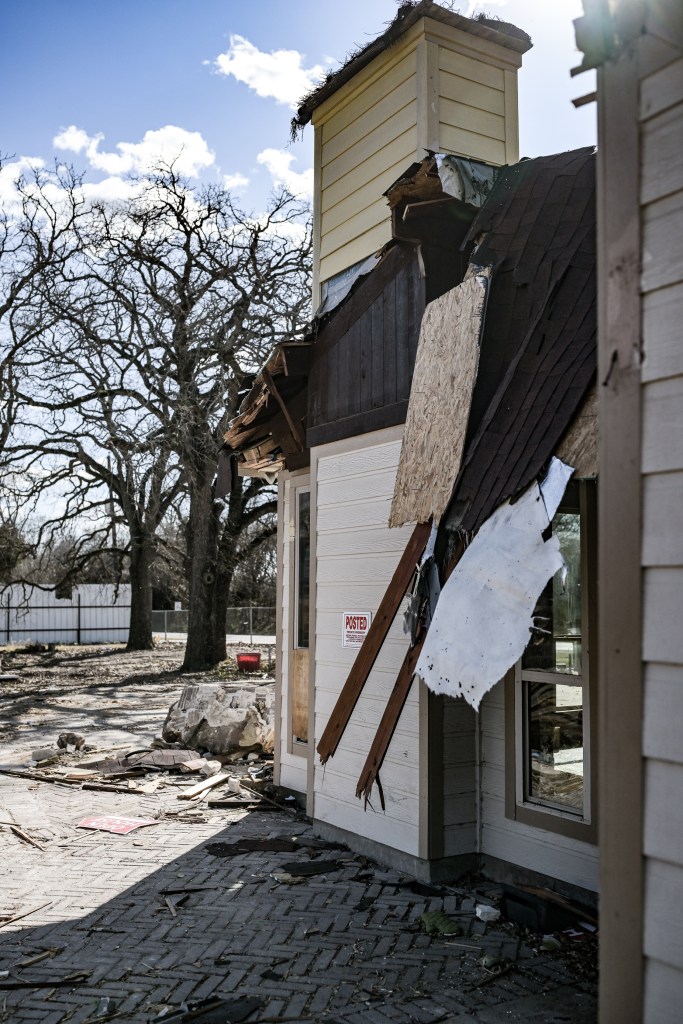 With the partial demolition, it may be too late to save the Ridgell house for historic preservation.
If it’s too late to save the Ridgell house, community leaders are dead-set on stopping future demolitions.
According to Blair, an end-of-year trip to the Dallas Central Library turned into a “fortuitous” lecture on efforts to preserve Dallas’ historical landmarks. Fresh off a conversation with librarians dedicated to identifying historic homes, Blair received the initial calls about the planned demolition of the Kleberg building. Since then, she has enlisted the library’s help in identifying what needs to be done to ensure that other Kleberg homes can be saved.
While Dallas has recognized historic districts — a designation that, when enforced, encourages preservation and requires future development to align with traditional standards — since the 1970s, she feels the effort to save historic homes hasn’t been made evenly across the board. There is a “disparity of understanding” in Dallas’ southern neighborhoods, she said, which has kept neighbors from initiating preservation efforts in the past.
“Education within the southern sector needs to happen. Identifying these locations needs to happen,” Blair said. “We need to raise our hands and say, ‘Look, we have this property that’s old. Is it historical? We need partnership with those that know how to do the work. … If we don’t raise the flag, no one says, ‘Let me help you.’”
Blair said the effort is an “immediate focus” for her office, but that determining whether homes in the area have maintained their historical value will take time. Carranza, Freeman and Hawes worry that more structures will fall to the same fate as the Ridgell house: Modern upgrades will render the effort worthless, and developers will move in before the community can.
Just this month, Hawes found himself exasperated by a neighbor’s decision to repaint a red brick home white. It’s “one of the last remaining colonial homes” in Kleberg that he believes was built by the town’s judge.
“So now that likely won’t count as a historical house,” he said. “They ruined it.”
Freeman has similar fears. His home is stunning, with a wraparound porch, blue-gray shutters, a dark-wood door with rippling glass panes, and large oak trees that cover the property. Before Freeman moved in, the home was owned by Kleberg’s mayor. Blair and Carranza both emphasized their desire to get the home on whatever list will keep it from being torn down someday.
Freeman recently had to replace his roof, and while he made an effort to choose new materials that mimicked the style of the old one, he doesn’t know if that sort of update would be disqualifying.
Carranza insists that Kleberg is a neighborhood of passionate people, but he worries. Many of the most involved residents he knows are growing older, and many “are tired of waiting.” While he often encourages his neighbors not to give up on advocating for Kleberg, he has increasingly found that his urging falls on deaf ears.
Will this latest push for preservation be just another City Hall promise? Not if he can help it.
“Look at it out here,” Carranza said, driving through the Kleberg backroads and pointing to the sweeping pasture that holds his cows. “It could be so beautiful.”