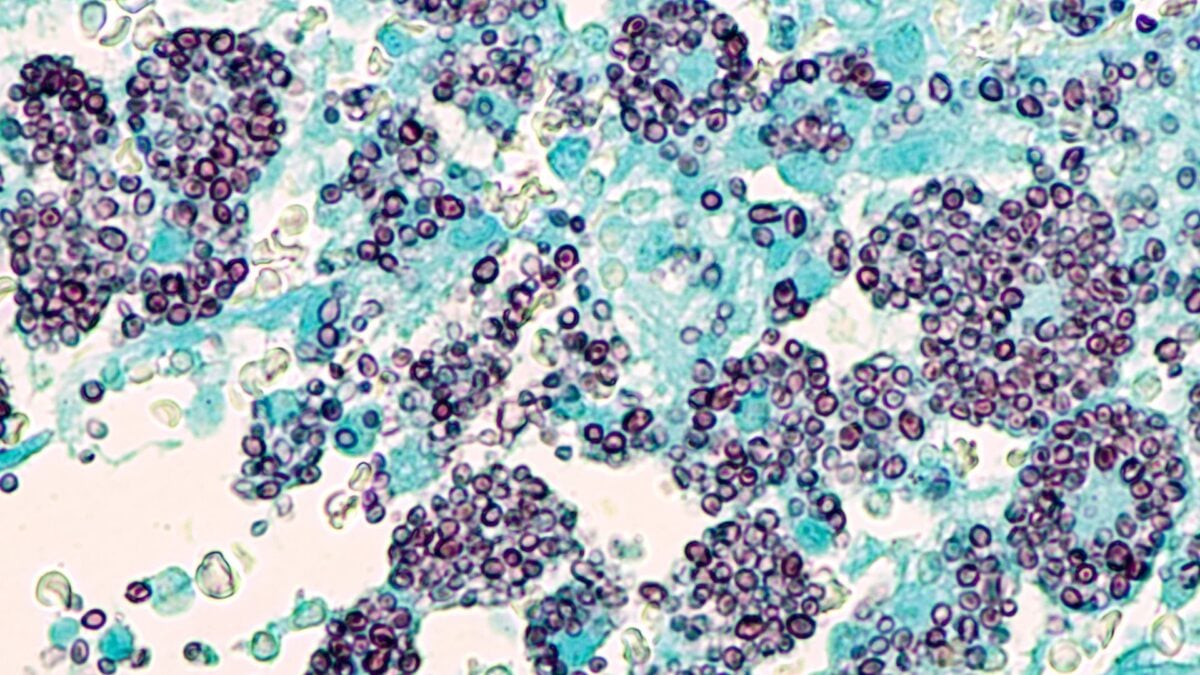
A rare but potentially deadly fungal infection known as histoplasmosis is sickening a cluster of people in Tennessee.
Dozens of histoplasmosis cases have been reported in middle Tennessee since last fall, according to local health officials, while one woman may have died as a result. As of yet, officials have not identified a clear source of the cluster, though the infection is not transmittable between people.
A hidden danger
Histoplasmosis is caused by inhaling spores of the Histoplasma fungus (typically the species Histoplasma capsulatum). Most people are not sickened by these exposures, but sometimes the infection causes relatively mild pneumonia, leading to symptoms such as fever, cough, chest pain, and body aches. In rare cases, the infection can linger in the lungs and become a chronic problem or even spread to other parts of the body, like the brain, and cause serious, life-threatening illness.
In early December 2025, the Tennessee Department of Health issued a health advisory to clinicians and labs in the state, warning of increased acute and severe histoplasmosis cases in Williamson and Maury County. At the time, it reported 18 known cases. A spokesperson for the Tennessee Department of Health told Gizmodo on Thursday that this tally is now at 36.
Last week, the family of Alyssia Brown, a resident from Spring Hill, came forward to the media to discuss her case and a possibly related death.
Brown’s symptoms reportedly began soon after she moved into her new home in October 2025. She experienced a chronic cough that refused to go away. Eventually, on December 8, she visited an emergency room, where she was diagnosed with bronchitis and prescribed a steroid medication. Her condition continued to worsen, and she passed away on December 15.
Prior to her death, she sought medical care again and requested that doctors test her for histoplasmosis, having heard about the cluster. According to her family and roommate, the test came back positive for the fungus on December 18. Local detectives are investigating Brown’s death, and her family is still awaiting her autopsy results, the New York Times reported Wednesday.
Mystery source
A potential origin for these cases hasn’t been identified as of yet, and it’s possible that one will never be located, given the nature of this fungus, health officials say.
“Histoplasmosis is commonly found throughout the soil in Tennessee, so it can be challenging to completely prevent exposure,” the Tennessee Department of Health representative told Gizmodo. Like many fungal infections, though, severe cases are more likely to occur in people with weakened immune systems. People exposed to high levels of the fungus are also at greater risk of severe illness.
That said, the fungus is known to thrive in soil that’s been saturated with bird or bat droppings, and bats are thought to be an important vector for transmission. Previous outbreaks of histoplasmosis have been linked to bat exposure. Last year, for instance, doctors documented how 12 out of 13 members of a single family developed the infection after visiting the bat-colonized Venado Caves in Costa Rica during a vacation. People in the U.S. have also contracted histoplasmosis from using bat guano as fertilizer to grow cannabis.
The Tennessee Department of Health is advising doctors to stay on alert for further cases and to suspect histoplasmosis when treating people from middle Tennessee with unexplained fever or respiratory illness.