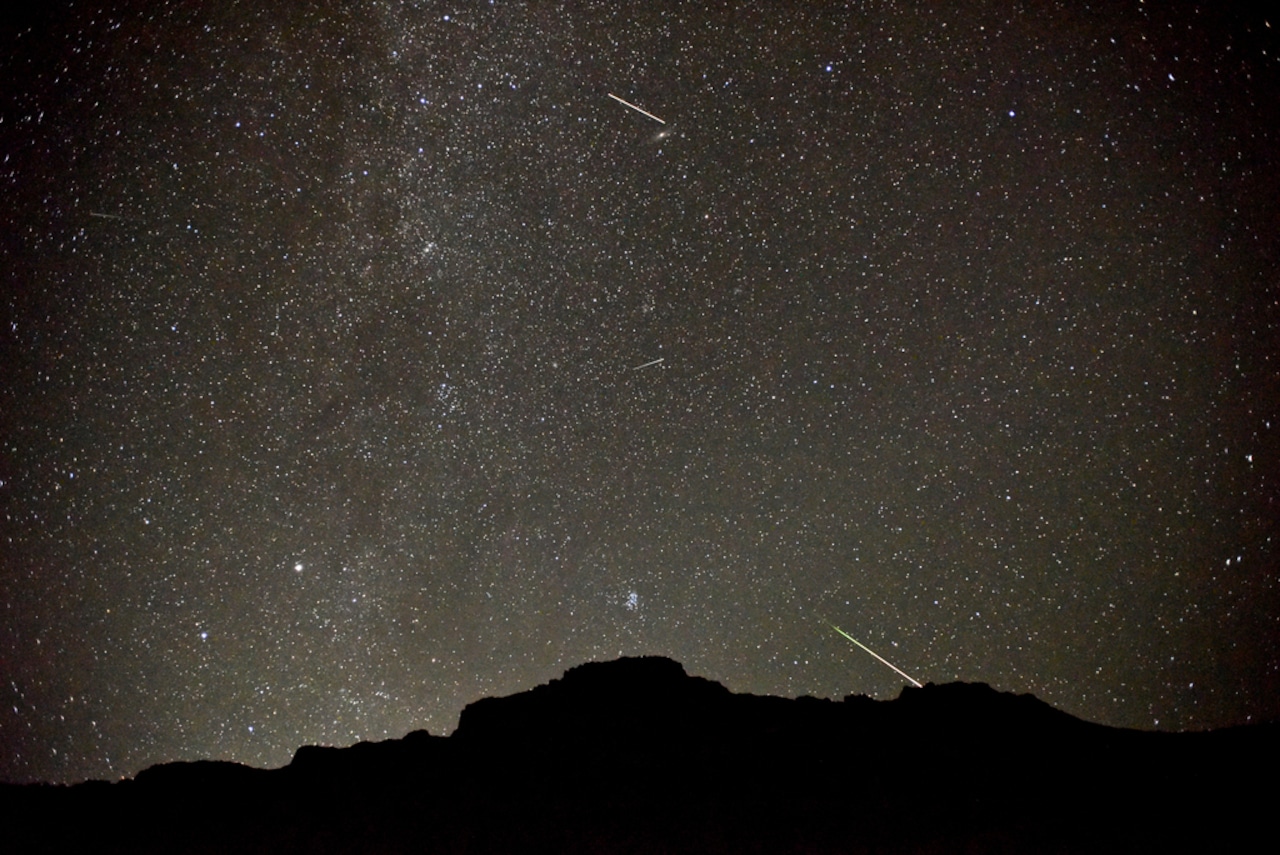
We already know that Oregon has some of the darkest skies in the country, so perhaps it’s no surprise that our state is also one of the best places to see meteors.
A new study commissioned by Canadian gambling site Casino.ca (the latest online gambling website to sponsor a trending study), had Oregon ranked in the top five for “shooting star hotspots” in the United States.
It’s the latest astrotourism accolade for Oregon. Over the last few years, we’ve seen announcements of new Dark Sky Parks, Dark Sky Communities and the biggest Dark Sky Sanctuary in the world — all in our own backyard. It’s enough to warrant a full guide to Oregon’s dark sky country.
According to the study — which weighed sky quality, accessibility to dark parks, tourism and population draw, and social media sightings — Oregon is the fourth best U.S. state to watch a meteor shower, scoring 76 out of a possible 100.
“The final score represents a relative likelihood of good meteor-viewing conditions, combing darkness with how easy it is for people to actually visit and observe,” Casino.ca wrote in the study. “It is not a literal nightly probability, but a comparative ranking across locations.”
Meteors, which are commonly referred to as shooting stars, can be seen during any of the many meteor showers that occur throughout the year. When the Earth passes through a field of debris, typically left behind by comets or asteroids that pass through the solar system, the chunks of rock and ice burn up brightly as they enter our atmosphere, become briefly visible.
The best place to see meteors is under the darkest skies possible. In Oregon, that usually means heading out to southern, central and southeast Oregon, home of the state’s several officially designated Dark Sky places.
But while Oregon has been recognized as one of the very best stargazing locations in America, it lost out to three other states in the Casino.ca study. Coming in ahead of Oregon were Texas, Arizona and California, which claimed the No. 1 spot. Our state faltered largely due to a dearth of social media mentions, with only 437 compared to California’s 4,370.
Of course, that might just mean that Oregonians feel no need to shout about their spectacular meteor shower experiences.