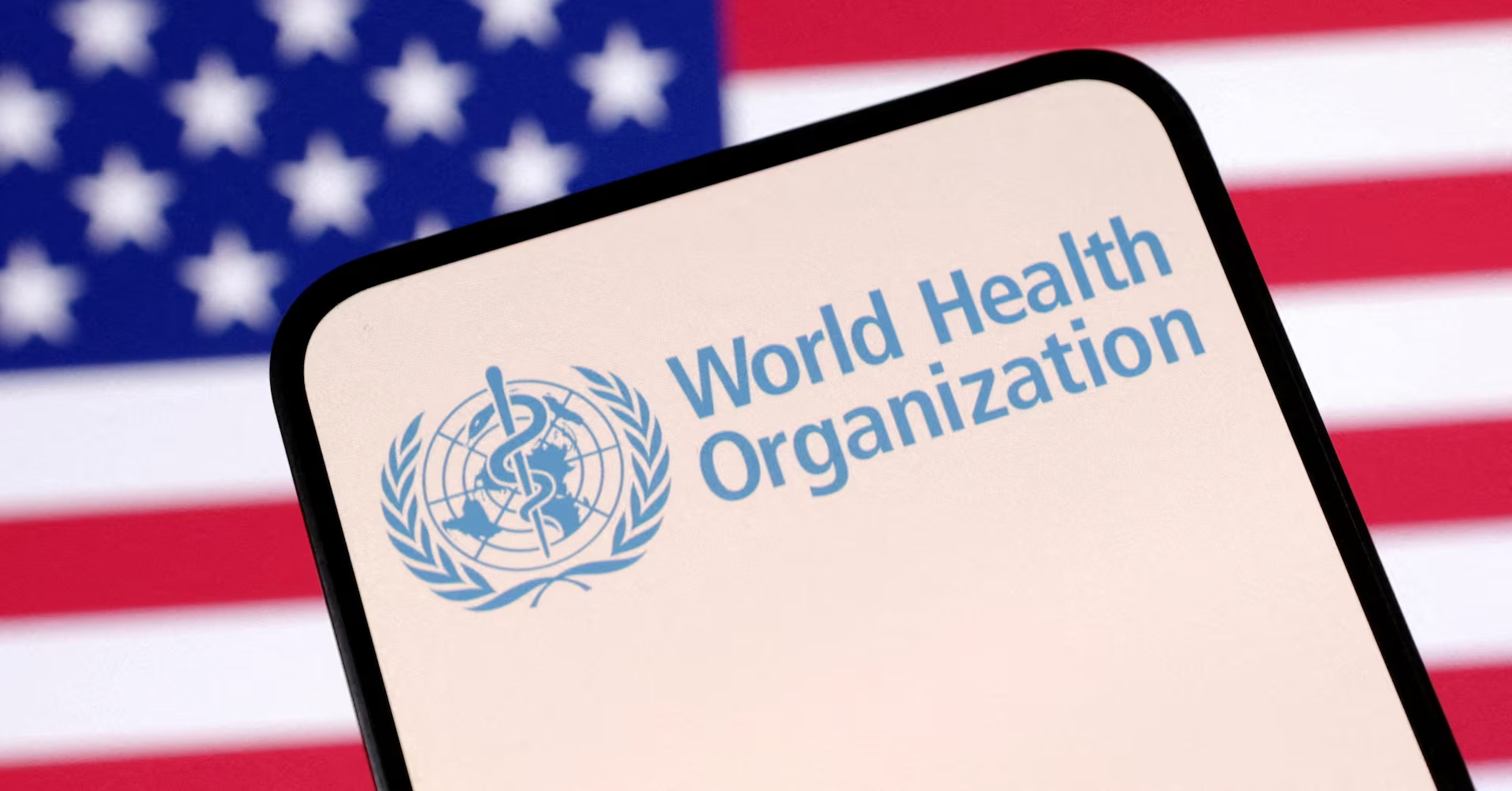
- US owes WHO $260 million in fees
- WHO faces budget crisis, staff cuts linked to US exit
- US official says country does not intend to return to WHO
- Global health experts urge re-think
LONDON, Jan 22 (Reuters) – The United States officially left the World Health Organization on Thursday after a year of warnings that doing so would hurt public health in the U.S. and globally, saying its decision reflected failures in the U.N. health agency’s management of the COVID-19 pandemic.
President Donald Trump gave notice that the U.S. would quit the organization on the first day of his presidency in 2025, via an executive order.
Sign up here.
According to a press release from the U.S. Health and State Departments, the U.S. will only work with the WHO in a limited fashion in order to effectuate the withdrawal.
“We have no plans to participate as an observer, and we have no plans of rejoining,” a senior government health official said. The U.S. said it plans to work directly with other countries – rather than through an international organization – on disease surveillance and other public health priorities.
DISPUTE OVER US-OWED FEES
Under U.S. law, it was supposed to give one-year notice and pay all outstanding fees – around $260 million – before departing.
But a U.S. State Department official disputed that the statute contains a condition that any payment needs to be made before withdrawal.
“The American people have paid more than enough,” a State Department spokesperson said in an email earlier on Thursday.
The Department of Health and Human Services said in a document released on Thursday that the government had ended its funding contributions to the agency. Trump had exercised his authority to pause the future transfer of any U.S. government resources to the WHO because the organization had cost the U.S. trillions of dollars, the HHS spokesperson said.
The U.S. flag had been removed from outside the WHO headquarters in Geneva on Thursday, according to witnesses.
In recent weeks, the U.S. has moved to exit a number of other United Nations organizations, and some fear that Trump’s recently launched Board of Peace could undermine the UN as a whole.
Several WHO critics have also proposed setting up a new agency to replace the organization, although a proposal document reviewed by the Trump administration last year instead suggested the U.S. push for reforms and American leadership at WHO.
QUICK RETURN UNLIKELY
Over the last year, many global health experts have urged a rethink, including most recently WHO Director General Tedros Adhanom Ghebreyesus.
The WHO also said the U.S. has not yet paid the fees it owes for 2024 and 2025. Member states are set to discuss the U.S. departure and how it will be handled at the WHO’s executive board in February, a WHO spokesperson said.
“This is a clear violation of U.S. law,” said Lawrence Gostin, founding director of the O’Neill Institute for Global Health Law at Georgetown University in Washington, a close observer of the WHO. “But Trump is highly likely to get away with it.”
Bill Gates – chair of the Gates Foundation, a major funder of global health initiatives and some of the WHO’s work – told Reuters at Davos that he did not expect the U.S. to reconsider in the short term.
Gates said he would still advocate for the U.S. to rejoin. “The world needs the World Health Organization,” he said.
WHAT THE DEPARTURE MEANSThe U.S. departure has sparked a financial crisis that has seen the WHO cut its management team in half and scale back work, cutting budgets across the agency. Washington has traditionally been by far the U.N. health agency’s biggest financial backer, contributing around 18% of its overall funding. The WHO will also shed around a quarter of its staff by the middle of this year.
The agency said it has been working with the U.S. and sharing information in the last year. It was unclear how the collaboration will work going forward.
Global health experts said this posed risks for the U.S., the WHO and the world.
“The U.S. withdrawal from WHO could weaken the systems and collaborations the world relies on to detect, prevent, and respond to health threats,” said Kelly Henning, public health program lead at Bloomberg Philanthropies, a U.S.-based non-profit.
Reporting by Jennifer Rigby and Emma Farge, additional reporting by Jeffrey Dastin in Davos and Michael Erman in New York; Editing by David Gregorio and Bill Berkrot
Our Standards: The Thomson Reuters Trust Principles., opens new tab