CHICAGO — The budget at The Mary Crane Center, a Chicago-based day care, has always been tight.
But a freeze on Illinois’ access to $1 billion of federal funding for childcare and family assistance has put the center’s ability to stay open in jeopardy, according to teacher Alice Dryden
“We’re all anxious. We’re all angry. We’re all tired,” Dryden said.
Illinois is one of five states being held back this month from a total of $10 billion in federal funding over what the Trump administration painted as fraud concerns. The cuts will affect around 100,000 families and thousands of licensed child care providers across the state, according to a statement from Gov. JB Pritzker this month.
Without the federal funding, Dryden said the day care might only have a month before it “would really have to make some tough decisions.”
Dryden said the closing of The Mary Crane Center and child care centers like it would unravel “a support network that’s holding up our entire neighborhood, our entire city” — an idea echoed by Tahiti Hamer, an Early Head Start teacher at the Chicago Metro YMCA.
“You got workers losing their jobs, and you got families, who these services are being provided for, losing their jobs because they have nowhere for their kids to go while they work,” Hamer said. “The kids suffer because now they’re losing that education and services they were receiving to progress.”
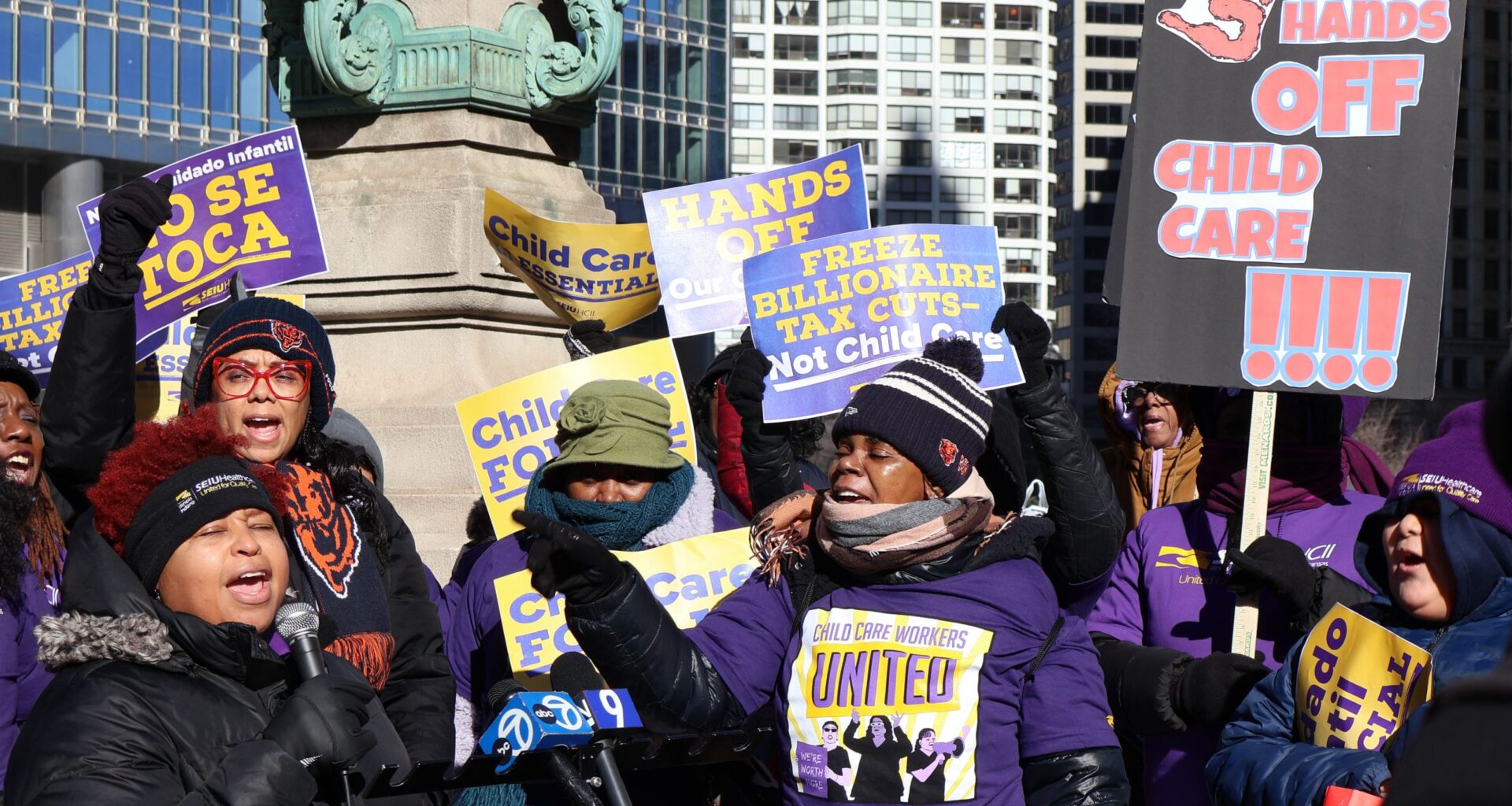
The U.S. Department of Health and Human Services, in announcing the freeze on Jan. 6, cited “serious concerns about widespread fraud and misuse of taxpayer dollars in state-administered programs” as the reason behind the freeze in its announcement. But at a protest rally Jan. 15 held by the Illinois Childcare For All Coalition, Erica Bland, executive vice president of SEIU Healthcare Illinois, said those who believe that allegation “don’t understand the child care industry.”
“They need those records,” Bland said. “They have to have them to remain in compliance with state boards and different departments, to be able to remain in compliance for the meal programs that they participate in and receive support from.”
 Teachers, parents and advocates gather for a protest rally held by Illinois Childcare for all Coalition in front of Trump Tower on Jan. 15, 2026. Credit: Sabrina Castle/Block Club Chicago
Pritzker added in his earlier statement that child care programs in Illinois “operate within robust procedures and protocol to prevent, report, and address alleged fraud.”
Bland said this move is actually aiming to “target working families and low-income people” to benefit the rich.
Dryden said that, while giving money to the already wealthy, this move will force educators like herself to spread already bare budgets even thinner. Having not heard from her employer about any plan to replace this funding, she and other teachers can only prepare through “small things we can do day to day,” like making materials, such as toys and stocks of diapers, last longer to save money, she said.
Hamer said she and fellow staff have been “talking to parents, letting them know the importance of standing up in their rallies about this, speaking out, coming out in numbers, making their voices heard.”
A federal judge in New York temporarily blocked the freeze with a Jan. 9 ruling after the five affected states sued the Trump administration. The ruling orders the federal government to release funding while the lawsuit proceeds.
“Anything that keeps us open a little longer, I will take it and I will be relieved,” Dryden said.
Yet Dryden said she still worries whether the administration will comply even if the move is permanently blocked.
“It’s a system that [Trump] has tried to attack and dismantle before, and I don’t know that he will stop trying to do that,” Dryden said. “I wish this would be the end. I don’t anticipate it will be.”
Dryden and Hamer both emphasized the need for Illinois and other cities to enact universal child care policies to insulate childcare workers and families from any future freezes.
“I would love for them to make care affordable for everybody. That way we don’t have to worry about a child care budget being on freeze because that’s a guaranteed thing for us already,” Hamer said.
Even if the freeze is upheld, Dryden and Hamer both said they and other childcare workers and advocates will keep fighting.
“We’re going to keep pushing and keep letting them know our voices matter because if we don’t stand up for our kids and for our parents and for ourselves, who will?” Hamer said.
Listen to the Block Club Chicago podcast: