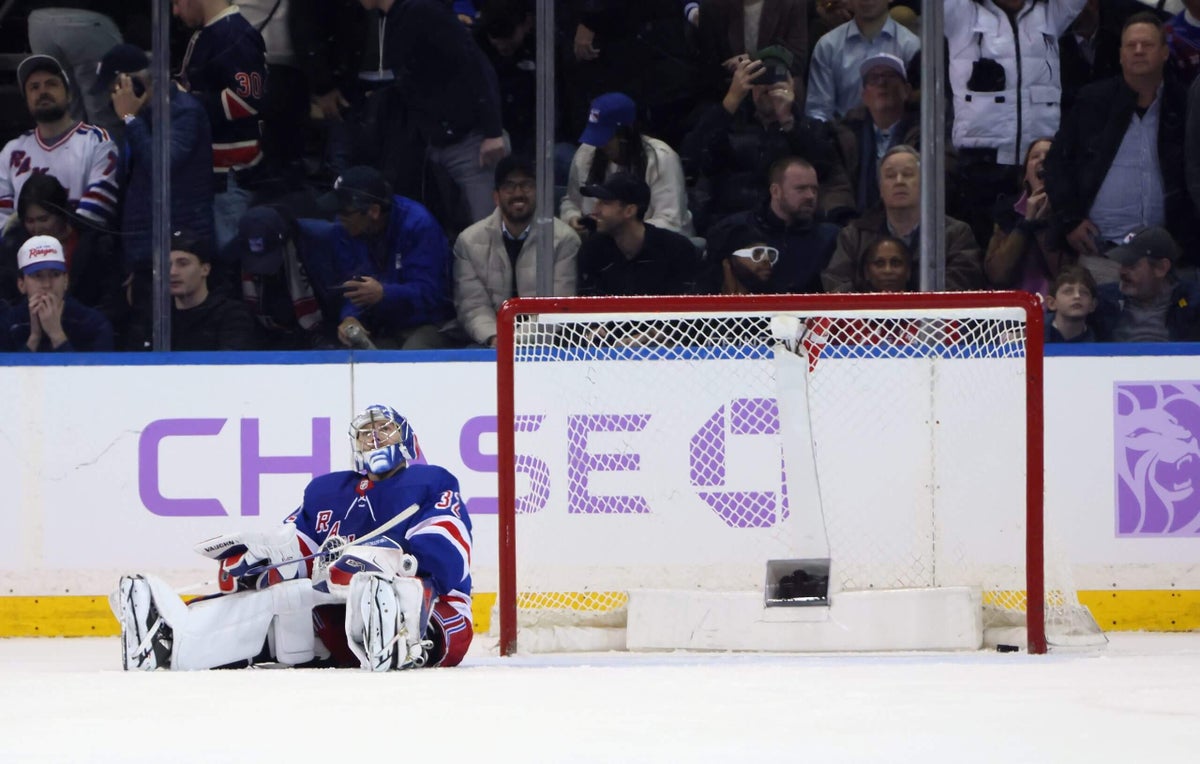
NEW YORK — Less than eight years after the New York Rangers sent out their original rebuild letter, they took pen to (digital) paper again.
The wording this time is slightly different, with team president and general manager Chris Drury choosing to label the second iteration as a “retool” rather than a full-scale rebuild. But the organization has reached the same conclusion: The existing core isn’t good enough, so it’s time to move on from veteran players in favor of draft picks and youth.
How did they get here so quickly? That’s been the subject of fierce debate among a fan base that seems much more skeptical this time around. They’re worried the present-day Rangers are in an even worse position than when they wrote the first letter and are unconvinced New York has the right people in charge to pull off the daunting task ahead.
The previous rebuild, formally announced in a statement to fans on Feb. 8, 2018 and signed by former team president Glen Sather and GM Jeff Gorton, yielded an exciting three-year run. By 2022, the Rangers were in the Eastern Conference final. They then repeated that feat while claiming the franchise’s fourth Presidents’ Trophy in 2023-24.
But it all began to crumble sooner than anyone anticipated. New York missed the playoffs the following season, with its rapid on-ice deterioration often overshadowed by off-ice drama that consumed all corners of the organization. Drury attempted to patch a fractured locker room together with a new coach (Mike Sullivan) and new captain (J.T. Miller), but no Band-Aids were going to stop the hemorrhage of a fizzling roster, barren prospect pool and broken culture.
Drury and owner James Dolan clung to hope as long as they could, perhaps doing further damage in the process, but by last Friday, they reluctantly accepted their fate and issued “The Letter 2.0.”
Neither has agreed to interview requests in the days since, but through years of reporting and conversations with a half-dozen league sources who spoke under the condition of anonymity so they could freely discuss sensitive information, The Athletic has outlined many of the key events that occurred between the two letters and led the Rangers back to this precarious point.
Poor drafting and developing
The first rebuild was pushed into the public consciousness in 2018, but the wheels had been turning in that direction a year earlier.
Shortly before the 2017 NHL Draft, Gorton traded longtime center Derek Stepan and backup goalie Antti Raanta to the Arizona Coyotes in exchange for young defenseman Tony DeAngelo and the No. 7 draft pick. That began a stretch of four consecutive drafts with a top-10 selection.
Over five years from 2017 to 2021, the Rangers made 42 total picks, including nine first-rounders. It was supposed to lay the foundation for the next decade-plus, but far too many of those prospects fell flat. That, above all else, explains why New York’s contention window closed so quickly.
Outside of Gorton’s final draft in 2020, from which Alexis Lafrenière (No. 1), Braden Schneider (No. 19), Will Cuylle (No. 60) and Matt Rempe (No. 165) remain on the active roster, with Dylan Garand (No. 103) and Brett Berard (No. 134) also still in the system, only three other draftees among those 42 picks are currently with the NHL club: Matthew Robertson (No. 49 in 2019), Adam Edström (No. 161 in 2019) and Brennan Othmann (No. 16 in 2021).
It’s hard to build a sustainable winner with a hit rate that low, but even more so when your premium picks don’t turn into top-of-the-lineup staples. Only three of the nine first-rounders remain in the organization (Lafrenière, Schneider and Othmann), with none coming close to their originally perceived ceilings. The other six — Lias Andersson (No. 7 in 2017), Vitali Kravtsov (No. 9 in 2018), Filip Chytil (No. 21 in 2017), K’Andre Miller (No. 22 in 2018), Nils Lundkvist (No. 28 in 2018) and Kaapo Kakko (No. 2 in 2019) — have either been traded or busted out of the league entirely.
The Andersson and Kravtsov picks stand as the biggest whiffs. The Rangers made overtures in 2017 to move up for two-time Norris Trophy winner Cale Makar (who may be on his way to a third award this season), according to two people close to the discussions at the time, but they proved fruitless. The Colorado Avalanche selected him at No. 4, then another potential New York target, Swedish center Elias Pettersson, was snagged by the Vancouver Canucks with the fifth pick.
That left Gorton, director of player personnel Gordie Clark and the rest of the scouting department weighing a group of centers that included Martin Nečas (No. 12), Nick Suzuki (No. 13) and Robert Thomas (No. 20). They settled on Andersson, whom they saw as “a gritty second-line guy” with high-character and two-way ability, according to a scout. He was the only one among the discussed options who didn’t become an NHL top-sixer — or, as another scout put it, “Just a bad pick.”
Fast-forward to 2018, and the Rangers faced a similar dilemma. They coveted Boston University power forward Brady Tkachuk — “We talked about Brady since he was 15 years old,” one scout said — but they were too far back to get him at No. 9. They zeroed in on Kravtsov, who enamored them with his combination of playmaking and 6-foot-3 frame. It’s harder to pinpoint what New York could have done differently with that pick, with only one forward who was taken throughout the rest of an underwhelming first round eclipsing 90 career NHL points as of Thursday: Joel Farabee, who was selected 14th by the Philadelphia Flyers.
Regardless of circumstances, having Andersson and Kravtsov combine for only 19 points across 114 total games with New York represented a major setback.
The Rangers had chances to redeem themselves when the lottery balls bounced their way in the next two drafts, netting them the No. 2 and No. 1 picks in 2019 and 2020 respectively. There was internal debate about center Kirby Dach in 2019, according to two people close to the discussions, but they decided to follow the consensus and go with Kakko, who was widely considered the second-best prospect in that draft after Jack Hughes. In 2020, there’s a good chance that all 31 teams at the time would have taken Lafrenière: “If they say they wouldn’t, they’re lying to you,” a league source said about the player who had been hyped as a generational talent throughout his junior career in the QMJHL.
There’s an element of bad luck involved with landing those high picks in years when the top prospects didn’t live up to their billing, but the best teams make their own luck through savvy planning and decision-making. Whether more blame falls on the Rangers’ scouting approach or development program is up for debate, but things have to go wrong in both departments to end up with so little high-end youth. New York’s pipeline now ranks 24th among 32 teams, according to The Athletic’s Corey Pronman.
One takeaway from multiple league sources is that the Rangers rushed certain prospects, only to see it backfire. It’s an especially difficult transition for those coming from overseas, as was the case with Andersson, Kravtsov, Chytil and Kakko, who each made their NHL debuts at age 20 or younger. In three of those four instances, they were demoted to the AHL after their confidence was shot, creating what one former executive described as “a yo-yo (game) that never works out.”
The situation spiraled for Andersson and Kravtsov in particular. Andersson became depressed, later telling Sweden’s Gothenburg Post that he had trouble sleeping and resorted to sleeping pills, while Kravtsov twice left the Rangers to go home to Russia due to his lack of NHL opportunities and friction with Drury, who had multiple heated run-ins with the frustrated winger while serving as AHL Hartford’s GM in the early rebuild years. All of it raised questions about New York’s handling of its young players.
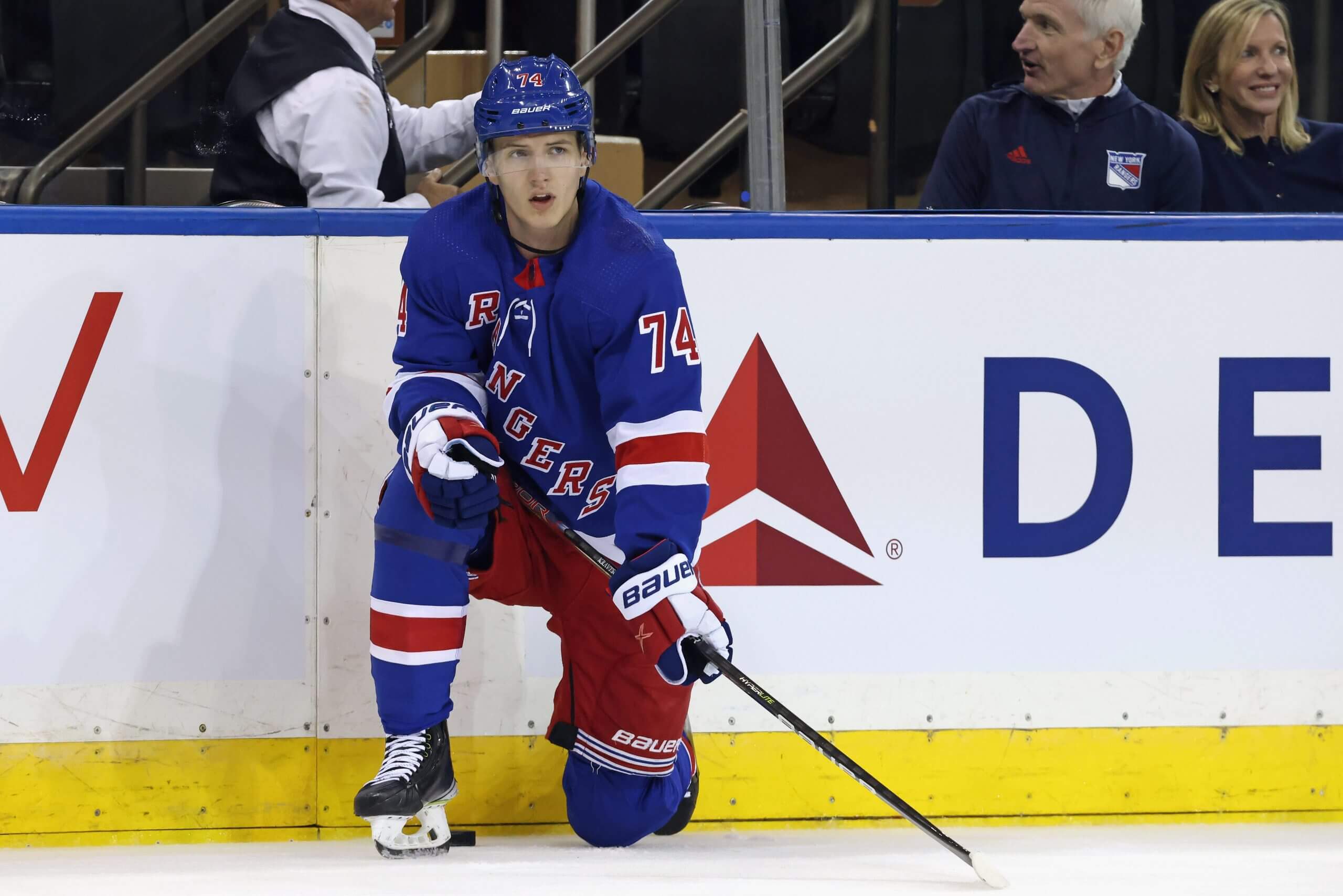
Vitali Kravtsov struggled in his time with the Rangers. (Bruce Bennett / Getty Images)
Some also pointed to the need for more intricate skill development. The Rangers have added a feature to their scheduling app this season that allows AHL prospects to sign up for extra training sessions, but other teams have had similar resources in place for years.
“You can’t just rely on taking guys out to dinner and having a nice conversation about how their game went,” said one scout.
Since taking over before the 2021 draft, Drury has brought in John Lilley as director of player personnel and amateur scouting while replacing multiple scouts and coaches, but he’s kept Jed Ortmeyer as director of player development and Tanner Glass as Ortmeyer’s top assistant.
The results haven’t improved. Of 31 picks made across five drafts with Drury at the helm, no selection has played more games (48) or produced more points (14) than 2022 fourth-round center Noah Laba.
Abrupt firings
Gorton’s track record was far from perfect, with those draft misses and a 2018 trade with the Tampa Bay Lightning representing his primary blemishes. He inquired about then-prospects Anthony Cirelli and Mikhail Sergachev, according to two people familiar with negotiations, but was walled off and turned his attention to defenseman Libor Hájek as the primary piece coming back to New York in a deal that sent captain Ryan McDonagh and a young J.T. Miller to Tampa.
Hájek never panned out, nor did the other assets acquired: veteran forward Vladislav Namestnikov, center prospect Brett Howden and two picks that turned into Lundkvist and 2019 second-rounder Karl Henriksson, the latter of whom never appeared in an NHL game and has since returned to the SHL. Meanwhile, McDonagh won the Cup twice with the Lightning, and Miller became a 100-point player with the Vancouver Canucks.
But overall, Gorton executed the late-2010s rebuild with a sound strategy that set the Rangers up for a couple of long playoff runs. He pulled off 24 trades in the two years immediately following the original letter, most of which were aimed at stockpiling draft picks and prospects. The theory was the more darts they threw, the better their chances of hitting a bull’s-eye.
Gorton hit a few, starting with the 2016 trade that returned Mika Zibanejad and a 2018 second-rounder in exchange for fading center Derrick Brassard and a 2018 seventh-rounder. That gave the Rangers their No. 1 center for the next decade, while the 2018 trade that sent a past-his-prime Rick Nash to the Boston Bruins created a web that yielded multiple core players in center Ryan Strome and defensemen Ryan Lindgren and K’Andre Miller. Flipping a fringe NHLer in Ryan Spooner for Strome was an especially shrewd bit of business.
Later came the 2019 trade with the Calgary Flames for future Norris Trophy winner Adam Fox, who maneuvered his way to his hometown team but was acquired without giving up a first-round pick or any prospects. Gorton also turned the failed Andersson pick into a 2020 second-rounder that he used to target Cuylle.
The turning point came in July 2019 when the rebuild was accelerated by the signing of prized free agent Artemi Panarin. When word reached the Rangers that Panarin preferred New York and was willing to take less money to get there, there was “significant debate” about whether it was too early in the process to make that kind of leap, as one person briefed on the team’s thinking described. They ultimately decided they couldn’t pass on a player of Panarin’s caliber and locked him up to a seven-year, $81.5 million contract.
That, along with a trade for future captain Jacob Trouba that same summer, sped up the rebuild timeline and raised internal expectations.
There were still obvious growing pains for a roster that used a total of 16 players 25 or younger during the 2019-20 season, but the Rangers came on in the second half and sat only two points out of a wild-card spot when the COVID-19 pandemic halted play on March 12, 2020. They were swept out of the play-in round when the season resumed that August, then faded out of the playoff race during a five-game losing streak at the end of a COVID-shortened 2020-21 season.
The common perception is that a 6-3 loss to the Washington Capitals on May 3, 2021, during which Caps bruiser Tom Wilson punched Rangers forward Pavel Buchnevich in the back of the head and essentially body-slammed Panarin, convinced Dolan that Gorton and then-team president John Davidson had to go. But a league source indicated changes were already brewing as a result of the owner’s belief that the team wasn’t living up to its talent.
Around that same time, in consultation with Sather, who was then serving as senior advisor, Dolan met with Davidson and Gorton about the direction of the team. Among the topics discussed was moving on from coach David Quinn, according to the league source. Davidson and Gorton preferred to give him another crack at it, with Dolan deciding to replace them all instead.
The firings of Davidson and Gorton were announced on May 5, which remains one of the most shocking days in recent franchise history and a critical event between the two letters.
Early missteps from Drury
Meanwhile, Dolan came away from a separate meeting with Drury sold that he was the one to push the Rangers forward. Drury was considered a rising executive who had been in the running to take over GM posts for both the Florida Panthers and Pittsburgh Penguins, and Dolan handed him the keys to both the team president and GM roles without interviewing other candidates.
While Gorton had prioritized skill early in the rebuild, there were clear signs in his final years that he was trying to round out the roster with physicality. Lindgren and Trouba joined the D corps, while the 2020 picks of Schneider, Cuylle and Rempe aimed to infuse the prospect pool with toughness.
Drury took those efforts into hyperdrive. He began his tenure stressing the need to become “harder to play against,” then spent the coming months overcorrecting in the direction of grit. His main acquisitions that summer were forwards Sammy Blais, Barclay Goodrow and Ryan Reaves, along with defensemen Patrik Nemeth. Each of those players was eventually traded for lesser value than it took to get them, or in Goodrow’s case waived altogether.
The Nemeth signing went especially poorly. He was a healthy scratch by the time the Rangers got to the playoffs, then Drury sent the Coyotes two second-round picks just to persuade them to eat the final two years of a contract carrying a $2.5 million average annual value.
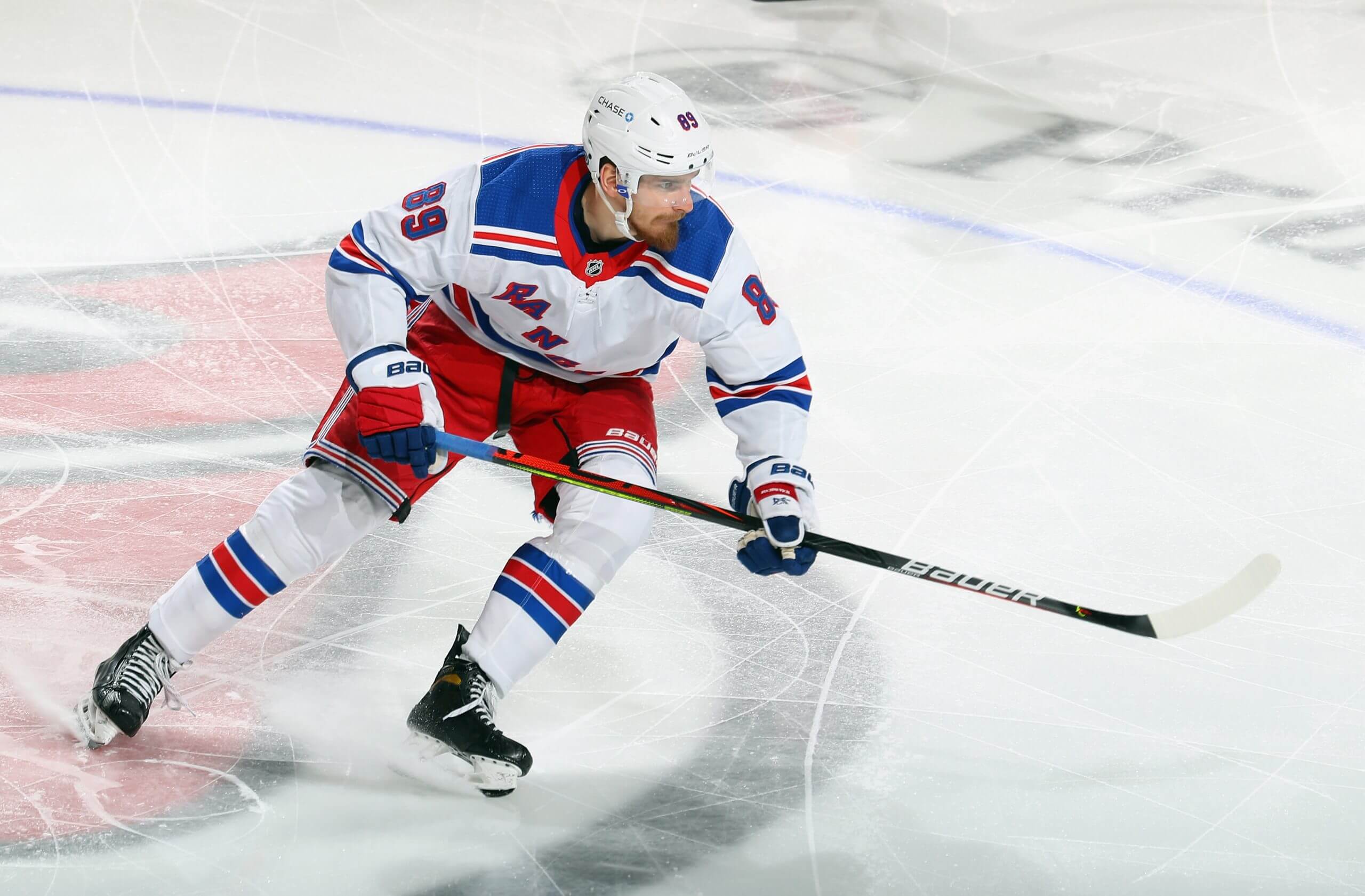
Pavel Buchnevich left the Rangers as part of Chris Drury’s push for more physicality. (Bruce Bennett / Getty Images)
Rangers fans are even more resentful about the trade that sent Buchnevich to the St. Louis Blues for Blais and a 2022 second-rounder. Drury wanted to free up cap space and clear a path for young wingers such as Lafrenière, Kakko and Kravtsov to move up in the lineup, but it exemplified his devaluing of skill and left a hole at top-line right wing that New York has struggled to fill to this day.
That offseason would have been viewed in a much different light had Drury been able to pull off a trade for star center Jack Eichel. The Rangers made what they considered competitive offers and believed they were close to a deal, but they declined to include Lafrenière or Kakko in the package and grew increasingly frustrated with what they perceived as reluctance from Buffalo Sabres owner Terry Pegula, according to a person briefed on the negotiations.
Eichel was traded to the Vegas Golden Knights on Nov. 4, 2021, and won the Stanley Cup two seasons later.
The good times (with underlying concerns)
With Eichel out of the picture, Drury doubled down on the core Gorton built. He gave Fox and Zibanejad long-term extensions that fall, then watched the team blossom while marching toward a 110-point regular season and thrilling trip to the conference final.
The 2021-22 trade deadline marked Drury’s most effective in-season moves to date, with forwards Andrew Copp, Tyler Motte and Frank Vatrano and defenseman Justin Braun aiding the cause down the stretch. But it also began a slippery slope of gutting the team’s draft capital for win-now deals that never resulted in the ultimate prize. From the 2021 summer through the 2024 deadline, New York shipped away a total of 20 picks on player acquisitions and the Nemeth salary dump.
The majority of those trades were for deadline rentals, with the lack of long-term, impact additions preventing the Rangers from upping their collective level and extending their window to contend. From the time Drury took over until last season’s plummet, the only player who was brought in to play a prominent role — top-six forward or top-four defensemen — and did so for more than a few months was center Vincent Trocheck. Signing him to a seven-year, $39.375 million contract during 2022 free agency proved to be a worthwhile decision, but that was the extent of the lasting upgrades for multiple years.
The Rangers were cap-strapped for many of those seasons, but the roster stagnation kept them from improving the aspect of their game that was holding them back: five-on-five play.
Those successful teams were carried by goalie Igor Shesterkin, who won the Vezina Trophy in 2021-22, and elite special teams. Shesterkin ranked second among NHL goalies with at least 50 appearances from 2021-24 with a .921 save percentage, while New York boasted the fourth-best power play conversion rate at 25.2 percent and third-best penalty kill at 82.7 percent. But its 48.47 percent expected goals-for rate at five-on-five during that span sat 23rd, according to Natural Stat Trick.
The Rangers were at an even-strength disadvantage against top teams, with a penchant for turnovers that made them one of the league’s worst at defending against the rush and maintaining defensive structure. Drury cycled through four different coaches — Quinn, Gerard Gallant, Peter Laviolette and now Sullivan — in search of a voice who could correct those issues, but it became increasingly clear that it was a personnel problem above all else.
Cultural issues
The Rangers finally reached that conclusion after looking overmatched against the eventual champion Florida Panthers in the 2024 conference final, with Drury setting out to clear cap space for the necessary changes. He identified a few veterans to shed, starting with Goodrow and Trouba.
The logic was sound. Their contracts were overpriced given their production, but where Drury miscalculated was how to handle the exits of popular figures in the locker room.
Goodrow was placed on waivers to circumvent his no-trade list in June 2024 with only a last-minute warning, which was promptly followed by the Rangers trying to strong-arm Trouba out of town. It turned into a messy public dispute, with the former captain using his own no-trade power to block Drury’s attempts. Teammates were upset about the backdoor methods and lack of up-front communication with respected leaders, which several expressed during a gathering at Panarin’s house to bid Goodrow farewell, as The Athletic reported last season.
Those feelings lingered as they entered training camp with more drama unfolding.
That August, Panarin and the Rangers paid financial settlements to a team employee after she alleged that Panarin sexually assaulted her, as The Athletic later reported. The same employee was placed on paid leave for sharing her anti-anxiety medicine with a player the previous season, which was followed by a public relations staff member being fired for having dinner with a player following an offseason media event, according to a league source.
In the aftermath of those incidents, an internal memo signed by Drury, as well as New York Knicks president Leon Rose and MSG chief operating officer Jamaal Lesane, was distributed to all team employees, issuing “a reminder regarding the expectations of behavior when interacting with the players or coaches of any of our teams.” It set forth strict guidelines, prohibiting staffers from staying at the same hotel as any MSG-owned teams (including Hartford and the Westchester Knicks), traveling on team flights or buses, or attending team social gatherings or meals, threatening termination for anyone who failed to comply. The Rangers also stopped allowing social media employees to cover road games outside of the local region.
This was interpreted as an overreach by some staffers, who responded by boycotting the next team function after the memo was sent out, according to two people with knowledge of the fallout, adding to the friction that was engulfing the Rangers.
Everyone seemed to be walking on eggshells as the 2024-25 season began, but the tension crescendoed following a couple of bad losses on a late-November road trip. Drury responded with another memo — this one to all 31 opposing GMs. It openly solicited trade offers, listing Trouba and the longest-tenured Ranger, Chris Kreider, by name, and was leaked in short order. Both players found out secondhand, sending an already strained locker room into a tailspin.
The team responded with a woeful 4-15 stretch that effectively tanked their season and set off a chain reaction of 10 trades in the next eight months.
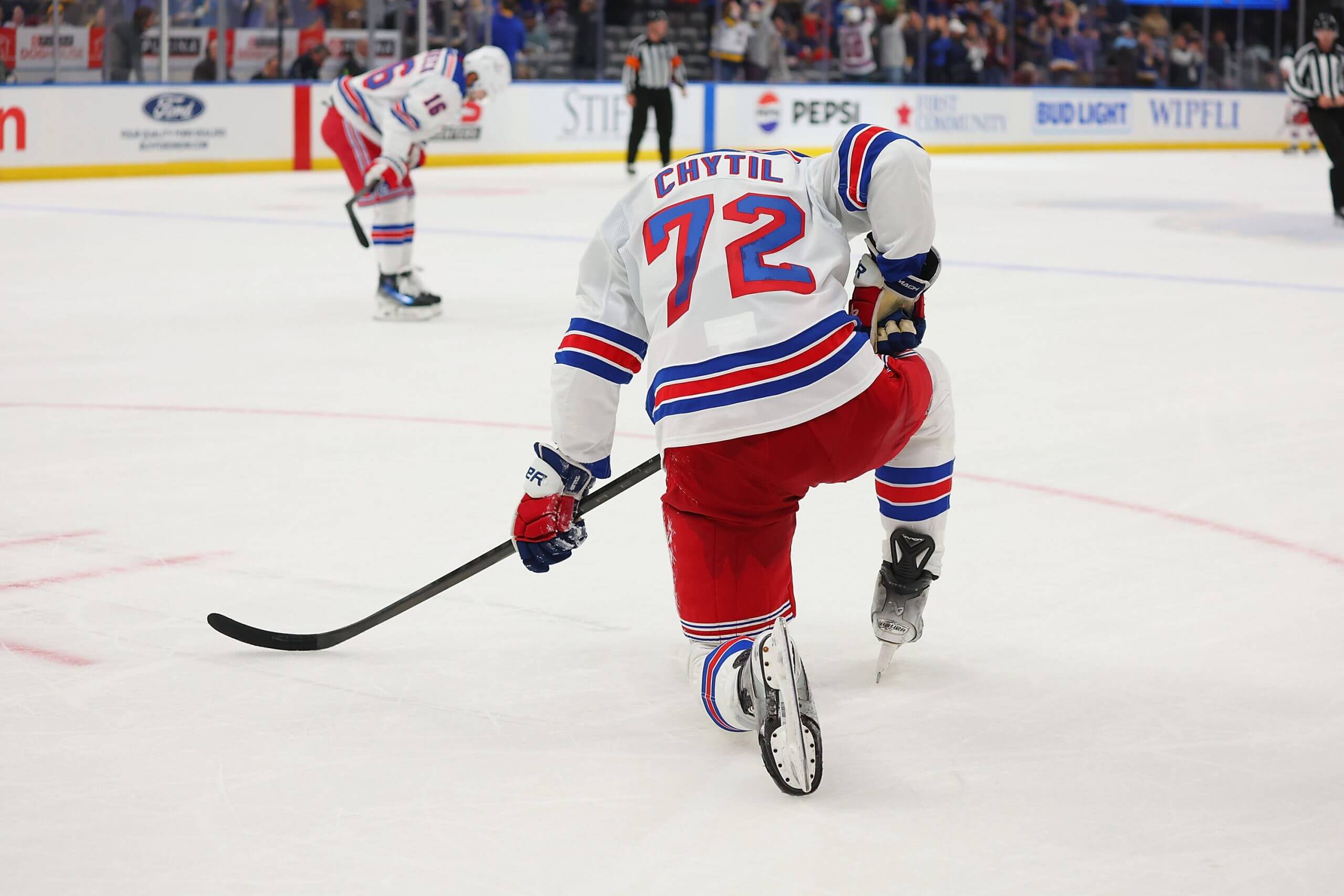
Filip Chytil was one of several Rangers that was traded away during a disaster 2024-25 season. (Dilip Vishwanat / Getty Images)
The downfall and uncertain future
After the Dec. 6, 2024 trade that sent Trouba to the Anaheim Ducks for fringe defenseman Urho Vaakanainen and a 2025 fourth-round pick, Drury also offloaded Kakko, Chytil, Lindgren, Jimmy Vesey, Reilly Smith, Kreider and K’Andre Miller. Each player had his flaws, but many of those deals amounted to salary dumps, with little coming back to replace them.
The one exception was the trade on Jan. 31, 2025 that returned J.T. Miller to New York in exchange for Chytil, defenseman prospect Victor Mancini and a conditional first-round pick. Drury gambled that the tenacious forward would harden what he perceived as a sensitive group and push it in the grittier direction he’d spent years striving for, going so far as to name Miller captain in September, but it wasn’t enough to salvage a losing cause.
It was also counterintuitive for the recently stated purpose of getting younger. As the Rangers enter their retool, Miller is less than two months shy of his 33rd birthday and in the midst of his worst statistical season in at least eight years. He has four years remaining on a contract that pays him $8 million annually.
An aging core, a poor history of drafting and developing, a general devaluing of speed and skill, and a culture of paranoia have all added up to leave the Rangers in a difficult spot. They’ve accepted that they must sell off veterans for “young players, draft picks and cap space,” as Drury’s letter stated, but Panarin, Miller, Zibanejad and others hold no-movement clauses that stand in the way and will reduce returns even if they agree to new destinations. More importantly, a lack of foundational pieces leaves them with little to build around. The only New York prospect who appeared on Pronman’s recent ranking of top 137 under-23 players was forward Gabe Perreault at No. 120.
Drury must hope that Fox, who will turn 28 next month, and Shesterkin, who turned 30 last month, will still be in their primes by the time the Rangers turn things around. But there are so many other holes to fill, particularly up front, where there’s a dearth of play-driving forwards. (Especially after Panarin is traded.)
It will likely require a more thorough teardown than the notion of a retool suggests, but it’s unclear how long a timeline Dolan is willing to give Drury. Dolan has backed his handpicked GM at every turn, but a series of missteps has undoubtedly intensified the pressure and fueled warranted skepticism among a distrustful fan base.