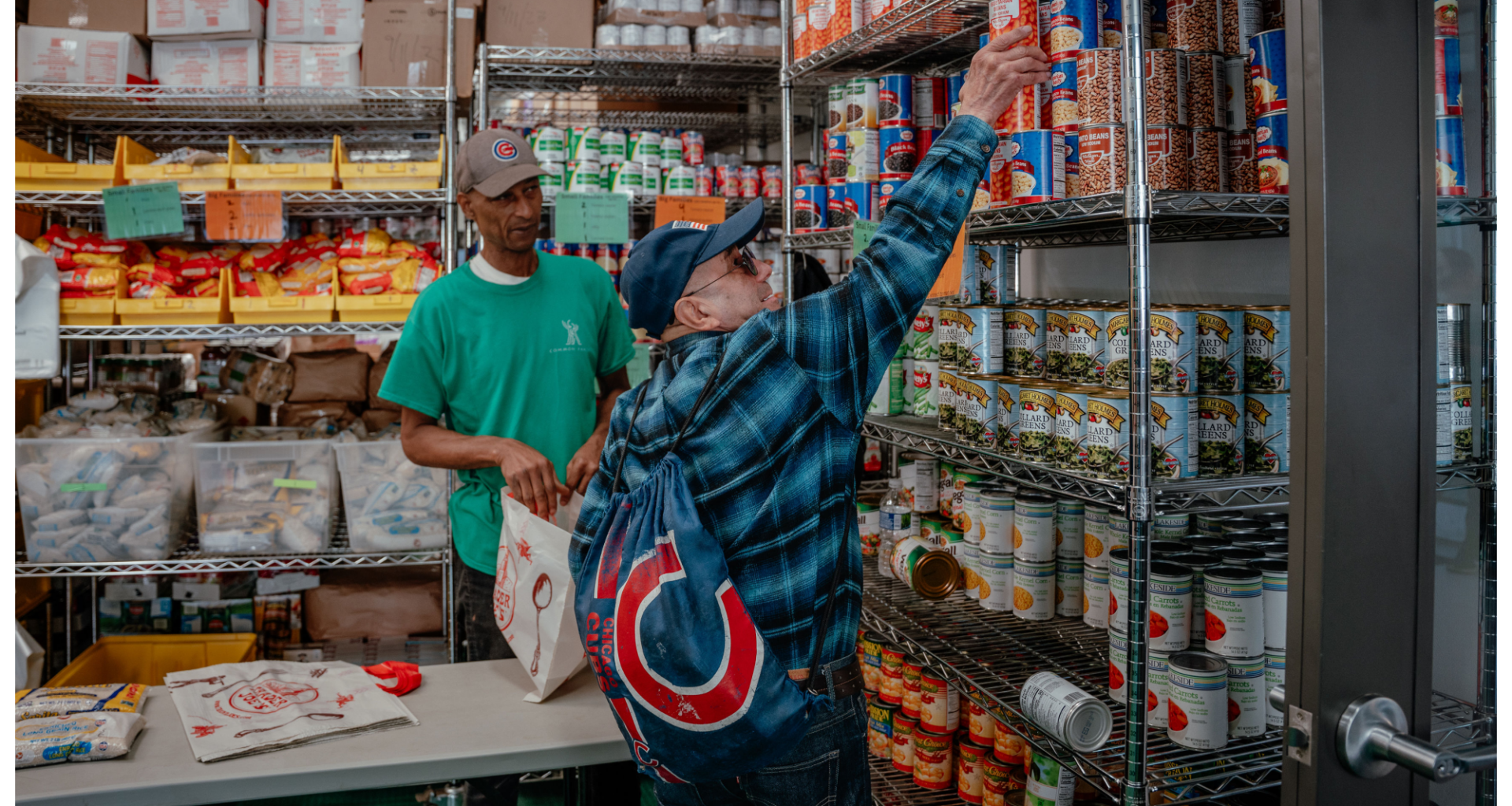
CHICAGO — Food banks and local pantries are preparing for major changes to the Supplemental Nutrition Assistance Program, which could significantly increase the number of people who rely on them, pantry administrators said.
The changes under the Trump administration’s “Big Beautiful Bill” were announced last year and kick off Feb. 1.
Starting in February, people ages 18-64 without dependents will need to work, volunteer or participate in qualifying education programs for at least 80 hours each month to keep their SNAP benefits. Those who do not meet the requirements or don’t qualify for an exemption will receive only three months of benefits within a three-year period.
People could start losing their benefits in May if they didn’t meet the work requirement for three consecutive months. And they may continue to lose them at any time if they fail to meet work requirements going forward, which will increase stress and anxiety for people already struggling to make ends meet, said Verenice Martinez, director of food distribution services for the Midway food pantry Pan de Vida, 2701 S. Lawndale Ave., operated by New Life Centers of Chicagoland.
“At this time, the benefits made to help the most vulnerable are the most unstable,” she said.
Local food pantries are bracing for more people relying on them to get food — even as pantries, food banks and soup kitchens are already stretched thin — as demand has grown after the pandemic and rising food prices, said Camerin Mattson, communications manager for the Greater Chicago Food Depository.
“We are preparing for an ongoing hunger crisis,” Mattson said.
 A Greater Chicago Food Depository truck drives on Feb. 26 past the United Center on the Near West Side. Credit: Colin Boyle/Block Club Chicago
Over 1.8 million people in Illinois received SNAP benefits as of September 2025, state data shows. Up to 360,000 people in the state could lose them, Gov. JB Pritzker’s office previously said. That includes up to 20,000 unhoused people, veterans and youth who have aged out of foster care, according to Pritzker’s office.
Locally, most pantries do not track how many of their visitors already receive SNAP benefits.
But many pantries have seen more families who already did not qualify for benefits or who stopped working due to fear of immigration raids relying on their services to ensure their households have enough food, Martinez said.
“We find that our pantries are now not only supplementing our families in need, they might actually be their only source [of food],” she said.
The new work requirements place additional burdens on people facing food insecurity, Mattson said. Cook County and state leaders decried the federal administration’s policy at a news conference Wednesday, saying the new imposed requirements will have “real and lasting impacts,” CBS Chicago reported.
Among those impacted are people 55 and older, including veterans and those experiencing homelessness, who will now have to meet new work requirements, according to the Illinois Department of Human Services. People in these groups could face additional challenges in finding employment due to their age or impact on their families, Mattson said.
“Volunteering is also an option, but obviously, some of the same barriers for people seeking employment [remain]. Sometimes there are transportation barriers or other reasons why people can’t volunteer, such as people caring for their grandbabies so their children can work,” Mattson said.
At the same time, it’s hard to predict when large numbers of people could lose SNAP benefits, challenging pantries and food banks to be consistently ready to distribute more food. But past experience shows that when families lose SNAP benefits, they turn to pantries, soup kitchens and emergency food distributions, Mattson said.
The Greater Chicago Food Depository supplies food at no cost to a network of more than 850 food pantries, soup kitchens, shelters and other sites in Chicago and Cook County. Amid the government shutdown, attendance reached the “highest point” in the food bank’s history, Mattson said.
“During that month, throughout our network and at our extra emergency food box distributions, we served 240,000 household visits, and that’s a record in our nearly 50-year history,” Mattson said.
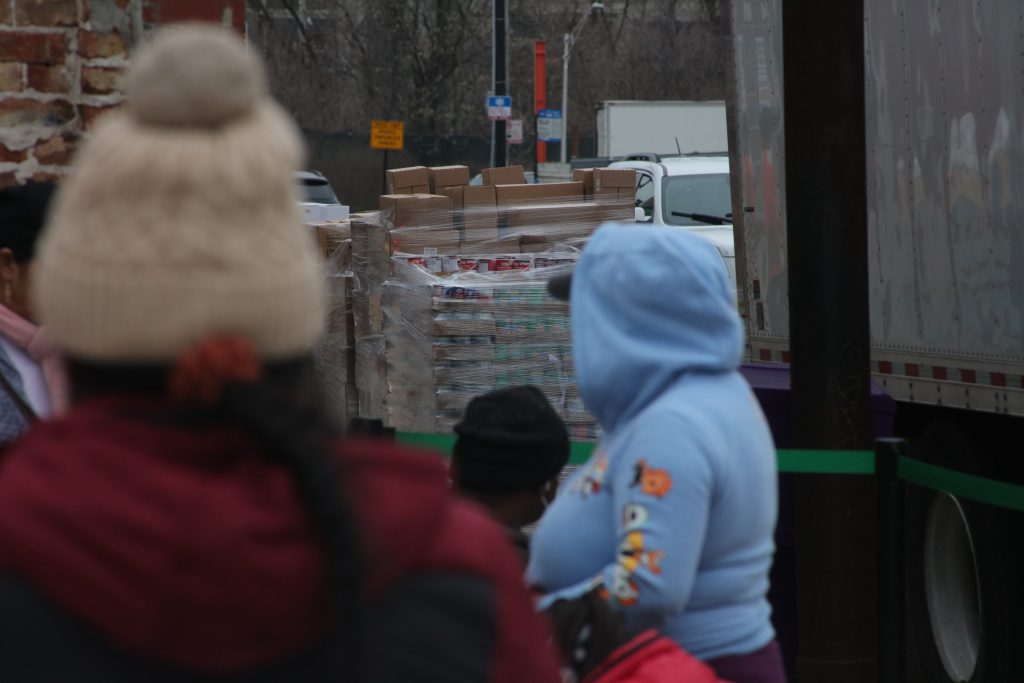 Families wait in line as food arrives for distribution at Above and Beyond Food Pantry, 817 S. Pulaski Rd. Credit: Provided
In Garfield Park, the week before benefits were suspended during the shutdown, the number of people visiting Above and Beyond Food Pantry, 817 S. Pulaski Road, almost tripled, said director Ken Cozzi. About 450 people visited the pantry, up from an average of 178 people per day. That could happen again if people believe their benefits are ending in February, he said.
“Not only is there a big change, [but] people don’t know how to navigate it,” Cozzi said.
Cozzi has fielded questions and shared information about the new requirements with regular pantry visitors who are unsure whether they qualify for exemptions.
As the Feb. 1 deadline approaches, people who regularly visit the pantry have also started asking if the pantry has jobs or volunteering opportunities to meet the 80-hour requirement, Cozzi said. Pan de Vida has a resource table and has partnered with local groups to have representatives who can answer pantry visitors’ questions, and the Greater Chicago Food Depository has circulated flyers and online information.
“Taking the time to really read on what’s happening eliminates the fear and the panic,” Martinez said.
Staff at Above and Beyond Food Pantry are trying to work with people “as much as we can,” but the pantry does not have the capacity to employ or have as many people volunteer, Cozzi said.
Many pantry visitors have low-paying or unstable jobs, cannot get more work hours, take care of children older than 14 or their elderly parents and grandkids, and juggle other responsibilities, he said.
“We have quite a few people like that, trying to balance life and everything else. They’re working, they’re putting effort, and they’re still falling short,” he said.
Across the country, hunger relief organizations have sounded the alarm over cuts to federal food assistance, which they say will dramatically increase food insecurity among lower-income Americans and further strain the emergency food system.
Staff at local food pantries are bracing for more challenging operations, from needing more staff to ensuring they can increase the supply of food from local and national grocery stores, bakeries, and restaurants and having enough storage space, Cozzi and Martinez said.
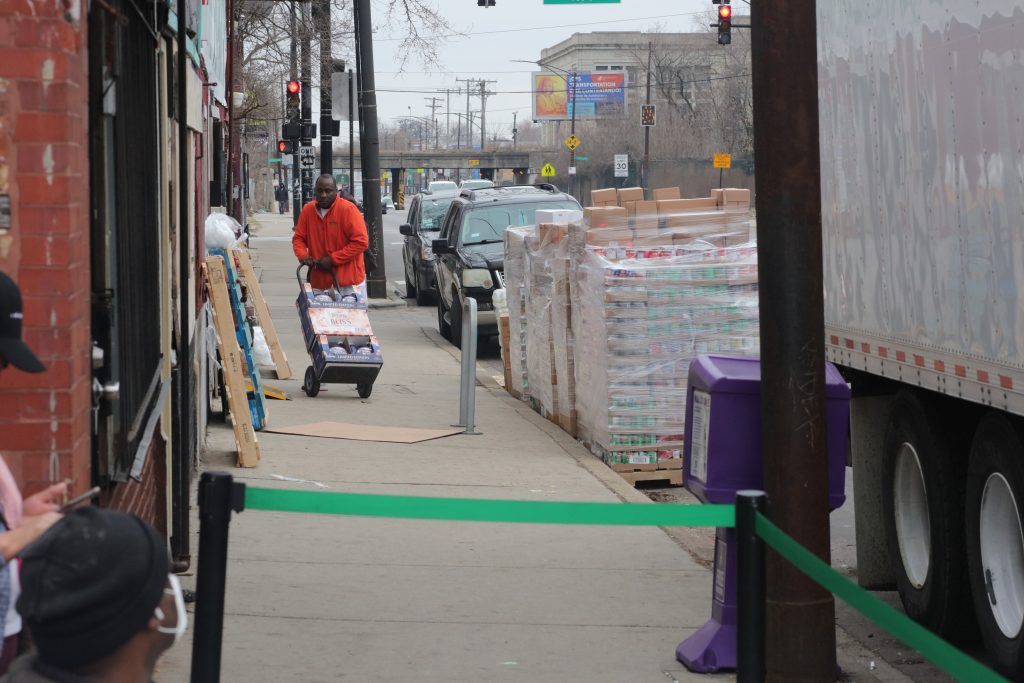 Food arrives for distribution at Above and Beyond Food Pantry, 817 S. Pulaski Rd. Credit: Provided
Above and Beyond Food Pantry is open six days a week, serving neighbors primarily from Garfield Park, Austin, North Lawndale and Little Village, Cozzi said. Aside from getting food from the Greater Chicago Food Depository, the pantry offers baked goods, bread, produce, seasonings, oil and other products rescued from local grocery stores and bakeries.
ln 2025, it rescued over 910,000 pounds of food that would’ve otherwise gone to waste and distributed it from four West Side sites, including its Garfield Park food pantry.
Funding is an ongoing challenge for food pantries and food banks, as the need for food aid has not wavered and national funding has been slashed, pantry administrators said.
Above and Beyond Food Pantry purchased a new building as it outgrew its space, but it still needs to raise money to buy equipment, refrigerators and freezers, among other improvements, Cozzi said.
“It’s not a small amount, but it’s needed in order for us to be able to keep up with the demand and the need of the community,” Cozzi said.
SNAP participants can visit saveyoursnap.org to update their information and learn more about how they can qualify for an exemption from the new requirements.
Exemptions include people who have a child under 14 years old or have a medically certified disability. Participants must report their work hours to the Illinois Department of Human Services to avoid losing benefits.
Block Club’s Mack Liederman and freelancer Greg Trotter contributed.
Listen to the Block Club Chicago podcast: