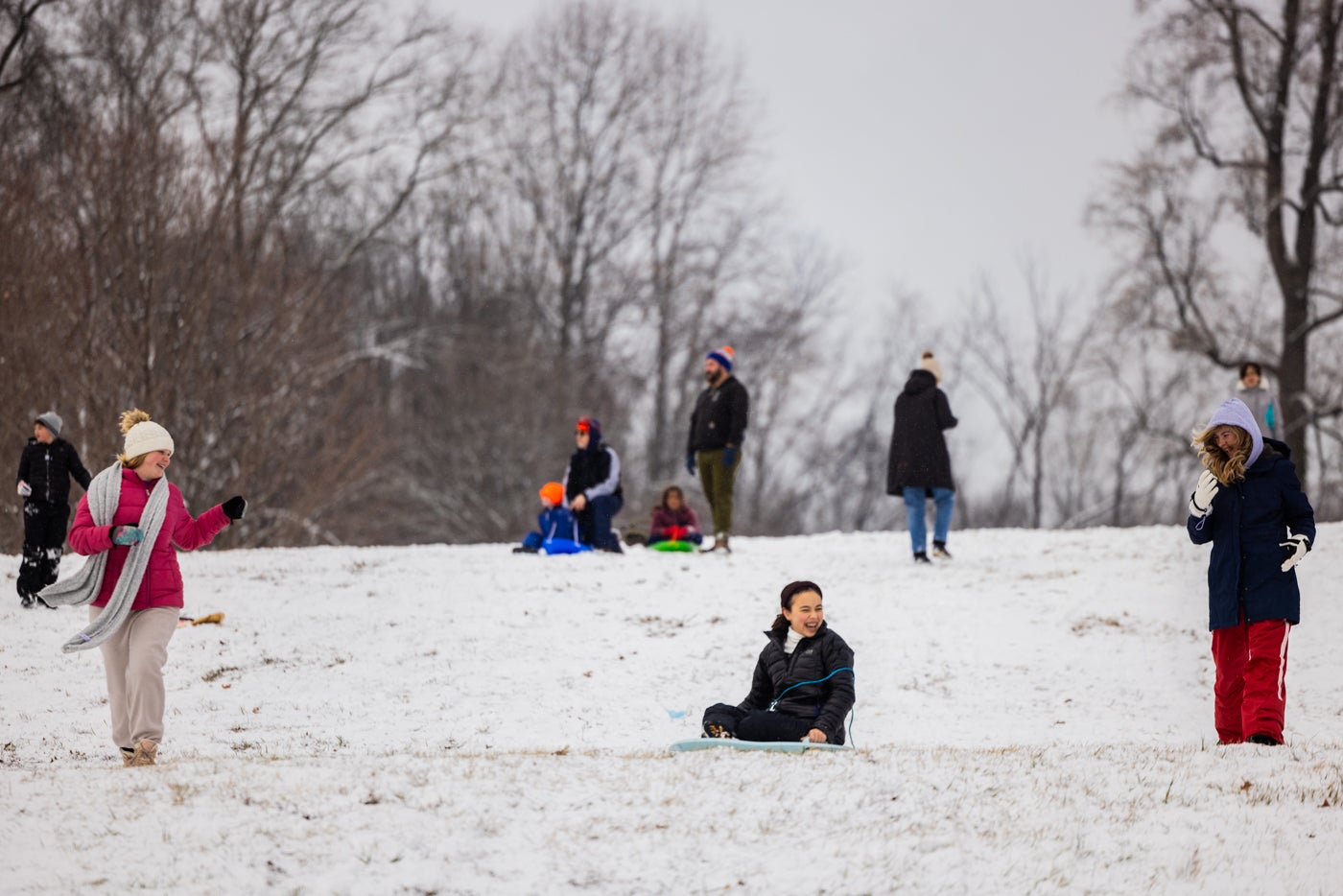
The Philadelphia region is expecting between 8 and 12 inches of snow Sunday for its first major winter storm of the year, which also comes with a heightened risk for accidents, trauma and other dangerous situations.
People can take precautions at home to avoid painful injuries, serious medical conditions and visits to the emergency room, doctors say.
Here are some Do’s and Don’ts of snowstorm activities to stay safe and healthy:
Do: Assess your ability to shovel snow, recognize your limitations and be aware of heart risks.
Before reaching for a shovel, determine if you can handle what might be a very strenuous activity, said Dr. Kraftin Schreyer, an emergency physician and medical director of capacity management at Temple University Health System.
Shoveling heavy snow can be similar to a high-intensity cardio workout, increasing stress on the heart in a way that someone might not be used to, possibly leading to a heart attack.
“And those people that are not as accustomed to exercise are at higher risk,” she said. “Even a minimal amount of perceived exertion with shoveling, you can start to see effects after even two minutes of shoveling. And the heavier the snow, the greater the degree of exertion.”
People should call 911 and seek emergency care if they experience signs of a cardiac event, including chest pain, shortness of breath, fatigue, nausea, lightheadedness or dizziness.
Don’t: Wait until the end of the storm to start clearing snow.
To avoid moving the heaviest snow after the storm is over, Dr. Ruhal Shah, an orthopedic and spine surgeon at Premier Orthopaedic Associates in South Jersey, recommends people shovel smaller amounts of snow more frequently throughout the day or make plans with neighbors, friends or family who can clear the snow for you.
Don’t: Twist your body while shoveling.
Shoveling can lead to painful injuries in the back, neck and upper body when done improperly, Shah said.
“When you move snow, what you do is use your arms, right?” he said. “So, the arms, which are attached to the torso, wherever those [joints] are fragile will potentially give you problems or people have shoulder discomfort, elbow discomfort, wrist discomfort.”
Repeatedly twisting the torso can also cause back issues. Instead, Shah said people need to keep their core rigid and rely on their legs to lift and move the snow.
“You’re generating the power in other areas, like your ankles, like your knees, like your hips,” he said. “In that same vein, you don’t want to twist, because that’s where your back is actually the most fragile.”
Do: Dress appropriately for freezing temperatures to avoid hypothermia.
Temperatures will stay below freezing this week, which means people should dress in layers and protect their hands, feet and head. Schreyer said this is especially important for elderly adults and young children “if you’re spending all day playing in the snow.”
“If you can, take a break, get inside, warm up,” she said.
Wet conditions from melting snow or play can also exacerbate hypothermic injuries, Schreyer said, which can include frostbite or damage to the nervous system, cardiovascular system and organs.
“The actual clinical impact of the low environmental temperature is worse than during a whiteout condition,” she said. “So, it’s better to be dry and cold than wet and cold.”
It’s also better to dress assuming you may be exposed to the cold for longer than planned, Schreyer said, accounting for the possibility you may get stuck driving or while traveling in other ways.