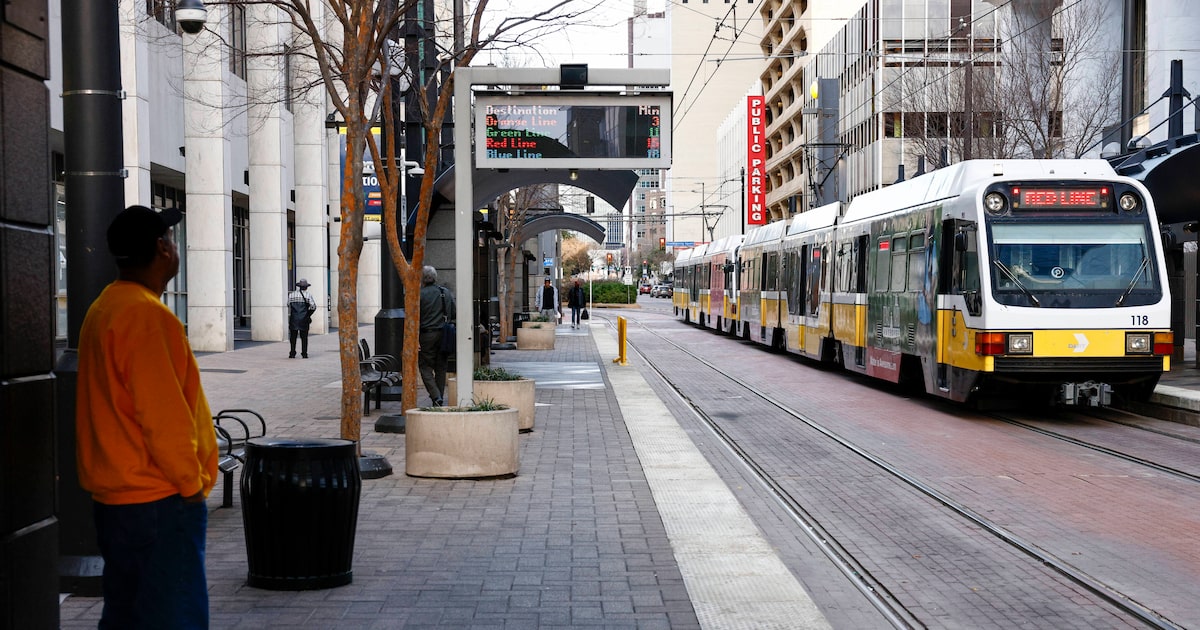
Dallas Area Rapid Transit has been facing bleak prospects as some of its member cities contemplate abandoning it, a move that would fracture the system and the spirit of regionalism that created it.
But there’s still hope for a better outcome. At a Tuesday committee meeting, Dallas City Council members discussed a framework that could reform DART’s governance, funding and service. The committee narrowly voted to accept the general principles at play.
This framework and the talks that led to it present a workable path to satisfying suburbs’ reasonable concerns and persuading them to remain in the system. An intact and viable DART is the best outcome for the region. Local leaders should not let this opportunity slip away.
The cities of Plano and Irving are both looking at a possible exit from DART.
Opinion
Although there is still a lot to work out, Plano views the ideas being discussed as a good start.
“We welcome a solution that better serves the transit needs of Plano today,” City Manager Mark Israelson said in a statement.
Irving Mayor Rick Stopfer called these talks “the first step forward of many that need to be addressed.”
The framework Dallas City Council members discussed is not perfect, and it’s still just a working model. But it’s a major improvement that these discussions are happening at all.
There are 15 seats on DART’s board of directors, distributed among cities based on population. City councils appoint board members. Dallas appoints eight members.
Under the proposed framework, the board would grow to 20 seats and some cities would have weighted votes. Dallas would control five seats and wield roughly 40% of the vote, according to city documents.
DART’s funding mechanism has also been at the center of the debate about the transit agency’s future. Texas cities are allowed to collect two pennies of every dollar spent locally. DART cities give one of their pennies to the transit agency, often putting them at a competitive disadvantage with neighboring cities that use sales tax money for economic development.
Some member cities have been trying to regain control of a portion of their penny. Those efforts culminated last year in a bill that would have financially devastated the agency had it passed.
The proposed framework could accomplish something similar without wrecking the agency’s finances. Under it, each member city would pay a contribution for regional services like rail and paratransit, then they would pay for the intracity service they choose and get back what’s left to use for other transportation purposes.
As our region grows more populous and congested, a functioning, well-connected public transportation system will be critical. DART has a lot of problems, but working together to fix them is far better than letting the whole thing collapse.
We welcome your thoughts in a letter to the editor. See the guidelines and submit your letter here.
If you have problems with the form, you can submit via email at letters@dallasnews.com