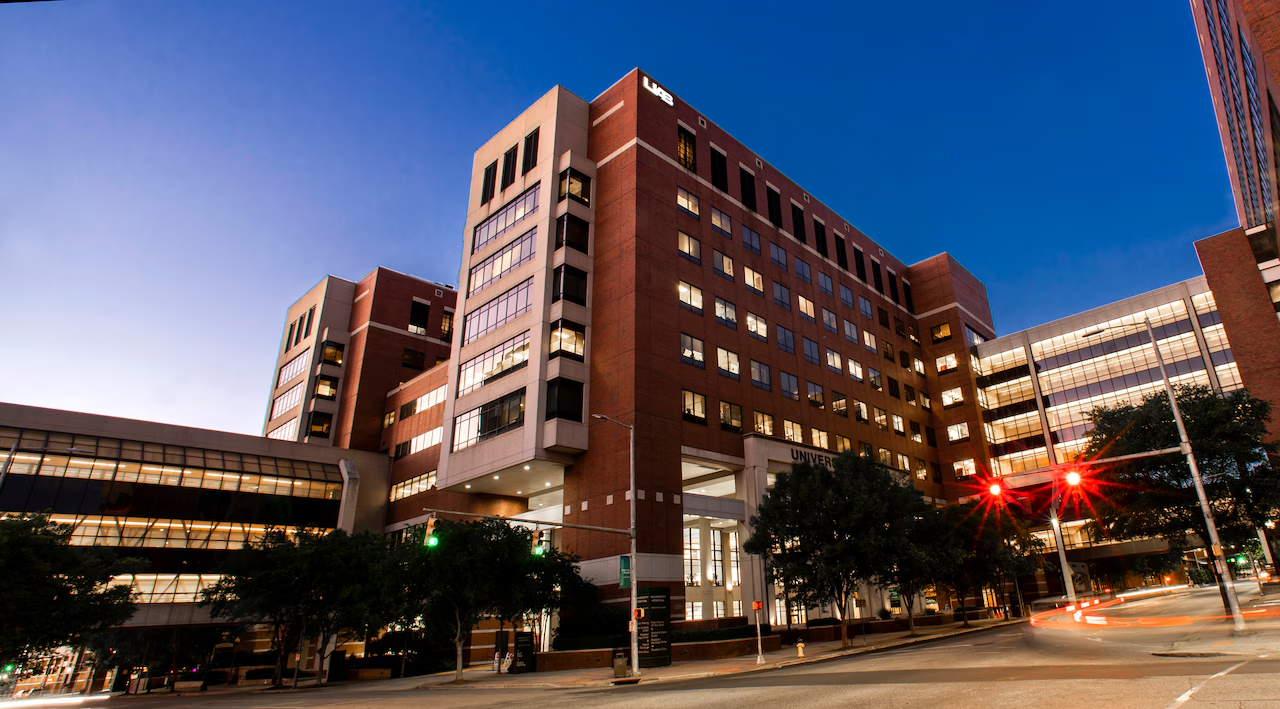
The University of Alabama at Birmingham hospital recently became the first in the Southeast to perform a kidney transplant using a robot.
On Jan. 15, Drs. Michael Hanaway and Muhammad Rabbani performed the procedure using robotic-assisted surgical equipment.
That means the surgeon doesn’t work directly with their hands, according to UAB. Instead, they sit at a console and use controls to guide robotic instruments inserted through a few small incisions, while a surgical assistant stays at the patient’s side.
“This milestone represents a meaningful evolution in how we bring state-of-the-art care to our patients,” said Dr. Jacqueline Garonzik Wang, division director of transplantation and co-director of the UAB Comprehensive Transplant Institute.
“By leveraging newer technology, we will be able to offer lifesaving kidney transplant to more patients and significantly improve outcomes for our recipients. This will result in more transplants, shorter hospital stays, decreased pain and decreased recovery time.”
Another benefit of the surgery, according to a UAB press release, is that it makes smaller incisions, meaning scars may heal better cosmetically. And patients generally face a lower risk of complications, such as infection or hernia, and often experience faster healing, according to the hospital.
Garonzik Wang also said patients with higher BMIs or advanced diseases will benefit more given they’re more likely to struggle with postoperative pain or larger incisions.
Hanaway, the surgeon who guided the robot, said the technology enhanced his ability to see into difficult areas during the procedure, allowing him to be more accurate and precise.
“What is better for the surgeon’s performance is always better for the patient’s results and outcomes,” said Hanaway, the surgical director of UAB’s kidney transplant program.
UAB said that integrating robotics into transplant surgery makes “transplant procedures safer, more precise and more accessible, ultimately improving outcomes and helping patients return to their daily lives more quickly.”
Garonzik Wang added that the innovation aligns with national trends in providing more minimally invasive care.
One day after UAB performed its transplant surgery, a Trump administration official praised Alabama’s plan to use robots for ultrasounds.The state has said it plans to do so using some of the $203 million Alabama was awarded under the federal government’s Rural Health Transformation Program, a grant that was created in last year’s Big Beautiful Bill.
“Alabama has no OBGYNs in many of their counties, so they’re doing something pretty cool. They’re actually having robots do ultrasounds on these pregnant moms,” Dr. Mehmet Oz, administrator for the Centers for Medicare & Medicaid Services, said during a health care roundtable at the White House.
But those comments garnered backlash on social media, including from U.S. Senator Bernie Sanders.
“No, Dr. Oz. It is not “cool” that we don’t have OBGYN’s in many rural counties in America. It is an international embarrassment,” Sanders posted on X. “In the richest country on earth, we need more doctors, nurses, dentists and mental health counselors, not more robots.”
UAB, which performs more than 400 transplants each year across all organ groups, said their use of robotic transplantation procedures “represent its future.”