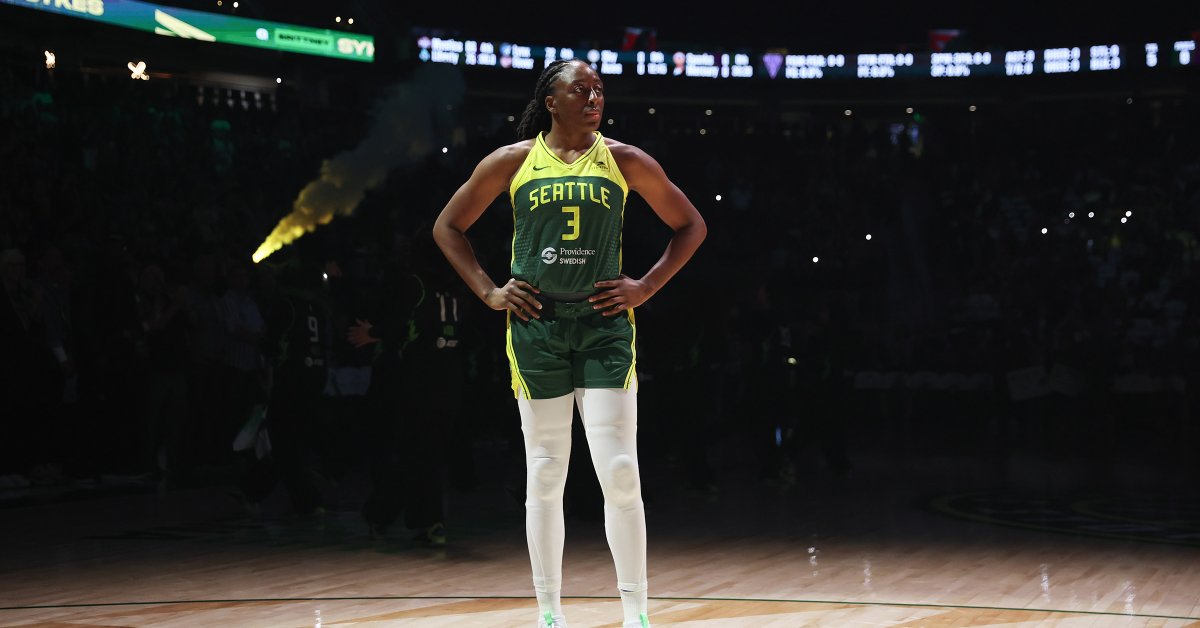
Ogwumike, a Stanford graduate who has led the union since 2016, has proven herself as a trusted leader ready to meet this moment. An agreement could set the WNBA on a path to prosperity for the next decade or more. An impasse could result in a work stoppage that thwarts the WNBA’s momentum and does lasting damage to the brand.
The league’s current collective-bargaining agreement, which Ogwumike saw to the finish line back in 2020, has been extended twice this offseason and expired on Jan. 9. (The two sides continue to negotiate under a “status quo” period, thus far avoiding a lockout or strike.) Ogwumike is confident that the players’ strategy—bargaining from a position of strength—will result in a fair deal. “The energy, the experience from a player’s perspective, it doesn’t feel like anything but upward and forward,” she says. “There’s a level of leverage that comes with that in negotiating. Players understand their worth, they understand their value. That’s what we want. It’s what we deserve.”
Throughout her WNBA career, Ogwumike has recognized the value of her platform. About a decade ago, Nneka and her younger sister Chiney, an ESPN commentator and former WNBA player, partnered with UNICEF to raise education funds for girls in Nigeria. (The sisters are first-generation Nigerian Americans who grew up in the Houston area.) In her role as union president, she spearheaded player social activism in the 2020 WNBA bubble—or “wubble”—as the players dedicated their season to Breonna Taylor, postponed games after the shooting of Jacob Blake, and wore T-shirts encouraging people to vote for the Rev. Raphael Warnock in the Georgia U.S. Senate election. (Warnock defeated incumbent Kelly Loeffler, then a co-owner of the Atlanta Dream, in a runoff.) Ogwumike also took over the voting-rights organization More Than a Vote from LeBron James before the 2024 presidential election.
She credits her family background for her social consciousness. “Nigerian culture is very much about having loyalty and pride and a strong sense of community,” says Ogwumike. “Having that kind of worldly perspective allowed me to understand there’s a lot of things happening outside of what I can see right in front of me.”
While Ogwumike is coming off another All-Star season in which she finished tied for sixth in MVP voting, she acknowledges she’s at the back end of her playing career. Former Secretary of State Condoleezza Rice, who got to know Chiney and Nneka at Stanford, has said the sisters will end up at the top of their chosen post-playing professions. Chiney’s ESPN star is certainly ascendant, but Nneka has no plans to follow her into broadcasting. “It’s just not my jam,” she says. “I feel like there are going to be times when I just don’t have anything to say. And that’s not what they want to hear.”
But after working so hard to shape the future of the league, it’s very possible she’ll stick around, perhaps running an WNBA franchise as a team president. “I try to leave options open,” says Ogwumike. “So when that time comes, I’m sure I will be ready.”