 Photographer: Andres Kudacki/Getty Images
(Bloomberg) — Power prices in New York City and other major population centers are surging to unprecedented heights as a record-setting cold spell threatens to intensify in coming days.
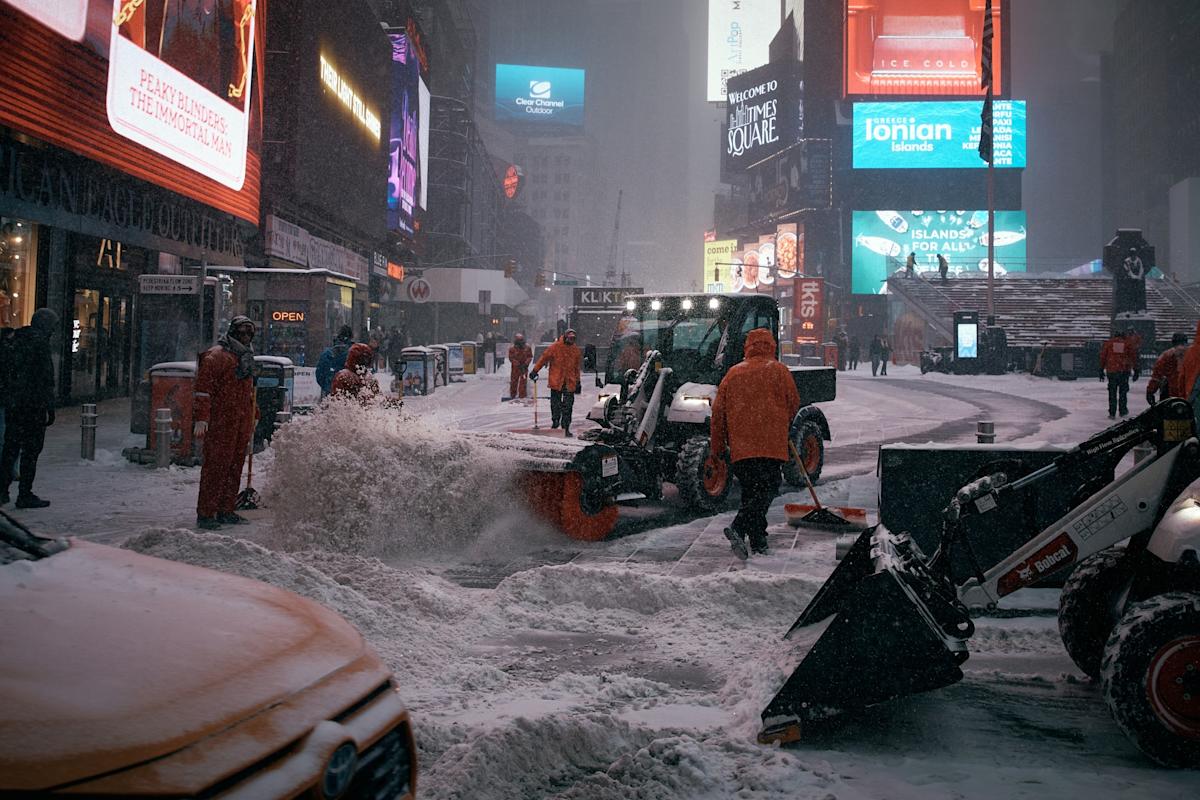
A reinforcing shot of polar air will likely push temperatures in the US East as much as 30F (-17C) below normal beginning Friday, while a “bomb cyclone” threatens coastal cities with another round of heavy snow late in the week.
Most Read from Bloomberg
Power prices in Baltimore and Washington DC rose to more than $4,000 a megawatt-hour amid a grid emergency on Tuesday. Next-day prices for New York City jumped 31%, breaking records for a third straight day.
Meanwhile, the grid manager serving more than 67 million people from Chicago to Virginia is taking the extraordinary step of preparing to shift data centers and other major customers to back-up power to free up electricity supplies for households, hospitals and other small users.
At least 41 deaths in 13 states have so far been linked to the storm, according to local authorities across the country. That includes at least two in Louisiana who died of suspected hypothermia inside their homes.
Roughly 450,000 homes and businesses across the US were still without power as of 6 p.m. New York time Tuesday, according to PowerOutage.com.
The cold is far from over. Baltimore could remain stuck below 28F for nine straight days, according to the US Weather Prediction Center, something that hasn’t happened since the 1800s.
New York City, meanwhile, has little chance of edging above freezing until Monday, according to the local National Weather Service office. Ferry service shut down across the city Tuesday afternoon due to “significant, continuing ice buildup” in the East and Hudson rivers and in local harbors. Officials said the closure could continue for days.
As time passes, the physical strain on everything from generating plants to high-voltage transmission wires grows.
“Prolonged subzero temperatures create a cumulative wear-and-tear on gas and power systems,” said Arushi Sharma Frank, a senior associate at the Center for Strategic and International Studies. “As this cold persists into its third and fourth day, we are fighting the laws of physics on aging spinning machines and risks of depressurized pipe.”
New York’s grid operator said about 3 gigawatts of generating capacity — the equivalent of three nuclear plants — was unavailable due to outages at multiple fossil-fuel plants and sluggish solar generation.
“These supply‑and‑demand pressures mirror the system dynamics experienced during last year’s June heat wave,” said Kevin Lanahan, a senior vice president at the New York Independent System Operator.
Power-producer stocks advanced, with NRG Energy Inc. jumping more than 4% and Vista Corp., Talen Energy Corp. and Constellation Energy Corp. also rising.
With extreme temperatures in the Ohio River Valley and Mid-Atlantic seen persisting well into next week, the prospects for the Northeast to obtain supply relief from other regions look slim.
Photographer: Spencer Platt/Getty Images
“It’s not without precedent, but it’s been a long time” since the eastern US saw such a sustained blast of severe cold, said David Roth, a meteorologist with the Weather Prediction Center. “We’re talking decades across the Mid-Atlantic.”
After years of flat demand, US power consumption is undergoing an abrupt spike as more homes transition to electric heat and energy-intensive data centers crop up all over the country. The ongoing freeze has also raised the specter of fuel-supply disruptions at natural gas-fired generating stations as wells and pumping stations freeze.
A fast-moving clipper system brought snow from the Great Lakes into the Northeast on Tuesday. But the far bigger threat is the potential bomb cyclone late this weekend. Weather models suggest the coming storm is most likely to bring snow and rain along the coast, from South Carolina to New Jersey, as well as Boston and Maine, Roth noted.
“If it stays really far offshore, maybe no one gets it,” Roth said. “But we’re still five days out and models can change.”
–With assistance from Brian K. Sullivan.
(Updates with Baltimore and Washington DC power in third paragraph.)
Most Read from Bloomberg Businessweek
©2026 Bloomberg L.P.