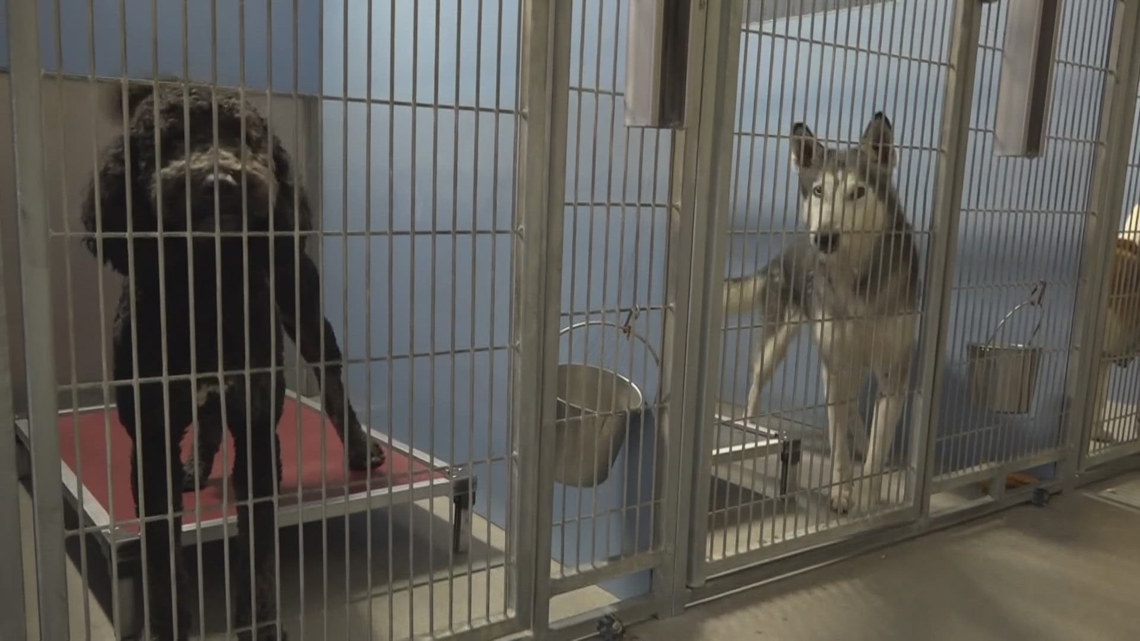
The ordinance initially proposed a 3-day ACPS stray hold, but after several community meetings, councilmembers decided to take a more gradual approach to the change.
JACKSONVILLE, Fla. — Jacksonville City Council gave final approval Tuesday night to a new ordinance members say will help improve animal welfare across the city.
With its passage, the city’s stray-hold period at Animal Care and Protective Services will be reduced, meaning animals will be able to be adopted out five days after intake instead of six.
The initial ordinance proposed a more dramatic 3-day stray hold, which sparked sharp pushback from some animal advocates who believed it would prevent some pets and owners from being reunited. ACPS leadership pushed for the change, claiming it will reduce animal stress levels and help them get adopted faster.
“Lessening the stray hold is going to save more animals’ lives,” said ACPS Chief Michael Bricker at Tuesday’s meeting. “The dogs that we’re talking about are the dogs that are coming in without any identification at all. Through the data, Jacksonville data, 80% of the 241 dogs that came in that were returned to owner happened within the first three days.”
Prior to the ordinance passing, Councilman Raul Arias attended multiple community meetings with people both against and in support of a 3-day stray hold. He said it inspired him to propose a more gradual decrease in the stray hold period. Arias pointed out that neighboring St. Johns County also has a 5-day stray hold.
The meetings also brought more issues to the council’s attention, like shelter communications. As it stands, ACPS does not have a direct phone number, meaning people must call the generic city number to speak with shelter staff. This leads to calls not getting answered. Arias says that in the future, he wants to look into budgeting for dedicated staff to handle ACPS calls.
“This is a great start to the conversation. There’s a lot more to do,” Arias said.
The ordinance also simplifies rules surrounding tethering and sheltering. It removes specific measurement and weight requirements for chains and leaves more discretion for ACPS officers about what dog tethers and shelters are adequate.
Chief Bricker said the old specifications made it hard to enforce.
“We would actually have to bring a scale out with us to weigh the dog plus the chain in order to get some resolution. With this new ordinance, we’re gonna be able to see that that chain is too heavy for that dog, and that tether is not correct, and we’re gonna be able to address that immediately.”
The ordinance used to specify that animal shelters had to have a level floor, three structurally sound walls and a solid roof, but it now more simply says the shelter must be “adequate … to protect animals from the weather, extreme temperature and direct sunlight.”
Some advocates previously told First Coast News they believe the vagueness could lead to trouble once it comes time to prosecute offenders.
“It seems more like taking out all the verbiage of the size and weight of chains and the type of shelter makes it pretty gray,” Vickie Nelson said.
The ordinance passed 17-1, with only Council Member Matt Carlucci voting no.