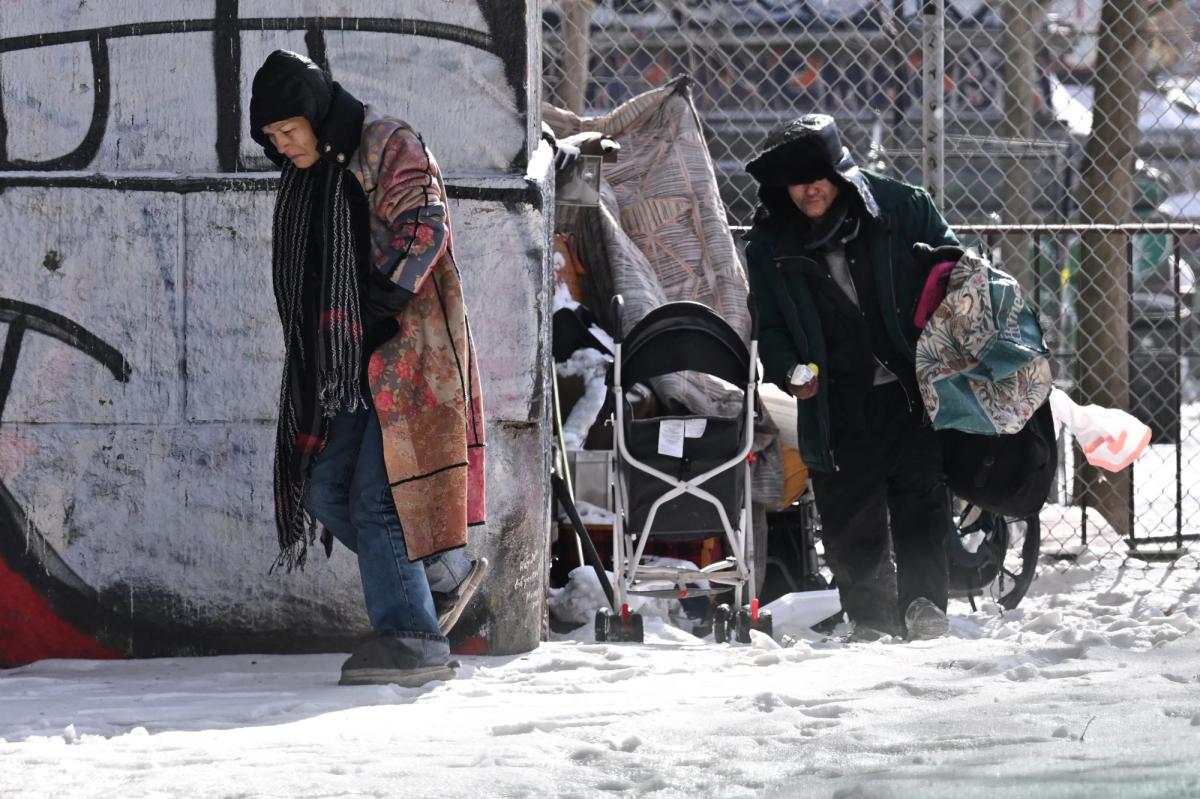
The Big Apple is about to become Tent City, and never mind the icy temps that apparently left 10 people dead outdoors.
Or perhaps we’ll start calling it Lepto Town — once leptospirosis, the bacterial disease rampant in homeless encampments, takes hold.
That’s because New York’s new mayor, Zohran Mamdani, has barred the NYPD from closing down the ramshackle camps that have been springing up in neighborhoods across the five boroughs ever since he previewed his policy in December.
The consequences are dire — for the vagrants themselves, and for the city’s viability.
Over the last few days, 10 New Yorkers were found dead outside in the cold, city officials said Tuesday.
Most were discovered in a park or an alley, and likely were sleeping rough — indeed, several were known to the city’s shelter system, the mayor conceded.
No matter how many neighborhood residents call 311 to report a new encampment, the NYPD is now powerless to deal with them — and even New York’s Strongest are barred from cleaning them up.
The Sanitation Department has orders to remove garbage and human waste, but must leave mattresses, clothing, makeshift cardboard huts and other items intact.
In other words, Sanitation workers must serve as maids, while doing nothing about the dangerous mess.
“What’s next, a city-funded turndown service for people sleeping on the streets?” asked outraged City Councilwoman Joann Ariola (R-Queens), who watched this new farce play out along Jamaica Avenue last week.
Get opinions and commentary from our columnists
Subscribe to our daily Post Opinion newsletter!
Thanks for signing up!
Everyone should be outraged.
Mamdani is showing a misguided brand of compassion for the homeless, and no compassion whatsoever for residents and business owners.
Encampments bring crime, filth and a distressing decline in street civility.
They also bring diseases like leptospirosis, a bacterial infection that can lead to kidney damage, meningitis and even death.
Officials in Berkeley, Calif., are now battling a leptospirosis outbreak in local tent cities.
The germ is found in rat urine, but spreads via contaminated surfaces or liquids.
This month’s frigid temperatures lower Gotham’s risk, but when the weather warms, New York parents will have to tell their kids not to jump in puddles or touch items on the street to avoid this new health hazard.
Even local Democrats are infuriated by Mamdani’s unwillingness to clear encampments.
“People are upset,” says City Councilwoman Gale Brewer, who represents the Upper West Side.
“You cannot have defecating, you cannot have food on the street, you cannot have all these boxes.”
So far, Mamdani insists you can.
His predecessor, Eric Adams, took a hard line against encampments.
But Mamdani’s policy aims to use the homeless as political tools, as he pushes a vision of government-controlled housing.
“We are going to take an approach that understands its mission is connecting those New Yorkers to housing,” he says.
Sorry, Mr. Mayor, that’s only one sliver of your mission.
You are also responsible for ensuring the safety and comfort of the rest of the city’s population, and tourists and business visitors, too.
Your heedlessness is giving all of them the middle finger.
No town or city should have to tolerate encampments.
In 2024, the US Supreme Court weighed in on the “rights” of the homeless versus the needs of communities — and community safety won out.
Otherwise, Justice Neil Gorsuch wrote, “with encampments dotting neighborhood sidewalks, adults and children are sometimes forced to navigate around used needles, human waste, and other hazards.”
That’s what New Yorkers are facing now.
Since that 2024 ruling, Democratic politicians including California Gov. Gavin Newsom have aggressively removed encampments.
Mamdani, heading in the opposite direction, is subjecting Gotham to a predictable increase in crime and contagion.
Los Angeles Police Department crime data show that from 2018 to ’22, the homeless made up 1% of the population — but 11% to 15% of all violent crime suspects.
You don’t want to walk by a homeless encampment after dark, or have your children navigate around one on their way to school.
Mamdani says he’s doing what’s right for the homeless: By keeping their presence a visible eyesore, he’ll ramp up pressure for city-run housing.
In truth, he’s making them victims, mere pawns in his political calculations.
A middle-aged person living on the streets loses 27 years of lifespan, on average.
Some fall victim to crime or disease, and (as we’ve seen this week) some freeze to death on the streets.
Most will die of alcohol or drug abuse; at least 75% of them suffer from untreated mental illnesses.
To protect the city’s livability as well as these fragile lives, Mamdani must abandon his impractical policy.
Clear these squatters’ sites as soon as they emerge, to encourage as many of the homeless as possible to get off the streets.
As Adams put it, there’s nothing progressive or compassionate “about leaving people to freeze in makeshift encampments.
“It dehumanizes the very people who need help.”
Betsy McCaughey is a former lieutenant governor of New York.