CLACKAMAS COUNTY, Ore. — The Oregon Health Authority (OHA) and Clackamas County health officials released a statement warning the public about exposure to measles.
Those who were present at the following location at the following date and time may have been exposed to measles:
- Kaiser Permanente Sunnyside Medical Center Emergency Department on 10180 Southeast Sunnyside Road in Clackamas between 11:28 a.m. and 1:53 p.m. on Monday, January 26, 2026
PAST COVERAGE | Oregon confirms first measles cases of 2026, public urged to review vaccinations
The two agencies recommend those who were at that location during this date and time should contact their health care provider and let them know they may have been exposed to someone who has measles. Their physician can determine whether they are immune to measles based on a variety of factors including vaccination record, age, or laboratory evidence of prior infection.
The exposed has been linked to a new measles case in the county, which is the second reported case of the virus in Clackamas County this year. The first case was reported on Jan. 16.
RELATED | Measles case found in Clackamas County; 3rd reported by Oregon health officials this week
The case in Clackamas County, however, was not the first in the state. Linn County saw two confirmed cases during the first week of January.
At the time, OHA and county authorities identified two locations where the public may have been exposed to the virus:
- Lebanon Community Hospital Emergency Department on Jan. 6 from 8:53 p.m. to 7 a.m. on Jan. 7.
- Albany General Hospital Emergency Department on Jan. 7 from 4:59 a.m. to 8:15 a.m.
Oregon’s 2025 cases
Oregon’s first measles case in 2025 was confirmed in June, when a person was hospitalized in the Portland area with a rash and conjunctivitis after they contracted the disease during international travel.
Last May, the OHA reported that Oregon had a record-high nonmedical vaccine exemption for kindergartners, but most families continued to vaccinate their kids.
A record 9.7% of kindergartners in the state have claimed nonmedical exemptions from school vaccination requirements for the 2024-2025 school year, marking the highest rate ever recorded in the state.
This increase continues an upward trend from 8.8% in 2024, when Oregon had the fourth-highest nonmedical exemption rate in the United States, according to the Centers for Disease Control and Prevention (CDC).
Symptoms and ‘immune amnesia’
Measles spreads through the air after an infected person coughs or sneezes, with the virus lingering for up to two hours.
People are contagious for four days before a rash appears, and will remain contagious up to four days afterward.
Symptoms begin seven to 21 days after exposure to the virus.
READ MORE | West Coast Health Alliance continues to recommend American Academy of Pediatrics vaccines
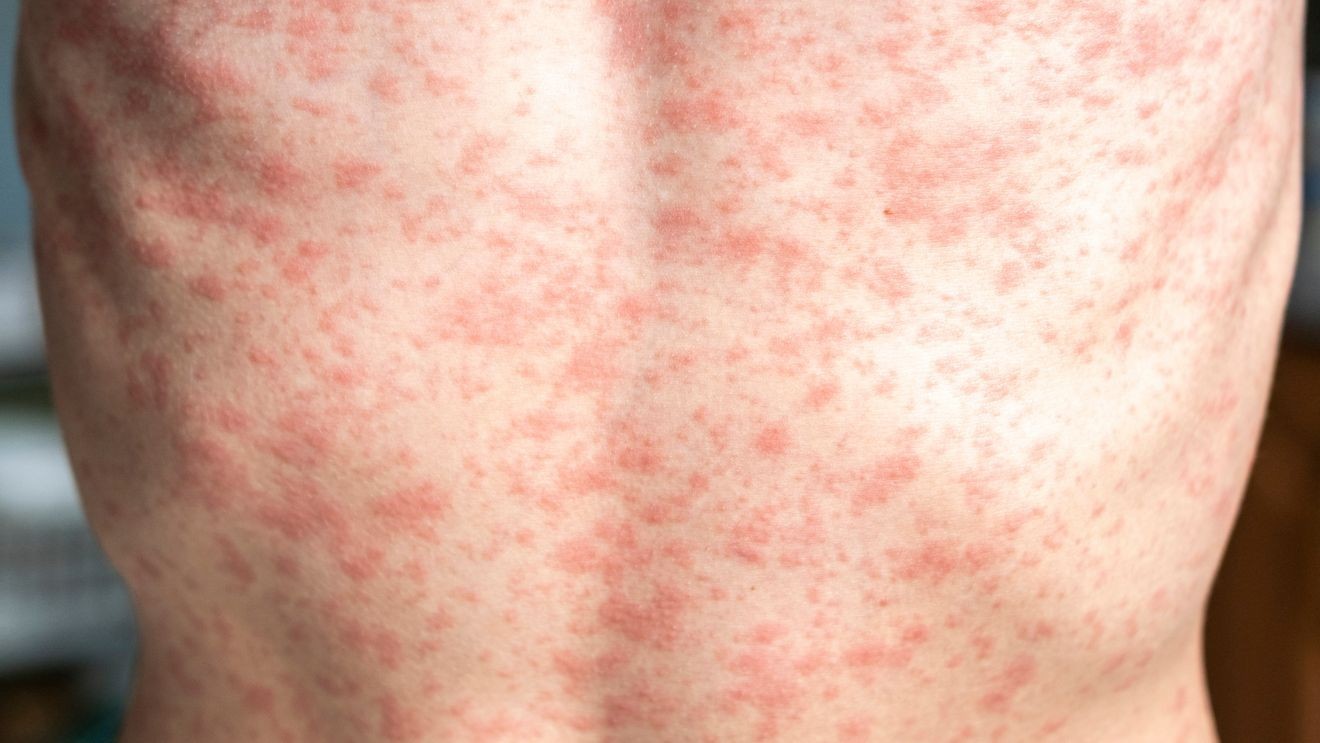
Symptoms typically start with a fever, cough, runny nose, and red eyes, followed by a rash. Complications can include ear infections, lung infections, and, rarely, brain swelling.
Measles is one of the most contagious diseases, and can be dangerous especially for infants and children under 5 years old, adults older than 20, pregnant women, and anyone with a weakened immune system.
In recent years, developed countries saw one or two deadly cases out of every 1,000 measles cases.
The virus is known to cause a dangerous and unique phenomenon called “immune amnesia,” in which the infected patient’s immune system goes through a reset, effectively “forgetting” any immunity it had towards other diseases.
According to studies, in a room full of people exposed to measles, 90% who are unvaccinated will develop the disease. In addition, it can linger in the air for up to 2 hours.
Even in healthy people, measles can cause the following:
- 1 out of every 1,000 measles cases will develop acute encephalitis, which often results in permanent brain damage.
- 1 to 3 out of every 1,000 children who become infected with measles will die from respiratory and neurologic complications.
Subacute sclerosing panencephalitis (SSPE), a rare but fatal degenerative disease of the central nervous system characterized by:
- Behavioral and intellectual deterioration.
- Seizures that generally develop 7 to 10 years after measles infection.
Public health officials advise people experiencing measles symptoms not to arrive unannounced at a medical office, and instead call ahead to arrange a safe entry plan to prevent exposing others.
The measles vaccine is highly effective, with two doses of the MMR vaccine providing 97% protection against the virus.
The resurgence of measles is linked to global spikes in cases, increasing the likelihood of unvaccinated travelers bringing the virus back to the U.S.
Measles was once a major health threat in the U.S., especially for children, with hundreds of thousands of cases and hundreds of deaths annually before the 1960s.
The introduction of the measles vaccine in 1963 led to a dramatic decline in cases, deaths, and serious complications.
By 1981, less than 1% of the previous number of cases were reported, and only 10% of U.S. counties saw any cases at all, according to the CDC.