Allan W. Janssen lives in London, Ontario.
Maine has always been a little different from the rest of the United States. Geographically, culturally and economically, we live on the edge of the map rather than at its center. Our closest neighbors are not New York or Washington, but New Brunswick and Quebec.
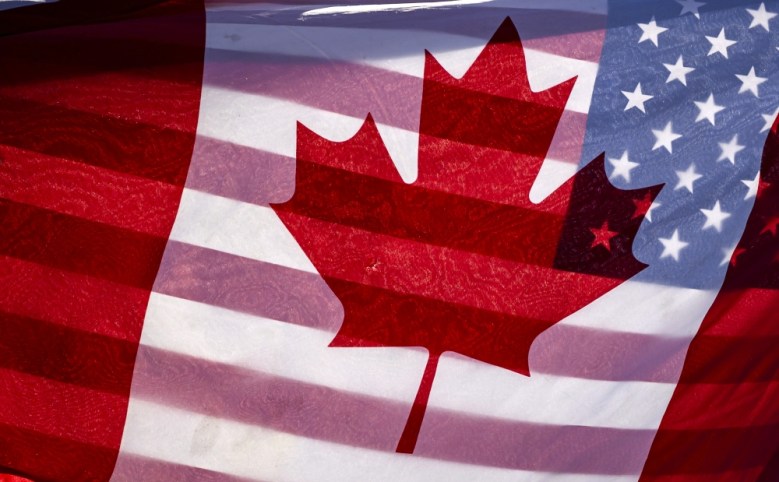
Many Maine families have relatives across the border. Our economies, fisheries, forests and power grids already intertwine. Yet we rarely pause to ask a simple question: What if Maine’s future was more closely aligned with Canada’s?
This is not a call for secession, nor a serious proposal to redraw borders tomorrow. It is a thought experiment — one that deserves calm, practical consideration rather than reflexive dismissal.
Maine faces challenges that are not unique, but are especially acute here. Rural hospitals struggle to stay open. Health care access in vast parts of the state is fragile and expensive. Energy costs are high and volatile. Young people leave for opportunities elsewhere, while aging communities strain under rising costs of care. These problems persist regardless of which party controls Washington.
Now consider a comparison that often goes unspoken. Canada, for all its imperfections, treats health care as essential infrastructure rather than a commodity. Rural communities in provinces like New Brunswick and Nova Scotia face difficulties similar to Maine’s, yet universal health care ensures that geography does not determine whether someone receives basic care. For many Mainers, that difference alone is worth reflecting on.
Energy is another area of quiet contrast. Canada’s public and mixed-model utilities have delivered more stable pricing in many regions, particularly where hydroelectric power plays a large role. Maine already imports significant electricity from Canada. A deeper integration — or alignment — would not be radical; it would be an extension of existing reality.
Fisheries offer an even clearer case. The Gulf of Maine does not recognize national borders. Lobster stocks, conservation efforts and climate impacts are shared concerns. Canadian fisheries policy has often been more precautionary and long-term in approach. Cooperative management across borders already exists, but political separation limits how far that cooperation can go.
Then there is the human dimension. Cross-border families are common in northern and eastern Maine. Many residents work seasonally, shop or receive services in Canada. Cultural differences are real, but they are smaller than many assume. Maine’s values — pragmatism, community responsibility, understatement — often feel closer to Atlantic Canada than to the political culture of distant capitals.
Critics will say this is unrealistic, even unpatriotic. But patriotism does not require intellectual silence. Asking whether current political arrangements serve people well is not disloyal — it is democratic. History shows that borders change not through whim, but through long periods of dissatisfaction followed by thoughtful debate.
The United States is undergoing a period of deep polarization and institutional strain. Canada faces its own challenges, but its political temperature is markedly lower, and its social safety nets broader. For a state like Maine, which often feels overlooked by national decision-makers, it is reasonable to ask whether alternative futures might better align with local needs.
No one is suggesting a referendum tomorrow. But refusing to even imagine different possibilities limits our ability to advocate for ourselves today. At minimum, this thought experiment sharpens an important point: Maine deserves systems that reflect its geography, values and realities — not ones imposed by distance.
Looking north does not mean turning our backs south. It simply means remembering that we are not as isolated as the map might suggest — and that better outcomes often begin with better questions.