Before boarding the plane, the travellers will be given a dose of Valium to calm their nerves. For some, it will be the first time they’ve flown. Others have logged thousands of miles over the Pacific Ocean. Like most weary and anxious passengers, they will be offered minimal personal space on board and food isn’t included in their fare.
But for these jet-setters, the tight quarters and minimal refreshments aren’t meant to maximize airline profits: they’re meant to keep them safe.
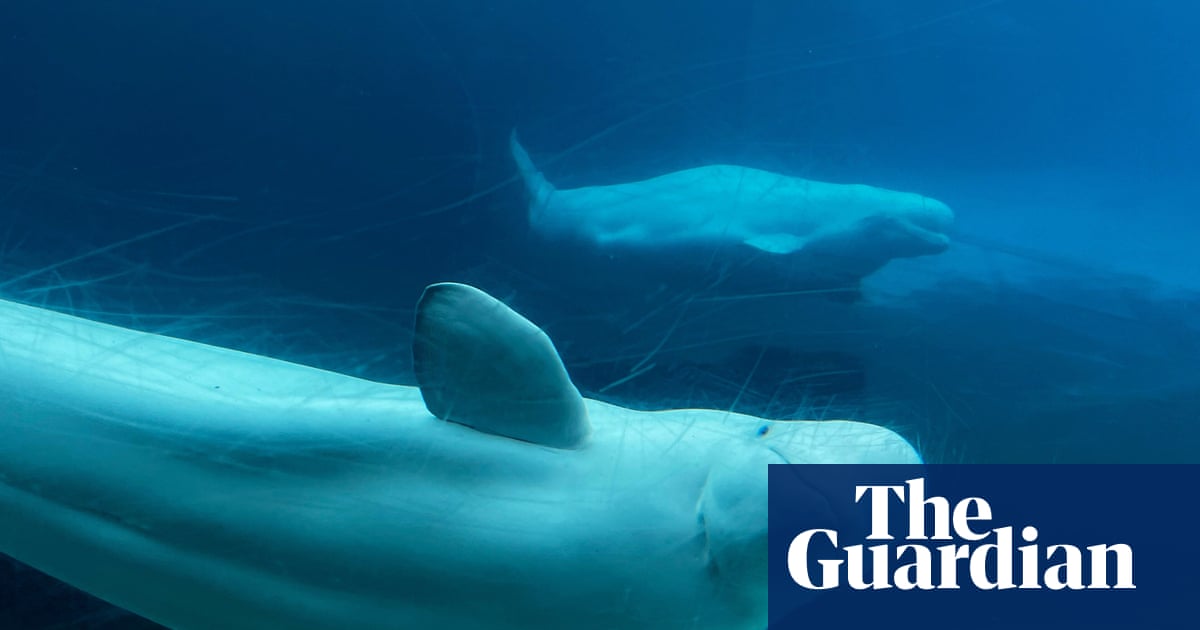
When 30 beluga whales and four dolphins are moved from Canada’s Marineland amusement park, the operation will be both a careful logistical feat and what former trainers say is a “long overdue” move to ensure the safe removal of the last captive whales in the country.
Earlier this week, Canada’s federal fisheries minister Joanne Thompson announced she had reached a tentative deal on export permits that would see all of Marineland’s ailing belugas shipped to four aquariums in the US. None of the aquariums, however, have confirmed they will take the whales. “The focus at this stage must be on the animals themselves,” the Georgia Aquarium, Mystic Aquarium and Shedd Aquarium said in a statement, adding that observations from a recent visit to Marineland would help “inform plans with the goal of providing hope and a future for these animals”.
But the development represents the closest all sides have come to for a plan to finally remove the whales from the amusement park, which has been closed to the public since 2024.
In October, Thompson rejected Marineland’s plan to sell the belugas to Chimelong Ocean Kingdom in China over fears the sale would result in a “continued life in captivity and a return to public entertainment”– which is banned under Canadian law.
In response, Marineland threatened to kill all 30 of its belugas.
This aerial view shows various belugas still held in captivity at the now closed Artic Cove exhibit, at Marineland, in Niagara Falls, Canada, on 13 November 2025. Photograph: Daphne Lemelin/AFP/Getty Images
According to Phil Demers, a former trainer turned whistleblower, moving a single whale requires careful planning, but transporting 30 whales is an immensely complex task and one that can nonetheless also be done “incredibly fast”.
Firstly, all the cetaceans must receive a clean bill of health after close inspection by a veterinarian. Of the belugas that could be sent, two have been receiving medical treatment in recent months for health issues.
“In all honesty, every animal is compromised to an extent. That’s just the reality of captivity. But at Marineland, they are absolutely compromised, which is why the Ontario government deemed the animals ‘in distress’ when they inspected the park in 2021,” said Demers.
For those healthy enough to travel, trainers will stop feeding them the night before and administer a dose of Valium. The following morning, the water of their tanks will be lowered and trainers will enter to help guide the whale into a fabric sling, which has holes for their pectoral fins. Once the whale is in the sling, it is lifted with a crane and placed in a ‘whale transport box’- a steel container measuring roughly 15 feet long and filled with salt water.
The largest whale ever transported – a grey whale calf named JJ that weighed nearly 20,00 pounds and measured 31 feet – was placed in a custom foam-padded container and driven along a California highway to the ocean.
“You need just enough water to ensure the buoyancy of the whale for every time its lungs fill with air so that there’s not too much weight on their internal organs. But you can’t have too much water that enters their blowholes,” said Demers. “It’s going to be a tumultuous trip and water will slosh around, but it’s also no different than a rough day in the ocean.”
Kristy Burgess worked as a beluga trainer for three years at Marineland of Canada, working with more than 30 whales. During that time, the trust she developed with the belugas was ‘magical’. Photograph: Courtesy of Kristy Burgess
The metal boxes will be loaded on to trucks and driven along the highway to a transport plane. While the trip is possible by road, airplanes are preferred and the Lockheed C-130 Hercules is favoured by teams for its ability to easily load the belly of the aircraft. But with few available, teams are forced to search for other options, said Demers.
“Once you land- it’s the same process but in reverse.”
Depending on the weight of the whales, Demers said that up to nine whales could be transported in a single trip. The last time Marineland moved belugas was in 2021, when they sent five to Mystic Aquarium. Three of those whales died soon after arriving, but Demers said those belugas had existing health issues and the aquariums “took a risk” transporting them.
But he is relieved that a solution is on the horizon for the whales, which have become a bargaining chip between Marineland, Ontario province and the federal government.
“I’ve been trying to stress now, essentially, for the better part of the last more than a decade that those animals need to be removed,” he said, adding he was glad the minister was no longer entertaining the idea of sending the whales to a sanctuary that hasn’t yet been built. “I think that sanctuary needs to be constructed as soon as possible- but anyone thinking these whales had a chance there is kidding themselves.”
Animals rights groups, however, said it was “absolutely heartbreaking” the whales would never get the chance to live in the proposed sanctuary. “Given Marineland’s appalling threat to execute the 30 belugas and four dolphins, the Minister had little choice but to offer these conditional approvals,” Camille Labchuk, executive director at Animal Justice, said in a statement. “It is also essential to ensure the whales will not be bred in the US–which is illegal in Canada. These animals must be the last generation to suffer in captivity.”
Kristy Burgess, a former beluga trainer, said she was elated to learn the whales were headed for the US.
“I feel super excited. They’re really good facilities with world class veterinarians. Highly qualified staff, and in places with real oversight,” she said.
Despite its threats to kill the whales as recently as this week, Marineland said in a statement that it is grateful to the federal government for tentatively approving the export permits “prioritizing the lives of these remarkable marine mammals.”